Poland · Europe
Krakow
A trumpet call cuts off mid-note every hour from the tallest tower of St. Mary's Basilica, a tradition dating back to a watchman supposedly shot mid-warning during a 13th-century invasion.
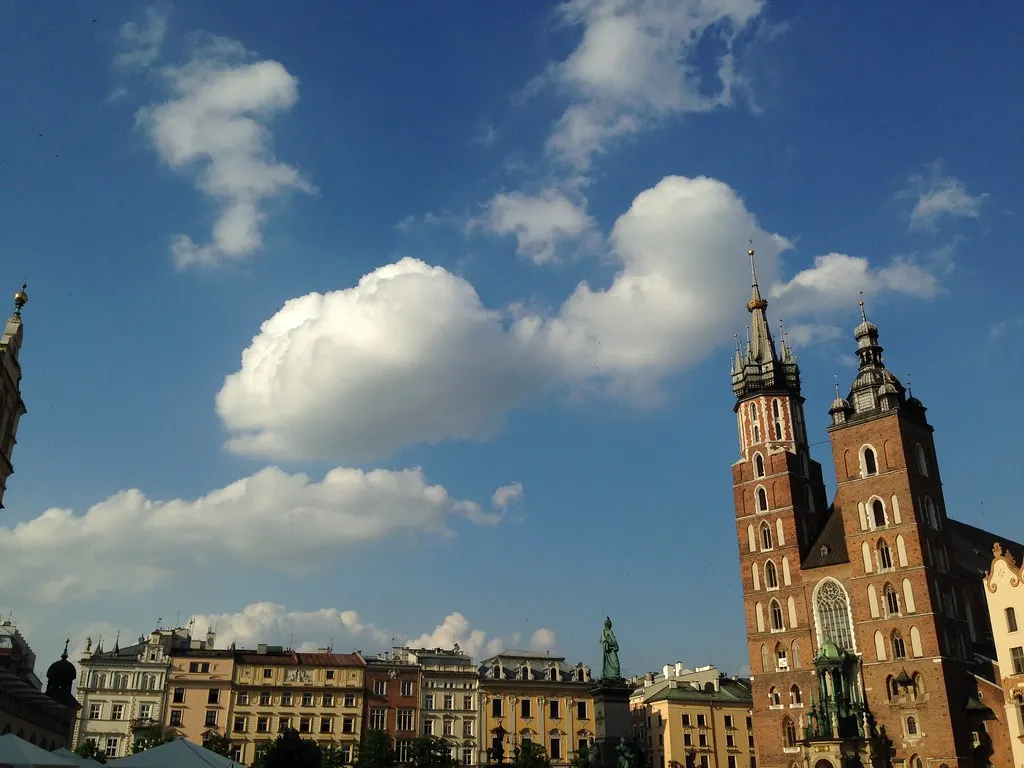
Krakow avoided the destruction that leveled much of Warsaw in World War II, which is the quiet reason its Old Town still looks the way it does — a genuinely intact medieval center rather than a careful postwar reconstruction. The Main Market Square, laid out in the 13th century, remains the largest medieval town square in Europe, ringed by the Cloth Hall's arcades and St. Mary's Basilica's two mismatched towers.
Every hour, a trumpet call known as the Hejnał Mariacki plays from the taller of those two towers and cuts off abruptly mid-phrase. The tradition supposedly commemorates a watchman shot in the throat mid-warning during a 13th-century Mongol raid, and whether or not the specific story is accurate, the truncated note is real and has been played, by tradition, every hour for centuries.
Wawel Castle, on a hill above the Vistula River, was the seat of Polish kings for hundreds of years before the capital moved to Warsaw. The grounds and cathedral exterior are free to walk; the State Rooms, Crown Treasury, and cathedral interior each need separate tickets, and it's easy to underestimate how much time the complex actually takes if you want to see more than the courtyard.
Kazimierz, a district a short walk south of Old Town, was Krakow's center of Jewish life for roughly 500 years before the Holocaust, and the area still carries that history in its surviving synagogues and cemeteries alongside what's now the city's most atmospheric concentration of bars and restaurants. Visiting both layers — the historical weight and the contemporary nightlife — without treating either as incidental is part of what makes Kazimierz worth the walk from Old Town.
The Auschwitz-Birkenau Memorial and Museum sits about 90 minutes from Krakow and is, for many visitors, the specific reason a Poland trip includes this city. It is a former Nazi concentration and extermination camp, preserved as a memorial and educational site, and it's worth visiting deliberately: book directly through the memorial's official website rather than a third-party tour reseller, and plan the day around the visit itself rather than pairing it with other sightseeing.
On a lighter register, the Wieliczka Salt Mine, a short trip outside the city, has been in continuous operation since the 13th century and includes chapels, chandeliers, and sculptures carved entirely from salt by generations of miners — a UNESCO World Heritage site that surprises visitors expecting a simple cave tour with how much has actually been built underground.
What a trip here actually costs
$35 / day avg.
- Hostel in Kazimierz or near Old Town
- Tram day pass
- Pierogi and milk bar lunches (bar mleczny, subsidized cafeteria-style spots)
- Free wander through the Main Square and Wawel grounds
What to do at this tier
- • Main Market Square, the largest medieval town square in Europe, free to walk
- • Wawel Castle grounds and cathedral exterior, free; interior requires a ticket
- • Kazimierz wander, former Jewish quarter, free
$85 / day avg.
- 3-star hotel walkable to Old Town
- Wawel Castle and Wieliczka Salt Mine tickets
- Sit-down Polish dinners with local vodka tasting
- Official guided Auschwitz-Birkenau tour
What to do at this tier
- • Wawel Castle State Rooms and Crown Treasury, booked ahead
- • Wieliczka Salt Mine tour, about 20km from the city
- • Official guided tour of Auschwitz-Birkenau Memorial, a full day
$190 / day avg.
- 4-5 star hotel near the Main Square
- Private guide for Old Town and Wawel Castle
- Tasting menu at a modern Polish restaurant
- Private driver and guide for Auschwitz-Birkenau
What to do at this tier
- • Private guided walk through Old Town and Wawel Castle's lesser-visited rooms
- • Private driver and guide for Auschwitz-Birkenau, avoiding group tour bus schedules
- • Tasting menu dinner at one of Krakow's modern Polish restaurants
These are average estimates for planning purposes, not real-time prices — actual costs vary by season, availability, and how far ahead you book.
How to get there
Click anywhere on the world map — any airport works, not just our main hubs.
Click anywhere on the map above — any airport in the world works — to see estimated travel time and cost from there.
Times and prices are planning estimates, not live fares — always check a booking site before you commit. See the full Transport Comparison guide for the general tradeoffs of each mode.
Best time to visit
May-September brings mild-to-warm weather; winters are genuinely cold and the Christmas markets are a specific draw for anyone comfortable with that.
Safety notes
Very safe overall, among the safer major European cities by most measures. Standard urban caution at night is enough.
Visa & currency
Polish złoty (PLN), not the euro. Standard Schengen 90-day visa-free rule applies for most Western passport holders.
Questions people ask before visiting
Is Krakow a cheap city to visit?
Yes, consistently one of the more affordable major European cities — food, transit, and accommodation all run noticeably below Western European prices, even in the tourist-heavy Old Town.
How do I visit Auschwitz-Birkenau respectfully?
Book an official guided tour directly through the Auschwitz-Birkenau Memorial's own website, not a third-party reseller — official tours are free with an optional guide fee and include the historical context the site is built to convey. It's about 90 minutes from Krakow by organized transport, and most visitors treat it as a full-day, single-purpose trip rather than pairing it with anything else that day.
Is the Wieliczka Salt Mine worth the visit?
Yes, and it surprises people who expect a simple cave tour — it's a UNESCO site with chapels, chandeliers, and sculptures all carved from salt by miners over centuries, some chambers over 100 meters underground. Book the tour in advance in summer.
What's the difference between Old Town and Kazimierz?
Old Town is the medieval core — the Main Square, Wawel Castle, the main tourist concentration. Kazimierz, a 20-minute walk south, was Krakow's historic Jewish quarter and is now the city's more atmospheric nightlife and food district, with a real weight of history alongside the bars.
How many days do you need in Krakow?
Two days covers Old Town, Wawel Castle, and Kazimierz. A third day is worth setting aside specifically for Auschwitz-Birkenau, treated as its own full day rather than squeezed in.
Nearby destinations
 Prague
Prague
Czechia
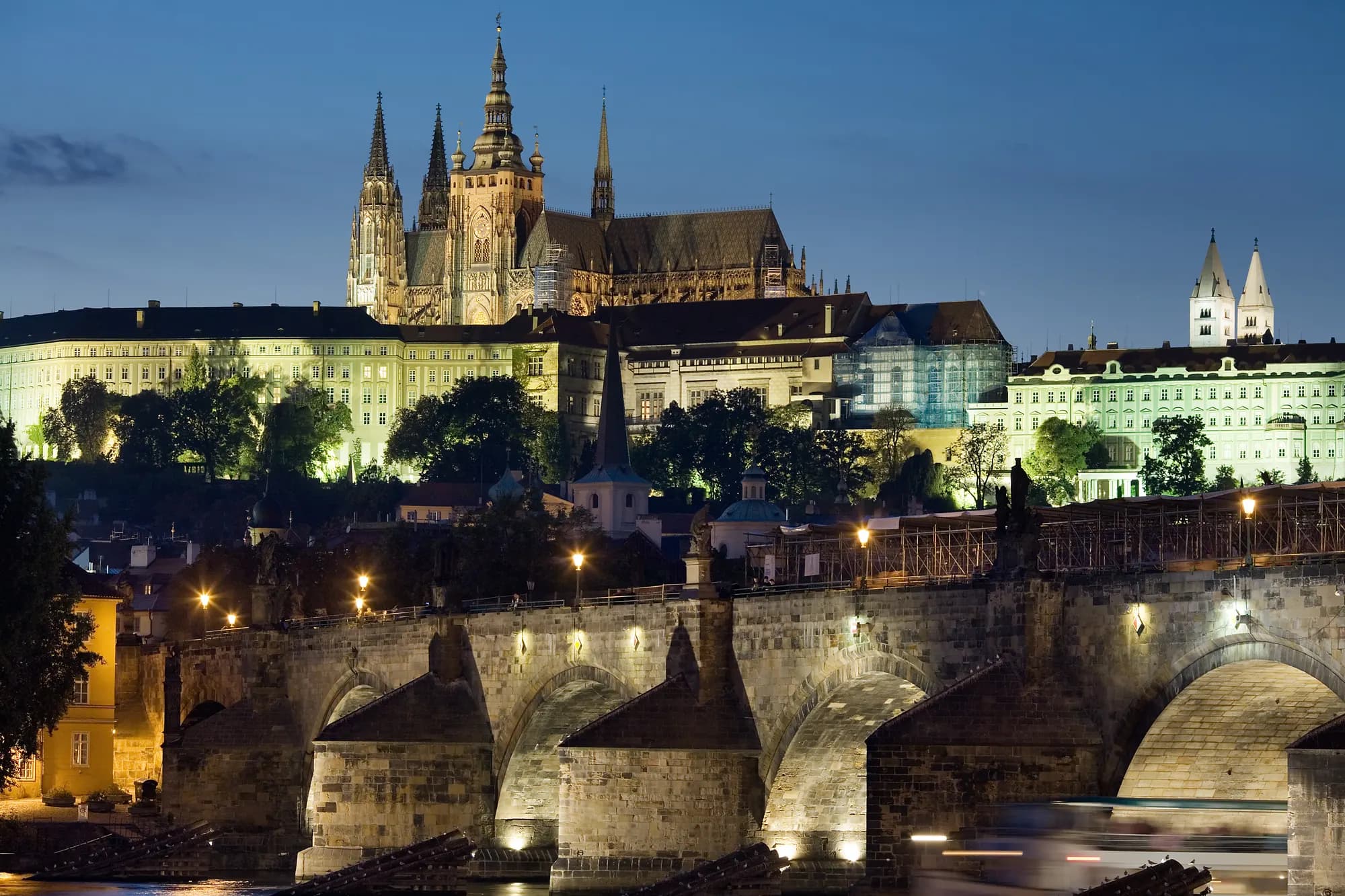
The beer costs less than the bottled water in most restaurants, which tells you almost everything about the local priorities before you've even seen the castle.
See full guide → Budapest
Budapest
Hungary
Two cities merged into one in 1873 — Buda's hills on one bank, Pest's flat grid on the other — and you can still feel the seam every time you cross the Chain Bridge between them.
See full guide →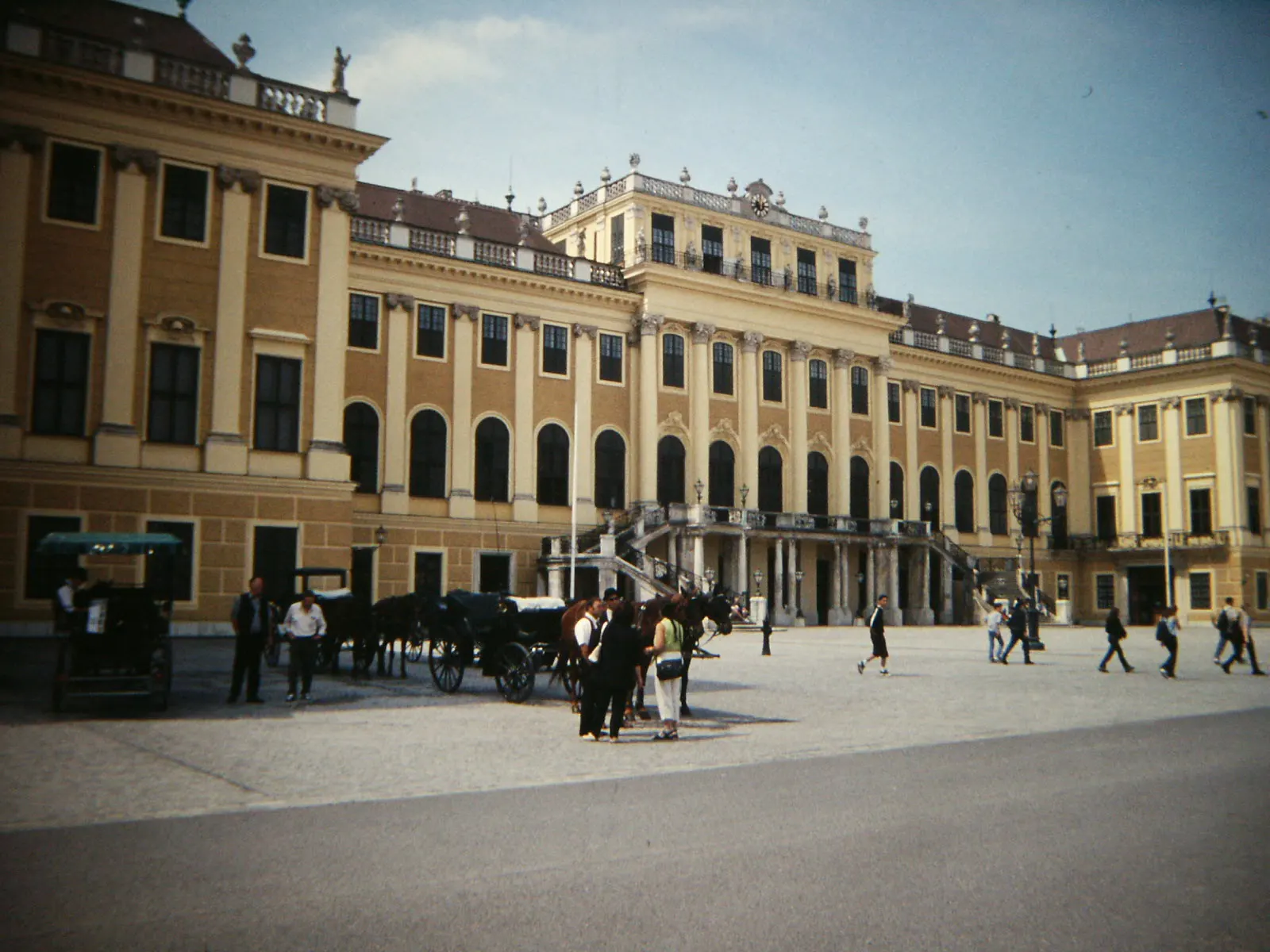 Vienna
Vienna
Austria
A single cup of coffee buys you a table for as long as you want it — the coffeehouse as a legal, UNESCO-recognized institution, not just a place to grab a drink and leave.
See full guide →Comparing more than one route? See the full transport comparison guide.