Czechia · Europe
Prague
The beer costs less than the bottled water in most restaurants, which tells you almost everything about the local priorities before you've even seen the castle.
Prague survived the 20th century almost architecturally intact, which is not something most Central European capitals can claim. It missed the worst of World War II's bombing campaigns, so the Gothic, Baroque, and Art Nouveau buildings that make up the historic center are largely original, not postwar reconstructions. Walking from the Old Town Square to Charles Bridge means passing through roughly six centuries of architecture without a single jarring gap.
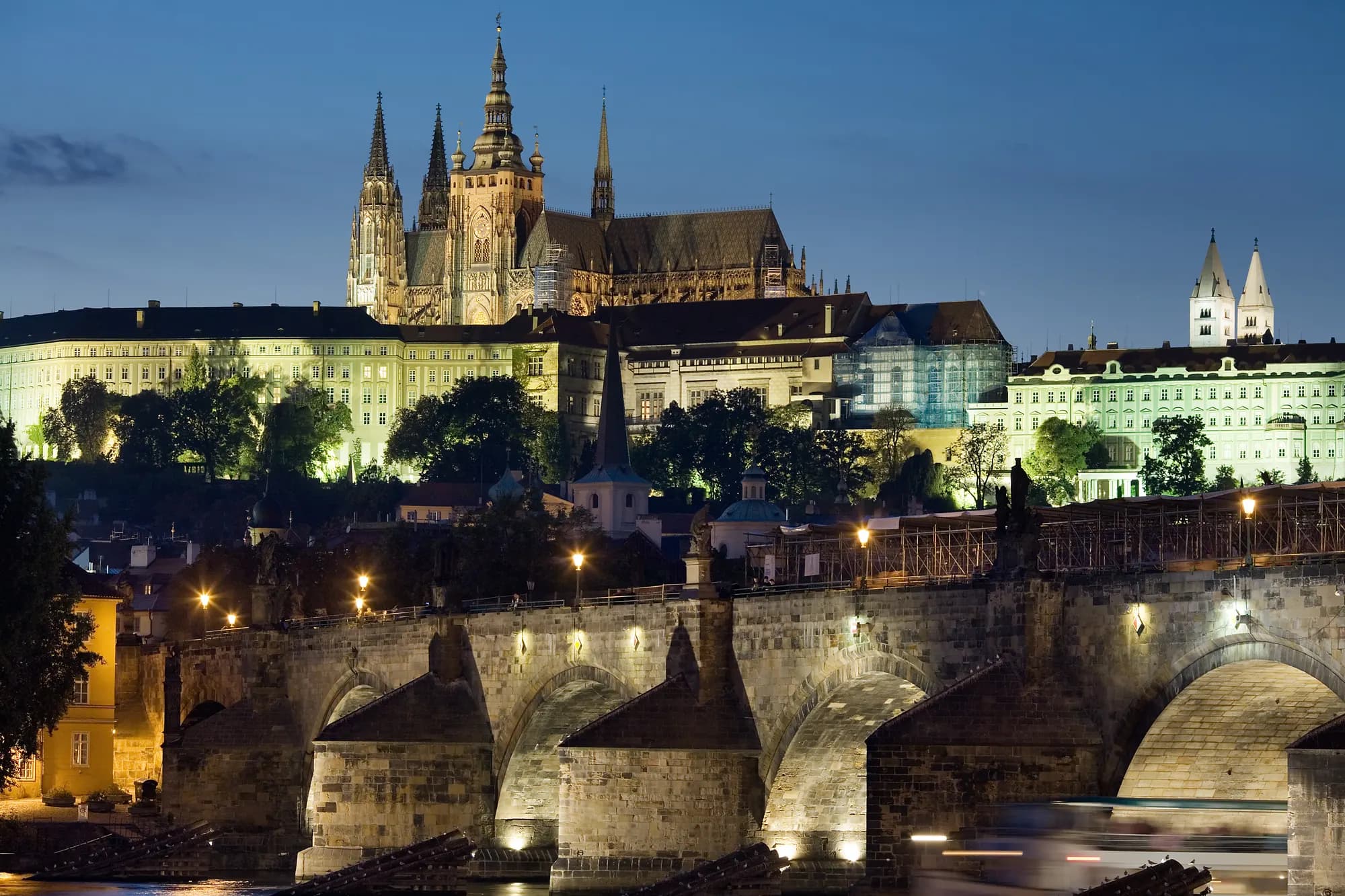
The castle complex, visible from most of the city on its hill above the river, is worth treating as a half-day commitment rather than a quick photo stop. It's not one building but a walled district — St. Vitus Cathedral's Gothic spires dominate the skyline, the old Royal Palace sits behind it, and Golden Lane's row of tiny, colorful houses (allegedly once home to castle guards and goldsmiths, though the exact history is debated) is easy to rush past if you're not paying attention.
One practical fact catches a surprising number of visitors off guard: Czechia is in the EU but has not adopted the euro. The currency is the Czech koruna, and while some restaurants in the most tourist-heavy blocks will accept euros, the exchange rate they apply is reliably bad. Pull korunas from an ATM and pay locally — it's a meaningfully cheaper trip that way.
Prague earned a reputation in the 2000s and 2010s as a budget stag-and-bachelor-party capital, and that scene still exists, concentrated on a handful of streets near Wenceslas Square and parts of Old Town. It's avoidable without much effort — most of the city, including large parts of the historic center after about 9pm, operates as a quiet, ordinary Central European capital rather than the loud version some visitors expect from the reputation.
Beer here isn't just cheap, it's a genuine point of local pride — Czechia has the highest per-capita beer consumption in the world, and Pilsner-style lager was invented not far from Prague, in the town of Plzeň. A half-liter at a proper pub, away from the main tourist squares, often costs less than a bottle of water at the same establishment.
What a trip here actually costs
$40 / day avg.
- Hostel in Old Town or Vinohrady
- Trams and metro, a day pass covers the whole city
- Traditional pub lunches, goulash or svíčková
- Beer at local prices, not tourist-street markup
What to do at this tier
- • Walk Charles Bridge at sunrise before the crowds and the vendors set up
- • Free wander through the Jewish Quarter's exterior architecture
- • Vyšehrad fortress, less crowded than the main castle, free to enter the grounds
$95 / day avg.
- 3-star hotel walkable to Old Town
- Prague Castle complex ticket
- Sit-down dinners at Czech restaurants
- River cruise on the Vltava
What to do at this tier
- • Prague Castle complex including St. Vitus Cathedral and Golden Lane
- • Vltava river cruise, an hour, good for a different angle on the skyline
- • Czech beer hall dinner with a proper flight of local styles
$220 / day avg.
- 4-5 star hotel with a castle or river view
- Private guided tour of Prague Castle and St. Vitus
- Tasting menu dinner at a well-regarded restaurant
- Private day trip to Český Krumlov
What to do at this tier
- • Private early-access tour of Prague Castle before public opening
- • Full-day trip to Český Krumlov, a smaller medieval town two hours south
- • Multi-course tasting menu at one of the city's higher-end restaurants
These are average estimates for planning purposes, not real-time prices — actual costs vary by season, availability, and how far ahead you book.
How to get there
Click anywhere on the world map — any airport works, not just our main hubs.
London is one of our researched reference cities — every mode below is hand-checked, not a formula.
| Mode | Time | Approx. cost | Notes |
|---|---|---|---|
| Flight | 2h05 | $45-150 | Fastest option; book 6-8 weeks out for the lower end of the range. |
Times and prices are planning estimates, not live fares — always check a booking site before you commit. See the full Transport Comparison guide for the general tradeoffs of each mode.
Best time to visit
May-June and September bring mild weather and noticeably thinner crowds than the July-August peak or the very cold winter months.
Safety notes
Very safe overall. Standard pickpocket caution on Charles Bridge and crowded trams, and some caution around the stag-party nightlife streets late at night.
Visa & currency
Czech koruna (CZK), not the euro. Standard Schengen 90-day visa-free rule applies for most Western passport holders.
Questions people ask before visiting
Does Prague use the euro?
No — Czechia uses the Czech koruna (CZK), not the euro, despite being in the EU. Some tourist-heavy spots accept euros but at poor exchange rates; withdraw korunas from an ATM and pay in local currency.
Is Prague still a big stag and bachelor party destination?
It has a real reputation for that, concentrated heavily around a few nightlife streets near Wenceslas Square and Old Town. Outside those specific blocks, most of the city operates as a normal, quiet Central European capital — it's easy to avoid if it's not what you're looking for.
How long should I spend at Prague Castle?
Budget at least half a day. It's less a single building and more a walled complex — St. Vitus Cathedral, the old Royal Palace, Golden Lane's tiny historic houses — and rushing it means missing most of what's inside the walls.
Is Prague expensive compared to Western Europe?
Noticeably cheaper, especially on food, beer, and public transit. Accommodation in the historic center has risen with tourism, but you'll still generally spend less per day here than in Paris, Amsterdam, or Rome.
What's the best way to see the astronomical clock show?
The hourly show itself is brief and, depending who you ask, a little underwhelming for the crowd it draws. The clock mechanism and the tower it's on are the more interesting part — climb it for the Old Town Square view rather than standing in the crowd for the chime.
Nearby destinations
 Vienna
Vienna
Austria
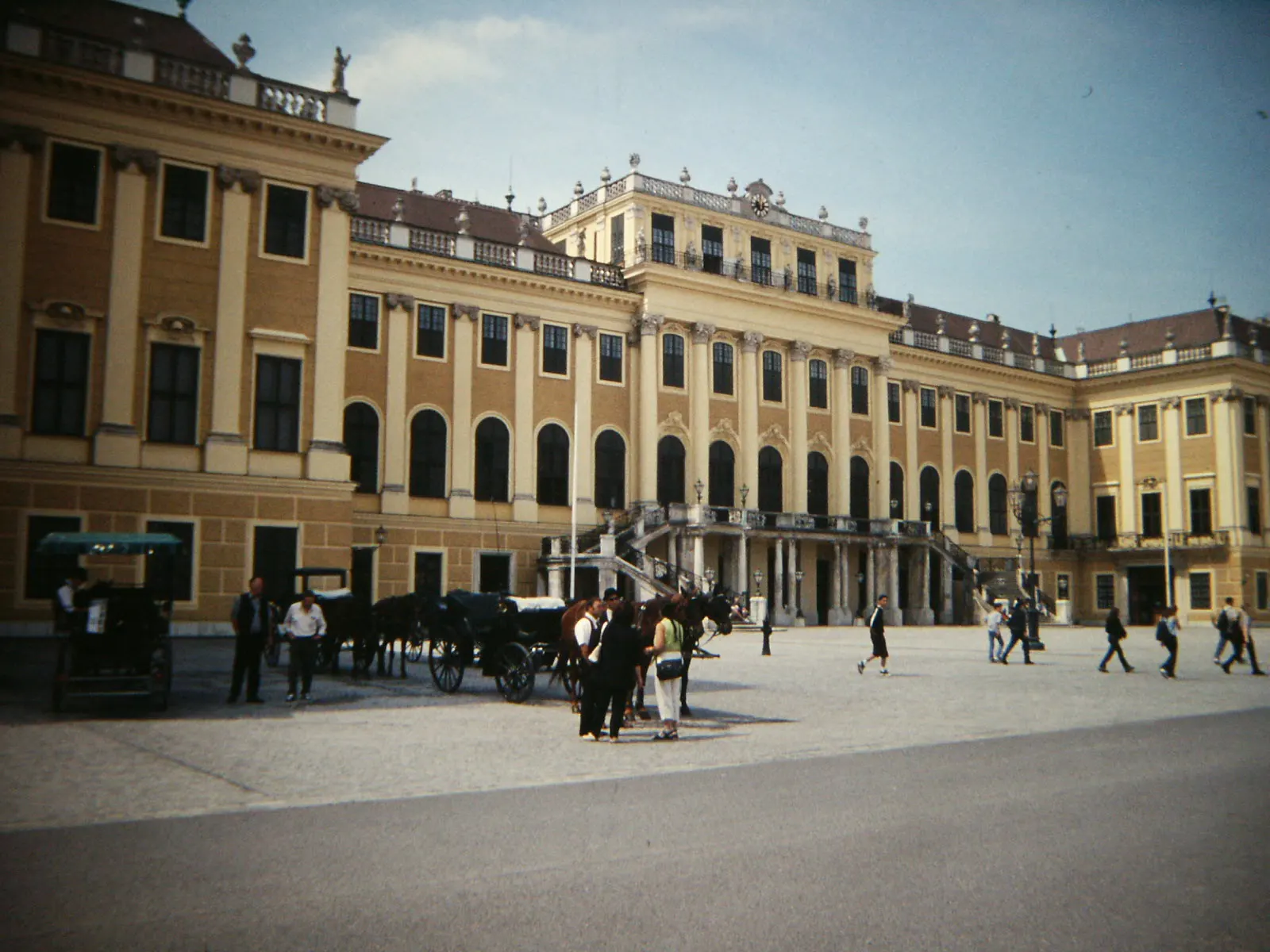
A single cup of coffee buys you a table for as long as you want it — the coffeehouse as a legal, UNESCO-recognized institution, not just a place to grab a drink and leave.
See full guide → Budapest
Budapest
Hungary
Two cities merged into one in 1873 — Buda's hills on one bank, Pest's flat grid on the other — and you can still feel the seam every time you cross the Chain Bridge between them.
See full guide →Comparing more than one route? See the full transport comparison guide.