Vietnam · Asia
Ho Chi Minh City
Renamed after national reunification in 1975, Ho Chi Minh City is still called Saigon by most of the people who actually live there — a city of millions of motorbikes, French colonial buildings repurposed rather than removed, and a war history told bluntly from the Vietnamese side at the War Remnants Museum.
Ho Chi Minh City was officially renamed in 1976 following national reunification, honoring the revolutionary leader, but the older name, Saigon, never really left daily use. Locals still say it constantly, especially for District 1's central core, and both names appear interchangeably on shopfronts and in casual conversation, a small but telling sign of how the city holds its layered history without fully resolving it.
The War Remnants Museum presents the Vietnam War, called the American War locally, from the Vietnamese perspective, with exhibits covering the conflict's civilian toll, chemical weapons like Agent Orange, and captured military equipment displayed in the courtyard outside. It's a genuinely difficult visit for many, presented without much softening, and stands as one of the most direct places in the country to engage with that history.
About 40 to 70 kilometers outside the city, depending on which section is visited, the Cu Chi Tunnels preserve part of an extensive underground network used by Viet Cong forces during the war, complete with hidden trapdoor entrances, ventilation shafts, and, in some sections, underground kitchens and hospitals. Guided tours let visitors crawl through widened tunnel sections built specifically for tourists, since the originals were sized for a much smaller build than most modern visitors.
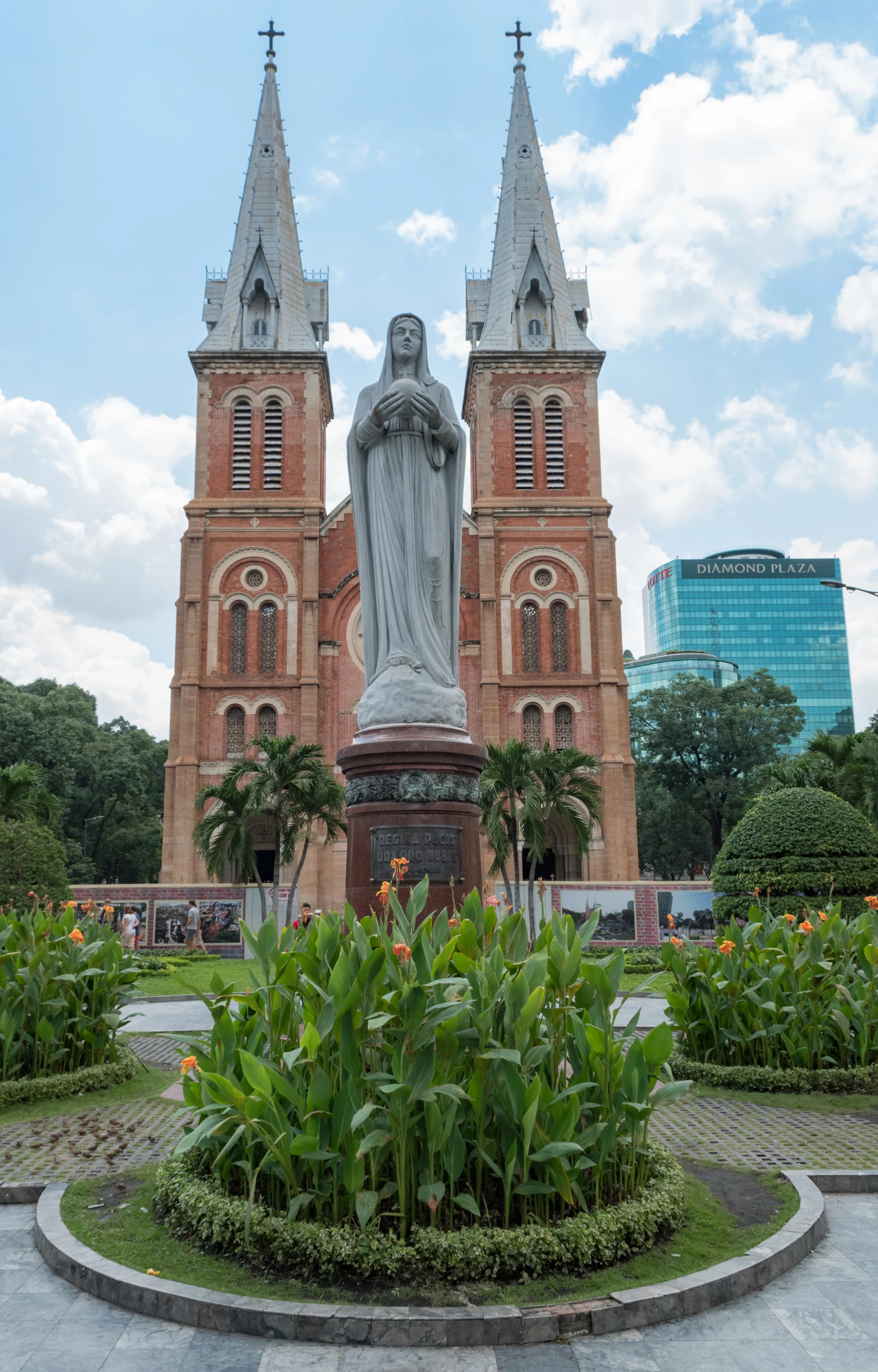
French colonial rule left a visible architectural mark that the city has largely kept and repurposed rather than erased, most notably the Notre-Dame Cathedral Basilica, built with imported French materials in the late 19th century, and the ornate Central Post Office, still a functioning post office today. Both sit within walking distance of each other in District 1.
The city's traffic, dominated by millions of motorbikes moving in a flow that looks chaotic but follows its own internal logic, is one of the more immediate sensory experiences of arriving in Ho Chi Minh City. Crossing the street takes a specific technique, walking at a steady, predictable pace and letting the bikes flow around rather than stopping and starting, and most visitors pick it up within a day or two.
What a trip here actually costs
$30 / day avg.
- Hostel dorm or budget guesthouse
- Grab motorbike taxi rides
- Street food and local com tam meals
- War Remnants Museum, low entry fee
What to do at this tier
- • War Remnants Museum, low entry fee
- • Ben Thanh Market, free to browse
- • Notre-Dame Cathedral Basilica and Central Post Office, free
$75 / day avg.
- 3-star hotel in District 1
- Half-day Cu Chi Tunnels guided tour
- Sit-down Vietnamese restaurant dinners
- Rooftop bar visit
What to do at this tier
- • Cu Chi Tunnels half-day guided tour
- • Street food walking tour through District 1 and beyond
- • Rooftop bar with skyline views over the Saigon River
$200 / day avg.
- 4-5 star hotel with pool
- Private guided city and Cu Chi Tunnels tour
- Fine dining Vietnamese tasting menu
- Private car with driver for the day
What to do at this tier
- • Private guided tour combining the city center and Cu Chi Tunnels
- • Fine dining tasting menu at a top Vietnamese restaurant
- • Private car and driver for a full-day custom itinerary
These are average estimates for planning purposes, not real-time prices — actual costs vary by season, availability, and how far ahead you book.
How to get there
Click anywhere on the world map — any airport works, not just our main hubs.
Click anywhere on the map above — any airport in the world works — to see estimated travel time and cost from there.
Times and prices are planning estimates, not live fares — always check a booking site before you commit. See the full Transport Comparison guide for the general tradeoffs of each mode.
Best time to visit
December-April is the dry season and the most comfortable for walking and touring; May-November brings frequent, often heavy, afternoon rain.
Safety notes
Generally safe; the main practical risk is traffic, since crossing streets amid constant motorbike flow takes a genuine adjustment for first-time visitors.
Visa & currency
Vietnamese dong (VND). Most nationalities need an e-visa arranged in advance, typically valid for stays up to 90 days.
Questions people ask before visiting
Is Ho Chi Minh City worth visiting?
Yes — the city combines the War Remnants Museum's unflinching account of the Vietnam War, the nearby Cu Chi Tunnels' underground network, French colonial architecture like the Central Post Office, and a street food and cafe scene that runs at full speed from early morning to late night.
Is it called Saigon or Ho Chi Minh City?
Officially Ho Chi Minh City since the 1976 renaming after national reunification, but most residents and much of the local business signage still use Saigon informally, especially for District 1's central area. Both names are understood and commonly used side by side.
What are the Cu Chi Tunnels?
An extensive underground tunnel network used by Viet Cong forces during the Vietnam War, located about 40-70km from central Ho Chi Minh City depending on the specific section visited. Guided tours let visitors crawl through widened sections and see recreated wartime living quarters.
How many days do you need in Ho Chi Minh City?
Two to three days covers the city center, War Remnants Museum, and a half-day Cu Chi Tunnels trip. Most visitors continue on to other parts of Vietnam, like Hoi An or Hanoi, rather than staying much longer.
Nearby destinations
 Hanoi
HanoiHanoi
Vietnam
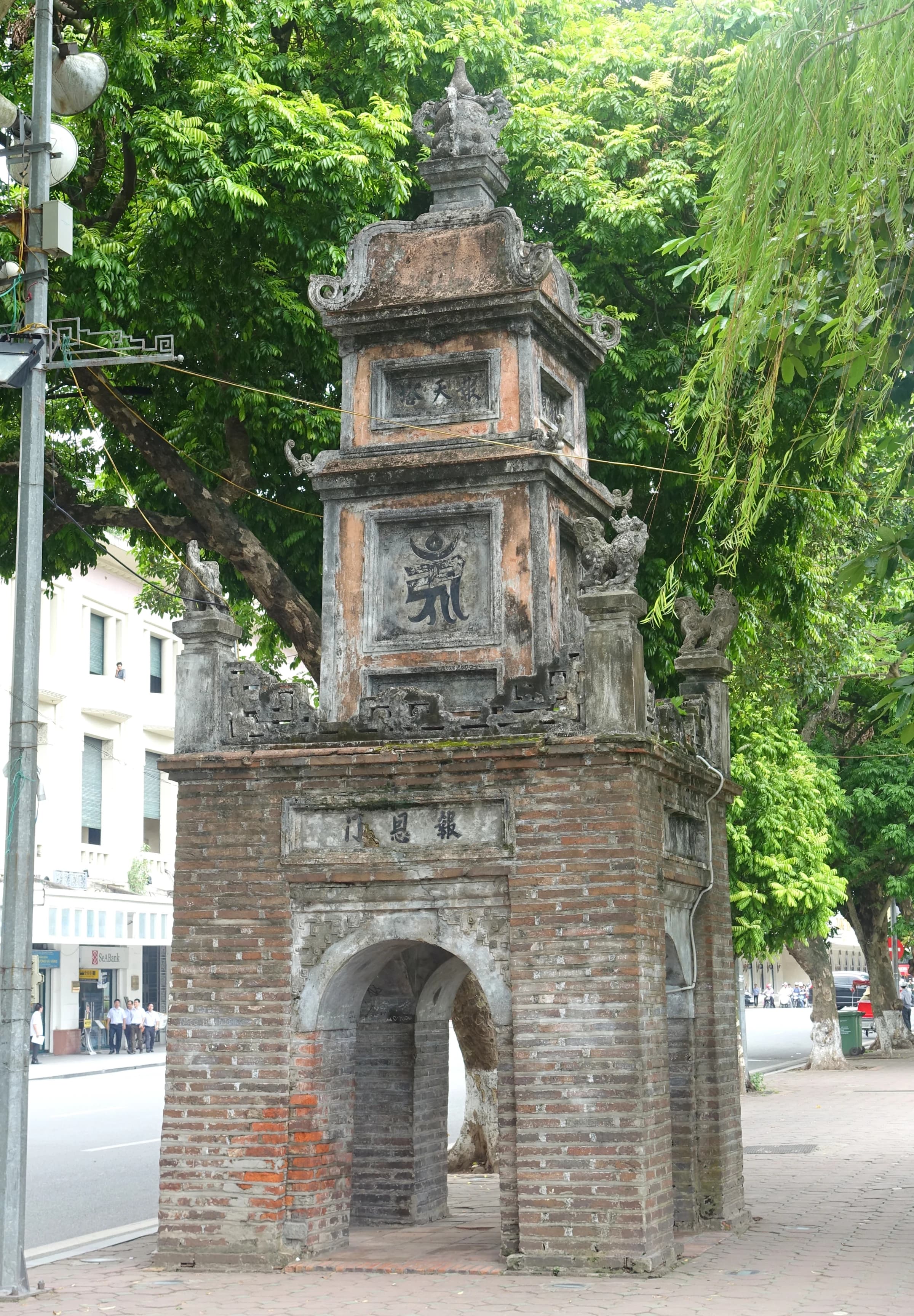
Vietnam's capital has been continuously inhabited since 1010, and a stretch of its Old Quarter still runs literal train tracks through a residential street lined with cafes close enough to touch the passing carriages — one of the more unusual ways a thousand-year-old city and modern viral tourism have collided.
See full guide →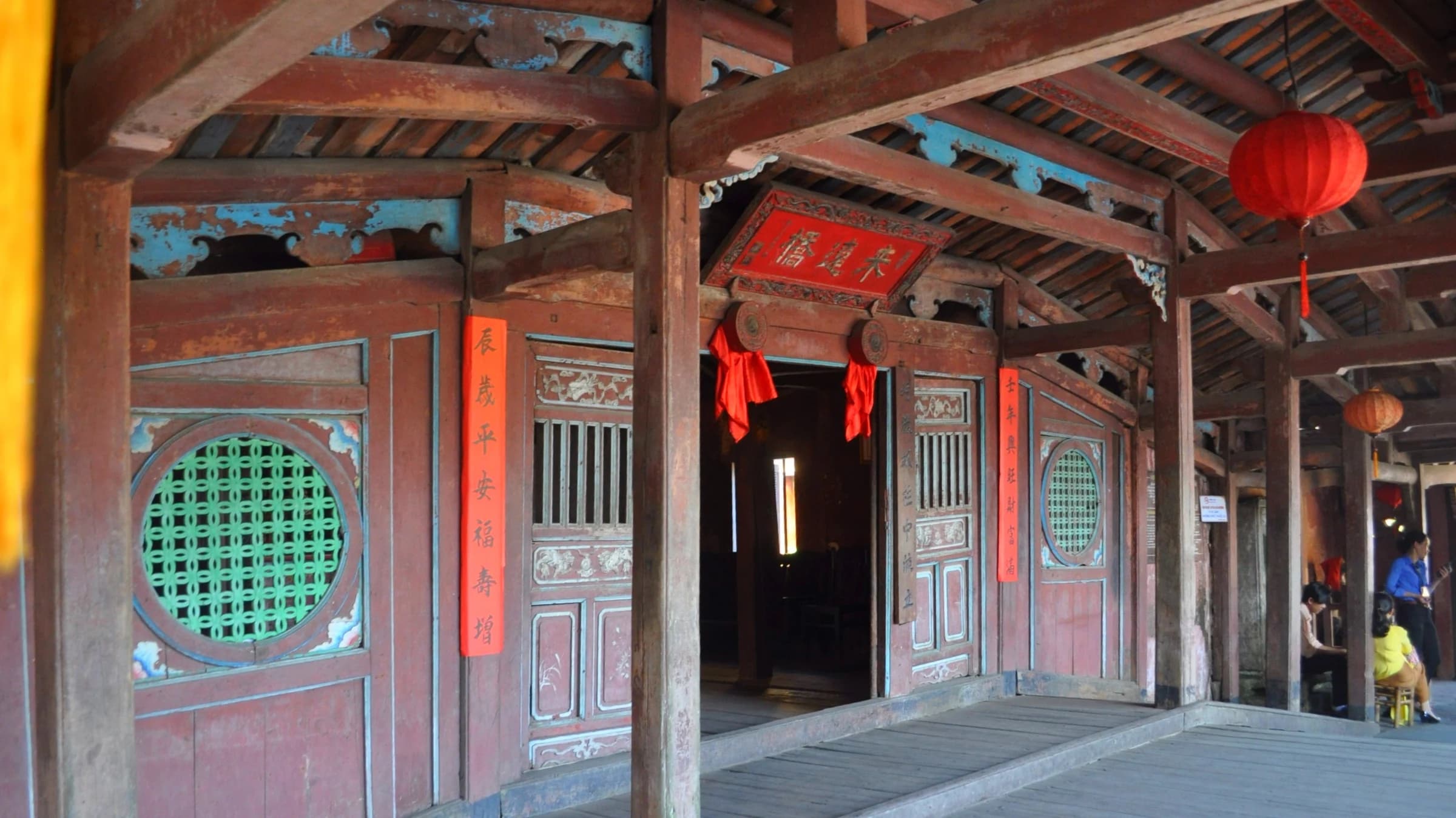 Hoi An
Hoi An
Vietnam
Hoi An spent centuries as a major Southeast Asian trading port where Vietnamese, Chinese, Japanese, and European merchants mixed under one roof, and once a month it still turns off its electric lights entirely, letting the whole UNESCO-listed old town glow purely on silk lanterns instead.
See full guide →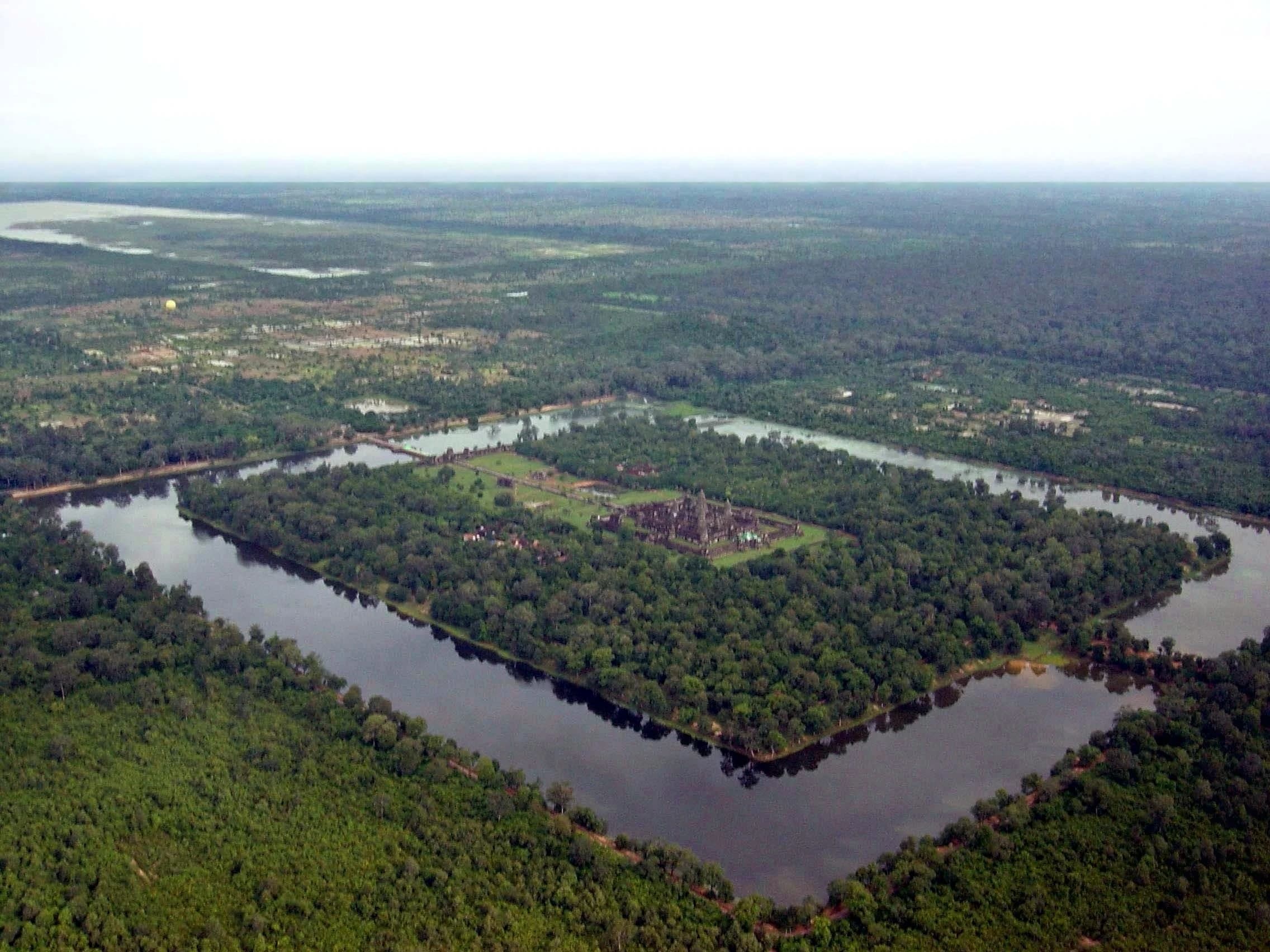 Siem Reap
Siem Reap
Cambodia
Angkor Wat is the largest religious monument on Earth by land area, and it's the only ancient structure depicted on a national flag anywhere in the world — a single temple within an archaeological park so vast that the city built around it, Siem Reap, has spent decades essentially existing to serve it.
See full guide →Comparing more than one route? See the full transport comparison guide.