Cambodia · Asia
Siem Reap
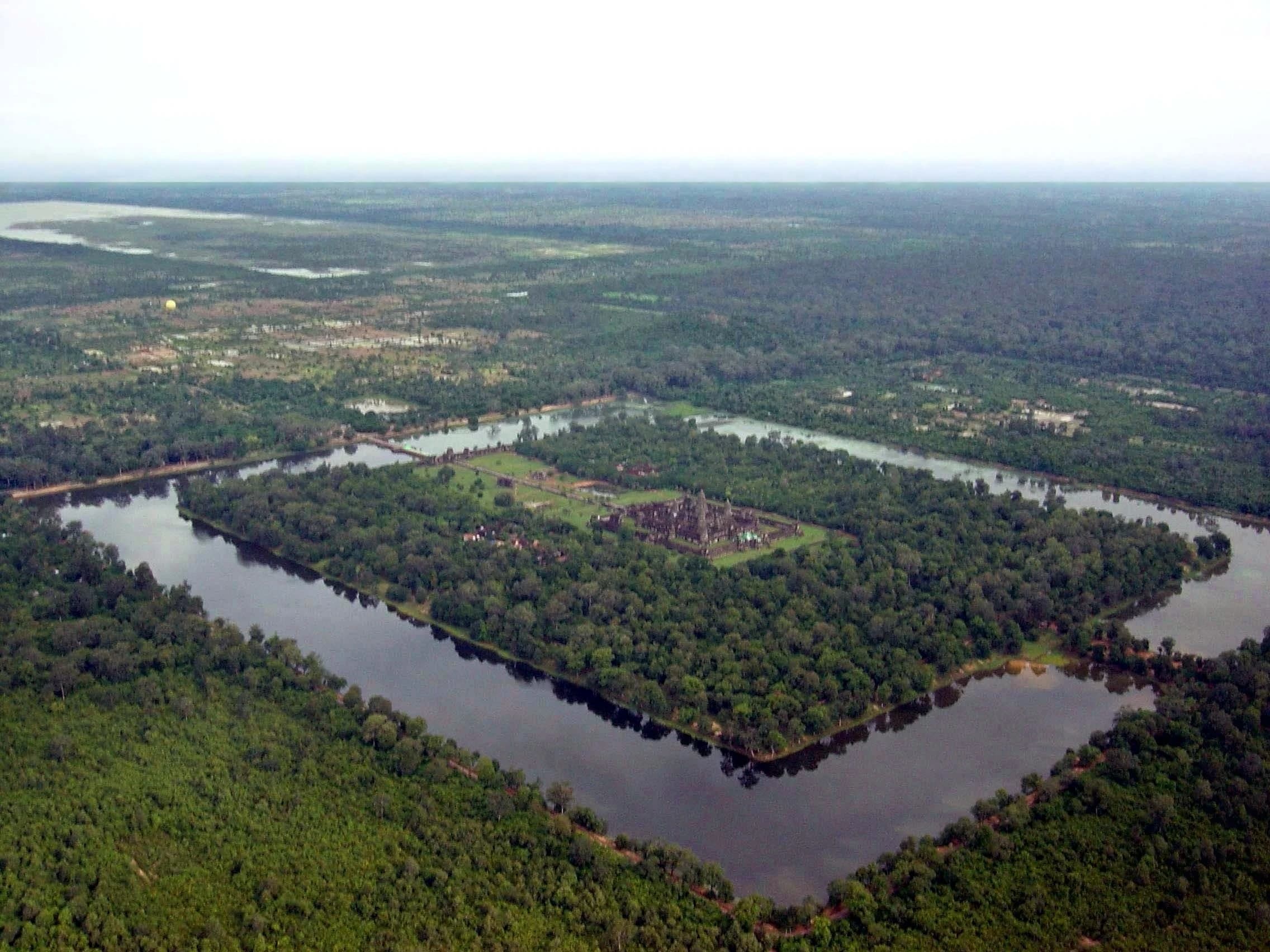
Angkor Wat is the largest religious monument on Earth by land area, and it's the only ancient structure depicted on a national flag anywhere in the world — a single temple within an archaeological park so vast that the city built around it, Siem Reap, has spent decades essentially existing to serve it.
Angkor Wat covers roughly 162.6 hectares, making it the largest religious monument in the world by land area, built in the early 12th century under King Suryavarman II as a Hindu temple dedicated to Vishnu before later becoming a Buddhist site. Cambodia is the only country in the world with a building depicted on its national flag, a distinction that reflects how central Angkor remains to national identity rather than just tourism marketing.
The temple sits inside the much larger Angkor Archaeological Park, a UNESCO World Heritage Site since 1992 that holds hundreds of temples spread across the surrounding jungle and countryside. Angkor Thom, the walled former capital, contains the Bayon temple, famous for dozens of massive stone faces carved into its towers, each looking out in a different direction with an expression that shifts depending on the light.
Ta Prohm, left deliberately less restored than other Angkor temples, has become one of the park's most photographed sites precisely because of that choice, with the roots of enormous silk-cotton and strangler fig trees grown directly through and around its stone walls over centuries. Its appearance in the 2001 film "Tomb Raider" gave it a lasting nickname among visitors, though the temple's slow reclamation by the forest was already its defining feature long before the movie existed.
Angkor is believed to have been the largest pre-industrial city in the world at its peak, sometime around the 9th to 15th centuries, with estimates suggesting close to a million residents spread across a metropolitan area built around an elaborate system of reservoirs and canals. Much of that ancient urban infrastructure remains only partially understood, still being mapped through ongoing archaeological and remote-sensing research.
Siem Reap, the modern town bordering the park, exists largely to support visitors to Angkor, and most trips settle into a rhythm of early temple mornings, when the heat and crowds are both more manageable, followed by afternoons back in town around Pub Street and the Old Market. A 3-day Angkor pass gives enough time to move beyond just Angkor Wat and the Bayon into the quieter, further-out temples that see a fraction of the visitors.
What a trip here actually costs
$30 / day avg.
- Guesthouse in Siem Reap town
- Tuk-tuk driver for temple days, shared cost
- Local Khmer restaurant meals
- 1-day Angkor pass
What to do at this tier
- • 1-day Angkor pass covering Angkor Wat and the Bayon's stone faces
- • Old Market and Pub Street in Siem Reap town, free to browse
- • Sunrise at Angkor Wat's reflecting pools, ticket required
$80 / day avg.
- 3-star hotel with pool
- 3-day Angkor pass with private tuk-tuk driver
- Guided tour of Angkor Wat, Angkor Thom, and Ta Prohm
- Apsara dance dinner show
What to do at this tier
- • 3-day Angkor pass with a private tuk-tuk driver
- • Guided tour covering Angkor Thom, Ta Prohm, and Banteay Srei
- • Apsara traditional dance dinner show
$220 / day avg.
- 5-star resort near Siem Reap town
- Private guide and air-conditioned car for temple touring
- Sunrise photography tour with a private guide
- Fine dining Khmer tasting menu
What to do at this tier
- • Private guide and air-conditioned car for a multi-day temple circuit
- • Private sunrise photography session at Angkor Wat
- • Helicopter tour over the wider Angkor Archaeological Park
These are average estimates for planning purposes, not real-time prices — actual costs vary by season, availability, and how far ahead you book.
How to get there
Click anywhere on the world map — any airport works, not just our main hubs.
Click anywhere on the map above — any airport in the world works — to see estimated travel time and cost from there.
Times and prices are planning estimates, not live fares — always check a booking site before you commit. See the full Transport Comparison guide for the general tradeoffs of each mode.
Best time to visit
November-February is cool and dry, the most comfortable season for full days of temple walking; March-May runs hot and humid.
Safety notes
Generally safe; stick to marked paths at temple sites, since some outlying areas of Cambodia still carry old landmine risk away from tourist routes.
Visa & currency
Cambodian riel (KHR), though US dollars are used interchangeably for most transactions. E-visas and visa on arrival are available for most nationalities.
Questions people ask before visiting
Is Angkor Wat worth visiting?
Yes — Angkor Wat is the largest religious monument in the world by land area, part of a wider archaeological park with hundreds of temples including Angkor Thom's stone faces and Ta Prohm's tree-swallowed ruins, and it's dense enough in scale and history to easily justify two or three full days.
How many days do you need for Angkor Archaeological Park?
A 3-day pass is the most popular option, giving enough time for Angkor Wat, Angkor Thom and the Bayon, Ta Prohm, and several of the further-out temples without rushing. A 1-day pass covers only the core highlights at a fast pace.
Is Angkor Wat sunrise worth it?
It's genuinely popular and photogenic, with the temple's towers silhouetted against the sky reflected in the front pools, though it also draws large crowds. Visiting later in the morning or in the afternoon offers a quieter, still striking alternative for anyone who'd rather skip the pre-dawn queue.
Why is Angkor Wat on Cambodia's flag?
Angkor Wat is a source of significant national pride as the centerpiece of the Khmer Empire, once one of the largest pre-industrial cities in the world, and Cambodia is the only country whose national flag features a building.
Nearby destinations
 Bangkok
Bangkok
Thailand
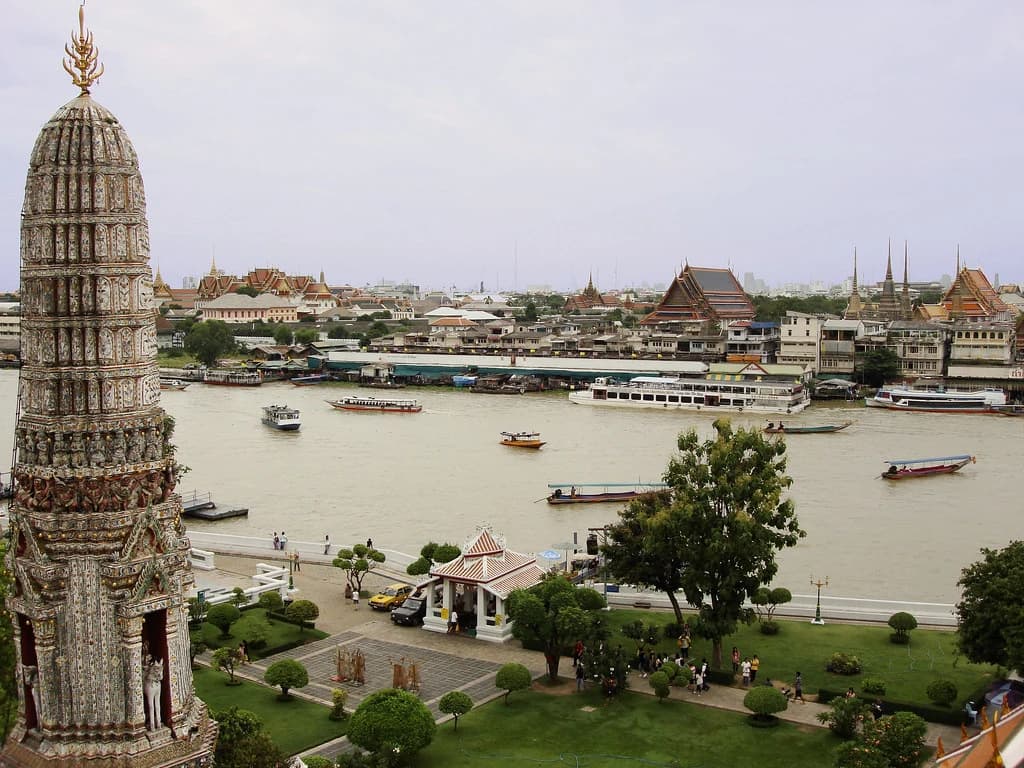
Bangkok's full ceremonial name runs 168 characters and holds the Guinness World Record for longest place name on Earth — a fitting bit of excess for a city that packs gold-spired royal temples, a river cut through by canal boats, and Michelin-recognized street food carts into the same few blocks.
See full guide →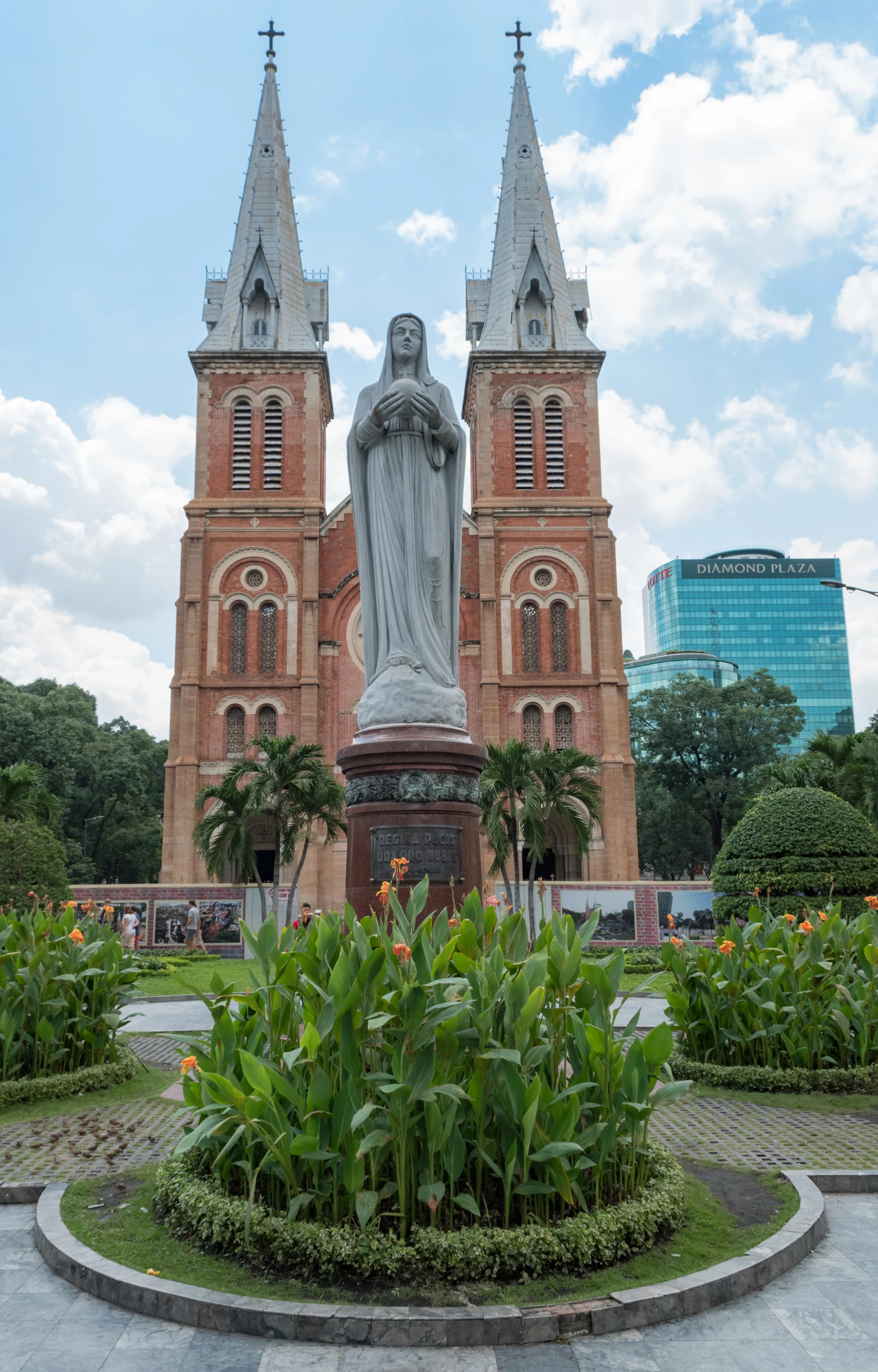 Ho Chi Minh City
Ho Chi Minh City
Vietnam
Renamed after national reunification in 1975, Ho Chi Minh City is still called Saigon by most of the people who actually live there — a city of millions of motorbikes, French colonial buildings repurposed rather than removed, and a war history told bluntly from the Vietnamese side at the War Remnants Museum.
See full guide →Comparing more than one route? See the full transport comparison guide.