Bolivia · South America
Sucre
Bolivia technically has two capitals, and Sucre, the whitewashed constitutional capital where independence was formally declared in 1825, sits a short drive from a vertical limestone quarry wall holding over 5,000 dinosaur footprints, discovered entirely by accident when a cement company blasted away rock and exposed one of the largest dinosaur track sites on Earth.
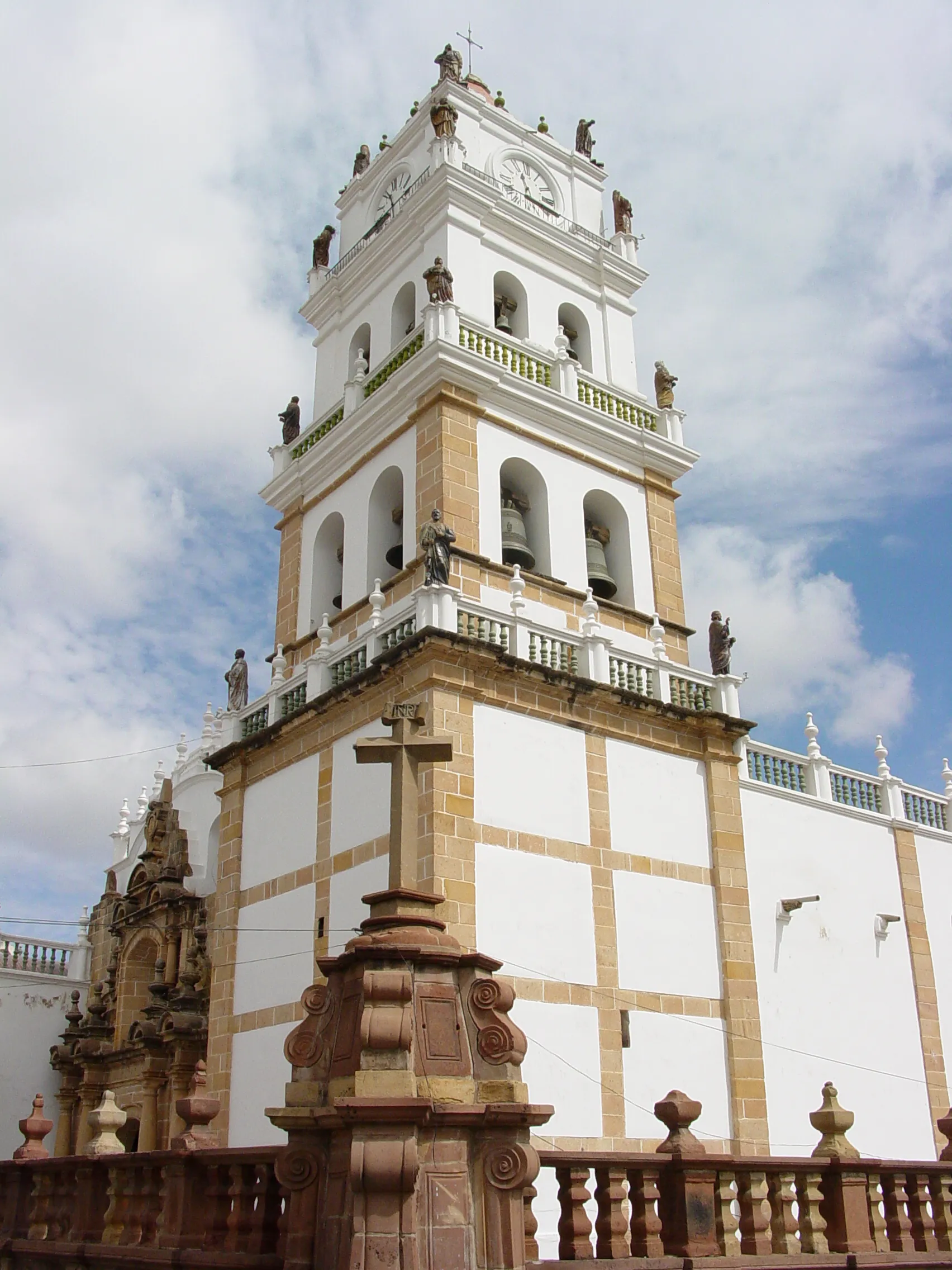
Bolivia technically maintains two capitals, a division rooted in an 1899 civil conflict that shifted most practical seats of government, the executive and legislature, to La Paz, while Sucre retained its status as the official constitutional capital and remains home to the country's judiciary. Sucre's whitewashed colonial center, protected by law to maintain its uniform white facades, earned UNESCO World Heritage status in recognition of that preserved 16th-to-19th-century architecture, giving the city a genuinely different visual identity from La Paz's dense, high-altitude sprawl.
The Casa de la Libertad, where Bolivian independence from Spanish colonial rule was formally declared in 1825, remains one of the most significant historical sites in the country, its rooms preserved much as they were at the moment of that declaration, alongside portraits and documents tracing the independence movement's key figures.
A short drive from the city center, Cal Orcko holds one of the largest collections of dinosaur footprints anywhere in the world, over 5,000 individual tracks from multiple species preserved on a nearly vertical limestone wall. The site was discovered entirely by accident in 1994, when blasting at an active cement quarry exposed the ancient lakebed surface, originally horizontal but tilted to near-vertical over millions of years by tectonic activity, revealing tracks that had remained hidden for roughly 68 million years.
Sucre's altitude, around 2,800 meters, sits noticeably lower than La Paz's roughly 3,600 meters, giving visitors a gentler adjustment to Bolivia's high-altitude Andean climate while still offering the same clear mountain light and crisp air that define much of the country's highland cities.
The Recoleta viewpoint, reached by a short climb from the city center, offers sweeping views back over Sucre's uniformly white rooftops against the surrounding hills, a vantage point that makes clear just how deliberately and consistently the city has maintained its colonial-era architectural character across the centuries since independence was declared here.
What a trip here actually costs
$25 / day avg.
- Guesthouse in the historic center
- Local bus or shared taxi transport
- Local Bolivian restaurant meals
- Casa de la Libertad, low entry fee
What to do at this tier
- • Casa de la Libertad, low entry fee
- • Historic whitewashed center walking tour, free
- • Recoleta viewpoint over the city, free
$65 / day avg.
- 3-star colonial-era hotel
- Guided Cal Orcko dinosaur park tour
- Historic center walking tour
- Sit-down restaurant dinners
What to do at this tier
- • Guided Cal Orcko dinosaur footprints tour
- • Colonial architecture and museum circuit
- • Tarabuco Sunday market day trip
These are average estimates for planning purposes, not real-time prices — actual costs vary by season, availability, and how far ahead you book.
How to get there
Click anywhere on the world map — any airport works, not just our main hubs.
Click anywhere on the map above — any airport in the world works — to see estimated travel time and cost from there.
Times and prices are planning estimates, not live fares — always check a booking site before you commit. See the full Transport Comparison guide for the general tradeoffs of each mode.
Best time to visit
May-October, the dry season, brings mild, comfortable temperatures well suited to walking the historic center.
Safety notes
Generally safe with standard city precautions; Sucre's altitude, around 2,800 meters, is more moderate than La Paz but can still cause mild adjustment effects for some visitors.
Visa & currency
Bolivian boliviano (BOB). Requirements vary by nationality, with some needing a visa arranged in advance, so confirm before booking.
Questions people ask before visiting
Is Sucre worth visiting?
Yes — Sucre, Bolivia's constitutional capital and a UNESCO World Heritage Site, holds well-preserved whitewashed colonial architecture, the Casa de la Libertad where Bolivian independence was declared, and Cal Orcko, a nearby limestone wall with one of the largest collections of dinosaur footprints in the world.
Why does Bolivia have two capitals?
Sucre is Bolivia's official constitutional capital and seat of the judiciary, while La Paz serves as the seat of the executive and legislative government, an arrangement dating back to a 1899 civil conflict that shifted most practical governing functions to La Paz while Sucre retained its formal constitutional status.
What is Cal Orcko?
A vertical limestone wall at a cement quarry near Sucre, discovered in 1994, holding over 5,000 dinosaur footprints from multiple species, exposed when quarry blasting removed the overlying rock. It's considered one of the largest and most significant dinosaur track sites in the world.
How many days do you need in Sucre?
Two to three days covers the historic center, Casa de la Libertad, and a half-day trip to Cal Orcko, a comfortable pace for a city built around walkable colonial architecture.
Nearby destinations
 La Paz
La Paz
Bolivia
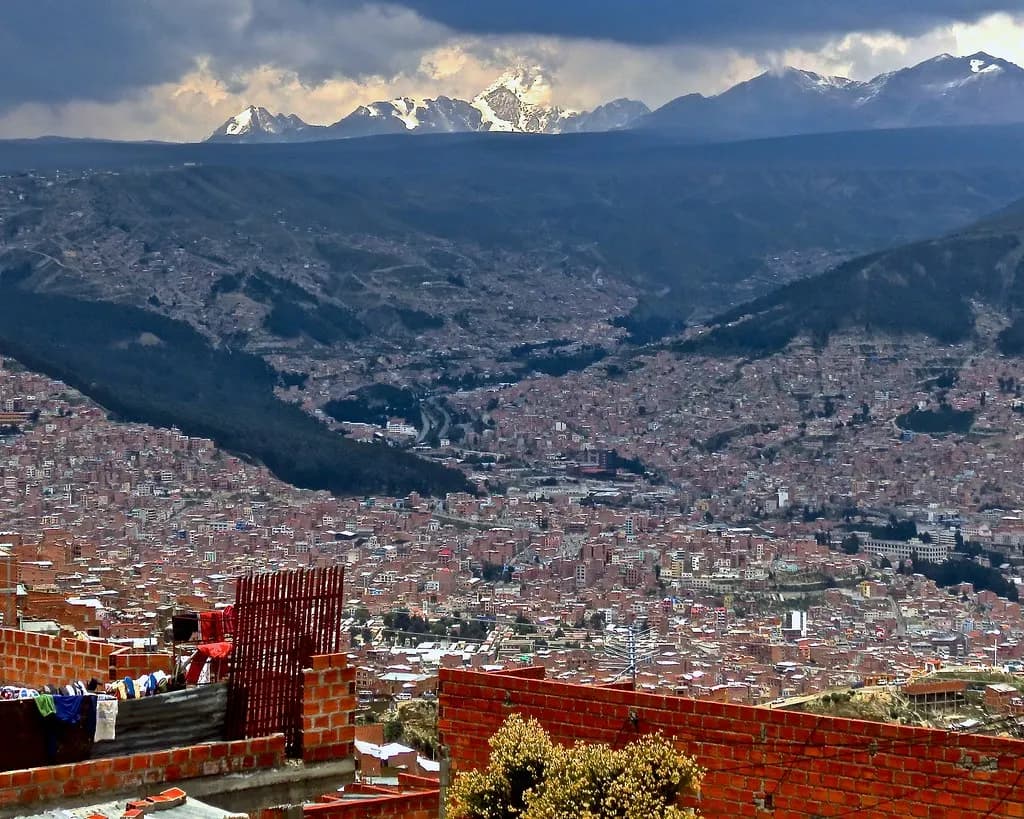
La Paz sits so high — over 3,600 meters at its lowest point — that the city built the largest urban cable car network on Earth just to move people up and down the canyon it's built into, since regular buses and roads couldn't handle the terrain.
See full guide →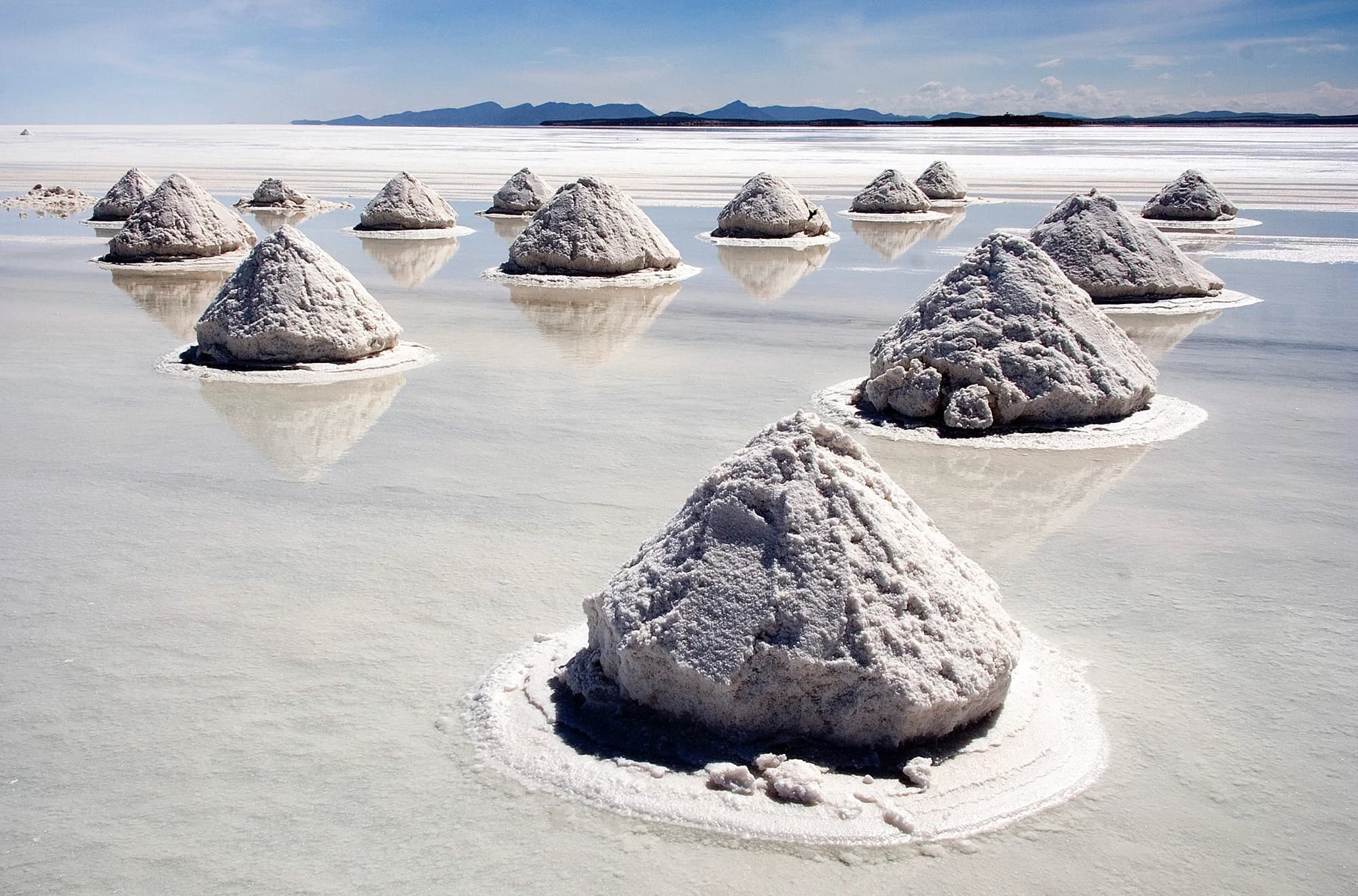 Salar de Uyuni
Salar de Uyuni
Bolivia
During the wet season, a thin sheet of water settles over the Salar de Uyuni's 10,000 square kilometers of salt crust and turns the entire flat into the world's largest natural mirror — a reflection so seamless that photos of visitors here regularly look like they're standing in mid-sky.
See full guide →Comparing more than one route? See the full transport comparison guide.