Chile · South America
Santiago
You can ski the Andes and be back in downtown Santiago for dinner the same day — a handful of major resorts sit less than two hours from a capital city of over 6 million people, a combination almost no other capital in the world can genuinely offer.
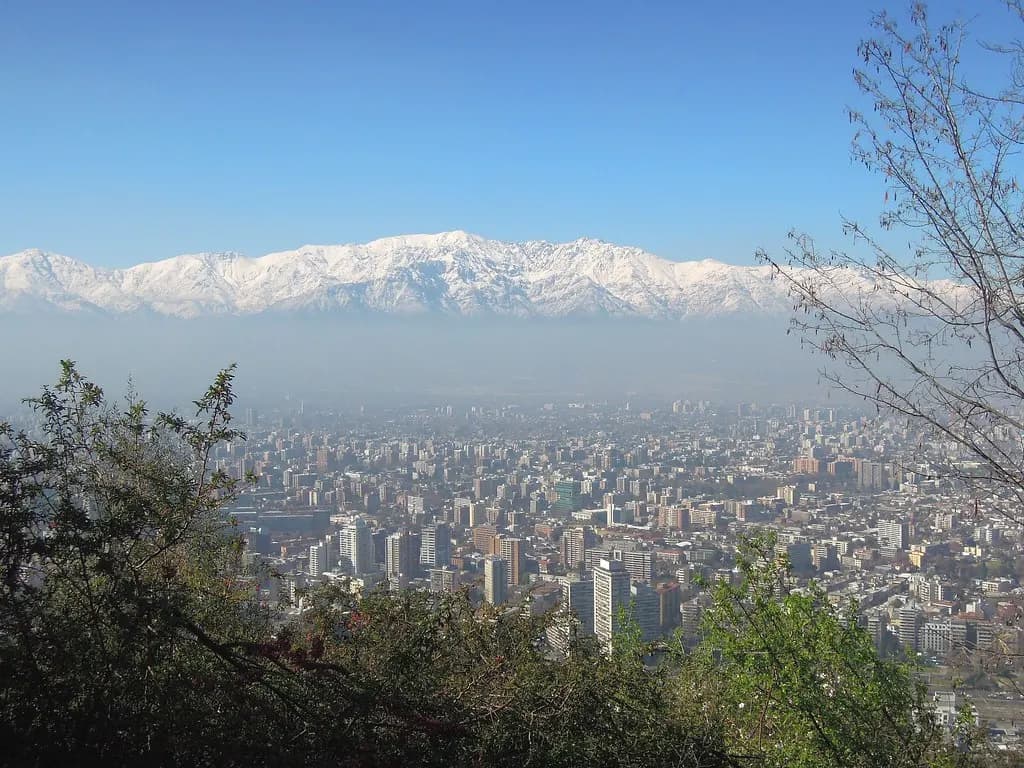
Santiago's setting is defined by the Andes, visible along the entire eastern edge of the city on clear days and close enough to make genuine mountain access a realistic day trip rather than a multi-day expedition. Ski resorts including Valle Nevado, La Parva, and El Colorado sit roughly 1.5 to 2 hours from downtown, a combination of major-capital-city amenities and immediate Alpine access that few other capitals in the world can match.
The historic center, anchored by Plaza de Armas and the Metropolitan Cathedral, reflects Santiago's founding in 1541 and its long role as the seat of Spanish colonial and later Chilean national government, while Cerro Santa Lucía, a small forested hill rising directly from the city center, gives an accessible green space and viewpoint without leaving downtown.
Bellavista, Santiago's bohemian arts neighborhood at the base of Cerro San Cristóbal, holds a concentration of restaurants, bars, and galleries, and includes La Chascona, one of poet and Nobel laureate Pablo Neruda's three Chilean homes, now preserved as a museum reflecting his distinctive, collector's-eye aesthetic.
Cerro San Cristóbal itself, reached by a funicular that's operated since 1925, rises above Bellavista and gives Santiago's most complete panoramic view — the dense urban grid below, the Andes rising sharply to the east, a geography that makes clear why the city's mountain access feels so immediate rather than remote.
Chile's wine industry, among the most significant in the Southern Hemisphere, is genuinely close to Santiago: the Casablanca Valley, known for cool-climate whites, sits about an hour toward the coast, while the Maipo Valley, home to some of Chile's most prestigious Cabernet Sauvignon producers, sits even closer — both make realistic half-day or full-day trips directly from the capital.
What a trip here actually costs
$35 / day avg.
- Hostel near Bellavista or the center
- Metro day pass
- Casual Chilean lunches
- Free wander through the historic center and Cerro Santa Lucía
What to do at this tier
- • Historic center and Plaza de Armas wander, free
- • Cerro Santa Lucía, a small hilltop park in the city center with a free-to-climb viewpoint
- • Bellavista neighborhood, Santiago's bohemian arts district, free to walk
$85 / day avg.
- 3-star hotel near Providencia or Bellavista
- Cerro San Cristóbal funicular ticket
- Sit-down Chilean dinners
- Casablanca Valley wine tour
What to do at this tier
- • Cerro San Cristóbal funicular for a panoramic Andes and city view
- • La Chascona, poet Pablo Neruda's Santiago home, now a museum
- • Casablanca Valley wine tour, Chile's cool-climate wine region roughly an hour away
$200 / day avg.
- 4-5 star hotel near Las Condes or the center
- Private guided city and Andes day trip
- Multi-course Chilean tasting menu with wine pairing
- Ski day at Valle Nevado with equipment rental
What to do at this tier
- • Private guided day trip into the Andes, hiking in summer or skiing in winter
- • Multi-course Chilean tasting menu paired with regional wines
- • Private Maipo Valley wine tour with a focus on Chile's flagship Cabernet Sauvignon producers
These are average estimates for planning purposes, not real-time prices — actual costs vary by season, availability, and how far ahead you book.
How to get there
Click anywhere on the world map — any airport works, not just our main hubs.
Click anywhere on the map above — any airport in the world works — to see estimated travel time and cost from there.
Times and prices are planning estimates, not live fares — always check a booking site before you commit. See the full Transport Comparison guide for the general tradeoffs of each mode.
Best time to visit
September-November and March-May bring mild, comfortable weather; June-August is ski season in the nearby Andes resorts.
Safety notes
Generally safe in the main tourist neighborhoods with standard urban caution.
Visa & currency
Chilean peso (CLP). Visa requirements vary by nationality; many Western passport holders can enter visa-free for short stays, worth confirming before booking.
Questions people ask before visiting
Is Santiago worth visiting?
Yes — it's a modern, well-run capital with a dramatic Andes backdrop visible from much of the city on clear days, genuinely close ski access in winter, and a strong wine region within day-trip distance, making it a practical base for a wider Chile itinerary.
How close are the ski resorts to Santiago?
Very close by international standards — resorts like Valle Nevado, La Parva, and El Colorado sit roughly 1.5-2 hours from downtown Santiago, making a day trip or short overnight ski stay genuinely realistic without a dedicated multi-day mountain base.
Santiago or Buenos Aires — which should I visit?
Buenos Aires has more historic European-style architecture and a stronger tango and nightlife identity. Santiago is more modern, orderly, and has the unmatched advantage of genuine mountain access and nearby wine country within the same trip. Many longer South America itineraries include both.
Is Santiago safe?
Generally safe in the main tourist neighborhoods (Providencia, Las Condes, Bellavista) with standard urban caution — Santiago is considered one of the safer major capitals in South America, though normal awareness around valuables in crowded areas is still sensible.
How many days do you need in Santiago?
Two days covers the historic center, Bellavista neighborhood, and Cerro San Cristóbal's viewpoint. A third day allows a day trip into the Andes for skiing or hiking, or a Casablanca or Maipo Valley wine tour.
Nearby destinations
 Valparaíso
Valparaíso
Chile
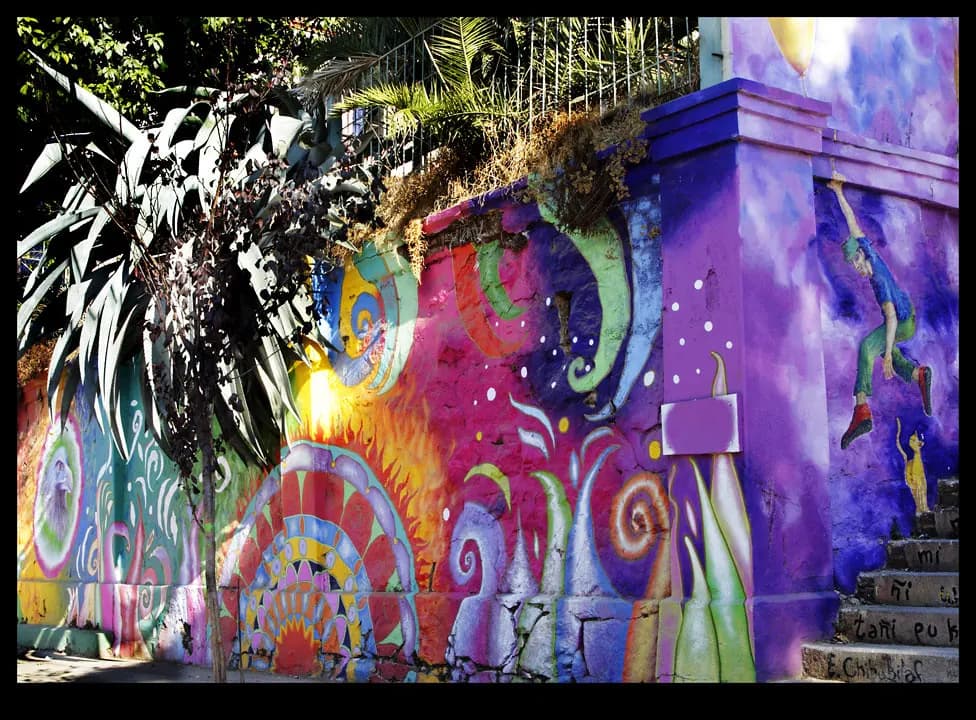
Valparaíso's steep hills got so impossible to climb on foot that the city built over a dozen antique funicular elevators starting in the 1880s — several are still running today, more than any other city in the world, hauling residents past walls covered in some of the best street art in South America.
See full guide →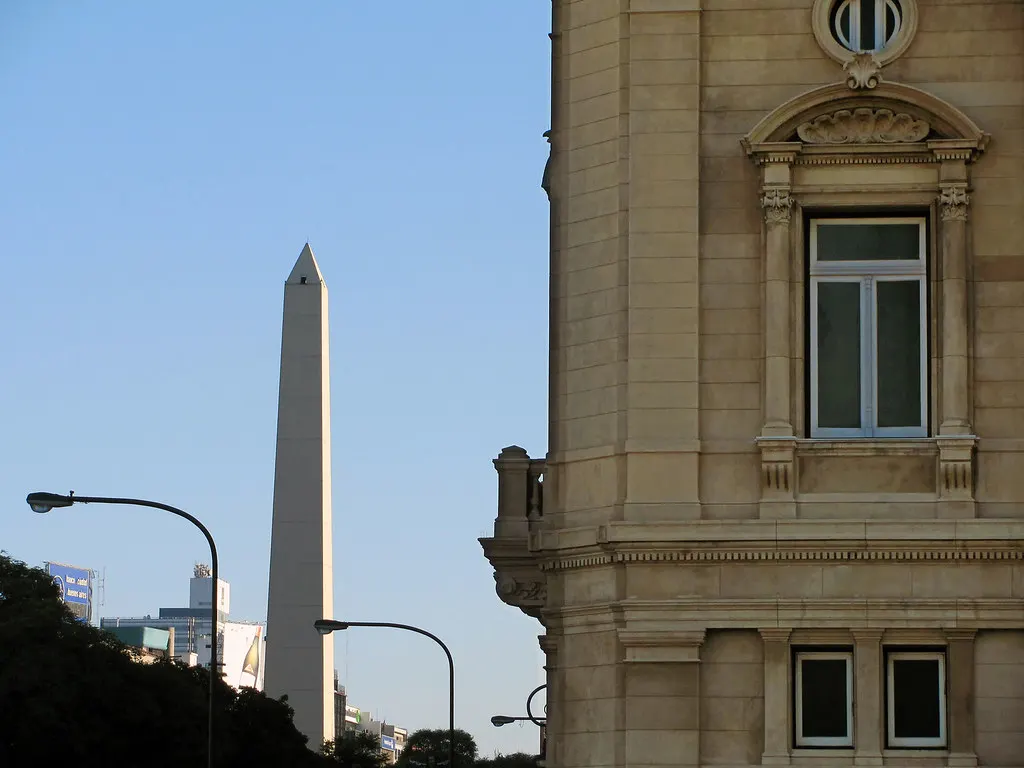 Buenos Aires
Buenos Aires
Argentina
Argentines eat more beef per person than almost any nation on Earth, dance a tango that started in the city's brothels and dockside bars in the 1880s, and built a capital so deliberately modeled on Paris that locals still call it "the Paris of South America."
See full guide →Comparing more than one route? See the full transport comparison guide.