Chile · South America
San Pedro de Atacama
Some weather stations in the Atacama Desert around San Pedro have never recorded a single drop of rain since records began, making it the driest non-polar desert on Earth — and that same relentlessly clear, dry air is exactly why the world's most powerful array of radio telescopes was built on a plateau nearby.
The Atacama Desert surrounding San Pedro holds a genuinely extreme distinction: some weather stations here have never recorded measurable rainfall since records began, making it the driest non-polar desert on Earth. A combination of the cold offshore Humboldt Current, the Andes blocking moisture from the Amazon basin, and a persistent high-pressure system overhead conspire to keep rain-bearing weather systems away almost entirely.
That same dryness, paired with high altitude and minimal light pollution, has made the region one of the best places on the planet for astronomy. ALMA, the Atacama Large Millimeter Array, sits on the Chajnantor plateau near San Pedro at over 5,000 meters elevation, its dozens of radio telescope dishes forming one of the most powerful astronomical instruments ever built, taking advantage of exactly the atmospheric clarity the desert's dryness produces.
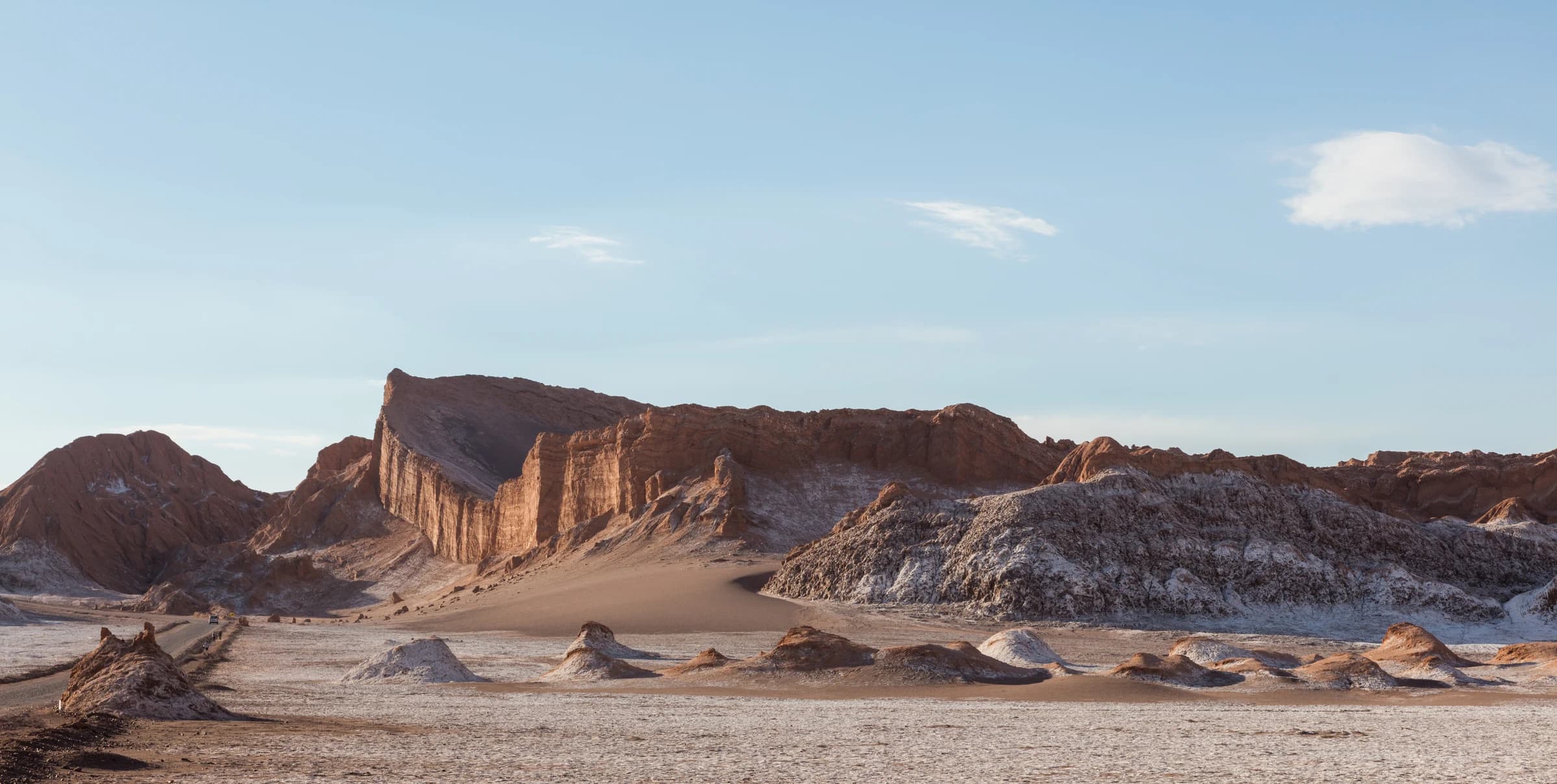
Valle de la Luna, a short drive from town, earns its name honestly — wind-eroded rock formations, salt crusts, and dune fields create a landscape that genuinely resembles lunar terrain, especially at sunset, when shifting light draws out deep reds and golds across the rock.
El Tatio, one of the highest-altitude geyser fields in the world at over 4,200 meters, is typically visited at sunrise, when the cold desert air makes the geysers' steam columns rise dramatically against the volcanic backdrop — a timing that also means a genuinely early, cold start for visitors.
San Pedro's small, low adobe-building town center feels almost incidental compared to the landscapes surrounding it, having grown from a small agricultural settlement into a tourism hub built specifically around access to the desert, salt flats, and colored high-altitude lagoons that draw visitors from around the world.
What a trip here actually costs
$45 / day avg.
- Hostel or budget guesthouse in town
- Casual meals at local restaurants
- Self-guided Valle de la Luna entry
- Local bus or shared shuttle tours
What to do at this tier
- • Valle de la Luna at sunset, self-guided or with a budget shared tour
- • San Pedro's small adobe town center, free to walk
- • Laguna Cejar and nearby salt lagoons, some with a modest entry fee
$110 / day avg.
- 3-star hotel in San Pedro
- Guided El Tatio geysers sunrise tour
- Sit-down dinners
- Stargazing tour with a professional telescope
What to do at this tier
- • El Tatio geysers sunrise tour
- • Stargazing tour with a professional telescope, given the region's exceptional dark skies
- • Piedras Rojas or the Atacama salt flat's flamingo-filled lagoons
$300 / day avg.
- Desert lodge with private terrace
- Private multi-day tour covering geysers, salt flats, and lagoons
- Fine dining reservations
- Private astronomy session with an expert guide
What to do at this tier
- • Private multi-day tour combining geysers, salt flats, and colored lagoons
- • Private astronomy session with an expert astronomer guide
- • Desert lodge stay with a private terrace for independent stargazing
These are average estimates for planning purposes, not real-time prices — actual costs vary by season, availability, and how far ahead you book.
How to get there
Click anywhere on the world map — any airport works, not just our main hubs.
Click anywhere on the map above — any airport in the world works — to see estimated travel time and cost from there.
Times and prices are planning estimates, not live fares — always check a booking site before you commit. See the full Transport Comparison guide for the general tradeoffs of each mode.
Best time to visit
The Atacama has good weather nearly year-round given how little it rains at all; May through August brings the clearest, most stable night skies for stargazing, though nighttime desert temperatures drop sharply regardless of season.
Safety notes
Very safe with low crime; the desert environment itself is the main practical concern, given intense daytime sun, cold nights, and high altitude at some excursion sites like El Tatio, so proper layering and hydration matter.
Visa & currency
Chilean peso (CLP). Most Western passport holders can enter Chile visa-free for tourist stays — worth confirming current requirements before booking.
Questions people ask before visiting
Why is the Atacama Desert so dry?
A combination of factors traps moisture away from the region — the cold Humboldt Current offshore limits evaporation, the Andes block moisture from the Amazon basin to the east, and a persistent high-pressure system overhead prevents rain-bearing systems from forming. Some parts have gone decades without measurable rainfall.
Why is the Atacama a major astronomy hub?
The combination of extremely low humidity, high altitude, minimal light pollution, and consistently clear skies makes it one of the best astronomical observing locations on Earth. ALMA, the Atacama Large Millimeter Array, one of the world's most powerful radio telescope networks, sits on a plateau near San Pedro at over 5,000 meters elevation.
What is Valle de la Luna?
Moon Valley, a dramatic landscape of wind-eroded rock formations, salt crusts, and dunes just outside San Pedro, named for its resemblance to a lunar surface. Sunset visits are especially popular, when the shifting light brings out the terrain's reds and golds.
What are the El Tatio geysers?
One of the highest-altitude geyser fields in the world, at over 4,200 meters, most active and visually dramatic at sunrise when the cold air makes the steam columns particularly striking against the surrounding volcanic landscape.
Nearby destinations
 Santiago
Santiago
Chile
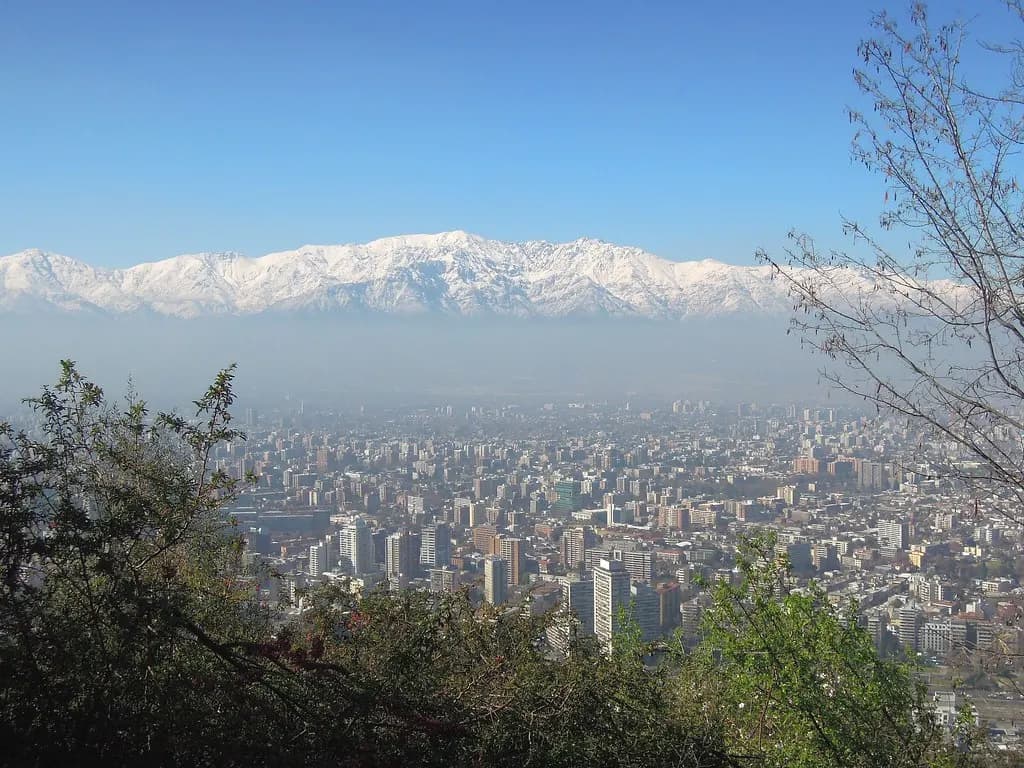
You can ski the Andes and be back in downtown Santiago for dinner the same day — a handful of major resorts sit less than two hours from a capital city of over 6 million people, a combination almost no other capital in the world can genuinely offer.
See full guide →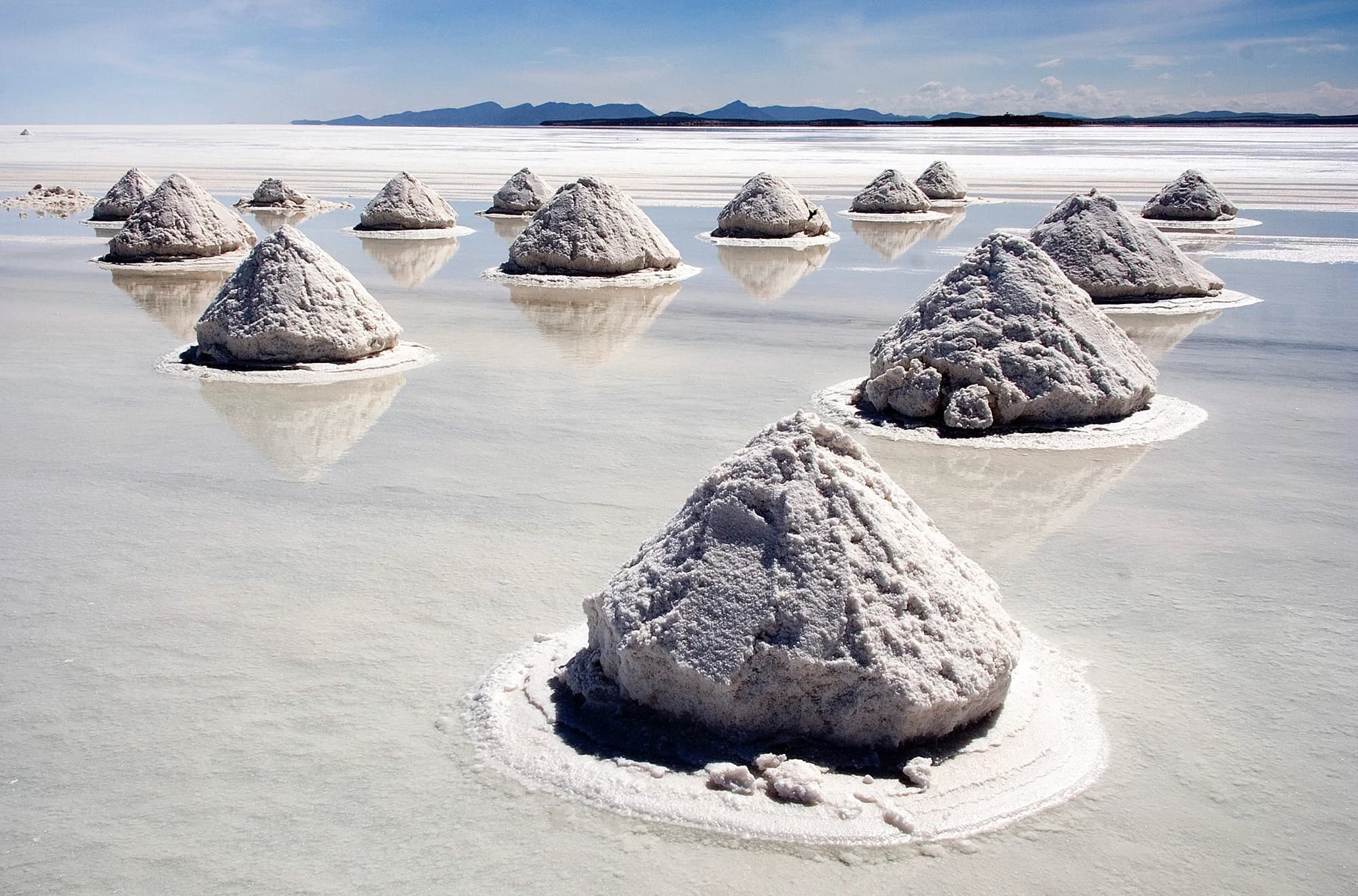 Salar de Uyuni
Salar de Uyuni
Bolivia
During the wet season, a thin sheet of water settles over the Salar de Uyuni's 10,000 square kilometers of salt crust and turns the entire flat into the world's largest natural mirror — a reflection so seamless that photos of visitors here regularly look like they're standing in mid-sky.
See full guide →Comparing more than one route? See the full transport comparison guide.