Colombia · South America
San Andrés
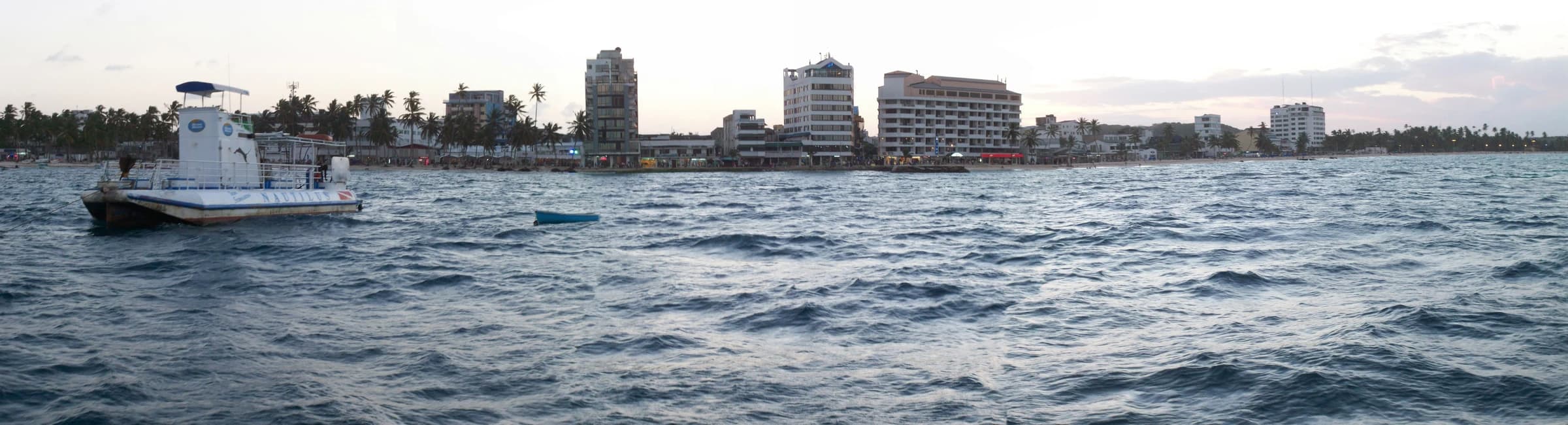
San Andrés sits about 775 kilometers from mainland Colombia but only around 190 kilometers off the coast of Nicaragua, and the island's Raizal population speaks its own English-based Creole rather than Spanish, a legacy of British settlers who arrived generations before the island became Colombian.
San Andrés sits closer to Nicaragua than to the rest of Colombia by a wide margin, about 190 kilometers off the Nicaraguan coast versus roughly 775 kilometers from mainland Colombia. That geography made the island's sovereignty a genuine point of dispute for decades, one the International Court of Justice addressed in a 2012 ruling that kept San Andrés and its surrounding islands under Colombian control while shifting some of the surrounding maritime waters toward Nicaragua, with a further ruling on fishing rights following in 2022.
The island's culture reflects a history separate from mainland Colombia in more than just geography. British settlers arrived in the 1600s, followed by enslaved Africans brought to work plantations under both British and later Spanish control, and the resulting Raizal community developed its own English-based Creole language, San Andrés-Providencia Creole, still spoken alongside Spanish and standard English today. Many Raizal families are Protestant, another contrast with the Catholic majority on the Colombian mainland.
The water surrounding San Andrés has earned the nickname Mar de los Siete Colores, the Sea of Seven Colors, for the visible gradient running from pale turquoise near the shore to deep blue further out, a result of the shallow reef shelf surrounding the island. Johnny Cay, a small sandy islet a short boat ride from San Andrés town, and the Aquario reef nearby are the two most common stops for a half-day out on the water.
San Andrés has operated as a free port since 1953, when Colombia designated it duty-free to boost the local economy, and the town center still carries that legacy through a dense strip of electronics and goods shops that draws mainland Colombian shoppers alongside beach tourists.
The surrounding waters form part of the Seaflower Biosphere Reserve, a UNESCO-designated marine protected area covering one of the largest coral reef systems in the Caribbean, and divers who venture beyond the shallow Aquario reef find a considerably larger barrier reef system with visibility that regularly exceeds 30 meters.
What a trip here actually costs
$45 / day avg.
- Guesthouse near San Andrés town
- Local transport by golf cart or moto-taxi
- Casual Raizal seafood meals
- Public beach access, free
What to do at this tier
- • Public beaches along San Andrés town, free
- • Duty-free shopping strip in the town center, a legacy of the island's free-port status since 1953
- • Sunset at the seaside walking promenade, free
$100 / day avg.
- 3-star beachfront hotel
- Boat trip to Johnny Cay and the Aquario reef
- Sit-down seafood dinners
- Rental scooter for the day
What to do at this tier
- • Boat trip to Johnny Cay, a small sandy islet just offshore popular for a half-day beach stop
- • Snorkeling at the Aquario reef, shallow and calm enough for beginners
- • Rental scooter loop around the island, roughly 30 kilometers of coastal road
$240 / day avg.
- 4-5 star beachfront resort
- Private boat charter around the reef
- Multi-course dinners featuring Raizal and Caribbean-Colombian cuisine
- Short flight or boat extension to Providencia
What to do at this tier
- • Private boat charter covering Johnny Cay, the Aquario reef, and quieter coves
- • Diving trip to the wider barrier reef surrounding the island, part of a UNESCO biosphere reserve
- • Short flight or ferry extension to Providencia for a quieter, less-developed island stop
These are average estimates for planning purposes, not real-time prices — actual costs vary by season, availability, and how far ahead you book.
How to get there
Click anywhere on the world map — any airport works, not just our main hubs.
Click anywhere on the map above — any airport in the world works — to see estimated travel time and cost from there.
Times and prices are planning estimates, not live fares — always check a booking site before you commit. See the full Transport Comparison guide for the general tradeoffs of each mode.
Best time to visit
January-April brings the driest weather; hurricane risk exists but is lower than the northern Caribbean given the island's southern position.
Safety notes
Generally safe for tourists in the main town and beach areas with standard precautions; the island sees far less crime than several mainland Colombian cities.
Visa & currency
Colombian peso (COP). Visa requirements vary by nationality; many Western passport holders can enter visa-free for short stays, worth confirming before booking.
Questions people ask before visiting
Is San Andrés worth visiting?
Yes — the island has some of Colombia's clearest water, nicknamed the Sea of Seven Colors for its gradient of turquoise and blue tones, plus a distinct Raizal culture and English-Creole heritage that feels genuinely different from mainland Colombia.
Why does San Andrés belong to Colombia if it's closer to Nicaragua?
The island has been under Colombian control since the colonial era, but Nicaragua disputed the maritime boundary for decades. The International Court of Justice ruled in 2012 that San Andrés and its surrounding islands remain Colombian while adjusting some maritime waters toward Nicaragua, and further rulings on fishing rights followed in 2022.
What language do people speak on San Andrés?
Spanish is the official language, but the island's Raizal community, descended from British settlers and enslaved Africans brought under British and later Spanish rule, speaks San Andrés-Providencia Creole, an English-based Creole language, alongside standard English and Spanish.
How many days do you need in San Andrés?
Three to four days covers the main island's beaches, a boat trip to Johnny Cay, and snorkeling at the surrounding reef. Some visitors extend the trip with a boat or short flight to Providencia, a quieter, less-developed sister island nearby.
Nearby destinations
 Cartagena
Cartagena
Colombia
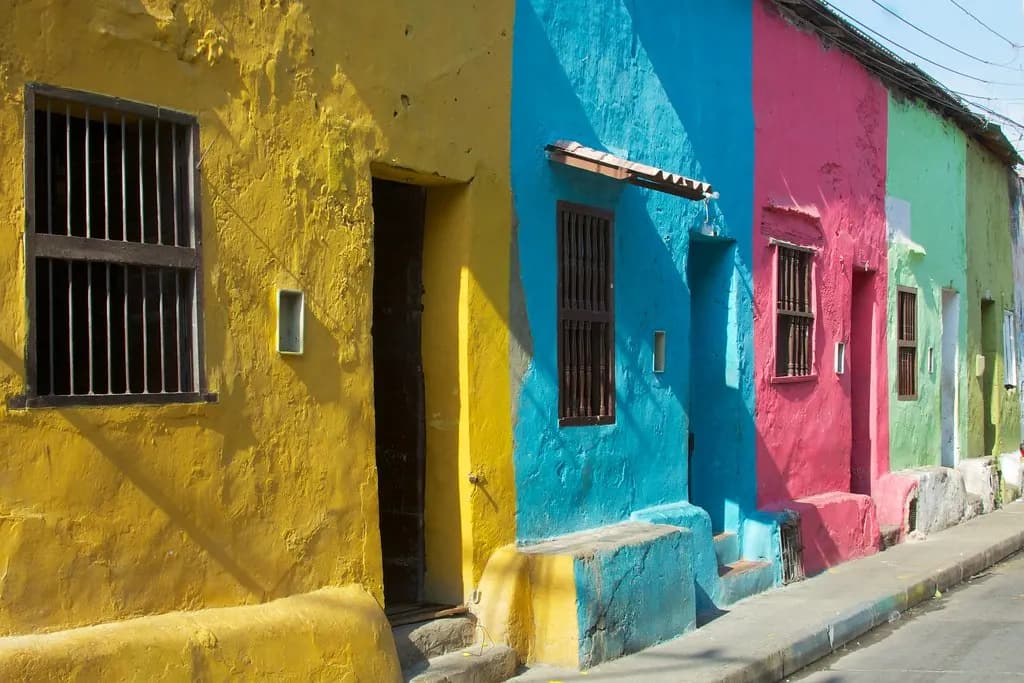
Spain spent over 200 years building walls around Cartagena to keep pirates and English privateers out, including Francis Drake himself — the fortifications worked well enough that they're still almost entirely intact, wrapping a genuinely lived-in colonial city rather than a museum piece.
See full guide →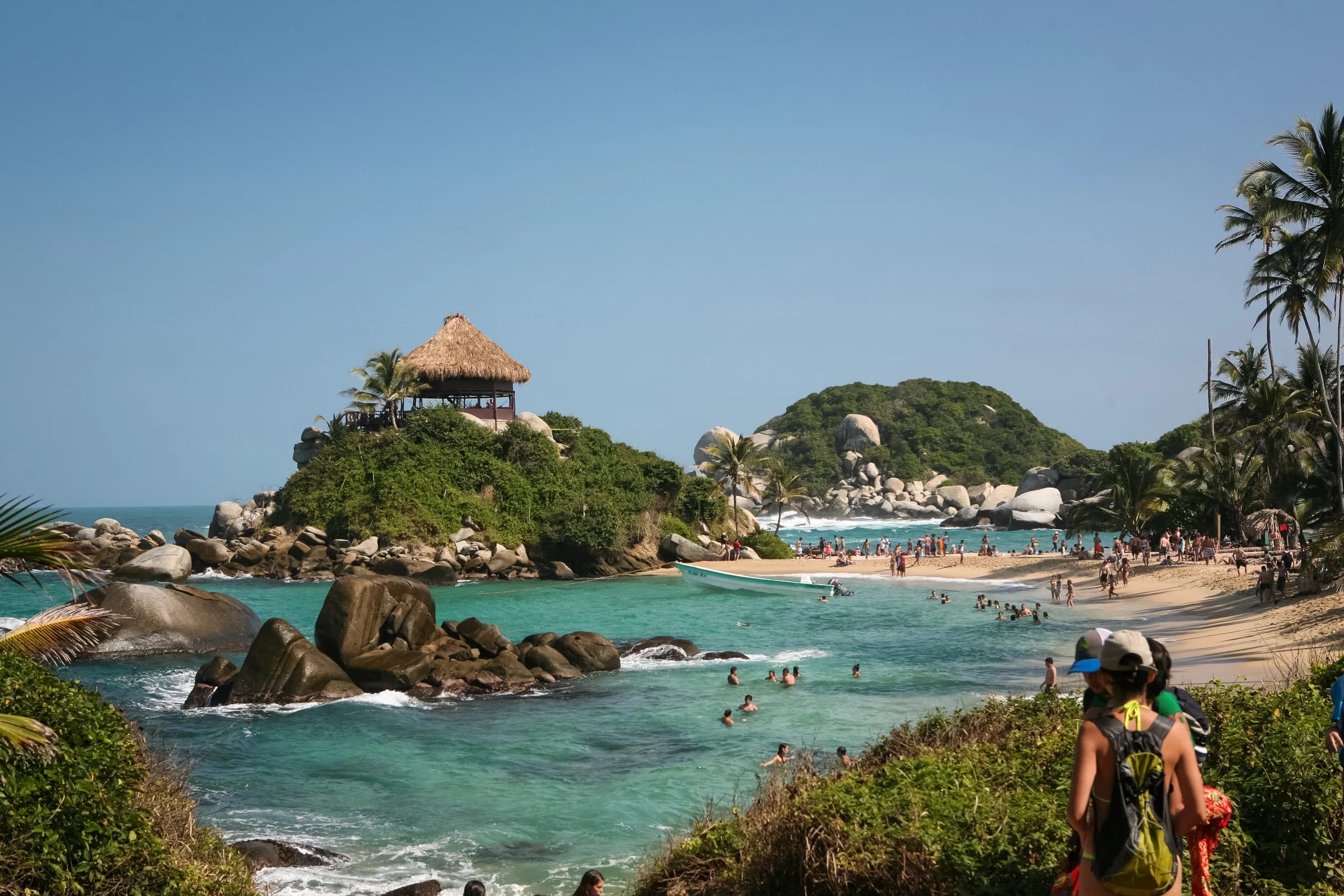 Santa Marta
Santa Marta
Colombia
Snow-capped peaks are visible from Santa Marta's Caribbean beaches on a clear day — the nearby Sierra Nevada de Santa Marta is the highest coastal mountain range on Earth, rising from sea level to over 5,700 meters in less distance than almost anywhere else on the planet.
See full guide →Comparing more than one route? See the full transport comparison guide.