Colombia · South America
Cartagena
Spain spent over 200 years building walls around Cartagena to keep pirates and English privateers out, including Francis Drake himself — the fortifications worked well enough that they're still almost entirely intact, wrapping a genuinely lived-in colonial city rather than a museum piece.
Cartagena's walls, built and expanded by Spain over more than two centuries starting in the 1500s, remain among the most complete surviving colonial fortifications in the Americas — a defensive response to the city's role as a major gold and silver shipping port, which made it an irresistible target. Sir Francis Drake sacked the city in 1586, and a major British siege in 1741 failed against the reinforced walls, driving Spain to keep expanding the fortification system for decades afterward.
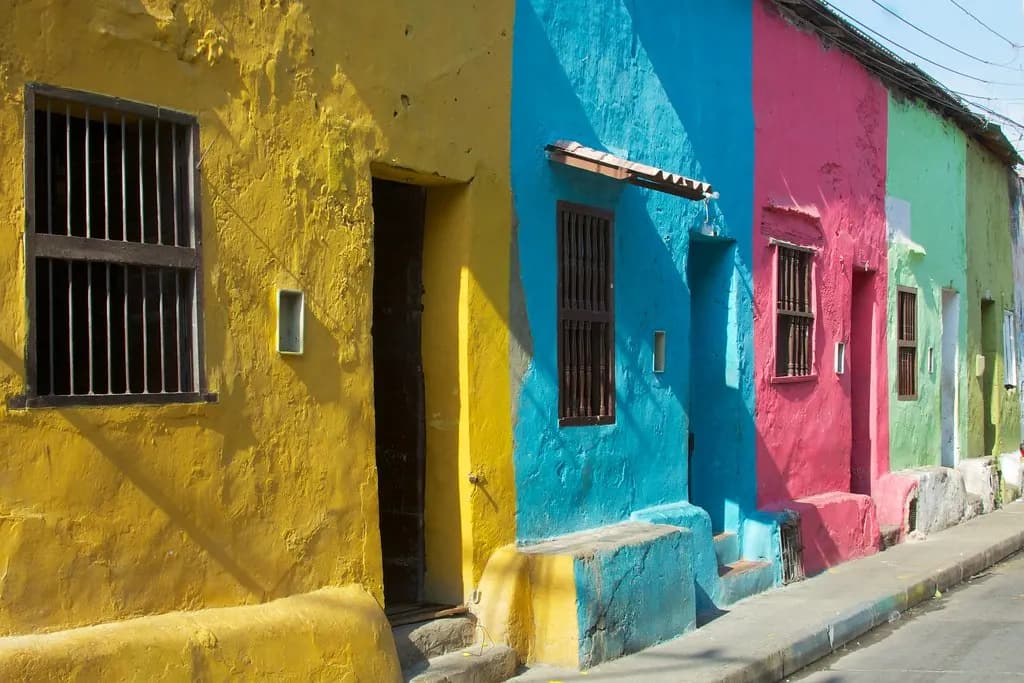
Unlike many walled historic centers preserved primarily as tourist sites, Cartagena's Old City remains genuinely lived in — residents occupy the same colorful, balconied colonial buildings that draw visitors, and the streets function as a real neighborhood with shops, churches, and plazas serving daily life alongside the tourism economy, a distinction that gives the city a lived-in texture some more museum-like colonial centers lack.
Castillo San Felipe de Barajas, on a hill just outside the walled city, ranks among the largest fortifications Spain ever built in its American colonies — a maze of tunnels, ramps, and defensive positions designed specifically to repel the kind of assaults that had repeatedly targeted the city, and it never fell to a direct attack despite numerous attempts.
Getsemaní, a neighborhood just outside the main walled Old City, has developed a genuinely different, livelier character — dense with street art, a younger crowd, and a nightlife scene that contrasts with the more polished, upscale walled center, giving Cartagena two distinct atmospheres within a short walk of each other.
The Rosario Islands, an archipelago roughly an hour offshore by boat, give Cartagena genuine Caribbean beach and snorkeling access beyond the historic city itself — a popular day-trip or overnight escape that rounds out a Cartagena visit with the beach component the walled city alone doesn't offer.
What a trip here actually costs
$40 / day avg.
- Hostel in Getsemaní
- Local bus and taxi fares
- Street food and casual Caribbean-Colombian lunches
- Free wander through the Old City walls
What to do at this tier
- • Walk the Old City walls and streets, colorful balconied colonial buildings, free
- • Getsemaní neighborhood, dense with street art and a livelier, less polished energy, free
- • Plaza de los Coches and the clock tower gate, free
$100 / day avg.
- 3-star hotel in the walled Old City
- San Felipe fortress entry
- Sit-down Caribbean-Colombian dinners
- Rosario Islands boat day trip
What to do at this tier
- • Castillo San Felipe de Barajas, one of the largest Spanish fortifications built in the Americas
- • Palace of the Inquisition, covering Cartagena's colonial and religious history
- • Rosario Islands boat day trip, white-sand beaches and snorkeling about an hour offshore
$240 / day avg.
- 4-5 star hotel inside the walled city
- Private guided colonial and fortification history tour
- Multi-course tasting menu at a well-regarded restaurant
- Private boat charter to the Rosario Islands
What to do at this tier
- • Private guided tour covering the walls, forts, and Cartagena's role as a colonial gold-shipping port
- • Private boat charter to the Rosario Islands, avoiding the larger group-tour boats
- • Multi-course tasting menu at a well-regarded Cartagena restaurant
These are average estimates for planning purposes, not real-time prices — actual costs vary by season, availability, and how far ahead you book.
How to get there
Click anywhere on the world map — any airport works, not just our main hubs.
Click anywhere on the map above — any airport in the world works — to see estimated travel time and cost from there.
Times and prices are planning estimates, not live fares — always check a booking site before you commit. See the full Transport Comparison guide for the general tradeoffs of each mode.
Best time to visit
December-April brings the driest weather; the rest of the year is warmer and wetter but still generally visitable given Cartagena's tropical, warm year-round climate.
Safety notes
Generally very safe within the main tourist zones with standard urban caution.
Visa & currency
Colombian peso (COP). Visa requirements vary by nationality; many Western passport holders can enter visa-free for short stays, worth confirming before booking.
Questions people ask before visiting
Is Cartagena worth visiting?
Yes — the walled Old City is one of the best-preserved Spanish colonial city centers in the Americas, UNESCO-listed and still genuinely lived in rather than preserved purely for tourism, with colorful balconied buildings, a real Caribbean beach nearby, and a food scene reflecting Colombia's Caribbean coastal identity.
Is Cartagena safe?
Yes for the vast majority of visitors staying within the Old City, Getsemaní, and Bocagrande with standard urban caution — Cartagena's tourist areas are heavily used and generally safe, though normal precautions around valuables in crowded areas apply as anywhere.
Why does Cartagena have such extensive walls and fortresses?
Spain built and reinforced Cartagena's fortifications over more than two centuries, starting in the 16th century, specifically to defend the city against pirates and rival European powers targeting its role as a major gold and silver shipping port. Sir Francis Drake sacked the city in 1586, and later attacks, including a major failed British siege in 1741, drove continued fortress expansion.
Are the Rosario Islands worth a day trip from Cartagena?
Yes — this archipelago of small Caribbean islands, roughly an hour by boat from Cartagena, offers genuine white-sand beach and snorkeling access, a strong contrast to the historic city itself and a popular full-day or overnight add-on.
How many days do you need in Cartagena?
Two days covers the walled Old City, Getsemaní's street art, and the fortress of San Felipe. A third day allows a Rosario Islands boat trip or a slower pace through Cartagena's food and rooftop bar scene.
Nearby destinations
 Medellín
Medellín
Colombia
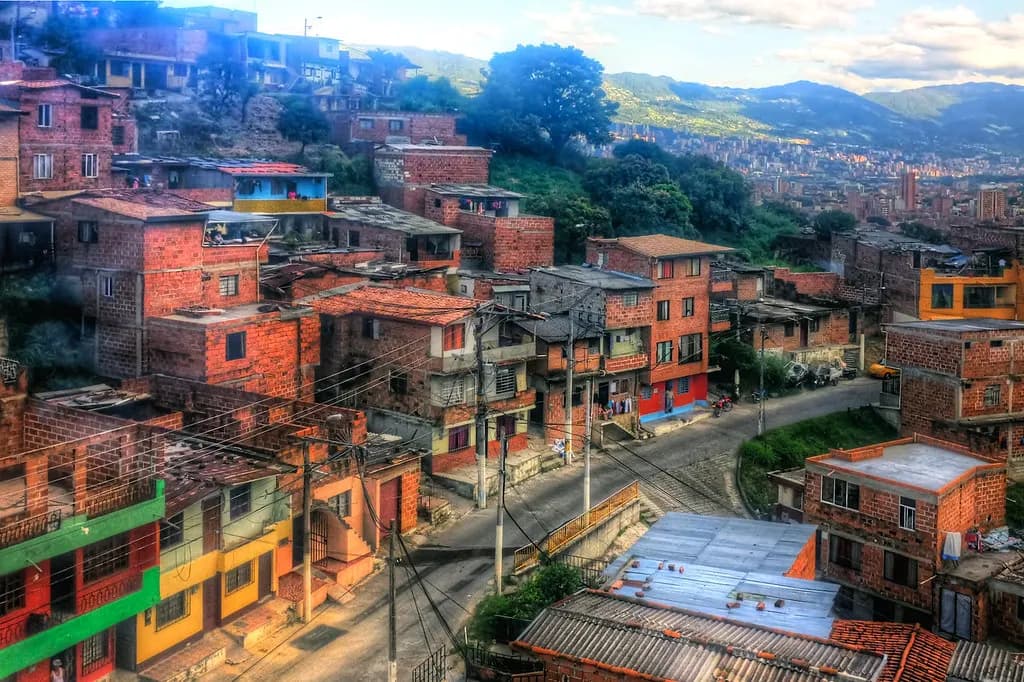
Medellín was once ranked the most dangerous city on Earth in the early 1990s — now it runs a cable car system built specifically to connect its poorest hillside neighborhoods to the city center, a transportation-as-social-policy project so effective that urban planners now study it worldwide.
See full guide →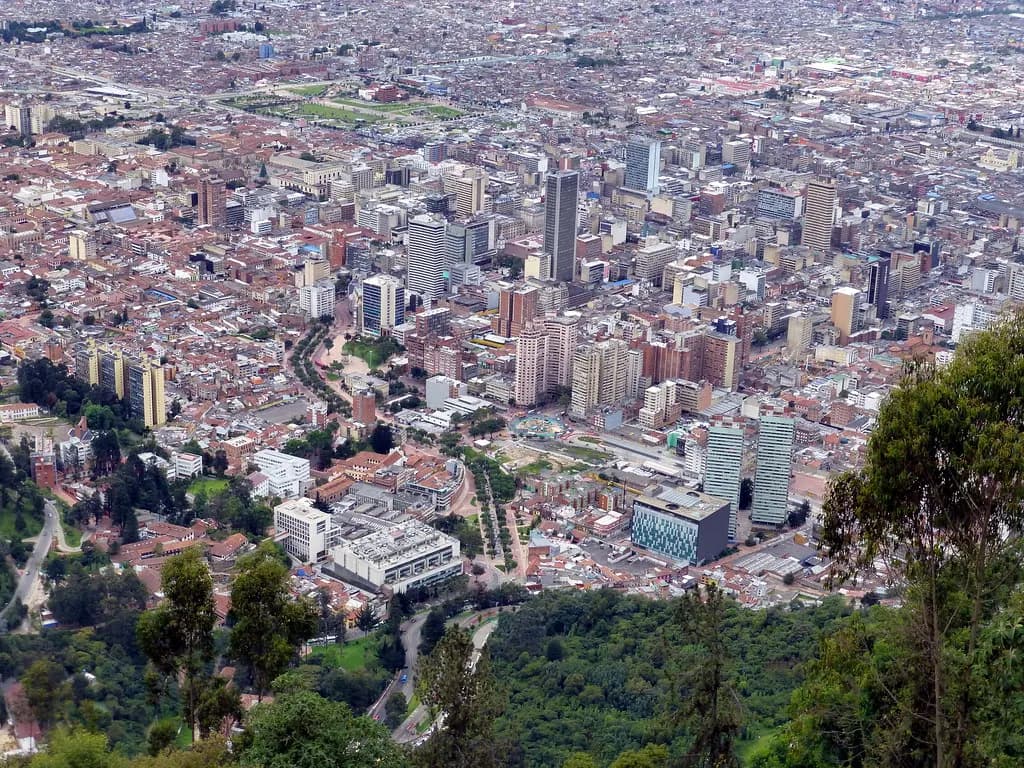 Bogotá
Bogotá
Colombia
Bogotá sits so high in the Andes — over 2,600 meters — that visitors regularly get winded walking uphill on their first day, and the city has responded by closing over 120 kilometers of its main roads to cars every Sunday morning for a citywide bike event that's been running since 1974.
See full guide →Comparing more than one route? See the full transport comparison guide.