Colombia · South America
Bogotá
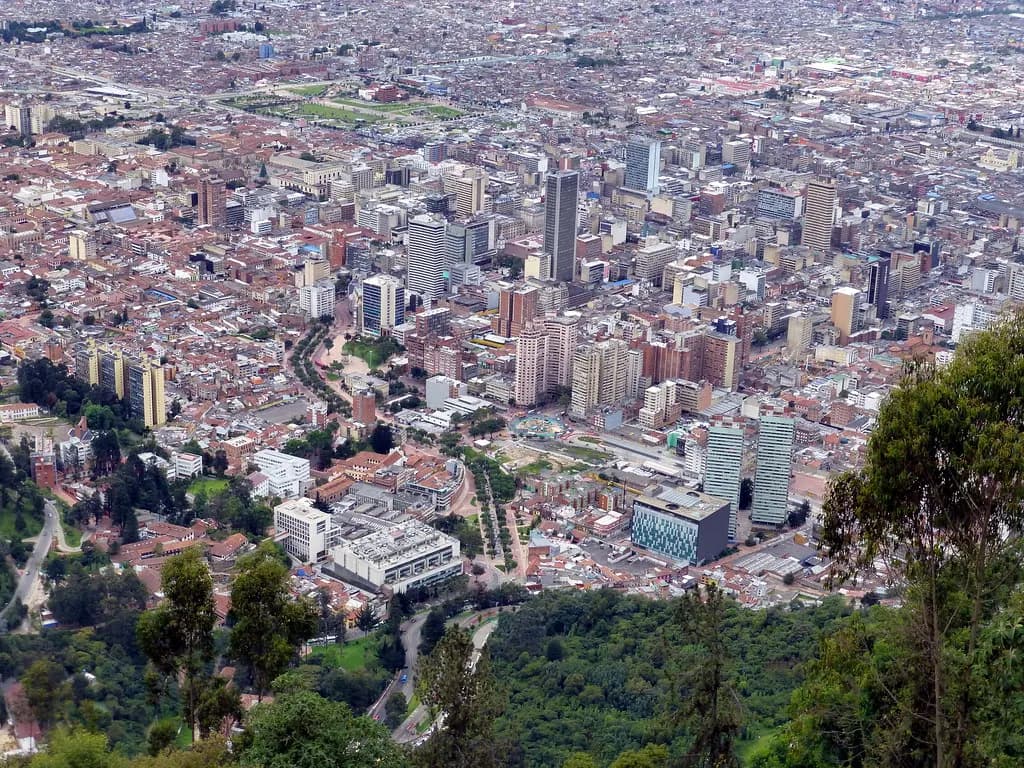
Bogotá sits so high in the Andes — over 2,600 meters — that visitors regularly get winded walking uphill on their first day, and the city has responded by closing over 120 kilometers of its main roads to cars every Sunday morning for a citywide bike event that's been running since 1974.
Bogotá sits at roughly 2,640 meters above sea level, high enough in the Andes that most visitors notice the thinner air within their first day — a genuine contrast to Medellín's milder valley climate, and part of why the two cities, despite being in the same country, feel so different to visit.
The Gold Museum (Museo del Oro) holds the largest collection of pre-Hispanic gold artifacts on Earth, over 34,000 pieces spanning multiple indigenous cultures across what's now Colombia, made in the centuries before Spanish colonization. The collection's scale and craftsmanship have made it one of the most significant museums in South America, and it remains a genuine highlight even for travelers who don't typically prioritize museums.
La Candelaria, Bogotá's colonial old town, holds narrow streets, colorful low-rise buildings, and Plaza de Bolívar, the political heart of the country, surrounded by government buildings including the Palace of Justice and the National Capitol. The neighborhood also anchors much of Bogotá's university life, giving it a genuinely lively, youthful energy alongside its historic architecture.
Bogotá has developed one of the most extensive and officially embraced street art scenes in South America — after a 2011 incident in which police shot and killed a young street artist sparked public outrage, the city moved toward legalizing and even commissioning murals rather than suppressing them, and La Candelaria and surrounding neighborhoods now hold dense, constantly evolving collections of large-scale work.
Every Sunday and public holiday morning, Bogotá closes over 120 kilometers of its main roads to car traffic for Ciclovía, a citywide cycling and pedestrian event that's been running since 1974 and remains one of the largest recurring open-streets programs in the world — a striking, genuinely local weekly ritual that visitors are welcome to join by renting a bike.
What a trip here actually costs
$30 / day avg.
- Hostel in La Candelaria
- TransMilenio bus fares
- Casual Colombian lunches
- Free wander through La Candelaria's colonial streets
What to do at this tier
- • La Candelaria colonial old town wander, free
- • Street art tour through Bogotá's dense mural scene, several free walking routes available
- • Plaza de Bolívar and the surrounding government buildings, free
$70 / day avg.
- 3-star hotel near La Candelaria or Chapinero
- Gold Museum entry
- Sit-down Colombian dinners
- Monserrate funicular ticket
What to do at this tier
- • Gold Museum, the largest collection of pre-Hispanic gold artifacts in the world
- • Monserrate, a mountain overlooking the city reached by funicular or cable car, with a church and panoramic view at the summit
- • Sit-down dinner featuring ajiaco, a hearty Bogotá chicken and potato soup
$170 / day avg.
- 4-5 star hotel in Zona Rosa or Chapinero
- Private guided history and street art tour
- Multi-course tasting menu
- Private day trip to the Salt Cathedral of Zipaquirá
What to do at this tier
- • Private guided tour connecting La Candelaria's colonial history with the city's contemporary street art scene
- • Private day trip to the Salt Cathedral of Zipaquirá, an underground cathedral carved into an active salt mine
- • Multi-course tasting menu at a well-regarded Bogotá restaurant
These are average estimates for planning purposes, not real-time prices — actual costs vary by season, availability, and how far ahead you book.
How to get there
Click anywhere on the world map — any airport works, not just our main hubs.
Click anywhere on the map above — any airport in the world works — to see estimated travel time and cost from there.
Times and prices are planning estimates, not live fares — always check a booking site before you commit. See the full Transport Comparison guide for the general tradeoffs of each mode.
Best time to visit
December-February and June-August are generally the driest months; Bogotá's high altitude keeps it cool year-round regardless of season.
Safety notes
Generally safe in the main visitor areas with standard urban caution.
Visa & currency
Colombian peso (COP). Visa requirements vary by nationality; many Western passport holders can enter visa-free for short stays, worth confirming before booking.
Questions people ask before visiting
Is Bogotá worth visiting?
Yes — it's Colombia's political, economic, and cultural capital, with the country's most significant museums (particularly the Gold Museum), a well-preserved colonial old town in La Candelaria, and one of the most extensive street art scenes in South America.
Is the Gold Museum in Bogotá worth visiting?
Yes — it holds the largest collection of pre-Hispanic gold artifacts in the world, over 34,000 pieces from cultures across Colombia spanning centuries before Spanish colonization, and is widely considered one of the best museums in South America.
Bogotá or Medellín — which should I visit?
Bogotá is the larger, more formal capital with deeper museum and historical offerings and a cooler mountain climate. Medellín has the milder 'eternal spring' weather, a stronger transformation narrative, and a livelier expat and nightlife scene. Many trips combine both, connected by a roughly one-hour flight.
Is Bogotá safe?
Generally safe in La Candelaria, Chapinero, and Zona Rosa with standard urban caution — like other major Latin American capitals, petty theft is a more realistic concern than violent crime for most visitors sticking to well-trafficked areas.
How many days do you need in Bogotá?
Two days covers La Candelaria, the Gold Museum, and Monserrate. A third day allows the city's street art scene in more depth or a day trip to the Salt Cathedral of Zipaquirá, an underground cathedral carved into a salt mine.
Nearby destinations
 Medellín
Medellín
Colombia
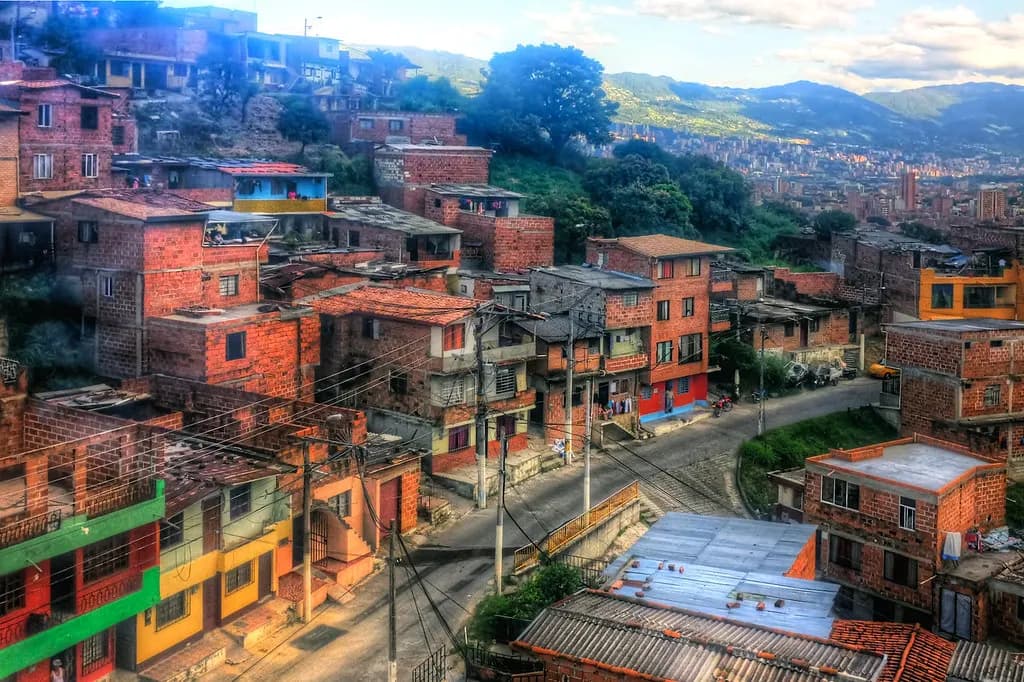
Medellín was once ranked the most dangerous city on Earth in the early 1990s — now it runs a cable car system built specifically to connect its poorest hillside neighborhoods to the city center, a transportation-as-social-policy project so effective that urban planners now study it worldwide.
See full guide →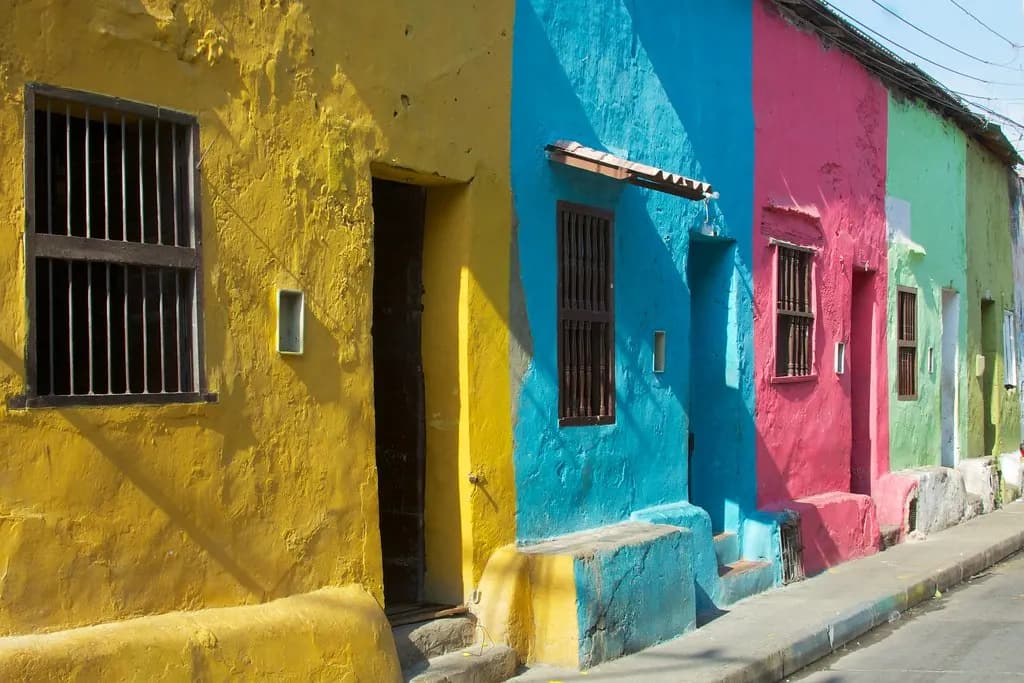 Cartagena
Cartagena
Colombia
Spain spent over 200 years building walls around Cartagena to keep pirates and English privateers out, including Francis Drake himself — the fortifications worked well enough that they're still almost entirely intact, wrapping a genuinely lived-in colonial city rather than a museum piece.
See full guide →Comparing more than one route? See the full transport comparison guide.