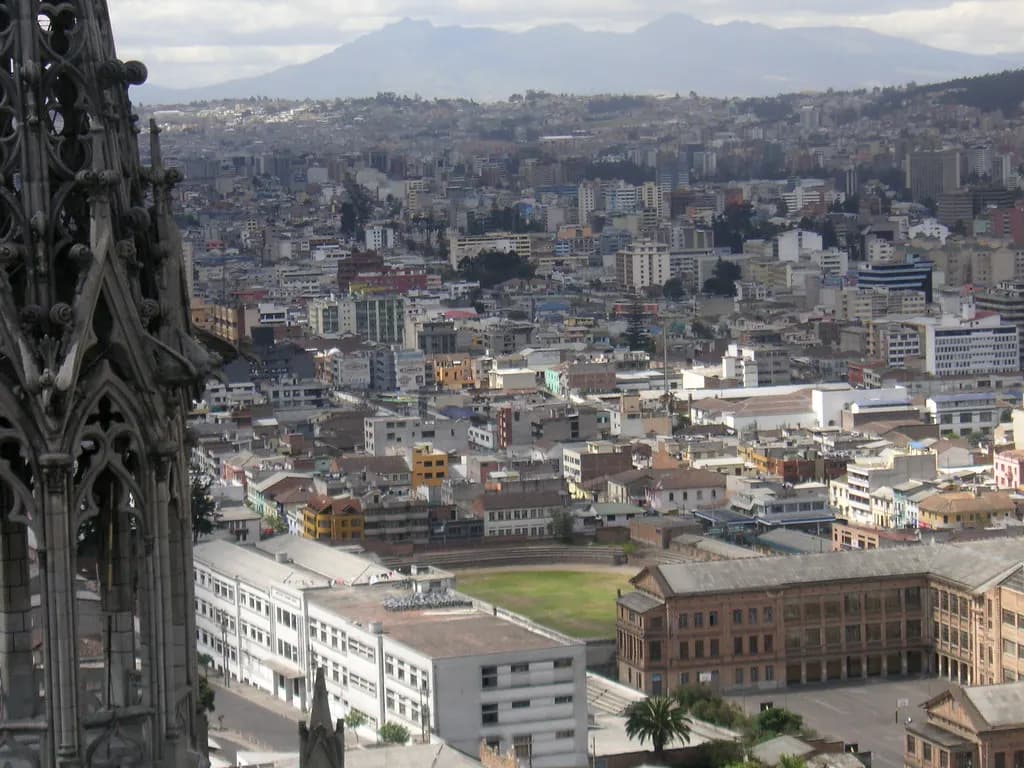
Ecuador · South America
Quito
Quito's historic center was one of the first two sites UNESCO ever named to its World Heritage list in 1978, tied with Krakow — and the city sits close enough to the equator that you can stand with one foot in each hemisphere at a monument just outside town.
Quito's historic center holds a genuine claim to being one of the most significant colonial old towns in the Americas — in 1978, UNESCO named it, alongside Krakow, among the very first sites ever inscribed on its World Heritage list, recognition that reflects both the scale of the district (one of the largest, least-altered historic centers in Latin America) and the density of colonial-era churches, monasteries, and plazas within it.
The city's most novel attraction sits just outside town: Ciudad Mitad del Mundo, a monument and museum complex marking the equator, complete with a painted line visitors can straddle for the obligatory photo. The actual scientifically precise equator line, determined by modern GPS rather than the 18th-century French geodesic mission that inspired the original monument's placement, sits a short walk away at a smaller, less crowded site — worth visiting both to understand the discrepancy.
At roughly 2,850 meters above sea level, Quito ranks among the highest capital cities in the world, and most visitors notice some mild altitude effects during their first day or two — shortness of breath on stairs, faster fatigue — that generally resolve with rest and hydration rather than requiring serious intervention.
The TelefériQo, a cable car climbing the slopes of Pichincha, an active volcano forming much of Quito's western skyline, carries visitors up to nearly 4,000 meters in about ten minutes, giving a sweeping panoramic view over the city and surrounding Andean peaks that would otherwise require a serious hike to reach.
Quito also functions as one of two mainland gateway cities, alongside Guayaquil, for flights to the Galápagos Islands — a roughly two-hour flight away and typically treated as a substantial, separate add-on to a Quito visit given the islands' distinct cost structure and the advance planning most Galápagos trips require.
What a trip here actually costs
$28 / day avg.
- Hostel near the historic center
- Local bus fares
- Almuerzo (set lunch) meals
- Free wander through the historic center
What to do at this tier
- • Historic center wander, one of the best-preserved colonial old towns in the Americas, free
- • Plaza Grande and the Presidential Palace exterior, free
- • Basílica del Voto Nacional exterior, a striking neo-Gothic church, free
$65 / day avg.
- 3-star hotel near the historic center or Mariscal
- Equator monument entry
- Sit-down Ecuadorian dinners
- TelefériQo cable car ticket
What to do at this tier
- • Ciudad Mitad del Mundo equator monument and museum, plus the nearby precise GPS-measured line
- • TelefériQo cable car up Pichincha volcano for a panoramic Andes and city view
- • Sit-down dinner featuring locro de papa (potato and cheese soup) and other Ecuadorian Andean dishes
$160 / day avg.
- 4-5 star hotel near the historic center
- Private guided colonial history tour
- Multi-course Ecuadorian tasting menu
- Private day trip combining the equator monument and Pichincha volcano
What to do at this tier
- • Private guided tour covering Quito's colonial architecture and its role as an early UNESCO World Heritage Site
- • Private day trip combining the equator monument, Pichincha volcano, and a nearby Andean market town
- • Multi-course Ecuadorian tasting menu at a well-regarded Quito restaurant
These are average estimates for planning purposes, not real-time prices — actual costs vary by season, availability, and how far ahead you book.
How to get there
Click anywhere on the world map — any airport works, not just our main hubs.
Click anywhere on the map above — any airport in the world works — to see estimated travel time and cost from there.
Times and prices are planning estimates, not live fares — always check a booking site before you commit. See the full Transport Comparison guide for the general tradeoffs of each mode.
Best time to visit
June-September, the driest months, are generally most comfortable; Quito's high-altitude climate stays cool year-round regardless of season.
Safety notes
Generally safe in the historic center and Mariscal areas with standard urban caution; the historic center is best visited during the day given lighter foot traffic at night in some areas.
Visa & currency
US dollar (USD), Ecuador's official currency since 2000. Visa requirements vary by nationality; many Western passport holders can enter visa-free for short stays, worth confirming before booking.
Questions people ask before visiting
Is Quito worth visiting?
Yes — its historic center is one of the best-preserved and largest colonial old towns in the Americas, recognized by UNESCO among the very first World Heritage sites in 1978, and the city sits high in the Andes with genuine mountain access and a functional cable car up a nearby volcano.
Is the equator monument near Quito worth visiting?
Yes as a quick, fun stop — Ciudad Mitad del Mundo, just outside the city, marks the equator with a monument and museum, though the precise scientifically measured line (determined by GPS) is actually a short walk away at a separate, less touristy site. Both are worth combining into one visit.
Do I need to acclimatize to Quito's altitude?
Yes, to some degree — at around 2,850 meters, Quito is one of the highest capital cities in the world, and mild altitude effects (shortness of breath, fatigue) are common in the first day or two. Taking it easy on arrival and staying hydrated helps most visitors adjust without serious issues.
How do I get from Quito to the Galápagos Islands?
By flight — Quito is one of two mainland gateway cities (along with Guayaquil) for flights to the Galápagos, typically a roughly 2-hour flight to either Baltra or San Cristóbal islands. Most Galápagos trips are booked as a separate, substantial add-on given the islands' distinct cost and logistics.
How many days do you need in Quito?
Two days covers the historic center and the equator monument. A third day allows the TelefériQo cable car up Pichincha volcano for a panoramic Andes view, or serves as a logistics day before flying onward to the Galápagos.
Nearby destinations
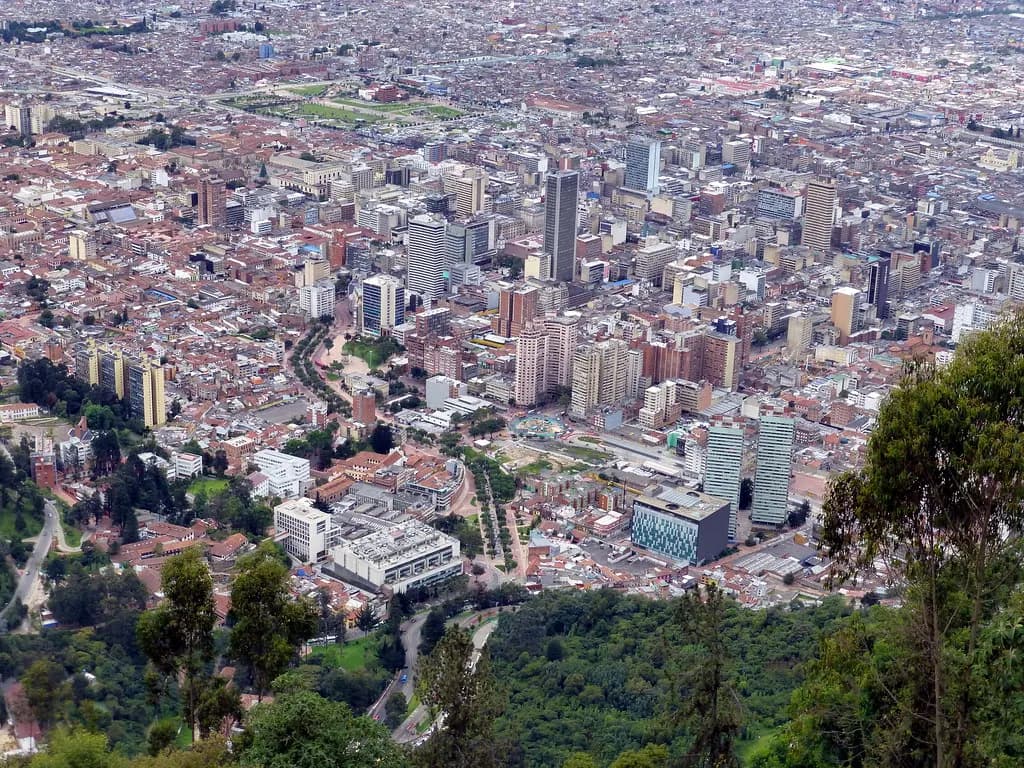 Bogotá
Bogotá
Colombia
Bogotá sits so high in the Andes — over 2,600 meters — that visitors regularly get winded walking uphill on their first day, and the city has responded by closing over 120 kilometers of its main roads to cars every Sunday morning for a citywide bike event that's been running since 1974.
See full guide →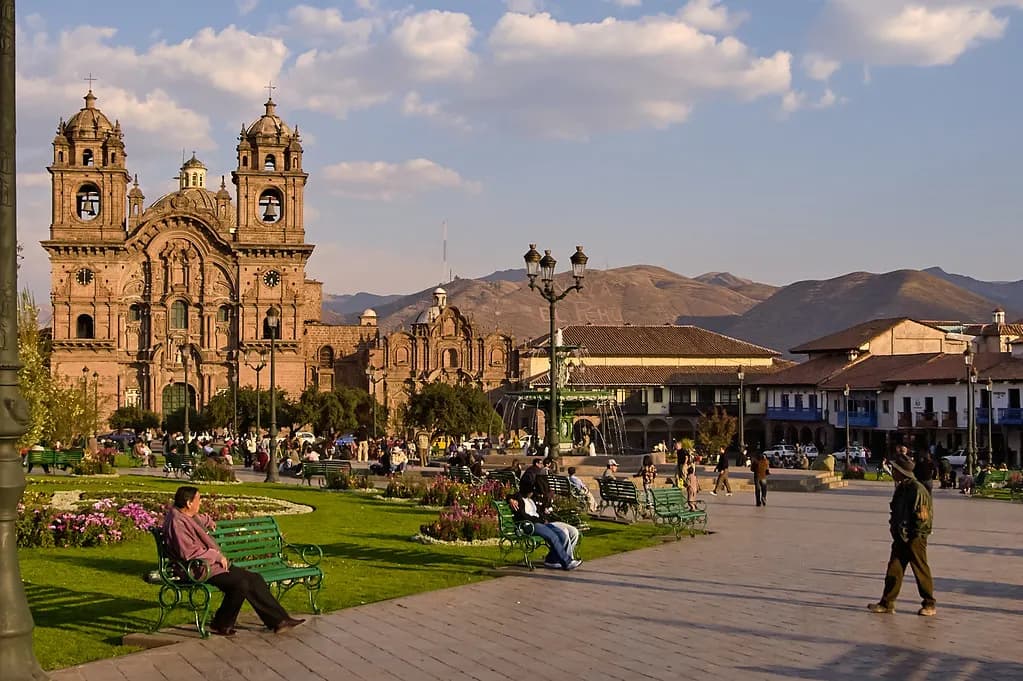 Cusco
CuscoCusco
Peru
The Inca built stone walls so precisely fitted that you still can't slide a knife blade between the blocks 500 years later — and Cusco was their capital, the literal center of an empire that stretched further than the Roman Empire at its peak.
See full guide →Comparing more than one route? See the full transport comparison guide.