Peru · South America
Cusco
The Inca built stone walls so precisely fitted that you still can't slide a knife blade between the blocks 500 years later — and Cusco was their capital, the literal center of an empire that stretched further than the Roman Empire at its peak.
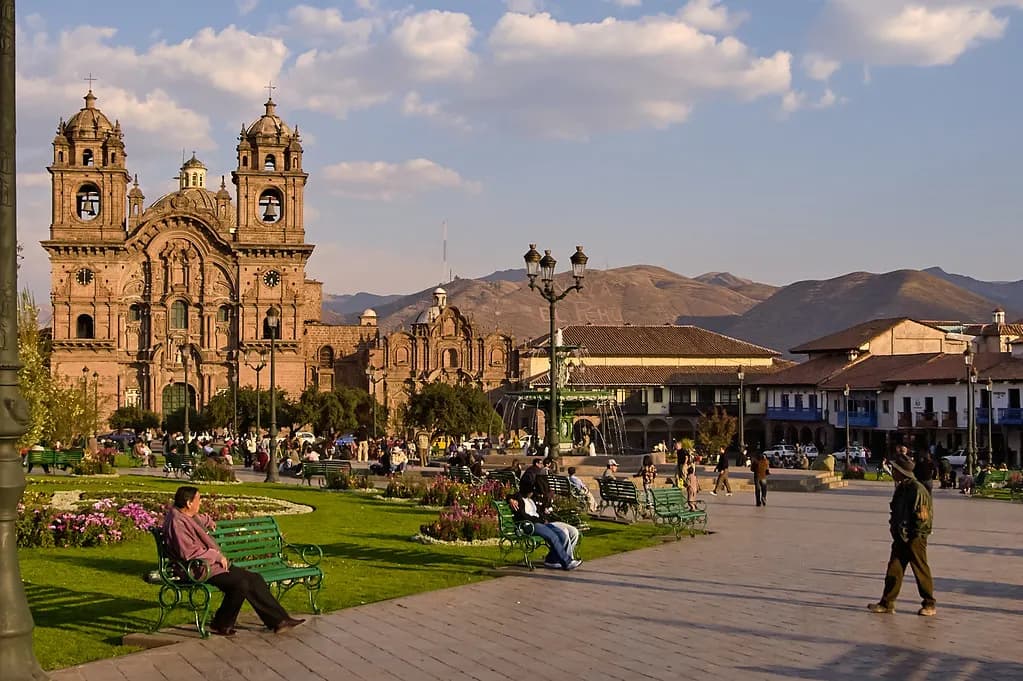
Cusco was the capital of the Inca Empire, which at its height in the early 16th century stretched further along a single continuous landmass than the Roman Empire ever did, reaching from modern-day Colombia to central Chile. The city's Inca stonework, particularly the massive, precisely interlocking blocks still visible in foundations throughout the historic center, remains famous for a level of precision — gaps too narrow to fit a knife blade between stones, achieved without mortar — that still isn't fully understood by modern engineers given the tools available at the time.
Spanish colonizers built directly on top of that Inca foundation after conquering Cusco in 1533, and the result is a city where colonial churches and buildings sit literally atop Inca stonework — Cusco Cathedral and the Qorikancha, once the Inca Empire's most important temple dedicated to the sun god Inti, both display that layered construction clearly, colonial architecture rising from Inca foundations that repeated earthquakes have proven far more resilient than the structures built on top of them.
Sacsayhuamán, a massive fortress complex on a hill overlooking the city, is itself a major Inca site independent of Machu Picchu — some of its stones weigh over 200 tons, moved and precisely fitted using methods still debated by archaeologists, and its scale rivals anything found at the more famous ruins two hours away.
At roughly 3,400 meters above sea level, Cusco's altitude is a genuine practical concern rather than a minor inconvenience — most visitors experience some symptoms of altitude sickness on arrival, and spending at least one or two days acclimatizing before any strenuous activity, including the Machu Picchu trip itself, meaningfully reduces the risk of more serious symptoms.
The Sacred Valley, stretching northwest of Cusco along the Urubamba River, holds Pisac and Ollantaytambo, two of the most significant remaining Inca towns and terraced agricultural sites in the region — both work well as a single guided day trip, and Ollantaytambo also functions as the main departure point for trains continuing on to Machu Picchu itself.
What a trip here actually costs
$30 / day avg.
- Hostel near the historic center
- Local bus fares
- Menu del día set lunches
- Free wander through the historic center and San Blas neighborhood
What to do at this tier
- • Historic center and San Blas artisan neighborhood wander, free
- • Plaza de Armas and the exterior of Cusco Cathedral, built on Inca foundations, free
- • Menu del día lunch, a genuinely local, inexpensive multi-course meal tradition
$75 / day avg.
- 3-star hotel near the Plaza de Armas
- Sacsayhuamán and Cusco Cathedral entry
- Sit-down Peruvian dinners
- Guided Sacred Valley day trip
What to do at this tier
- • Sacsayhuamán, a massive Inca fortress complex with stones weighing up to 200 tons
- • Cusco Cathedral and the Qorikancha (Temple of the Sun) interior, both built over Inca foundations
- • Guided Sacred Valley day trip, typically covering Pisac and Ollantaytambo
$180 / day avg.
- 4-5 star hotel near the historic center
- Private guided Cusco and Sacred Valley tour
- Multi-course Peruvian tasting menu
- Vistadome train tickets to Machu Picchu
What to do at this tier
- • Private guided tour of Cusco and the Sacred Valley with an archaeology-focused local expert
- • Vistadome train to Machu Picchu, offering panoramic windows for the scenic route
- • Multi-course Peruvian tasting menu at one of Cusco's well-regarded restaurants
These are average estimates for planning purposes, not real-time prices — actual costs vary by season, availability, and how far ahead you book.
How to get there
Click anywhere on the world map — any airport works, not just our main hubs.
Click anywhere on the map above — any airport in the world works — to see estimated travel time and cost from there.
Times and prices are planning estimates, not live fares — always check a booking site before you commit. See the full Transport Comparison guide for the general tradeoffs of each mode.
Best time to visit
May-September, Peru's dry season, brings the clearest skies and best trekking conditions, though also the most crowds at Machu Picchu.
Safety notes
Very safe overall. The main practical risk is altitude sickness rather than crime — take acclimatization seriously and consult a doctor before travel if you have relevant health concerns.
Visa & currency
Peruvian sol (PEN). Visa requirements vary by nationality; many Western passport holders can enter visa-free for short stays, worth confirming before booking.
Questions people ask before visiting
How many days should I spend acclimatizing to Cusco's altitude?
At least 1-2 full days before any strenuous activity or trek. Cusco sits at roughly 3,400 meters (11,200 feet), high enough that altitude sickness is a genuine risk for most visitors — taking it slow, staying hydrated, and trying coca tea (a traditional local remedy) on arrival meaningfully reduces symptoms.
Is Cusco worth visiting even without going to Machu Picchu?
Yes — Cusco itself was the capital of the Inca Empire, and its historic center sits directly on Inca stone foundations beneath colonial Spanish buildings, giving it a genuinely significant history independent of the famous ruins two hours away. Sacsayhuamán, a massive Inca fortress complex on the city's edge, is itself a major site.
What are the best Sacred Valley day trips from Cusco?
Pisac, with its Inca terraces and lively market, and Ollantaytambo, a still-inhabited Inca town with an impressive fortress, are the two most popular. Both are commonly combined into a single guided day trip, and Ollantaytambo also functions as the main train departure point toward Machu Picchu.
How do I get from Cusco to Machu Picchu?
Most visitors take a train from Cusco or Ollantaytambo to Aguas Calientes, the town below the ruins, then a shuttle bus up to the site itself — a straightforward, well-organized route. The multi-day Inca Trail trek is the more physically demanding, permit-limited alternative for hikers booking well in advance.
How many days do you need in Cusco?
Two days in the city itself, allowing for altitude acclimatization, covers the historic center and Sacsayhuamán. A Machu Picchu visit adds at least one more full day, and a Sacred Valley day trip adds another — most visitors plan four to five days total for the region.
Nearby destinations
 La Paz
La Paz
Bolivia
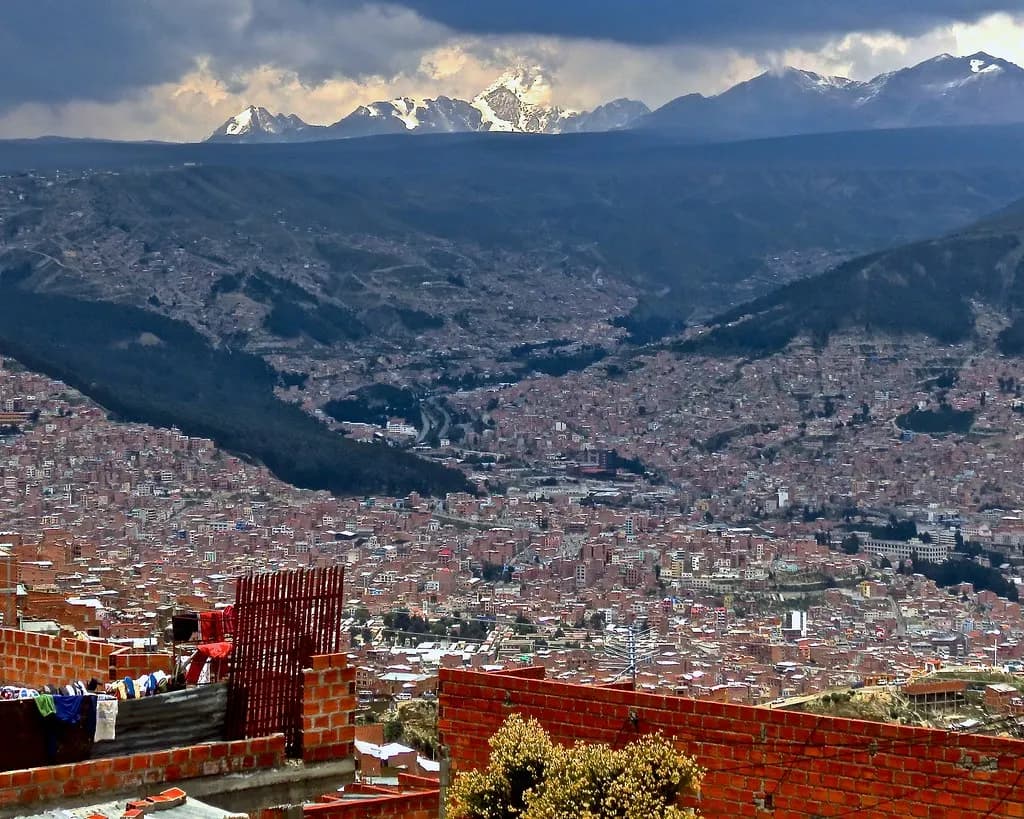
La Paz sits so high — over 3,600 meters at its lowest point — that the city built the largest urban cable car network on Earth just to move people up and down the canyon it's built into, since regular buses and roads couldn't handle the terrain.
See full guide →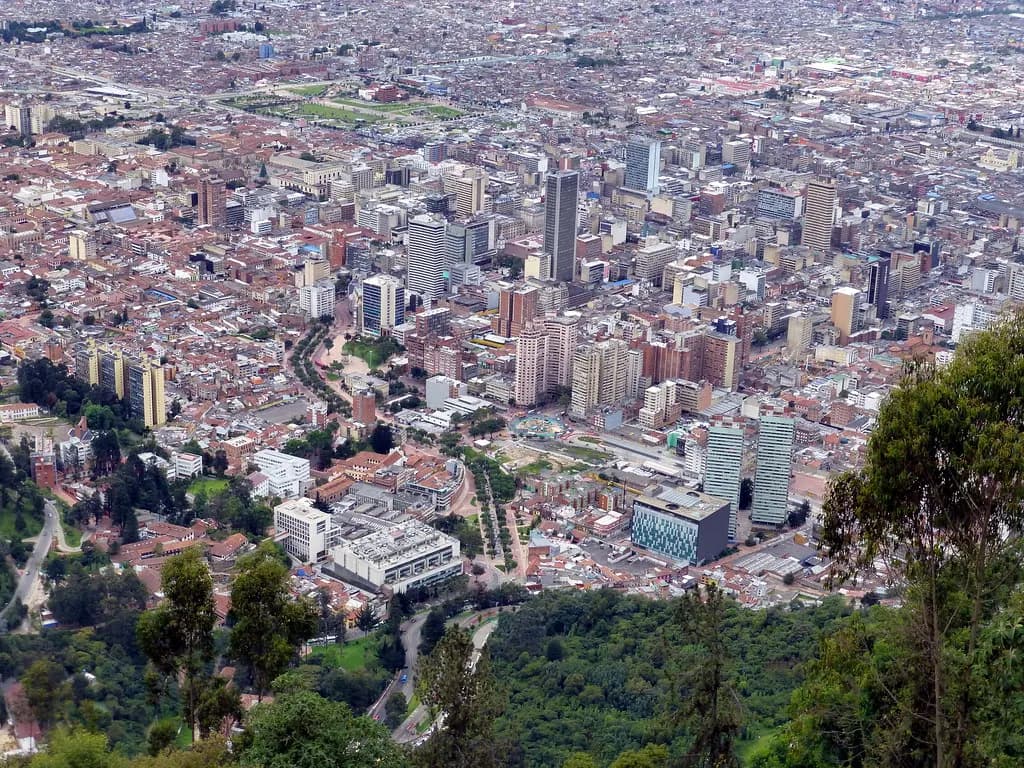 Bogotá
Bogotá
Colombia
Bogotá sits so high in the Andes — over 2,600 meters — that visitors regularly get winded walking uphill on their first day, and the city has responded by closing over 120 kilometers of its main roads to cars every Sunday morning for a citywide bike event that's been running since 1974.
See full guide →Comparing more than one route? See the full transport comparison guide.