Uruguay · South America
Punta del Este
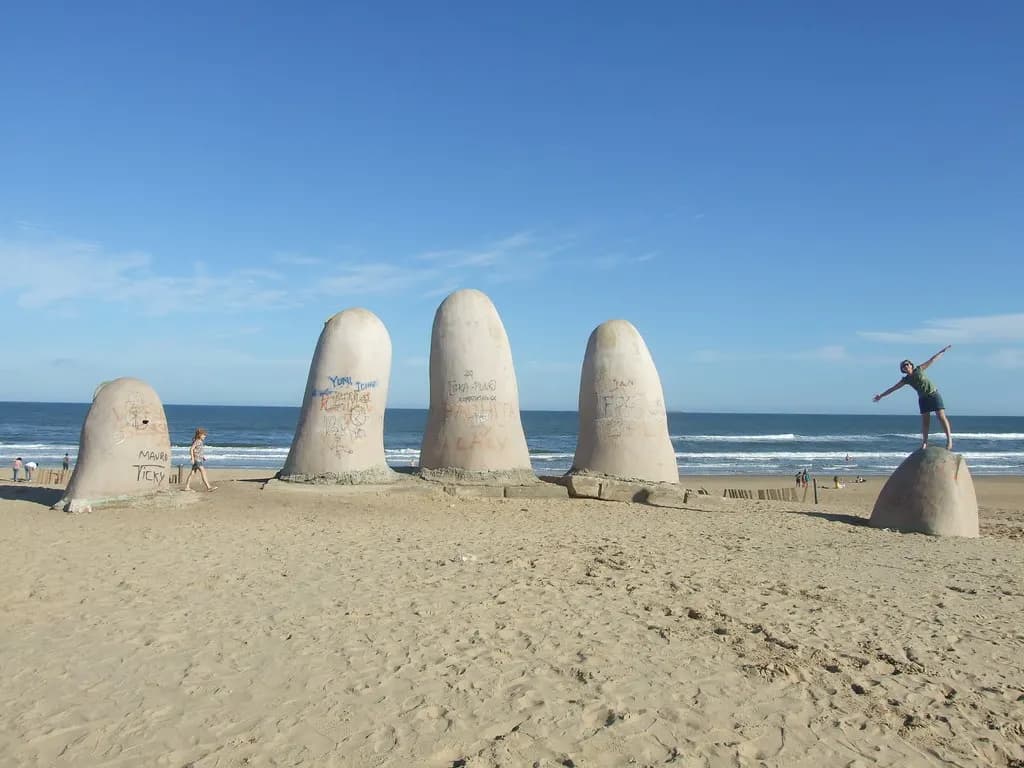
Uruguay's most famous beach resort has a sculpture of five giant fingers reaching up out of the sand, installed in 1982 as a warning about drowning — it's now one of the most photographed spots in the country for entirely different reasons.
Punta del Este's most recognizable landmark started as a piece of serious public art rather than a beach photo backdrop. La Mano, five giant concrete fingers emerging from the sand at Playa Brava, was created in 1982 by Chilean sculptor Mario Irarrázabal as a meditation on drowning and human vulnerability against the ocean's power — a somber original intent almost entirely overtaken today by its role as the town's most photographed, cheerfully embraced tourist attraction.
The town occupies a narrow peninsula giving it two genuinely distinct beach environments within walking distance of each other: Playa Brava, facing the open Atlantic, brings rougher surf and stronger currents, while Playa Mansa, facing the calmer Río de la Plata estuary side, offers gentler, more swimmable conditions — a combination that lets visitors choose their preferred beach character without traveling far.
Punta del Este has developed into South America's most explicitly upscale beach resort, drawing a wealthy clientele from Argentina and Brazil in particular during the Southern Hemisphere summer, with prices, nightlife, and dining that reflect that positioning clearly — a marked contrast to the more understated, historically focused character of Montevideo, just under two hours away.
Isla de Lobos, a small island offshore, holds one of the largest sea lion colonies in South America, and boat trips out to see the colony give visitors a genuine wildlife encounter without leaving the immediate area — a distinctive addition to what's otherwise primarily a beach-and-nightlife destination.
The town runs on a distinctly seasonal rhythm — packed and lively during the December-February peak, with a significant share of hotels, restaurants, and beach clubs scaling back or closing entirely during the rest of the year, making timing a genuinely important consideration for anyone planning a visit.
What a trip here actually costs
$110 / day avg.
- 3-star hotel near the beach
- Local bus fares
- Sit-down seafood lunches and dinners
- Free beach time at Playa Brava or Playa Mansa
What to do at this tier
- • Playa Brava (ocean side) and Playa Mansa (bay side), both free, with distinctly different wave conditions
- • La Mano sculpture at Playa Brava, free to visit and photograph
- • Sit-down seafood dinner reflecting Uruguay's strong coastal dining tradition
$260 / day avg.
- 4-5 star beachfront hotel or resort
- Private boat trip to nearby Isla de Lobos sea lion colony
- Multi-course seafood tasting menu
- VIP access to the town's summer nightlife scene
What to do at this tier
- • Private boat trip to Isla de Lobos, home to one of the largest sea lion colonies in South America
- • Multi-course seafood tasting menu at a well-regarded Punta del Este restaurant
- • VIP access to the town's summer nightlife and beach club scene
These are average estimates for planning purposes, not real-time prices — actual costs vary by season, availability, and how far ahead you book.
How to get there
Click anywhere on the world map — any airport works, not just our main hubs.
Click anywhere on the map above — any airport in the world works — to see estimated travel time and cost from there.
Times and prices are planning estimates, not live fares — always check a booking site before you commit. See the full Transport Comparison guide for the general tradeoffs of each mode.
Best time to visit
December-February, the Southern Hemisphere summer, is peak season with the warmest weather; the town is notably quiet and many businesses close outside this window.
Safety notes
Very safe overall, among the safer resort towns in South America.
Visa & currency
Uruguayan peso (UYU). Visa requirements vary by nationality; many Western passport holders can enter visa-free for short stays, worth confirming before booking.
Questions people ask before visiting
Is Punta del Este worth visiting?
Yes, particularly during the Southern Hemisphere summer — it's South America's most upscale beach resort town, drawing wealthy visitors from Argentina, Brazil, and beyond, with genuinely good beaches on both its calmer bay side and rougher ocean side within a short distance of each other.
What is La Mano, the hand sculpture?
A sculpture of five giant fingers emerging from the sand at Playa Brava, created by Chilean artist Mario Irarrázabal in 1982 originally as a piece about drowning and human vulnerability. It's since become Punta del Este's most recognizable and photographed landmark, largely detached from its original somber intent.
Punta del Este or Montevideo — which should I visit?
Montevideo is the calmer, more historically and culturally focused capital. Punta del Este is a dedicated beach and nightlife resort town, considerably more upscale and seasonal, essentially quiet outside the December-February peak. Many visitors combine a Montevideo stay with a shorter Punta del Este beach add-on.
Is Punta del Este expensive?
Yes, notably pricier than Montevideo or most of the rest of Uruguay — it's positioned as an upscale resort destination, and accommodation and dining prices reflect that, especially during peak summer season.
How many days do you need in Punta del Este?
Two to three days covers the main beaches, La Mano sculpture, and the town's dining and nightlife scene. Longer stays suit travelers using it as a dedicated beach base rather than a quick add-on.
Nearby destinations
 Montevideo
Montevideo
Uruguay
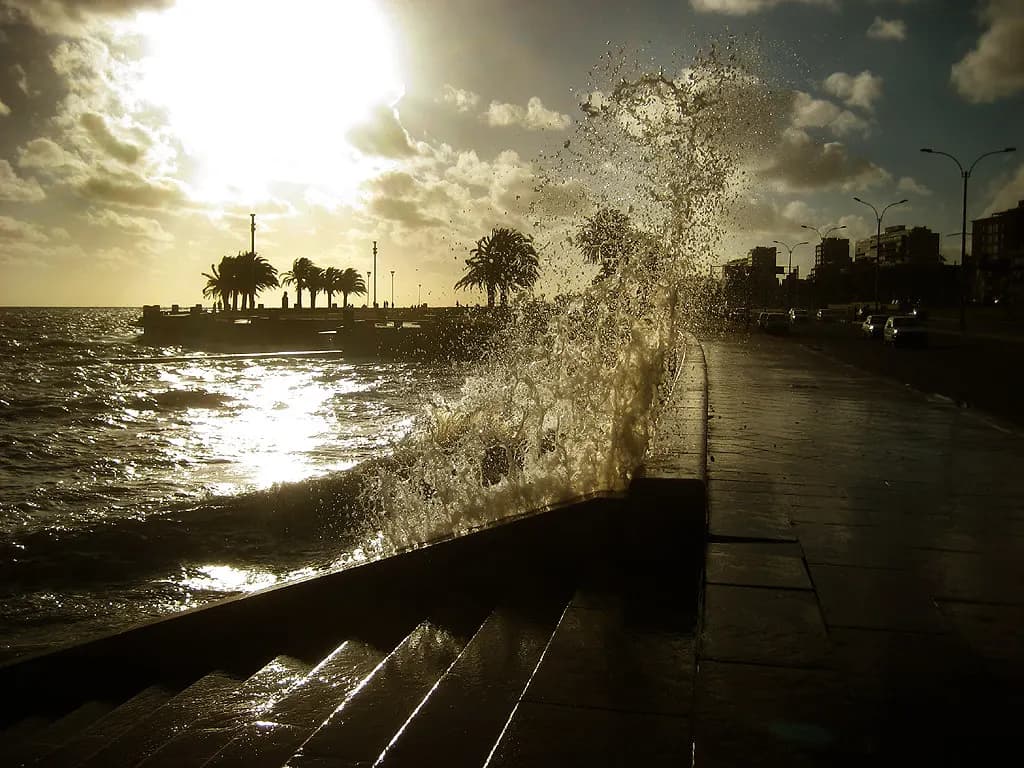
Uruguay legalized marijuana and same-sex marriage years before most of the world and has one of Latin America's highest standards of living — and its capital has a 22-kilometer waterfront promenade that's just... mostly empty, even in a city of 1.3 million people.
See full guide →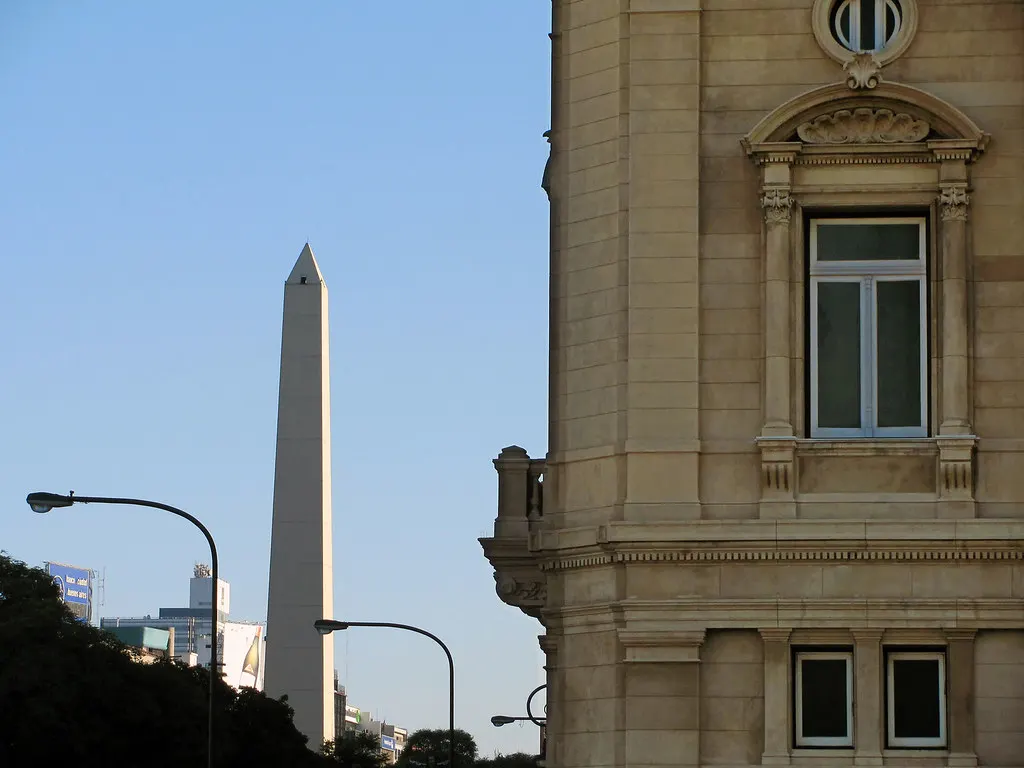 Buenos Aires
Buenos Aires
Argentina
Argentines eat more beef per person than almost any nation on Earth, dance a tango that started in the city's brothels and dockside bars in the 1880s, and built a capital so deliberately modeled on Paris that locals still call it "the Paris of South America."
See full guide →Comparing more than one route? See the full transport comparison guide.