Brazil · South America
Olinda
Olinda's Carnival skips the sequined parade floats that define Rio's version entirely, running instead on giant papier-mâché puppets called bonecos gigantes paraded through the hillside town's cobblestone streets by anyone who wants to join in — a looser, more participatory celebration that many Brazilians consider genuinely closer to Carnival's original spirit.
Olinda's Carnival runs on a fundamentally different structure from the version most international visitors associate with Brazil. Rather than Rio's ticketed sambadrome parade of professional samba schools competing on elaborate floats, Olinda's celebration centers on bonecos gigantes, giant papier-mâché puppets, some representing historical or pop culture figures, carried through the hillside town's cobblestone streets by open, participatory crowds rather than a scheduled procession of paid performers.
That looser, more communal structure has led many Brazilians to consider Olinda's Carnival genuinely closer to the holiday's older, pre-commercialized roots, a street-level celebration anyone can join simply by showing up, rather than a spectator event requiring tickets and reserved seating. Frevo, a fast-paced musical and dance style closely associated with the region, provides much of the celebration's soundtrack, recognized by UNESCO as an Intangible Cultural Heritage practice in its own right.
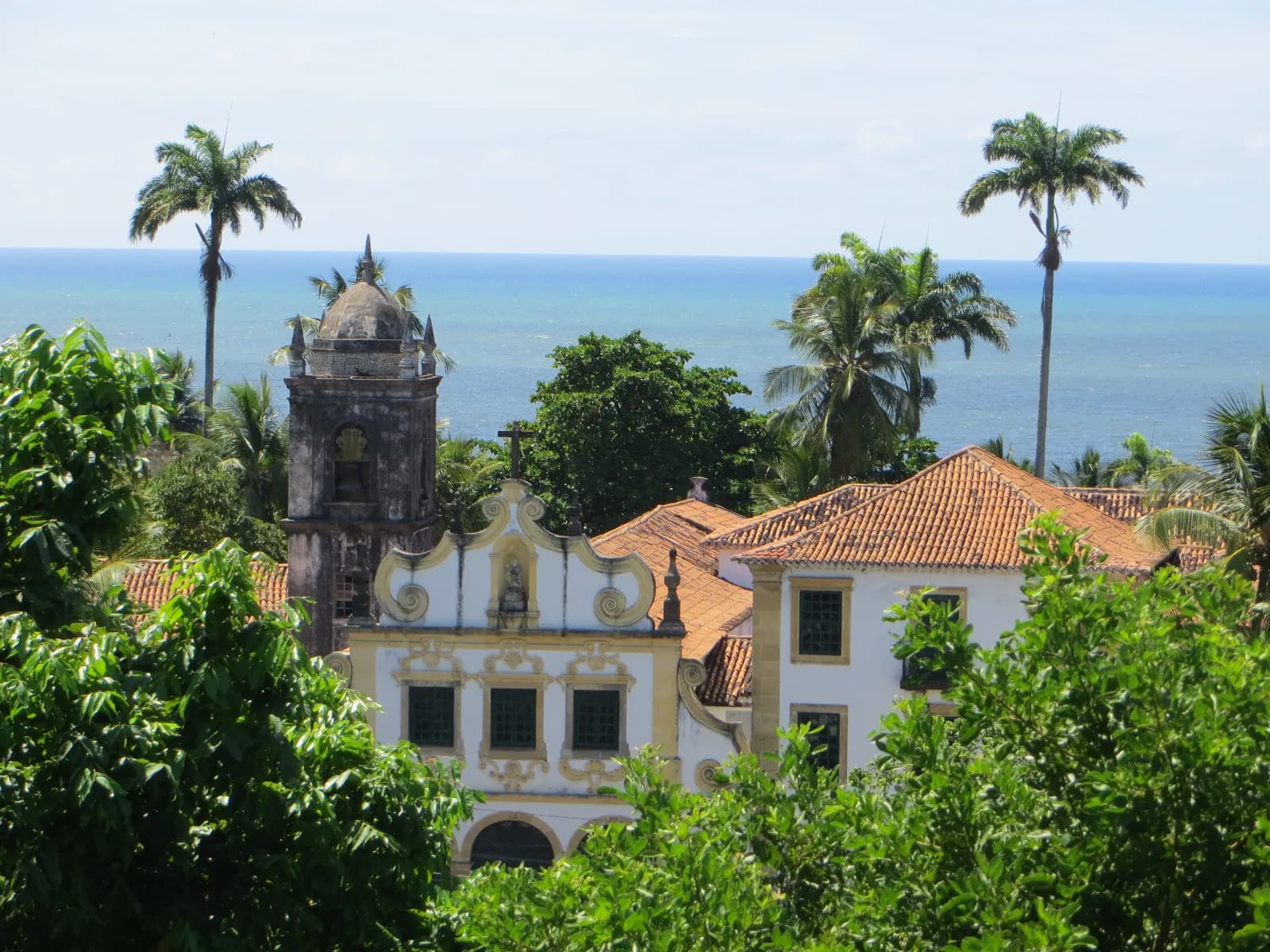
Beyond Carnival, Olinda's UNESCO World Heritage-listed historic center holds brightly painted colonial buildings, churches, and convents arranged across a hillside overlooking the Atlantic coast, its layout largely unchanged since Portuguese colonial administration made the town an early regional center before Recife, its larger neighbor, eventually eclipsed it commercially.
The Alto da Sé, a viewpoint at the town's highest point, offers sweeping views back over Olinda's colorful rooftops toward the coastline and Recife's modern skyline in the distance, a clear visual contrast between the two closely linked but visually distinct cities.
Most visitors base themselves in Recife, a short drive or bus ride away, given its wider range of accommodation and transport connections, treating Olinda as a focused day trip or overnight stay centered on its historic architecture and, when timing allows, its genuinely distinctive take on Brazil's most famous annual celebration.
What a trip here actually costs
$30 / day avg.
- Guesthouse in the historic center
- Local bus to Recife
- Local Pernambuco restaurant meals
- Historic church visits, low cost
What to do at this tier
- • Historic hillside center walking tour, free
- • Alto da Sé viewpoint over the coast, free
- • Local art studios and craft shops, free to browse
$75 / day avg.
- 3-star colonial-era pousada
- Guided historic center and Carnival culture tour
- Frevo dance show or class
- Sit-down restaurant dinners
What to do at this tier
- • Guided historic center and Carnival culture tour
- • Frevo dance show or introductory class
- • Day trip combining Olinda and Recife's historic centers
These are average estimates for planning purposes, not real-time prices — actual costs vary by season, availability, and how far ahead you book.
How to get there
Click anywhere on the world map — any airport works, not just our main hubs.
Click anywhere on the map above — any airport in the world works — to see estimated travel time and cost from there.
Times and prices are planning estimates, not live fares — always check a booking site before you commit. See the full Transport Comparison guide for the general tradeoffs of each mode.
Best time to visit
September-January brings warm, drier weather; Carnival timing shifts annually with the lunar calendar, typically falling in February or March, and draws large crowds if visiting specifically for it.
Safety notes
Generally safe in the historic tourist center; standard urban precautions apply, particularly around Carnival's larger crowds.
Visa & currency
Brazilian real (BRL). Many nationalities can enter visa-free for tourism, worth confirming based on passport before booking.
Questions people ask before visiting
Is Olinda worth visiting?
Yes — Olinda, a UNESCO World Heritage Site, holds colorful colonial architecture on a hillside overlooking the coast, one of Brazil's most distinctive Carnival celebrations built around giant puppets rather than parade floats, and a strong tradition of frevo music and dance.
How is Olinda's Carnival different from Rio's?
Olinda's Carnival runs on street parades led by bonecos gigantes, giant papier-mâché puppets, and open participation from anyone walking the streets, rather than Rio's ticketed sambadrome parade of professional samba schools on elaborate floats. Many consider Olinda's version closer to Carnival's older, more communal roots.
What is frevo?
A fast-paced Brazilian musical and dance style originating in Pernambuco state, closely associated with Olinda and neighboring Recife's Carnival celebrations, recognized by UNESCO as an Intangible Cultural Heritage practice.
How many days do you need in Olinda?
A day or two covers the historic hillside center and its churches and viewpoints comfortably, and many visitors base themselves in neighboring Recife, a short drive away, for a wider range of accommodation and access to the coast.
Nearby destinations
 Salvador
Salvador
Brazil
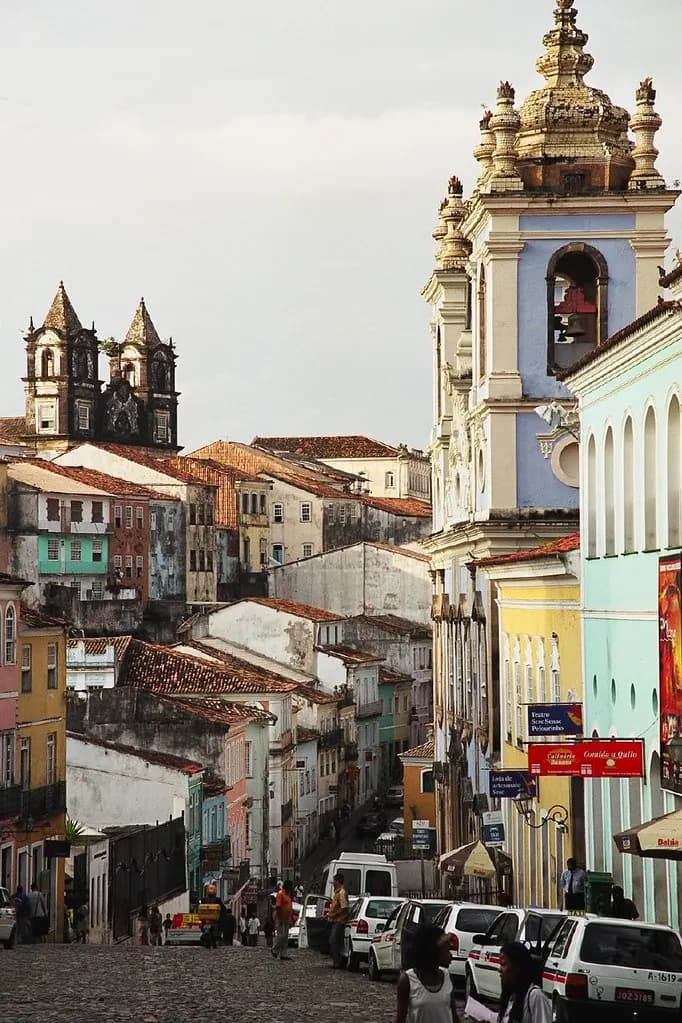
Salvador was Brazil's first capital for over two centuries and the main port of the entire Atlantic slave trade into the Americas — today it has the largest Afro-Brazilian population and culture of any city in the country, most visible in the historic Pelourinho square where that painful history and its resulting culture collide most directly.
See full guide →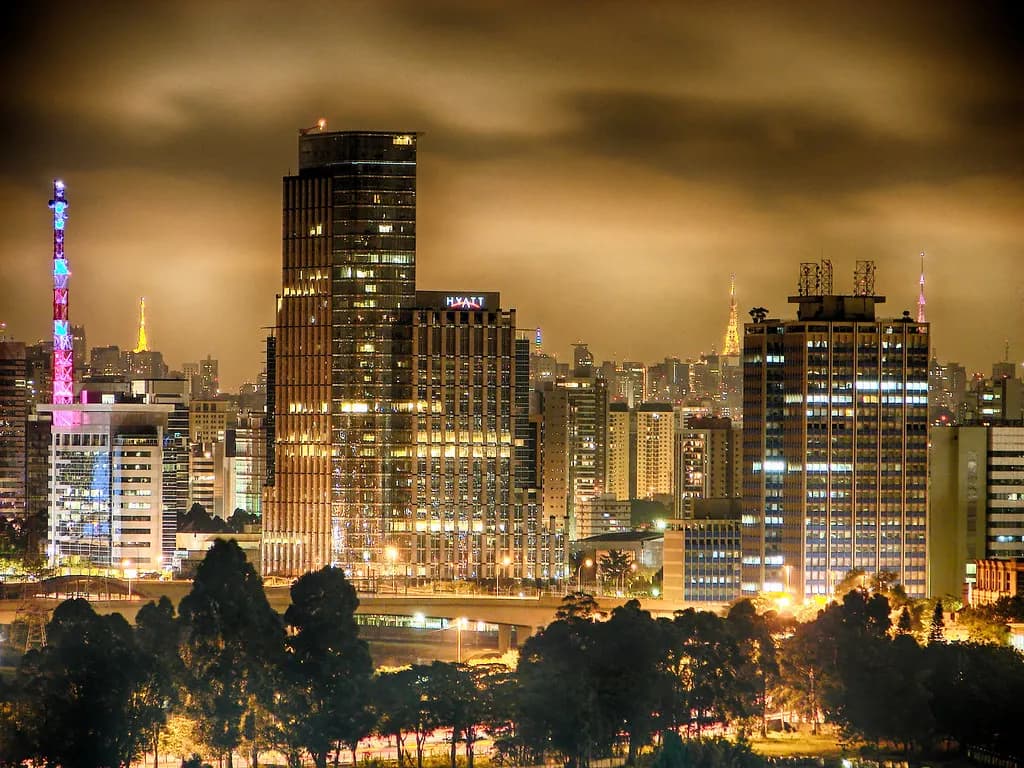 São Paulo
São Paulo
Brazil
São Paulo has more Michelin-starred restaurants and a bigger Japanese population than any city outside Japan itself — a metropolis of over 12 million people that barely registers on most first-time South America itineraries.
See full guide →Comparing more than one route? See the full transport comparison guide.