Peru · South America
Nazca
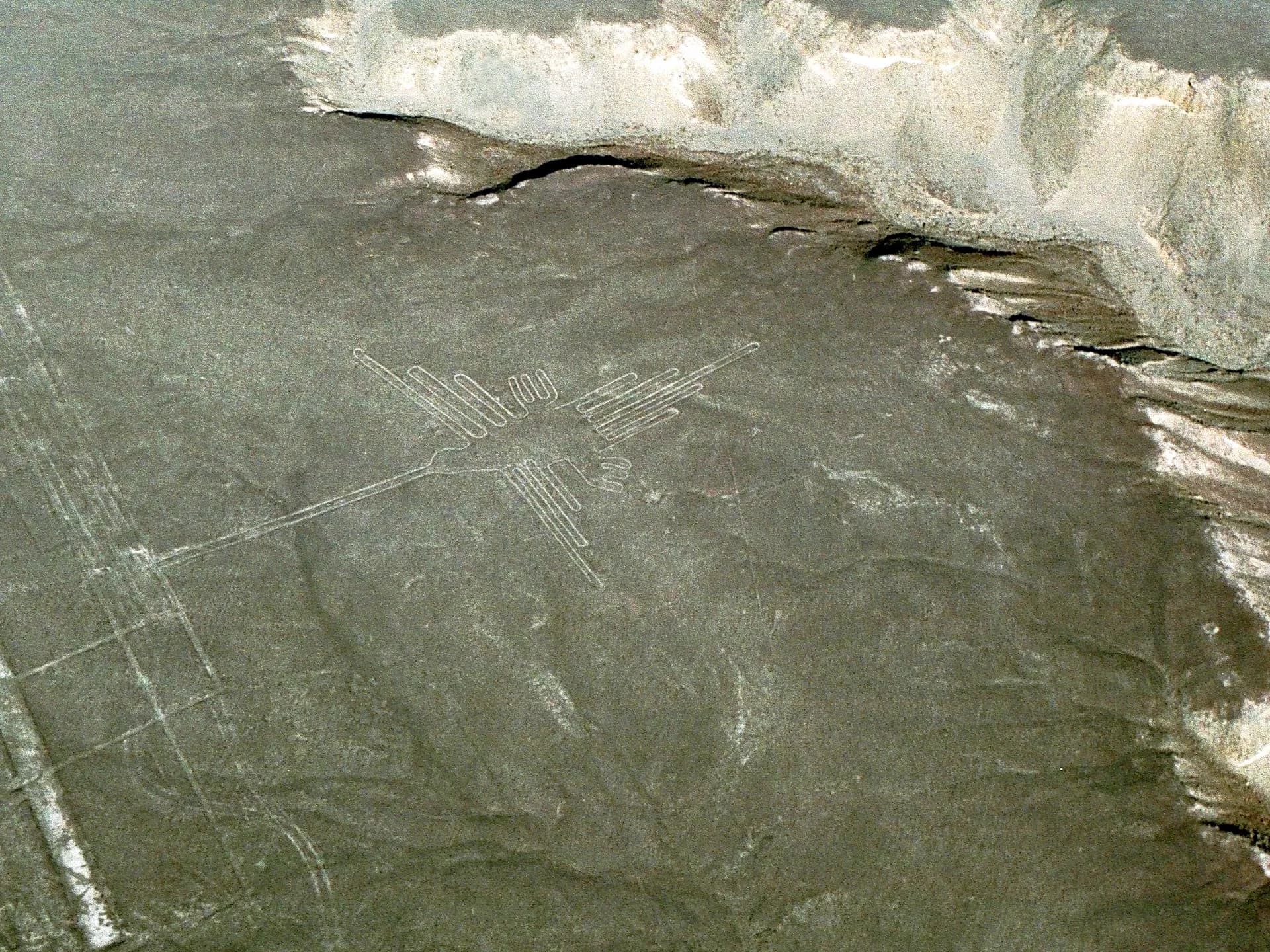
The Nazca Lines, hundreds of massive geoglyphs etched into Peru's coastal desert between roughly 500 BCE and 500 CE, are so large that a hummingbird figure spans 93 meters and a spider stretches 47 — shapes only fully readable from the air, which means the culture that made them had no way to see their own finished work.
The Nazca Lines, etched into Peru's coastal desert floor by the Nazca culture between roughly 500 BCE and 500 CE, include hundreds of individual figures ranging from simple geometric lines to detailed animal shapes, a hummingbird spanning 93 meters, a spider stretching 47, a monkey with a spiraling tail. Their scale is large enough that most figures are only fully legible from the air, meaning the people who created them had no way to see their own finished work in its complete form, a genuinely strange fact that's shaped much of the ongoing debate about why they were made at all.
That purpose remains unresolved. Theories range from astronomical calendars tracking solstices and star positions to ritual pathways connected to water and fertility ceremonies, given the region's chronic aridity and the Nazca culture's evident preoccupation with water management. No single theory has been definitively proven, and the lines' resistance to easy explanation is part of what's kept them a subject of genuine scientific and popular fascination for nearly a century since they were first widely documented.
Small plane flights over the desert remain the standard way to see the figures properly, since ground-level viewing reveals almost nothing of their actual shape. A metal viewing tower along the Pan-American Highway offers a partial alternative, letting visitors see two of the figures, the hands and the tree, from an elevated but still ground-based vantage point, a considerably cheaper option for anyone skipping the flight.
The Cantalloc Aqueducts, built by the same Nazca culture responsible for the lines, remain partially functional today, an underground irrigation system engineered to draw groundwater to the surface in one of the driest regions on Earth. Local farmers still use portions of the system, a direct, working link to engineering that predates the lines' surrounding mystery by roughly the same span of centuries.
Nazca's broader UNESCO World Heritage designation recognizes both the lines and this wider network of Nazca cultural achievement, and most visitors treat the town as a focused, one-to-two-day stop, a flight over the desert and a look at the aqueducts, rather than an extended base for exploring the surrounding region.
What a trip here actually costs
$35 / day avg.
- Guesthouse in Nazca town
- Viewing tower entry, low cost
- Local restaurant meals
- Cantalloc Aqueducts, low entry fee
What to do at this tier
- • Nazca Lines viewing tower along the Pan-American Highway, low entry fee
- • Cantalloc Aqueducts, low entry fee
- • Nazca town center and local market, free
$130 / day avg.
- 3-star hotel
- Small plane flight over the Nazca Lines
- Guided Cantalloc Aqueducts and Nazca culture tour
- Sit-down restaurant dinners
What to do at this tier
- • Small plane flight over the Nazca Lines
- • Guided tour covering the Cantalloc Aqueducts and local Nazca culture history
- • Chauchilla Cemetery, an ancient Nazca burial site
These are average estimates for planning purposes, not real-time prices — actual costs vary by season, availability, and how far ahead you book.
How to get there
Click anywhere on the world map — any airport works, not just our main hubs.
Click anywhere on the map above — any airport in the world works — to see estimated travel time and cost from there.
Times and prices are planning estimates, not live fares — always check a booking site before you commit. See the full Transport Comparison guide for the general tradeoffs of each mode.
Best time to visit
May-October is the dry season and the most stable for flights; some visitors experience motion sickness on the small planes, so consider timing meals accordingly.
Safety notes
Generally safe; choose a reputable flight operator, since small plane safety standards have varied historically among providers.
Visa & currency
Peruvian sol (PEN). Many nationalities can enter visa-free for tourism, worth confirming based on passport before booking.
Questions people ask before visiting
Is Nazca worth visiting?
Yes — the Nazca Lines, a UNESCO World Heritage Site, hold hundreds of massive geoglyphs depicting animals and geometric shapes across the desert floor, alongside the still-functioning Cantalloc Aqueducts built by the same Nazca culture roughly 1,500 years ago.
How do you see the Nazca Lines?
Small plane flights over the desert offer the clearest, most complete view of the figures, since they're only fully legible from the air. A metal viewing tower along the Pan-American Highway offers a partial, ground-level view of a couple of figures for a lower cost.
What is the purpose of the Nazca Lines?
Their exact purpose remains genuinely debated among archaeologists, with theories ranging from astronomical calendars to ritual pathways connected to water and fertility ceremonies. No single explanation has been definitively proven, which is part of what keeps the site so widely discussed.
How many days do you need in Nazca?
One to two days covers a flight over the Lines and a visit to the Cantalloc Aqueducts, making it a common stop on a longer Peru itinerary rather than a standalone multi-day destination.
Nearby destinations
 Lima
LimaLima
Peru
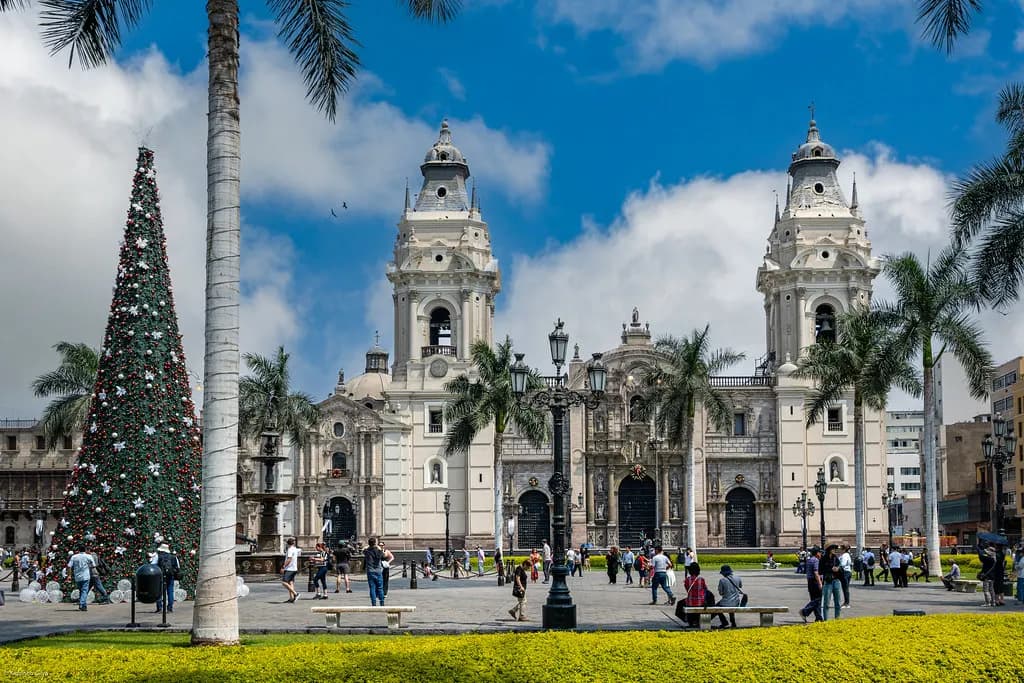
Lima has more restaurants on the World's 50 Best list than almost any other city on Earth, and the ceviche recipe locals insist is the only real one uses fish that never touches a stove — cooked entirely by citrus acid in a matter of minutes.
See full guide →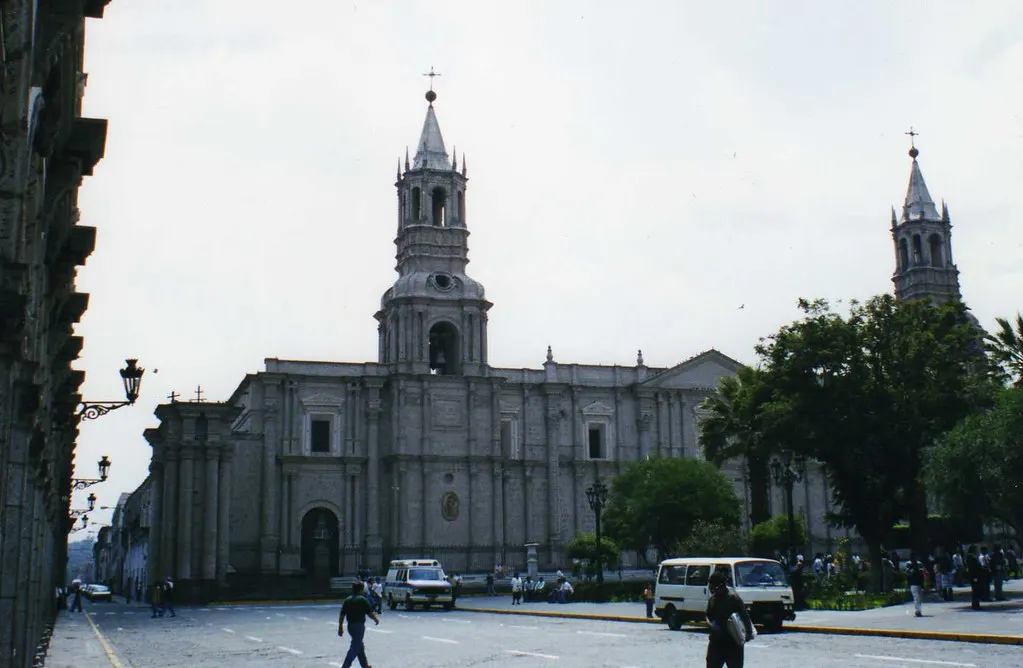 Arequipa
Arequipa
Peru
Arequipa is built almost entirely from sillar, a white volcanic stone quarried from the three volcanoes overlooking the city — enough of it that the whole historic center reflects sunlight back with a genuine, unmistakable glow that earned it the nickname "the White City."
See full guide →Comparing more than one route? See the full transport comparison guide.