Peru · South America
Lima
Lima has more restaurants on the World's 50 Best list than almost any other city on Earth, and the ceviche recipe locals insist is the only real one uses fish that never touches a stove — cooked entirely by citrus acid in a matter of minutes.
Lima has built one of the most internationally acclaimed food scenes anywhere in the world, regularly placing multiple restaurants on the World's 50 Best Restaurants list — a reputation built on extraordinary access to Pacific seafood, deep indigenous Peruvian culinary traditions, and generations of immigration, particularly from China and Japan, that fused into distinct hybrid cuisines like chifa and nikkei found nowhere else at this level of refinement.
Ceviche, Peru's signature dish, reaches a level of seriousness in Lima that's hard to overstate — the traditional preparation uses no heat at all, curing raw fish entirely through the citric acid in freshly squeezed lime juice, a process that takes minutes rather than hours and produces a dish locals treat as a genuine point of national pride rather than a casual appetizer.
Miraflores, Lima's most visitor-friendly district, sits along dramatic clifftops overlooking the Pacific, with a continuous string of parks running the length of the coastline — a striking urban geography that gives the district genuine ocean views without needing a beach directly below.
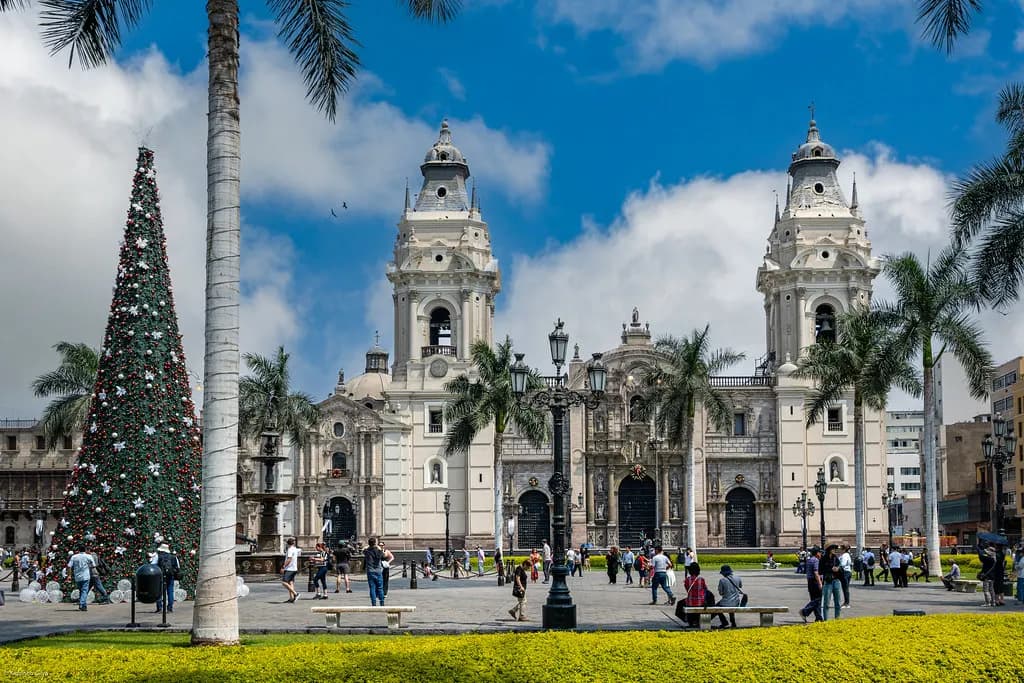
The historic center, a UNESCO World Heritage Site, reflects Lima's role as the seat of Spanish colonial power across much of South America for centuries — grand colonial architecture surrounds Plaza Mayor, and the Larco Museum, housed in an 18th-century mansion built atop a pre-Columbian pyramid, holds one of the most significant collections of ancient Peruvian art anywhere, including an extensive and frankly explicit erotic pottery collection that surprises many first-time visitors.
Barranco, Lima's bohemian neighborhood, developed as a 19th-century beach resort for the city's wealthy before evolving into an arts district dense with galleries, street art, and a livelier nightlife scene — a genuinely different pace from the more formal streets of Miraflores and San Isidro nearby.
What a trip here actually costs
$35 / day avg.
- Hostel in Miraflores or Barranco
- Local bus fares
- Ceviche and menu del día lunches
- Free clifftop park walks along the coast
What to do at this tier
- • Miraflores clifftop parks along the Pacific coastline, free
- • Historic center wander, including Plaza Mayor and the cathedral exterior, free
- • Barranco's bohemian streets and street art, free
$80 / day avg.
- 3-star hotel in Miraflores
- Historic center walking tour
- Sit-down Peruvian dinners
- Larco Museum entry
What to do at this tier
- • Larco Museum, a significant collection of pre-Columbian art housed in an 18th-century mansion
- • Historic center guided walking tour, covering colonial and pre-Hispanic layers
- • Sit-down ceviche lunch at a well-regarded cevichería
$190 / day avg.
- 4-5 star hotel with ocean views
- Tasting menu at a World's 50 Best-listed restaurant
- Private guided food and history tour
- Private day trip to nearby Pachacamac ruins
What to do at this tier
- • Tasting menu at one of Lima's World's 50 Best-listed restaurants, booked well in advance
- • Private guided food tour through Lima's markets and top restaurants
- • Private day trip to Pachacamac, a significant pre-Inca archaeological site south of the city
These are average estimates for planning purposes, not real-time prices — actual costs vary by season, availability, and how far ahead you book.
How to get there
Click anywhere on the world map — any airport works, not just our main hubs.
Click anywhere on the map above — any airport in the world works — to see estimated travel time and cost from there.
Times and prices are planning estimates, not live fares — always check a booking site before you commit. See the full Transport Comparison guide for the general tradeoffs of each mode.
Best time to visit
December-April brings the warmest, driest weather; Lima's coastal climate produces a notable gray mist (garúa) for much of the rest of the year even without heavy rain.
Safety notes
Generally safe in Miraflores, Barranco, and San Isidro with standard urban caution.
Visa & currency
Peruvian sol (PEN). Visa requirements vary by nationality; many Western passport holders can enter visa-free for short stays, worth confirming before booking.
Questions people ask before visiting
Is Lima worth visiting?
Yes — beyond functioning as the main gateway to Cusco and Machu Picchu, Lima has built one of the most internationally acclaimed food scenes in the world, a well-preserved colonial center, and a striking coastal setting with clifftop parks overlooking the Pacific.
Why is Lima's food scene so highly rated?
A combination of factors: access to extraordinary Pacific seafood, deep Peruvian culinary traditions blended with Chinese, Japanese, and Spanish immigrant influences, and a generation of chefs who've deliberately elevated home-style Peruvian dishes into fine dining. Several Lima restaurants regularly rank on the World's 50 Best Restaurants list.
Lima or Cusco — which should I prioritize?
Most Peru trips include both rather than choosing — Lima is the food and coastal capital, Cusco is the historic and Machu Picchu gateway. If time is genuinely limited, Cusco has the more singular, unmissable draw, but skipping Lima means missing Peru's culinary reputation entirely.
Is Lima safe?
Generally safe in Miraflores, Barranco, and San Isidro, the main visitor neighborhoods, with standard urban caution — like other major Latin American capitals, petty theft is a more realistic concern than violent crime for tourists sticking to well-trafficked areas.
How many days do you need in Lima?
Two days covers the historic center, Miraflores' clifftop parks, and a proper meal at one of the city's acclaimed restaurants. A third day allows Barranco's bohemian streets and a deeper dive into the food scene, including a market tour.
Nearby destinations
 Cusco
CuscoCusco
Peru
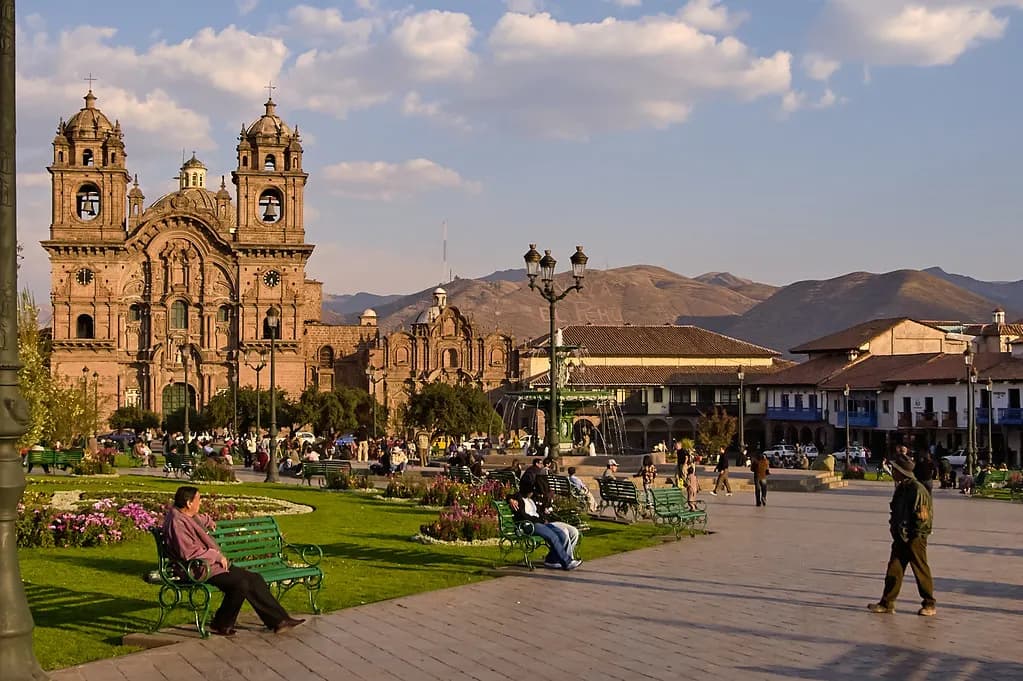
The Inca built stone walls so precisely fitted that you still can't slide a knife blade between the blocks 500 years later — and Cusco was their capital, the literal center of an empire that stretched further than the Roman Empire at its peak.
See full guide →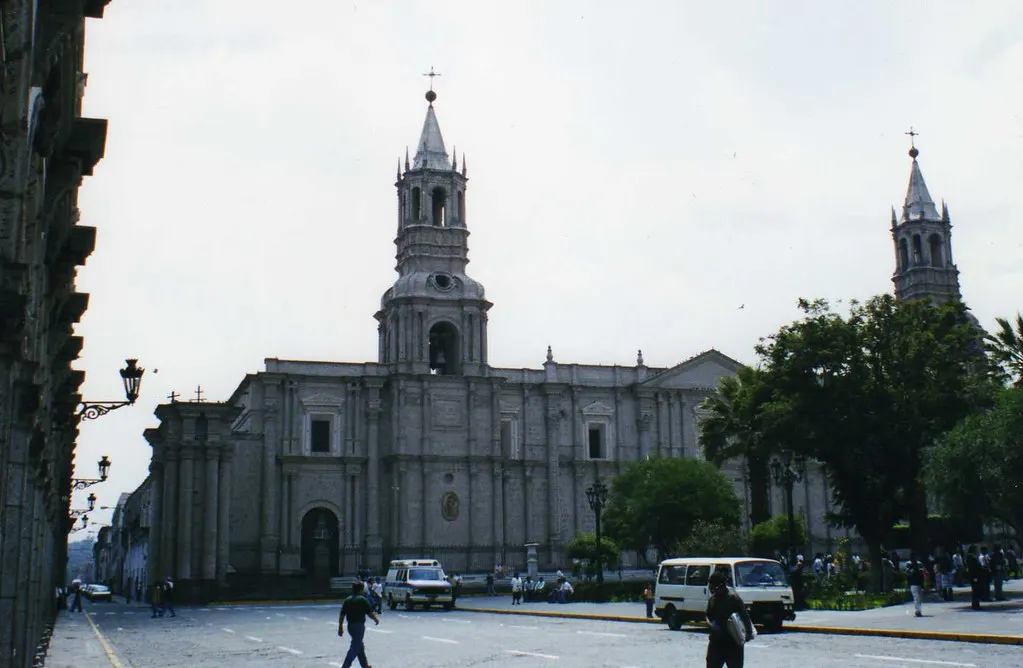 Arequipa
Arequipa
Peru
Arequipa is built almost entirely from sillar, a white volcanic stone quarried from the three volcanoes overlooking the city — enough of it that the whole historic center reflects sunlight back with a genuine, unmistakable glow that earned it the nickname "the White City."
See full guide →Comparing more than one route? See the full transport comparison guide.