Brazil · South America
Manaus
Just outside Manaus, the dark, slow-moving Rio Negro and the pale, fast, sediment-heavy Rio Solimões run side by side for several kilometers without fully mixing — a real, visible boundary between two rivers with different temperature, speed, and density, and the exact spot where the Amazon River is technically born.
Manaus sits at the exact geographic point where two of the Amazon basin's major rivers converge, and the meeting is visible in a way that surprises most first-time visitors. The dark, slow-moving Rio Negro and the pale, fast-flowing, sediment-rich Rio Solimões run side by side for several kilometers after they meet, kept distinct by real differences in temperature, current speed, and water density, before gradually blending into what becomes the main Amazon River itself.
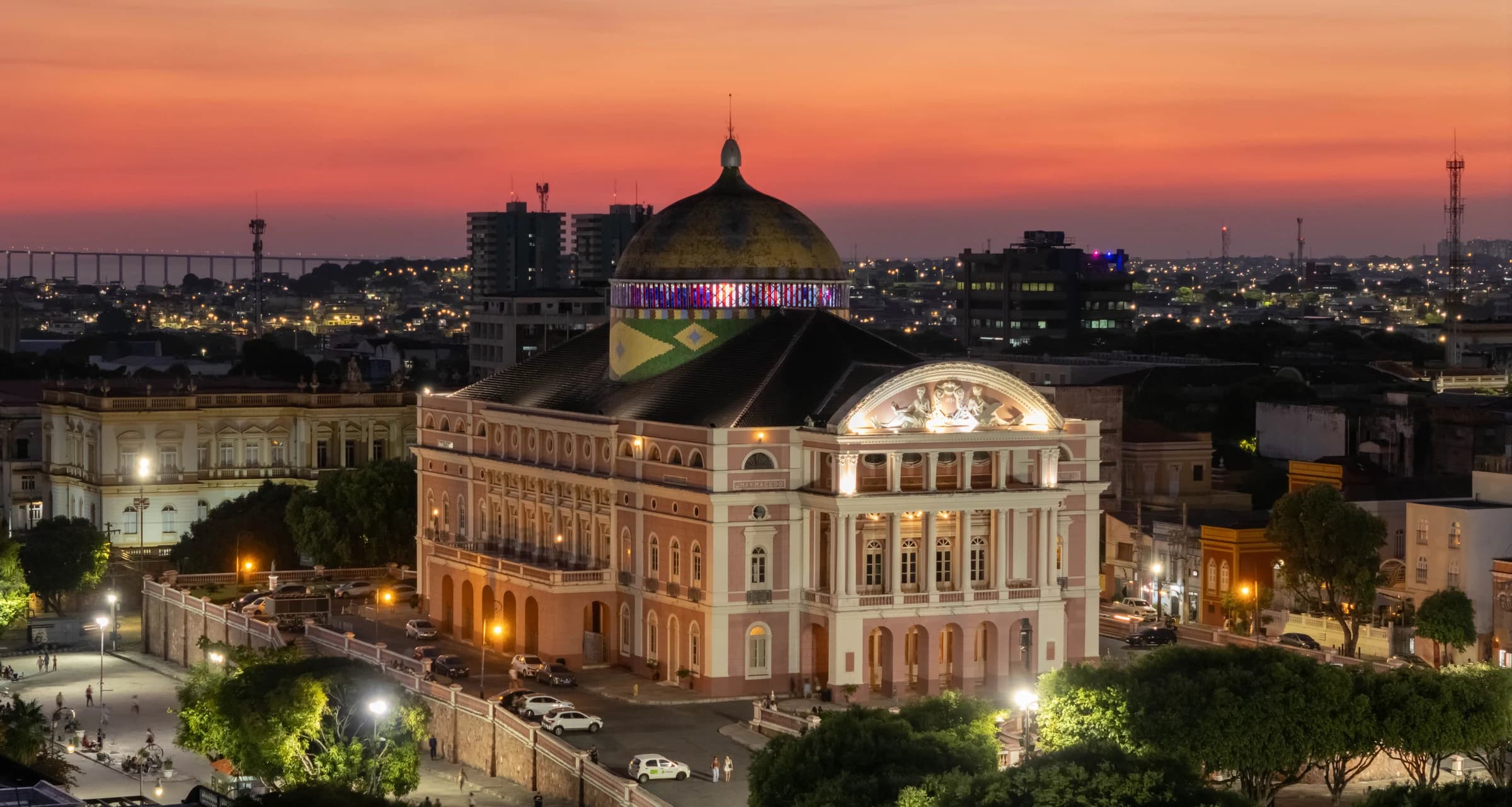
The city's most striking building, Teatro Amazonas, dates to the rubber boom of the late 1800s, when Manaus briefly became one of the wealthiest cities in the world on the strength of Amazonian rubber exports. Built with imported Italian marble, French ironwork, and a dome tiled to echo the colors of the Brazilian flag, the opera house stands as a genuinely striking symbol of that brief, extraordinary wealth deep in the rainforest.
Manaus's isolation remains a defining fact of the city today — with no reliable year-round road connection to most of the rest of Brazil, it's one of the largest cities in the world reachable mainly by air or river boat, a genuine practical constraint that shapes trade, cost of living, and daily life across the region.
That isolation also makes Manaus the natural gateway for rainforest tourism, with jungle lodges scattered along the surrounding rivers offering multi-day stays built around guided wildlife excursions, night canoe trips for spotting caimans, and walks focused on the rainforest's medicinal plants and ecology — experiences that go considerably deeper than a single day trip from the city can offer.
The Amazon rainforest surrounding Manaus holds an estimated 10 percent of the world's known species within a single, continuous ecosystem, a scale of biodiversity that has made the region a focus of ongoing scientific research as well as tourism, with new species still being formally documented in the areas around the city on a regular basis.
What a trip here actually costs
$45 / day avg.
- Hostel or budget hotel in central Manaus
- Casual Amazonian food, including fish dishes
- Meeting of the Waters group boat tour
- Teatro Amazonas guided tour
What to do at this tier
- • Teatro Amazonas, the opera house from the rubber boom era
- • Meeting of the Waters boat tour to see the two rivers side by side
- • Adolpho Lisboa Municipal Market for local Amazonian produce and fish
$120 / day avg.
- 3-star hotel in Manaus
- 2-3 day jungle lodge stay with guided excursions
- Meals included at the lodge
- Night canoe trip for caiman spotting
What to do at this tier
- • Multi-day jungle lodge stay with guided wildlife excursions
- • Night canoe trip for caiman spotting
- • Guided jungle walk focused on medicinal plants and rainforest ecology
$320 / day avg.
- High-end Amazon eco-lodge with private amenities
- Multi-day guided rainforest and river excursions
- All meals included
- Private guide for wildlife photography
What to do at this tier
- • High-end Amazon eco-lodge stay with private guiding
- • Multi-day river cruise deeper into the rainforest
- • Private wildlife photography excursion with a specialist guide
These are average estimates for planning purposes, not real-time prices — actual costs vary by season, availability, and how far ahead you book.
How to get there
Click anywhere on the world map — any airport works, not just our main hubs.
Click anywhere on the map above — any airport in the world works — to see estimated travel time and cost from there.
Times and prices are planning estimates, not live fares — always check a booking site before you commit. See the full Transport Comparison guide for the general tradeoffs of each mode.
Best time to visit
June through November, the drier season, makes jungle walking easier, though the Amazon remains genuinely humid and rainy year-round. December through May, the flooded season, allows more canoe-based exploration of areas inaccessible on foot.
Safety notes
Generally safe in the city with standard precautions; rainforest excursions should only be done with licensed guides given the genuine risks of the environment, and yellow fever vaccination is often required or strongly recommended before travel.
Visa & currency
Brazilian real (BRL). Visa requirements vary by nationality — several countries, including the US, require a visa for Brazil, so checking current requirements well before booking matters more here than for many South American destinations.
Questions people ask before visiting
Why don't the two rivers mix at the Meeting of the Waters?
The Rio Negro and Rio Solimões differ significantly in temperature, speed, water density, and acidity, which keeps them running as visibly distinct streams side by side for several kilometers before gradually blending. Boat tours from Manaus visit the exact point where the two colors meet.
What is the Amazon Theatre?
Teatro Amazonas, an ornate opera house completed in 1896 during the Amazon rubber boom, built with materials imported from Europe, including Italian marble and a dome tiled in the colors of the Brazilian flag. It's a striking symbol of the wealth the rubber trade briefly brought to a city deep in the rainforest, and it still hosts performances today.
How do you get to Manaus?
Almost entirely by air or river — Manaus has no reliable year-round road connection to most of the rest of Brazil, making it one of the largest cities in the world reachable mainly by plane or boat. Flights connect to major Brazilian cities, and river boats link it to smaller Amazon communities.
What can you actually see on an Amazon tour from Manaus?
Multi-day lodge stays offer the most substantial wildlife viewing, including caimans, pink river dolphins, and a wide range of birds, along with night canoe trips and guided jungle walks. Day trips from Manaus cover the Meeting of the Waters and closer rainforest areas but see notably less wildlife than staying overnight further from the city.
Nearby destinations
 Rio de Janeiro
Rio de Janeiro
Brazil
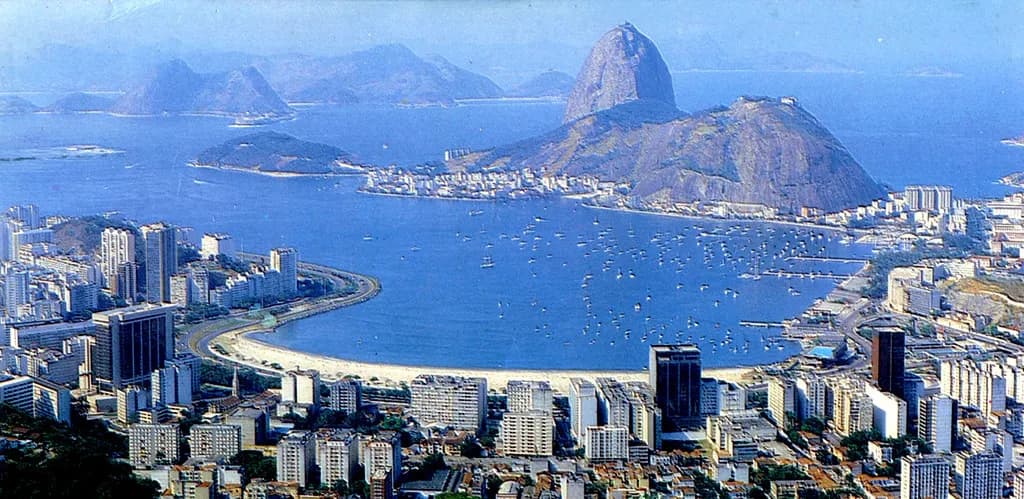
Christ the Redeemer took nine years to build and stands on a mountain that's part of a national park inside city limits — Rio has more urban rainforest within its borders than almost any other major city on Earth.
See full guide →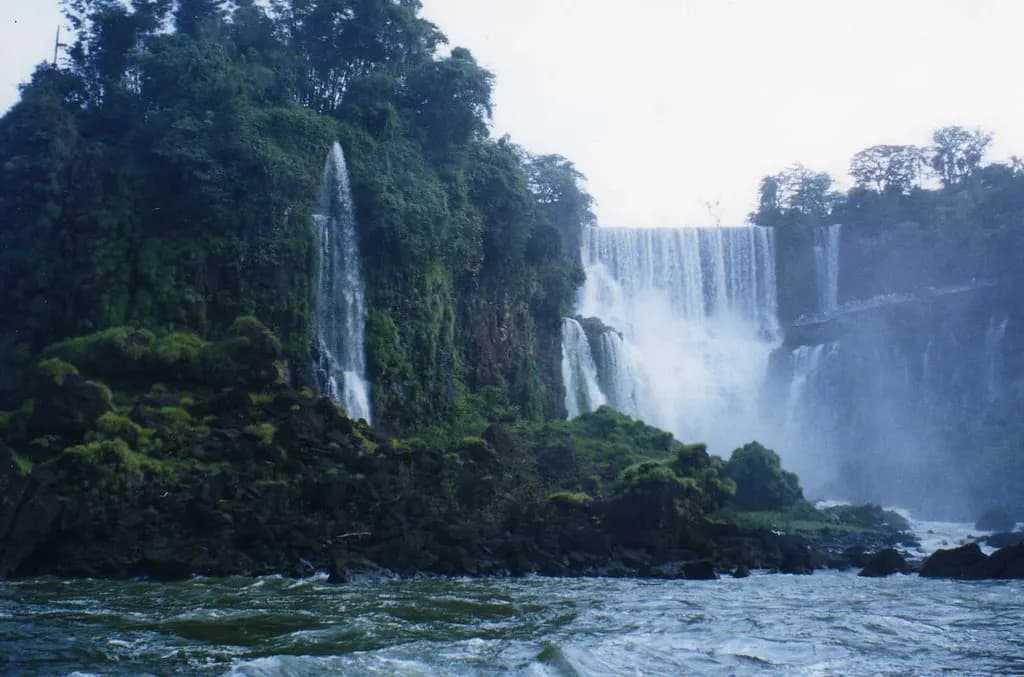 Iguazú Falls
Iguazú Falls
Argentina
Iguazú Falls is wider than Niagara and taller than Victoria Falls, and the comparison locals love to repeat is Eleanor Roosevelt's reported first reaction on seeing it: "Poor Niagara."
See full guide →Comparing more than one route? See the full transport comparison guide.