Guyana · South America
Georgetown
Guyana is the only country in South America where English is the official language, a legacy of British rule that also left Georgetown with St. George's Cathedral, one of the tallest wooden buildings on Earth, built entirely without structural steel.
Georgetown is the only capital city in South America built primarily around English rather than Spanish or Portuguese, a direct result of British rule over what was then called British Guiana until independence in 1966. That linguistic difference alone sets Guyana apart from every neighboring country, but the city's physical layout carries an equally distinct colonial fingerprint from an earlier Dutch period, when engineers reclaimed the land from the sea using the same drainage techniques used in the Netherlands.
Much of Georgetown, along with large stretches of Guyana's coast, sits below sea level and relies on a seawall and network of canals to keep the Atlantic out, a system of sluices and drainage still actively maintained today. Walking the seawall promenade at sunset is one of the more reliable things to do in the city, with the ocean visibly higher than the streets behind it.
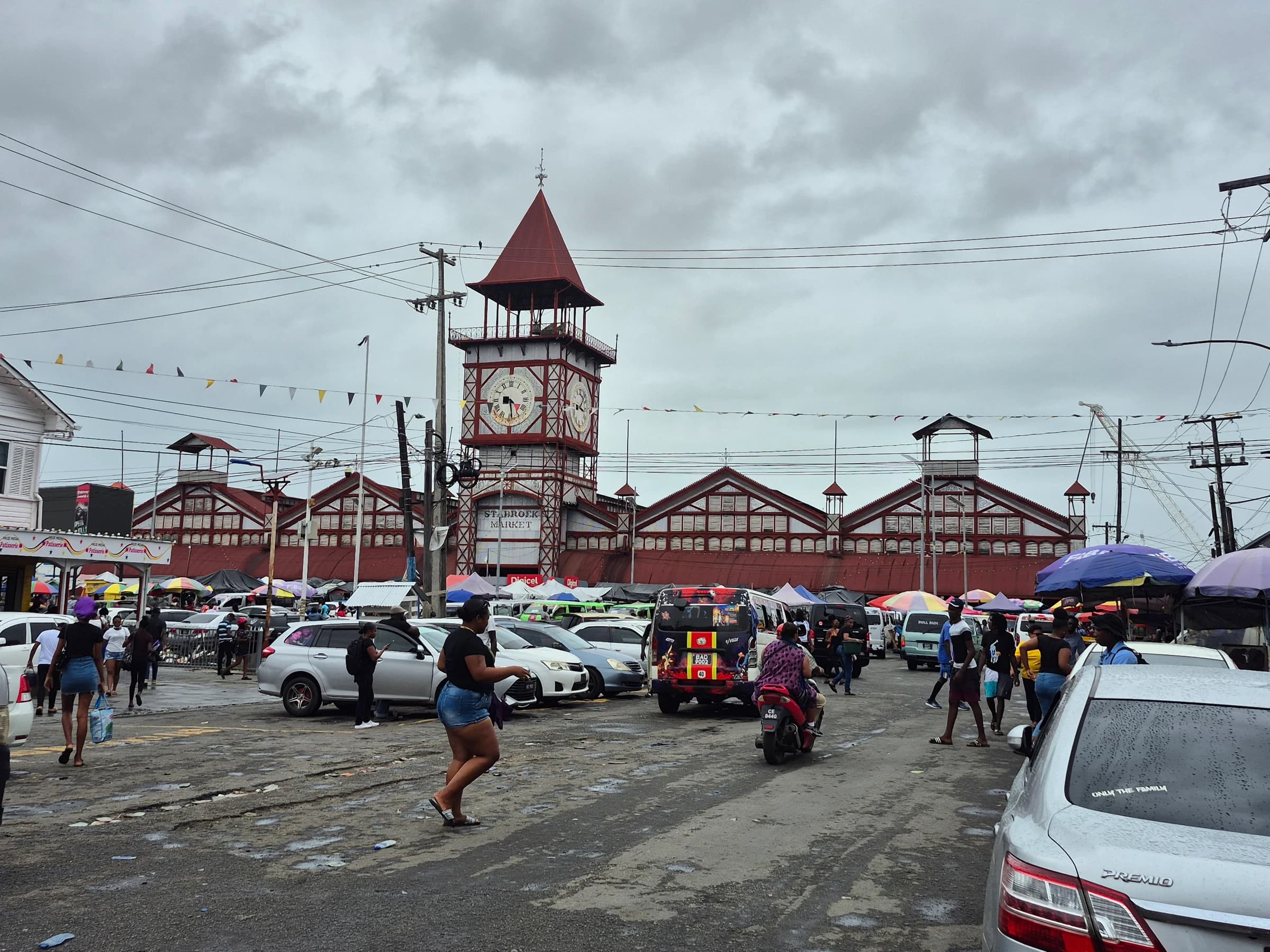
St. George's Cathedral, completed in 1892 and standing over 40 meters tall, is built almost entirely of wood, a design choice suited to the local climate and available materials rather than a stylistic flourish, and it remains one of the tallest wooden buildings anywhere in the world. Stabroek Market, with its cast-iron frame and prominent clock tower dating to the 1880s, functions as both a working market and one of the city's clearest colonial-era landmarks.
Guyana's economy has changed dramatically since 2015, when ExxonMobil discovered major offshore oil reserves off the coast. The country, previously one of South America's poorest, now posts some of the fastest GDP growth rates in the world, and Georgetown's skyline and infrastructure are visibly catching up to that shift year by year, even as the city retains its older wooden colonial core.
Most visitors treat Georgetown as a short stop before heading into Guyana's interior, where Kaieteur Falls drops water nearly five times the height of Niagara in a single, uninterrupted plunge, deep within rainforest that covers most of the country and remains largely unvisited by international tourism.
What a trip here actually costs
$30 / day avg.
- Guesthouse near the city center
- Local minibus fares
- Casual Guyanese meals
- Stabroek Market and seawall, free
What to do at this tier
- • Stabroek Market, a Victorian cast-iron market building with a distinctive clock tower, free to wander
- • Seawall promenade along the Atlantic, especially at sunset, free
- • St. George's Cathedral exterior, among the tallest wooden buildings in the world, free
$75 / day avg.
- 3-star hotel in Georgetown
- Guided city tour covering colonial architecture
- Sit-down Guyanese dinners
- Half-day trip to the Botanical Gardens and Zoo
What to do at this tier
- • Guided walking tour through Georgetown's colonial wooden architecture and history
- • Guyana National Museum, covering the country's colonial and indigenous history
- • Georgetown Botanical Gardens and Zoo, a green break from the city center
These are average estimates for planning purposes, not real-time prices — actual costs vary by season, availability, and how far ahead you book.
How to get there
Click anywhere on the world map — any airport works, not just our main hubs.
Click anywhere on the map above — any airport in the world works — to see estimated travel time and cost from there.
Times and prices are planning estimates, not live fares — always check a booking site before you commit. See the full Transport Comparison guide for the general tradeoffs of each mode.
Best time to visit
August-November is drier; Guyana sees two rainy seasons, roughly December-January and May-July, which can complicate travel outside the capital.
Safety notes
Generally safe in the main city center during the day with standard urban caution; petty theft is the main practical concern, and it's worth avoiding poorly lit areas after dark.
Visa & currency
Guyanese dollar (GYD). Many Western passport holders can enter visa-free for short stays, worth confirming before booking given Guyana's rapidly changing economic situation.
Questions people ask before visiting
Is Guyana worth visiting?
Yes, particularly for travelers drawn to genuinely off-the-beaten-path destinations — Guyana is the only English-speaking country in South America, largely covered in untouched Amazon rainforest, and has recently become one of the fastest-growing economies in the world following major offshore oil discoveries, all of which make it an unusually interesting stop for a country that still sees very few tourists.
Why does Georgetown have so much wooden colonial architecture?
Much of the city was built on land reclaimed from the sea by Dutch colonizers, using Dutch drainage engineering, and wood was the practical building material available. St. George's Cathedral, completed in 1892, is one of the tallest wooden buildings in the world at over 40 meters, and many of the city's older houses share the same raised, wooden construction style.
Is Georgetown below sea level?
Much of coastal Guyana, including large parts of Georgetown, sits below sea level and depends on a seawall and a network of canals and sluices, originally built under Dutch rule, to keep the Atlantic out. It's a similar engineering approach to parts of the Netherlands, adapted to the tropics.
How many days do you need in Georgetown?
One to two days covers Stabroek Market, St. George's Cathedral, and the seawall promenade. Most visitors treat Georgetown as a short stop before heading into Guyana's interior for rainforest lodges or Kaieteur Falls, one of the world's tallest single-drop waterfalls.
Nearby destinations
 Cayenne
Cayenne
French Guiana
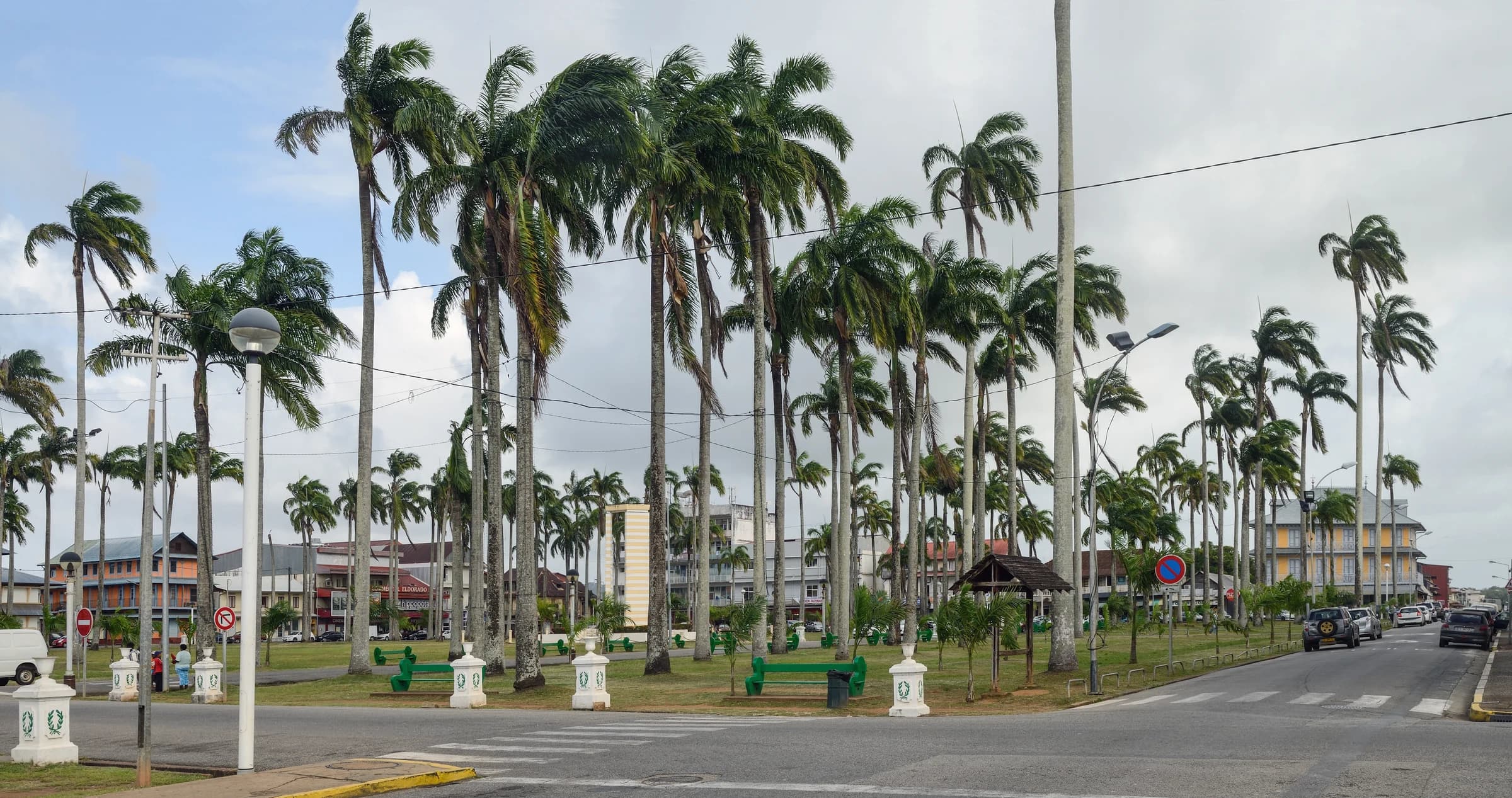
French Guiana isn't a country at all — it's a full region of France, using the euro and sending representatives to the French parliament, which makes Cayenne the only South American capital where you can pay in euros and never need a visa if you're an EU citizen.
See full guide →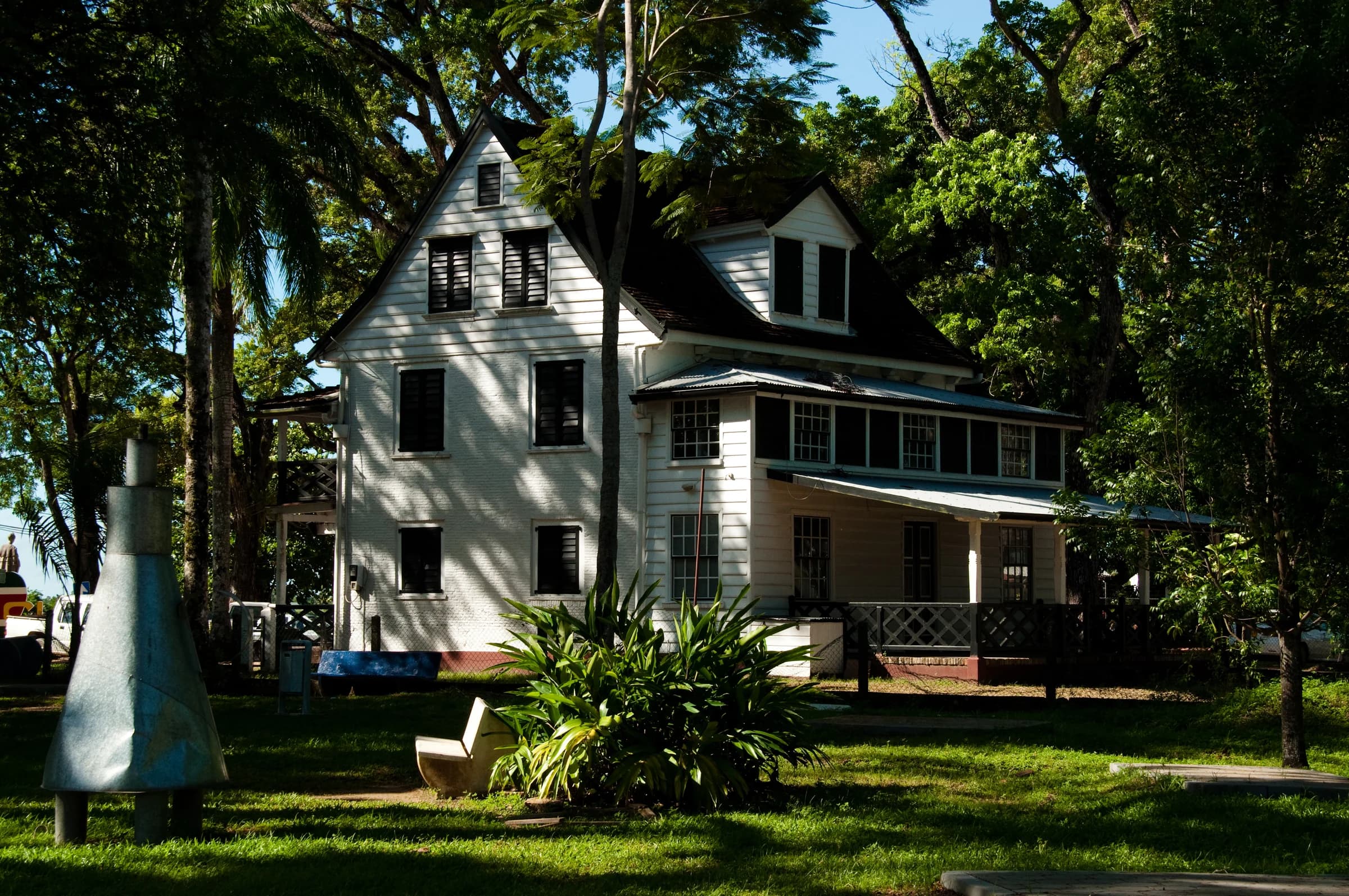 Paramaribo
Paramaribo
Suriname
Suriname is the only Dutch-speaking country in South America, and its capital's historic center is such a distinctive mix of Dutch colonial layout and wooden Caribbean-style building that UNESCO listed the entire inner city as a World Heritage Site.
See full guide →Comparing more than one route? See the full transport comparison guide.