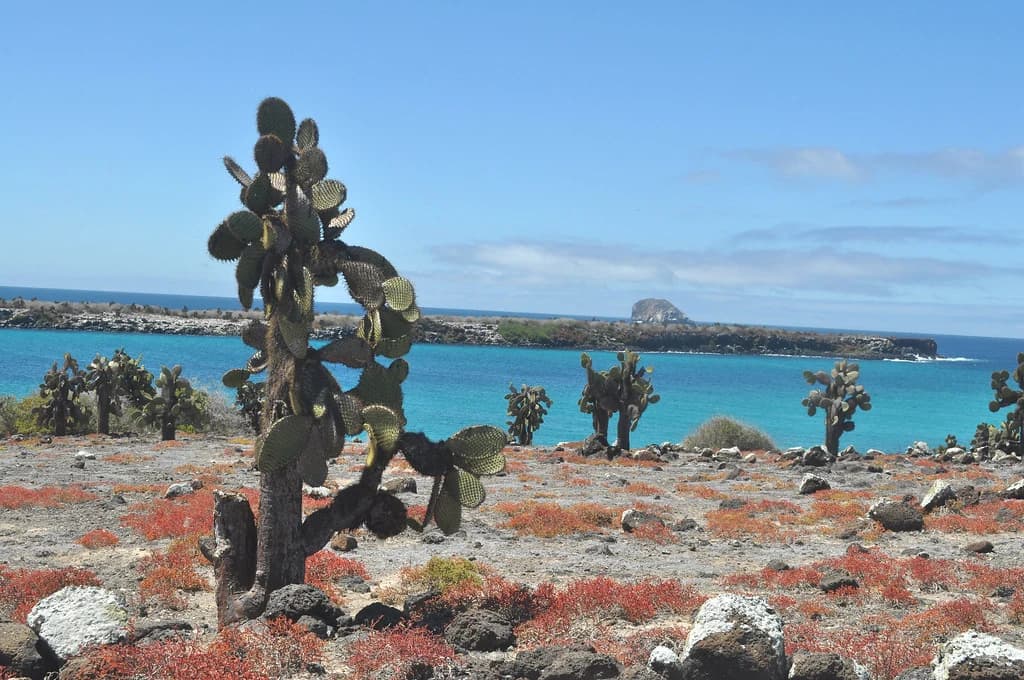
Ecuador · South America
Galápagos Islands
The giant tortoises that gave the Galápagos their name show almost no fear of humans, and neither do the marine iguanas, sea lions, or blue-footed boobies — a direct result of evolving for millions of years with no land predators, which is exactly the kind of undisturbed natural laboratory that let Charles Darwin piece together the theory of evolution in 1835.
The Galápagos Islands owe their name to the giant tortoises found nowhere else on Earth, "galápago" being an old Spanish word for saddle, a reference to the shape of some of the tortoises' shells. Those tortoises, along with marine iguanas, sea lions, and blue-footed boobies, share a striking trait: almost none of them show fear when approached, a direct consequence of evolving for millions of years on islands with no native land predators.
That undisturbed evolutionary laboratory is exactly what let Charles Darwin, visiting in 1835 aboard the HMS Beagle, observe how finches and tortoises varied distinctly from island to island — observations that became central evidence for the theory of evolution by natural selection he published decades later.
Roughly 97 percent of the islands' land area is protected as national park, and the regulations governing visits are genuinely strict: certified naturalist guides are required for most excursions, visitor numbers to specific sites are capped, and touching or feeding any animal carries real penalties, rules the islands' fame and fragility both make necessary.
The archipelago's volcanic origin remains active in places, and the resulting mix of young, barren lava fields alongside older, more vegetated islands gives different islands genuinely distinct landscapes and wildlife within a fairly compact area — a variety that multi-day cruises are built specifically to cover.
Marine life gets equal billing with the islands' famous land animals — the Galápagos marine iguana is the only iguana species on Earth that forages in the ocean, diving to graze on algae, a behavior found in no other lizard anywhere, and one more example of how isolated evolution here produced species with no real equivalent elsewhere.
What a trip here actually costs
$250 / day avg.
- Land-based hotel on Santa Cruz or San Cristóbal
- Daily guided day tours to nearby islands
- Meals included with tour packages
- National Park entry fee, prorated
What to do at this tier
- • Day tour to North Seymour or Plaza Sur islands for blue-footed boobies and land iguanas
- • Snorkeling with sea lions and sea turtles
- • Charles Darwin Research Station on Santa Cruz, seeing giant tortoise breeding programs
$600 / day avg.
- Multi-day small-ship cruise with full board
- Certified naturalist guide included on all excursions
- Snorkeling and wildlife excursions daily
- Transfers and National Park fee included
What to do at this tier
- • Multi-day small-ship cruise covering several remote islands
- • Diving trip to see hammerhead sharks near Wolf or Darwin Island
- • Private naturalist-guided highland tour to see wild giant tortoises
These are average estimates for planning purposes, not real-time prices — actual costs vary by season, availability, and how far ahead you book.
How to get there
Click anywhere on the world map — any airport works, not just our main hubs.
Click anywhere on the map above — any airport in the world works — to see estimated travel time and cost from there.
Times and prices are planning estimates, not live fares — always check a booking site before you commit. See the full Transport Comparison guide for the general tradeoffs of each mode.
Best time to visit
June through December brings cooler, drier conditions and calmer seas, generally considered the best wildlife-viewing window, though the archipelago has genuinely good visits year-round given its equatorial position.
Safety notes
Very safe with low crime; the main practical concern is following National Park rules strictly, since fines for touching wildlife or straying off marked trails are real and enforced.
Visa & currency
US dollar (USD), Ecuador's official currency. Most Western passport holders can enter Ecuador visa-free for tourist stays, though the Galápagos requires a separate transit control card and entry fee paid on arrival.
Questions people ask before visiting
Why is the wildlife in the Galápagos so unafraid of people?
The islands had no native land predators before humans arrived, so animals never evolved a fear response to large approaching creatures. Marine iguanas, sea lions, and giant tortoises routinely allow visitors to walk within a few meters, though touching or feeding any animal is strictly prohibited to protect that natural behavior.
Should you visit the Galápagos by cruise or based on land?
A multi-day cruise reaches more remote islands and covers more ground, generally considered the more complete way to see the archipelago's variety. Land-based trips, staying on one of the inhabited islands and taking day tours, cost less and suit travelers who prefer a fixed base over shipboard life.
Is the Galápagos expensive?
Yes, among the more expensive destinations in South America — strict conservation regulations limit visitor numbers and require certified naturalist guides for most activities, which keeps costs well above typical Ecuador travel. The $100 National Park entry fee is separate from flights, tours, and accommodation.
How many days do you need in the Galápagos?
A week is the practical minimum to see a meaningful range of islands and wildlife, given how much of a typical itinerary is built around boat transit between sites. Shorter 3-4 day trips are possible but limit you to islands near Santa Cruz or San Cristóbal.
Nearby destinations
 Quito
QuitoQuito
Ecuador
Quito's historic center was one of the first two sites UNESCO ever named to its World Heritage list in 1978, tied with Krakow — and the city sits close enough to the equator that you can stand with one foot in each hemisphere at a monument just outside town.
See full guide →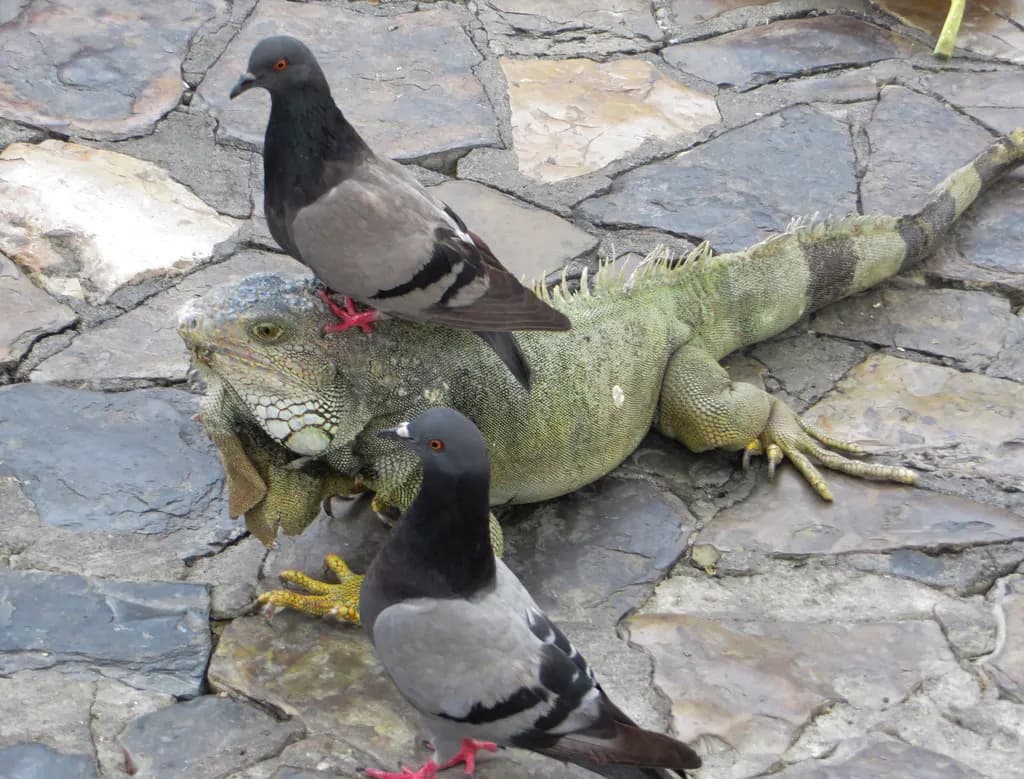 Guayaquil
Guayaquil
Ecuador
Guayaquil spent decades known mainly as Ecuador's rougher port city — then it rebuilt its entire riverfront into a two-and-a-half-kilometer public promenade and turned a formerly dangerous hillside slum into one of its most colorful, visited neighborhoods.
See full guide →Comparing more than one route? See the full transport comparison guide.