Brazil · South America
Fernando de Noronha
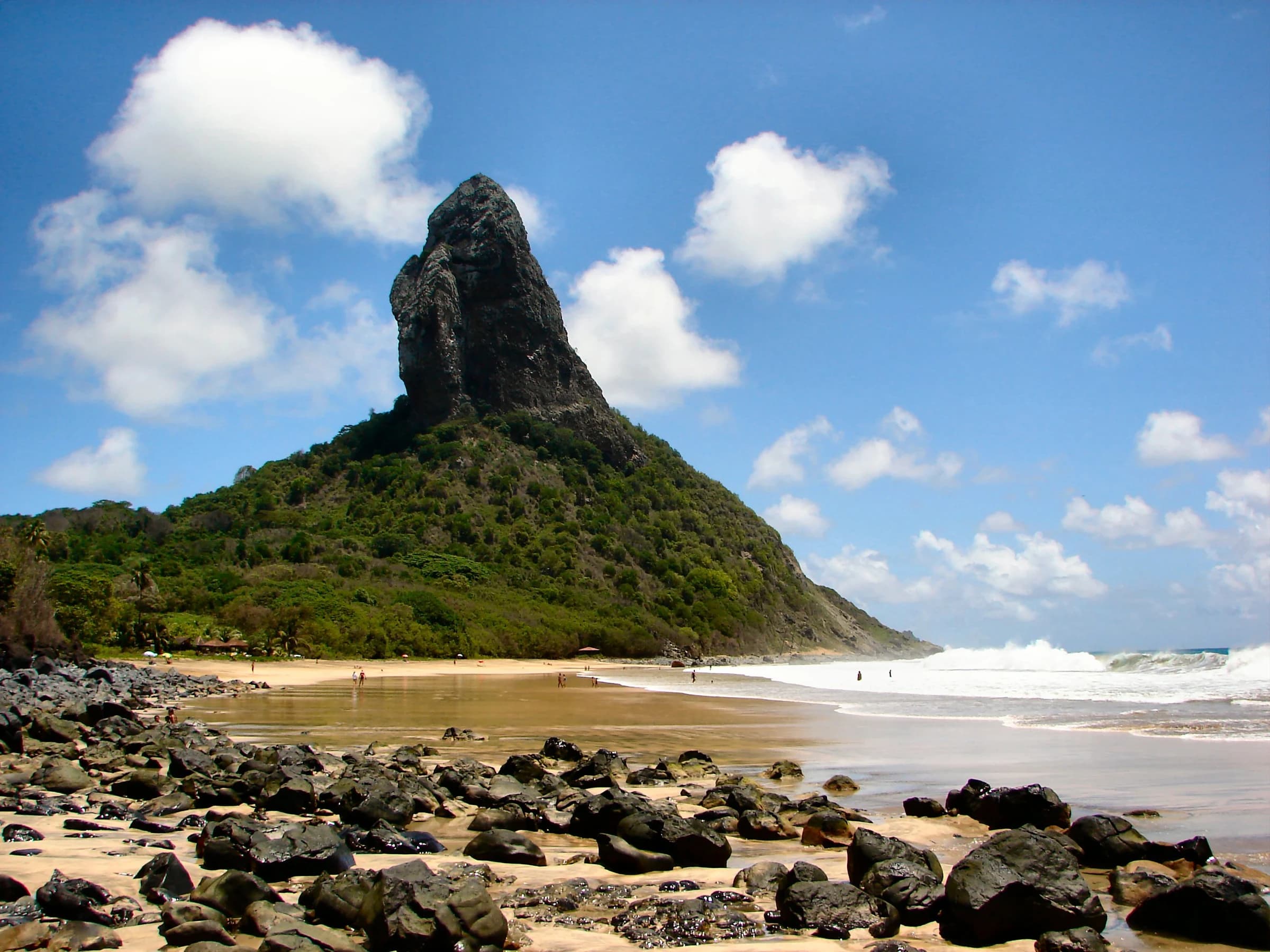
Brazil charges every visitor to Fernando de Noronha a daily environmental tax that increases the longer you stay, a deliberate policy to limit tourist numbers on an archipelago whose Baía do Sancho has repeatedly been ranked the best beach in the world.
Fernando de Noronha sits about 350 kilometers off Brazil's northeastern coast, an archipelago of volcanic islands reachable only by flight from Recife or Natal. Brazil deliberately limits how many people can visit at once, capping daily arrivals and charging a Taxa de Preservação Ambiental, an environmental tax that increases with every additional day of your stay, on top of a separate marine park entrance fee. The result is a place that costs considerably more than most of Brazil and stays correspondingly less crowded and better preserved.
Baía do Sancho, reached by a narrow path involving a ladder built into a crack in the cliff face, has topped multiple international traveler surveys ranking the world's best beaches, including repeated first-place finishes on TripAdvisor's Travelers' Choice awards. The approach alone filters out casual visitors, and the beach on the other side, walled in by cliffs on three sides and open to clear water on the fourth, tends to earn the reputation on sight.
Spinner dolphins gather most mornings in Baía dos Golfinhos, a bay closed to swimmers specifically to protect the pattern, and an overlook above the water lets visitors watch dozens of dolphins circling below without disturbing them. It's one of the more reliable wild dolphin-viewing spots anywhere, tied directly to the bay's naturally sheltered shape.
UNESCO listed Fernando de Noronha, along with the more remote Atol das Rocas further offshore, as a World Heritage Site in 2001, recognizing the archipelago's role as a breeding ground for tuna, shark, turtle, and seabird populations across the South Atlantic. The surrounding marine park, which covers most of the archipelago's waters, restricts fishing and development in ways that have kept the reef and fish populations considerably healthier than much of Brazil's mainland coast.
The cost of getting here and staying, driven by flight prices, the environmental tax, and limited accommodation supply, keeps Fernando de Noronha firmly in luxury territory for most travelers, but it's also the mechanism holding visitor numbers down in the first place. Brazil built the economics of the trip around scarcity on purpose.
What a trip here actually costs
$350 / day avg.
- Pousada near Vila dos Remédios
- Daily environmental preservation tax and park entrance fee
- Snorkeling or diving excursion
- Sit-down dinners at island restaurants
What to do at this tier
- • Baía do Sancho, reached via a ladder-and-tunnel path down a cliff face, repeatedly ranked among the world's best beaches
- • Dolphin watching at dawn from the Baía dos Golfinhos overlook, where spinner dolphins gather most mornings
- • Snorkeling or diving at Baía dos Porcos and the surrounding marine park, known for clear water and abundant reef fish
These are average estimates for planning purposes, not real-time prices — actual costs vary by season, availability, and how far ahead you book.
How to get there
Click anywhere on the world map — any airport works, not just our main hubs.
Click anywhere on the map above — any airport in the world works — to see estimated travel time and cost from there.
Times and prices are planning estimates, not live fares — always check a booking site before you commit. See the full Transport Comparison guide for the general tradeoffs of each mode.
Best time to visit
August-December brings the calmest, clearest water for snorkeling and diving; the rainier season runs roughly January-July, though the archipelago stays warm year-round.
Safety notes
Very safe; the archipelago has minimal crime and a small resident population focused on tourism and conservation work.
Visa & currency
Brazilian real (BRL). The environmental preservation tax is charged separately per day and increases the longer you stay, so factor it into trip length decisions. Visa requirements vary by nationality and follow standard Brazilian entry rules.
Questions people ask before visiting
Is Fernando de Noronha worth visiting?
Yes, if the cost fits your budget — this remote Brazilian archipelago has some of the clearest water and best-preserved marine life in the South Atlantic, and Baía do Sancho has repeatedly ranked among the world's best beaches in international traveler surveys. It's genuinely expensive relative to mainland Brazil, which is part of how it's stayed this well preserved.
Why does Fernando de Noronha charge an environmental tax?
Brazil limits the number of visitors allowed on the archipelago at any one time and charges a daily Taxa de Preservação Ambiental, an environmental preservation tax, that increases cumulatively with each additional day of your stay. A separate national marine park entrance fee also applies. Both exist specifically to fund conservation and discourage over-tourism on a small, ecologically sensitive island.
How do you get to Fernando de Noronha?
By flight only, from either Recife or Natal on Brazil's mainland northeast coast. There's no ferry service for tourists, and the airport has limited daily capacity, which is part of what keeps visitor numbers controlled.
How many days do you need in Fernando de Noronha?
Four to five days covers the main beaches, snorkeling spots, and a dolphin-watching morning at Baía dos Golfinhos. Given the flight cost and daily environmental tax, most visitors stay at least four days to make the trip worthwhile rather than doing a quick overnight.
Nearby destinations
 Salvador
Salvador
Brazil
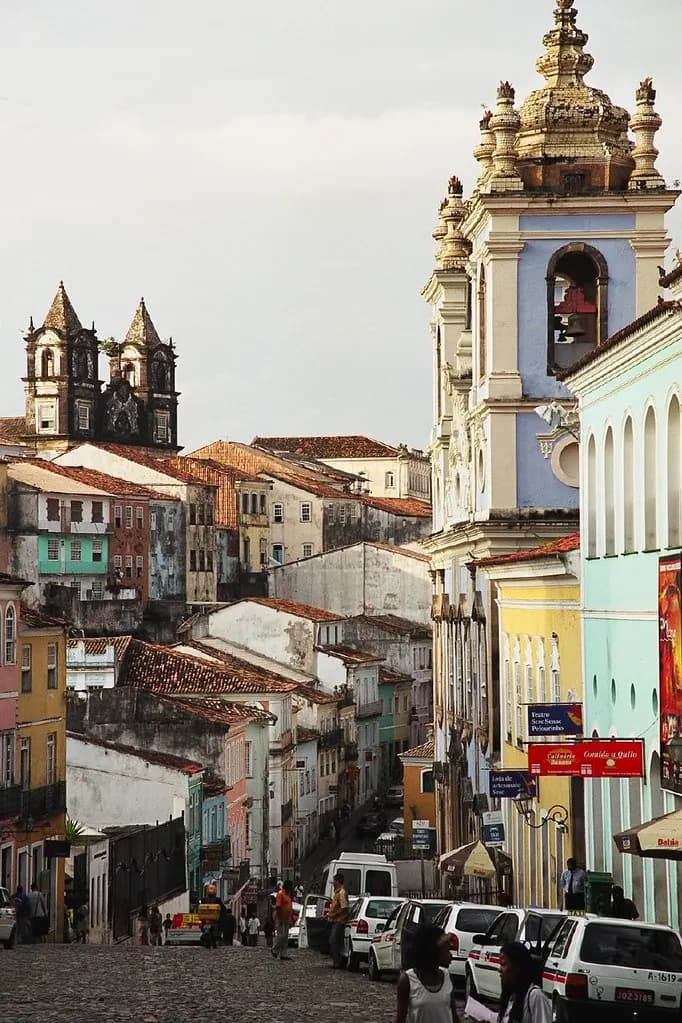
Salvador was Brazil's first capital for over two centuries and the main port of the entire Atlantic slave trade into the Americas — today it has the largest Afro-Brazilian population and culture of any city in the country, most visible in the historic Pelourinho square where that painful history and its resulting culture collide most directly.
See full guide →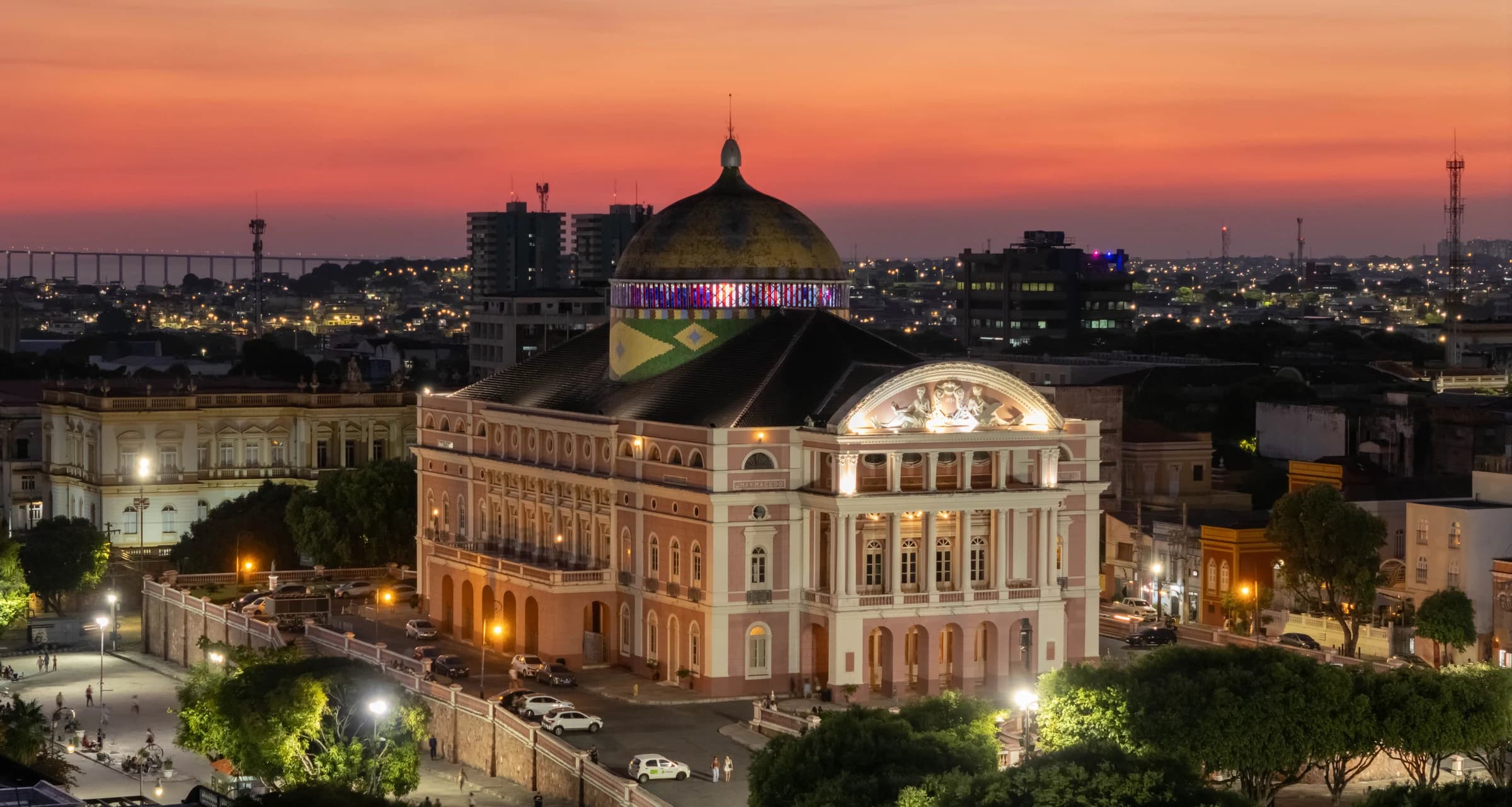 Manaus
Manaus
Brazil
Just outside Manaus, the dark, slow-moving Rio Negro and the pale, fast, sediment-heavy Rio Solimões run side by side for several kilometers without fully mixing — a real, visible boundary between two rivers with different temperature, speed, and density, and the exact spot where the Amazon River is technically born.
See full guide →Comparing more than one route? See the full transport comparison guide.