Ecuador · South America
Cuenca
The Panama hat isn't from Panama at all — it's woven almost entirely in and around Cuenca, Ecuador, and got its misleading name because 19th and early 20th century exporters shipped the hats through the Panama Canal region, where travelers and eventually Theodore Roosevelt himself picked them up and made the name stick.
The Panama hat's name is one of the more persistent geographic misnomers in the world — the hats have been hand-woven from toquilla palm straw in and around Cuenca since colonial times, with no meaningful connection to Panama in their production. The misleading name took hold when 19th-century exporters shipped the hats through Panama during the California Gold Rush, and it stuck permanently after Theodore Roosevelt was photographed wearing one during a 1906 visit to the Panama Canal construction site, cementing an association Ecuador has spent over a century trying to correct.
Cuenca's historic center, a UNESCO World Heritage Site since 1999, preserves one of Ecuador's most complete colonial-era cityscapes, its streets built along and across four rivers that still run through the city today, giving it a genuinely distinct layout compared to more purely grid-based Spanish colonial towns.
That preserved character, combined with a mild highland climate residents describe as eternal spring, a comparatively low cost of living, and reasonably accessible healthcare, has made Cuenca one of the most consistently recommended international retirement destinations for years, drawing a significant, established community of American and Canadian expatriates.
A few hours outside the city, the Ingapirca ruins hold Ecuador's largest known Inca archaeological site, blending Inca stonework with structures built earlier by the indigenous Cañari people — considerably smaller in scale than Peru's major Inca sites, but offering a genuine, uncrowded look at pre-Columbian construction and astronomical alignment.
Cajas National Park, in the páramo highlands just outside Cuenca, adds a strikingly different landscape within easy reach of the city — hundreds of glacial lakes scattered across a windswept, high-altitude ecosystem found in only a few places in the world, offering hiking largely untouched by the tourism infrastructure built up around Ecuador's more famous natural sites.
What a trip here actually costs
$35 / day avg.
- Hostel or budget guesthouse in the historic center
- Casual Ecuadorian meals at local markets
- Walking the colonial center, free
- Public bus fares
What to do at this tier
- • Historic center's colonial architecture and four rivers, free to walk
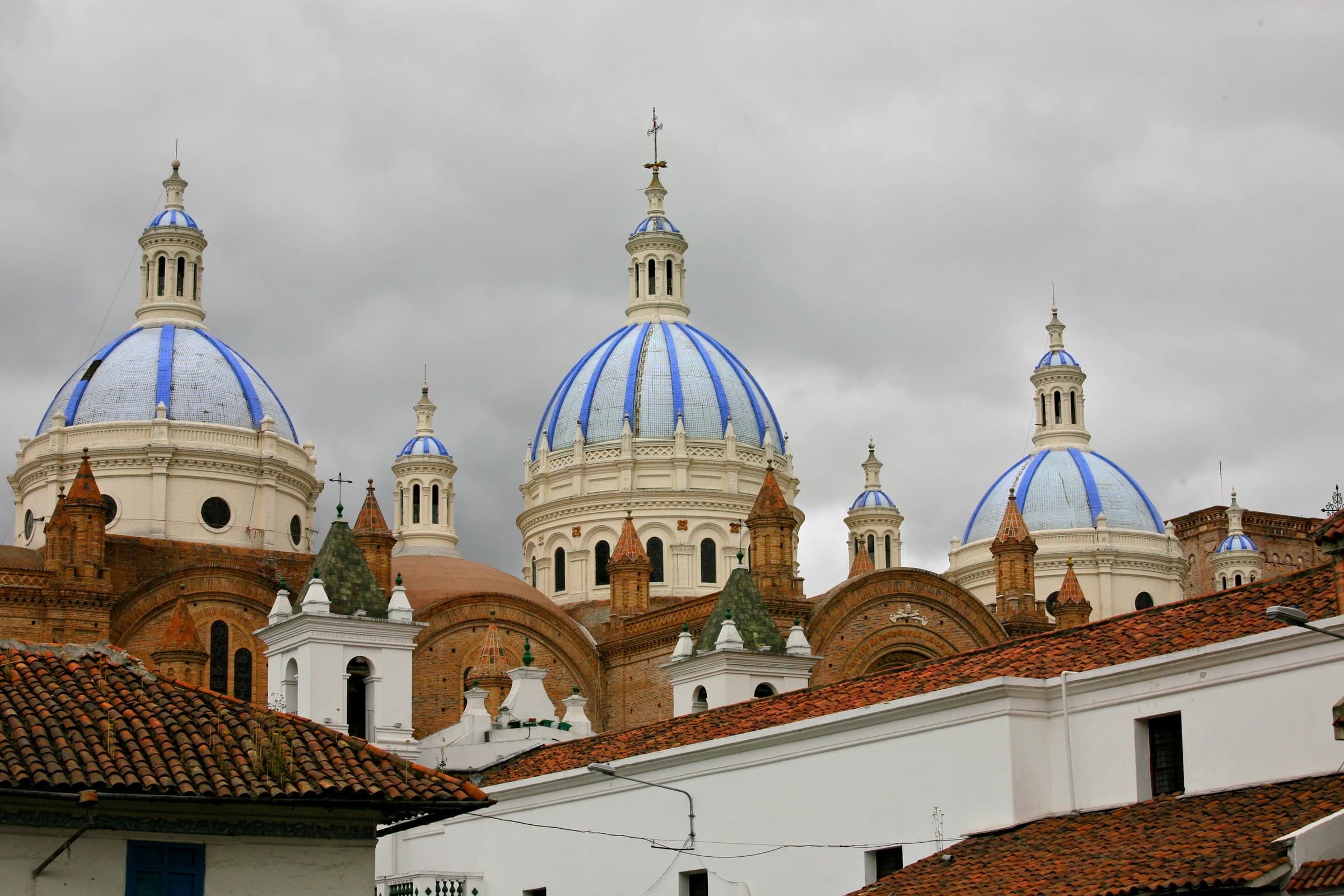
- • New Cathedral (Catedral de la Inmaculada Concepción) and its blue domes
- • Local markets for affordable Ecuadorian food
$85 / day avg.
- 3-star hotel in a restored colonial building
- Panama hat workshop visit and tour
- Sit-down dinners
- Day trip to Ingapirca ruins
What to do at this tier
- • Panama hat workshop tour to see traditional toquilla straw weaving
- • Day trip to the Ingapirca Inca ruins
- • Museo Pumapungo, covering Ecuadorian archaeology and culture
$220 / day avg.
- Boutique hotel in the historic center
- Private artisan and history tour
- Fine dining reservations
- Private guided day trip to Ingapirca and Cajas National Park
What to do at this tier
- • Private guided day trip combining Ingapirca and Cajas National Park
- • Private artisan tour covering hat weaving, ceramics, and jewelry workshops
- • Fine dining reservation at a top-rated Cuenca restaurant
These are average estimates for planning purposes, not real-time prices — actual costs vary by season, availability, and how far ahead you book.
How to get there
Click anywhere on the world map — any airport works, not just our main hubs.
Click anywhere on the map above — any airport in the world works — to see estimated travel time and cost from there.
Times and prices are planning estimates, not live fares — always check a booking site before you commit. See the full Transport Comparison guide for the general tradeoffs of each mode.
Best time to visit
Cuenca's climate stays mild nearly year-round given its highland location, often called eternal spring; June through September tends to be driest, though rain is possible any month.
Safety notes
Very safe by regional standards, one of Ecuador's lowest-crime major cities; standard urban precautions still apply in the historic center and markets.
Visa & currency
US dollar (USD), Ecuador's official currency. Most Western passport holders can enter Ecuador visa-free for tourist stays — worth confirming current requirements before booking.
Questions people ask before visiting
Why is the Panama hat actually from Ecuador?
The hats have been hand-woven from toquilla palm straw in and around Cuenca since the colonial era, but they gained their misleading name after being exported through Panama during the California Gold Rush and later the Panama Canal's construction, where the association stuck internationally, especially once Theodore Roosevelt was photographed wearing one during a 1906 canal visit.
Why does Cuenca attract so many foreign retirees?
A combination of a well-preserved colonial center, a mild year-round climate often described locally as eternal spring, a genuinely lower cost of living than most comparable cities, and good healthcare access has made it a consistently top-ranked international retirement destination, particularly among American and Canadian retirees.
What are the Ingapirca ruins?
Ecuador's largest known Inca archaeological site, a few hours from Cuenca, combining Inca construction with earlier Cañari indigenous structures. It's considerably smaller than Peru's major Inca sites but offers a genuine, less crowded look at Inca stonework and astronomical alignment.
Is Cuenca worth visiting?
Yes, particularly for well-preserved colonial architecture, a genuine artisan culture including Panama hat weaving, and a noticeably calmer pace than Ecuador's larger cities, all within a UNESCO World Heritage historic center.
Nearby destinations
 Quito
QuitoQuito
Ecuador
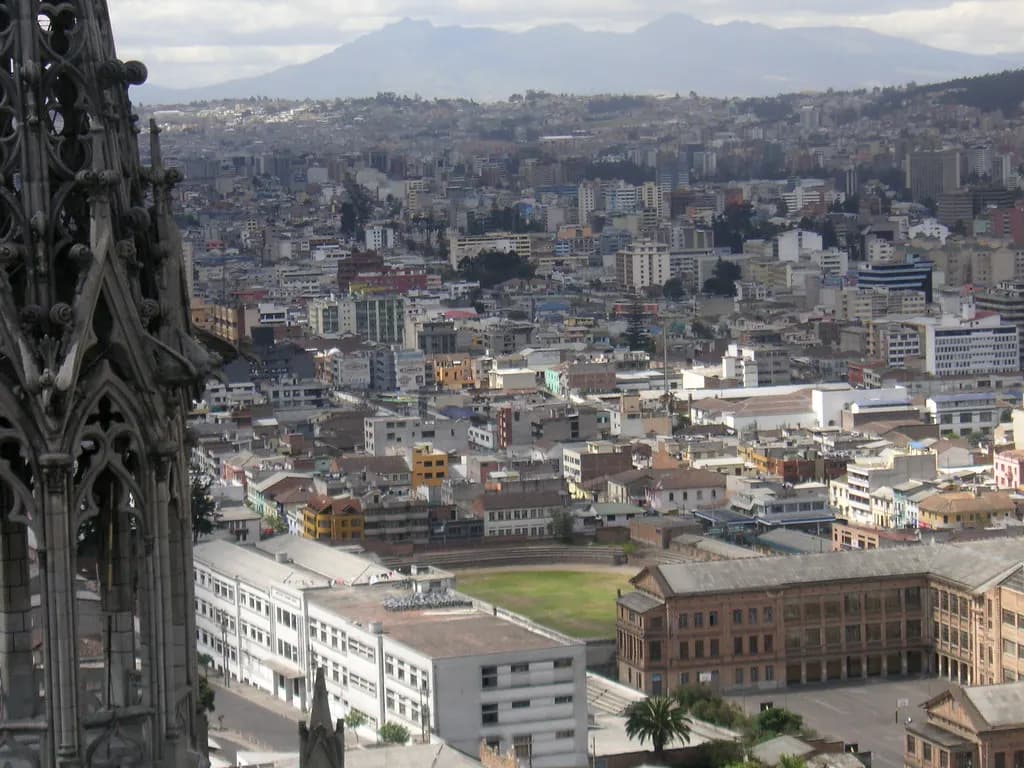
Quito's historic center was one of the first two sites UNESCO ever named to its World Heritage list in 1978, tied with Krakow — and the city sits close enough to the equator that you can stand with one foot in each hemisphere at a monument just outside town.
See full guide →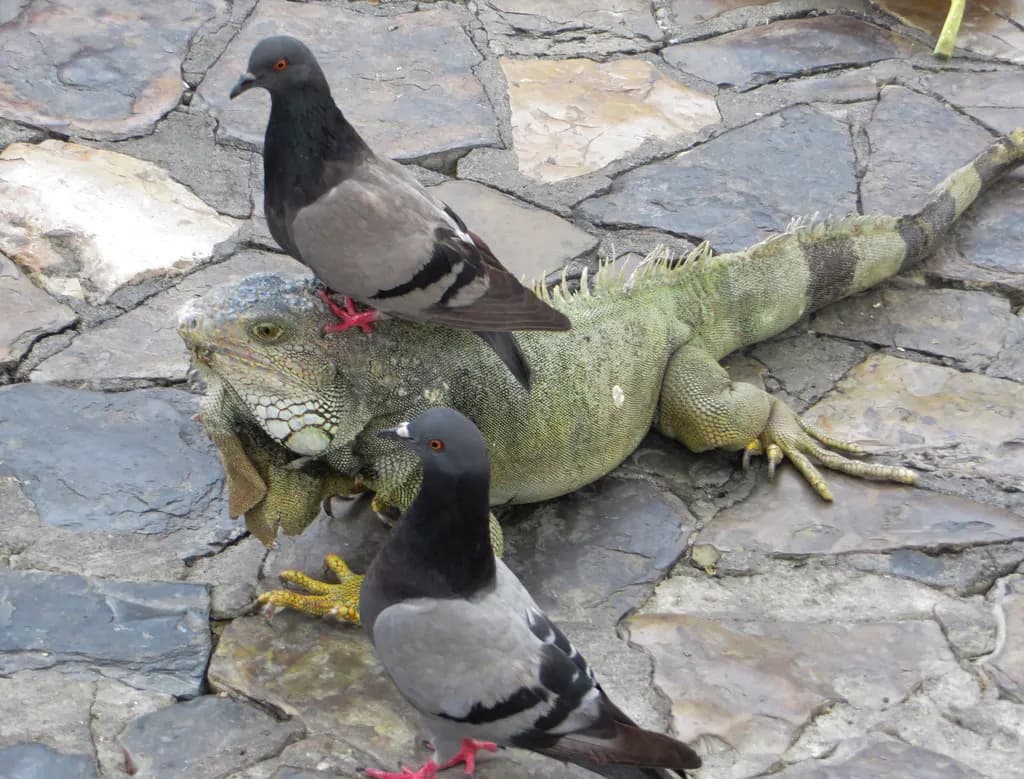 Guayaquil
Guayaquil
Ecuador
Guayaquil spent decades known mainly as Ecuador's rougher port city — then it rebuilt its entire riverfront into a two-and-a-half-kilometer public promenade and turned a formerly dangerous hillside slum into one of its most colorful, visited neighborhoods.
See full guide →Comparing more than one route? See the full transport comparison guide.