Venezuela · South America
Caracas
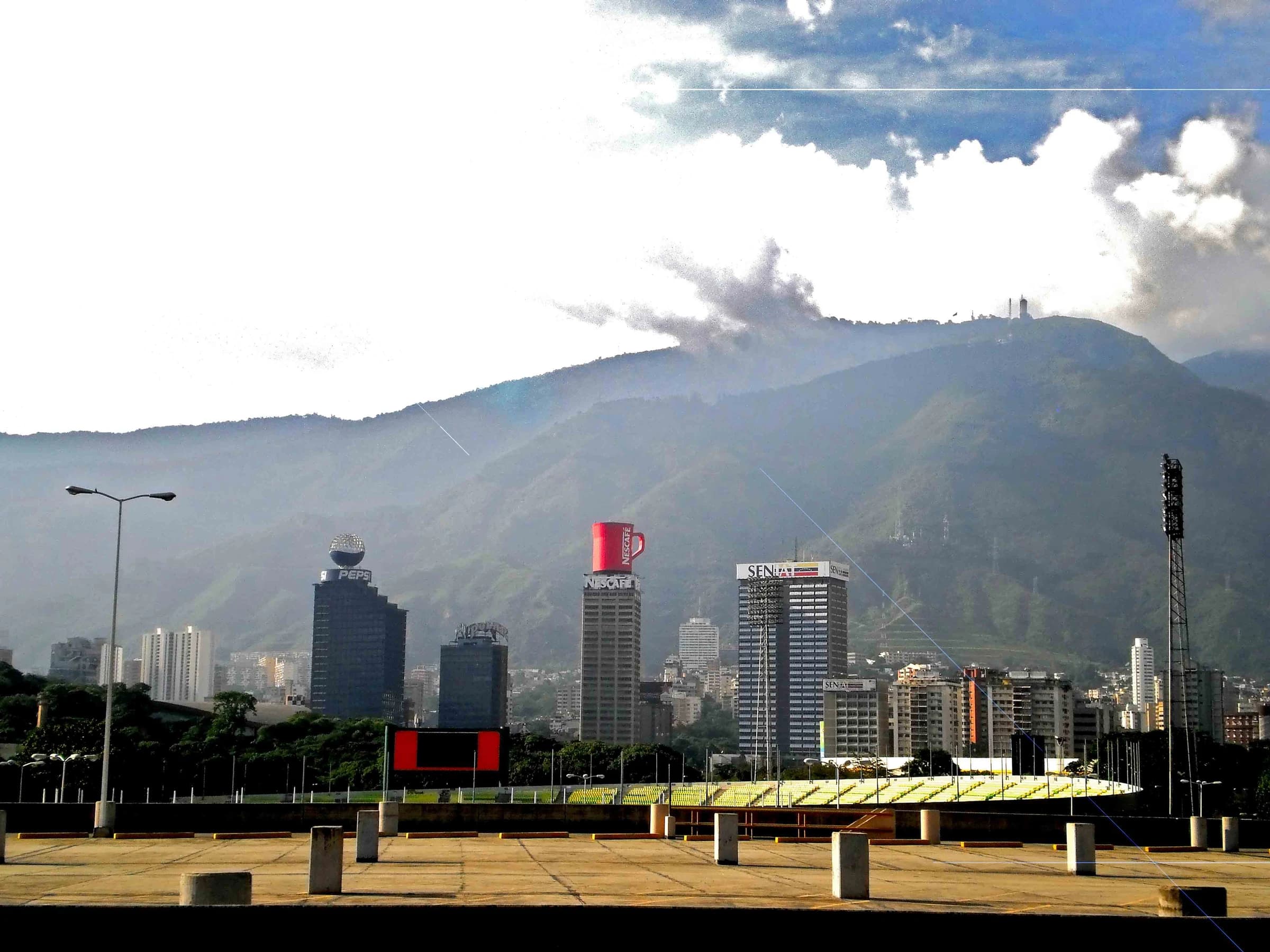
Caracas sits at roughly 900 meters in a narrow valley pinned between the Caribbean coast and the Ávila mountain, high enough that the city has never recorded a truly hot day despite lying just ten degrees north of the equator — locals call it the land of eternal spring.
Caracas sits in a valley about 900 meters above sea level, wedged between the Caribbean coast and the forested slopes of Ávila mountain, officially Waraira Repano National Park. That elevation keeps the climate mild and spring-like all year despite the city's tropical latitude, a contrast to the intense coastal heat found just a short drive north toward La Guaira.
The city holds outsized historical weight as the birthplace of Simón Bolívar, whose campaigns freed Venezuela, Colombia, Ecuador, Panama, Peru, and Bolivia from Spanish rule in the early 1800s. His childhood home near Plaza Bolívar, Casa Natal del Libertador, still stands in the historic center, and the Panteón Nacional holds his remains alongside other figures from the independence era.
Ciudad Universitaria de Caracas, the main campus of the Universidad Central de Venezuela, is the city's most distinctive architectural landmark. Architect Carlos Raúl Villanueva designed the complex in the 1940s and 1950s and commissioned murals and sculptures directly for its buildings from artists including Alexander Calder and Fernand Léger, work integrated into the architecture rather than added afterward. UNESCO listed the campus as a World Heritage Site in 2000, one of relatively few modernist sites to receive that designation.
Venezuela's economic collapse over the past decade, driven by hyperinflation and years of political crisis, has hit Caracas hard, and the crime rate in parts of the city ranks among the highest of any capital in the Americas. Most governments currently advise against non-essential travel to the country, and the practical reality for anyone who does visit is arranging private transport and a trusted local guide in advance rather than moving around independently.
Despite that, the Ávila cable car still runs, lifting visitors from the city up into the national park for views stretching from the valley to the Caribbean coastline, a reminder of how much natural setting Caracas has to work with even during a difficult stretch for the country as a whole.
What a trip here actually costs
$25 / day avg.
- Guesthouse in a known-safe area
- Private transfers instead of public transit
- Casual Venezuelan meals
- Plaza Bolívar and historic center, guided
What to do at this tier
- • Plaza Bolívar and the surrounding historic center, ideally with a local guide
- • Casa Natal del Libertador, Simón Bolívar's childhood home, free
- • Panteón Nacional, where Bolívar and other independence figures are buried
$60 / day avg.
- 3-star hotel with security
- Private driver for the day
- Sit-down Venezuelan dinners
- Ávila cable car and Ciudad Universitaria tour
What to do at this tier
- • Teleférico cable car up Ávila mountain for views over the entire valley and coast
- • Ciudad Universitaria de Caracas, a UNESCO-listed modernist campus with murals and sculptures by Calder and Léger
- • Private guided day covering the historic center and Sabana Grande with vetted transport throughout
These are average estimates for planning purposes, not real-time prices — actual costs vary by season, availability, and how far ahead you book.
How to get there
Click anywhere on the world map — any airport works, not just our main hubs.
Click anywhere on the map above — any airport in the world works — to see estimated travel time and cost from there.
Times and prices are planning estimates, not live fares — always check a booking site before you commit. See the full Transport Comparison guide for the general tradeoffs of each mode.
Best time to visit
December-April is drier; Caracas stays mild year-round thanks to its elevation, so weather is a secondary concern here compared to safety planning.
Safety notes
Crime rates are high, and conditions change quickly. Arrange airport transfers and local guides in advance, avoid displaying valuables, stick to known-safe neighborhoods, and check your government's current travel advisory before booking rather than relying on older information.
Visa & currency
Venezuelan bolívar, though the economy runs heavily on US dollars in practice given past hyperinflation. Visa requirements vary by nationality and have shifted in recent years, so confirm current entry rules directly before travel.
Questions people ask before visiting
Is Caracas safe to visit?
Caracas has one of the highest crime rates of any capital in the Americas, and most governments currently advise against non-essential travel to Venezuela. Visitors who go typically do so with a trusted local contact or guide, avoid moving around after dark, and stay within a small number of known-safe neighborhoods rather than exploring independently the way you might in most other South American capitals.
Is Venezuela safe to visit right now?
The situation varies significantly by region and changes over time, so checking current government travel advisories immediately before booking matters more here than for almost any other destination in this guide. Some travelers do visit specific areas, including Los Roques, with a very different risk profile than Caracas or the mainland interior.
Why was Caracas historically significant?
Caracas is the birthplace of Simón Bolívar, the military and political leader who led the independence of Venezuela, Colombia, Ecuador, Panama, Peru, and Bolivia from Spanish rule in the early 19th century. His childhood home, Casa Natal del Libertador, still stands in the historic center near Plaza Bolívar.
What is Ciudad Universitaria de Caracas?
It's the main campus of the Universidad Central de Venezuela, designed by architect Carlos Raúl Villanueva and completed in the 1950s. UNESCO added it to the World Heritage list in 2000 for the way it integrates modernist architecture with large-scale artworks by Alexander Calder, Fernand Léger, and other international artists, all commissioned specifically for the buildings.
Nearby destinations
 Cartagena
Cartagena
Colombia
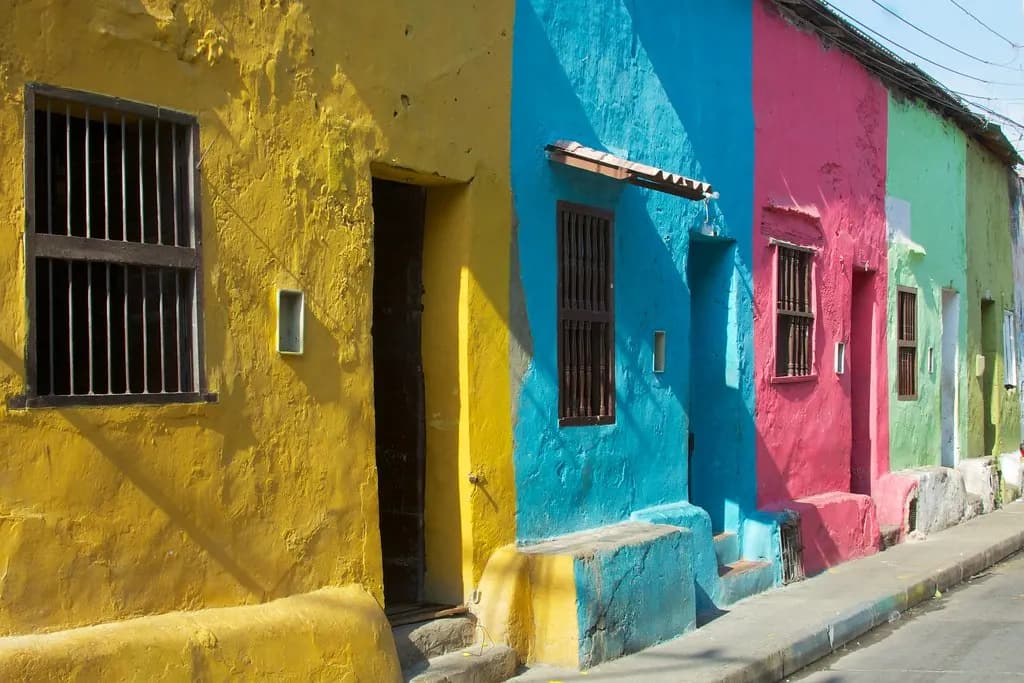
Spain spent over 200 years building walls around Cartagena to keep pirates and English privateers out, including Francis Drake himself — the fortifications worked well enough that they're still almost entirely intact, wrapping a genuinely lived-in colonial city rather than a museum piece.
See full guide →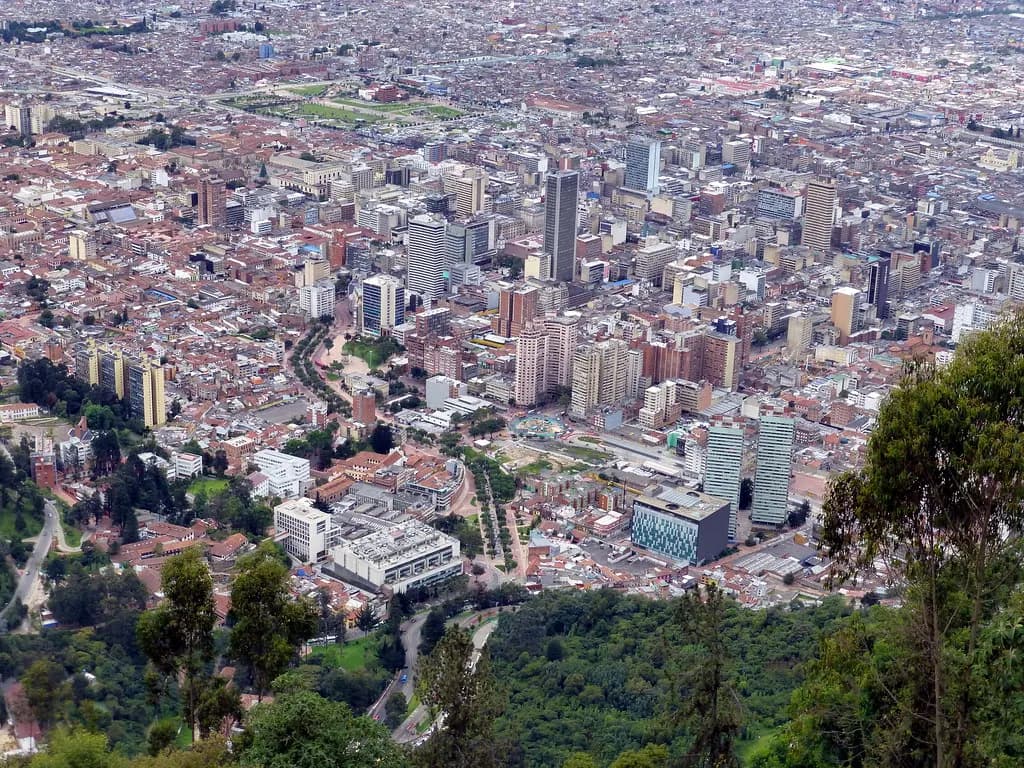 Bogotá
Bogotá
Colombia
Bogotá sits so high in the Andes — over 2,600 meters — that visitors regularly get winded walking uphill on their first day, and the city has responded by closing over 120 kilometers of its main roads to cars every Sunday morning for a citywide bike event that's been running since 1974.
See full guide →Comparing more than one route? See the full transport comparison guide.