New Zealand · Oceania
Taupo
Lake Taupo, the largest lake in New Zealand, sits inside the crater left by the Hatepe eruption roughly 1,800 years ago, one of the most powerful volcanic eruptions anywhere on Earth in the last 5,000 years, an event so massive that ancient Roman and Chinese records describe unusual red skies at the time it likely occurred.
Lake Taupo, New Zealand's largest lake by surface area, occupies a caldera left by the Hatepe eruption roughly 1,800 years ago, one of the most powerful volcanic eruptions anywhere on Earth within the past 5,000 years. The eruption was so massive that ancient Roman and Chinese historical records describe unusual reddish skies around the time it's believed to have occurred, a striking piece of evidence connecting a local New Zealand geological event to written records from the other side of the world.
The town of Taupo sits directly on the lake's shore, and its position at the edge of an active volcanic zone continues to shape the surrounding landscape today. Craters of the Moon, a geothermal area a short drive from town, holds bubbling mud pools and steaming vents accessible via a boardwalk, a direct, walkable introduction to the same volcanic forces that created the lake itself.
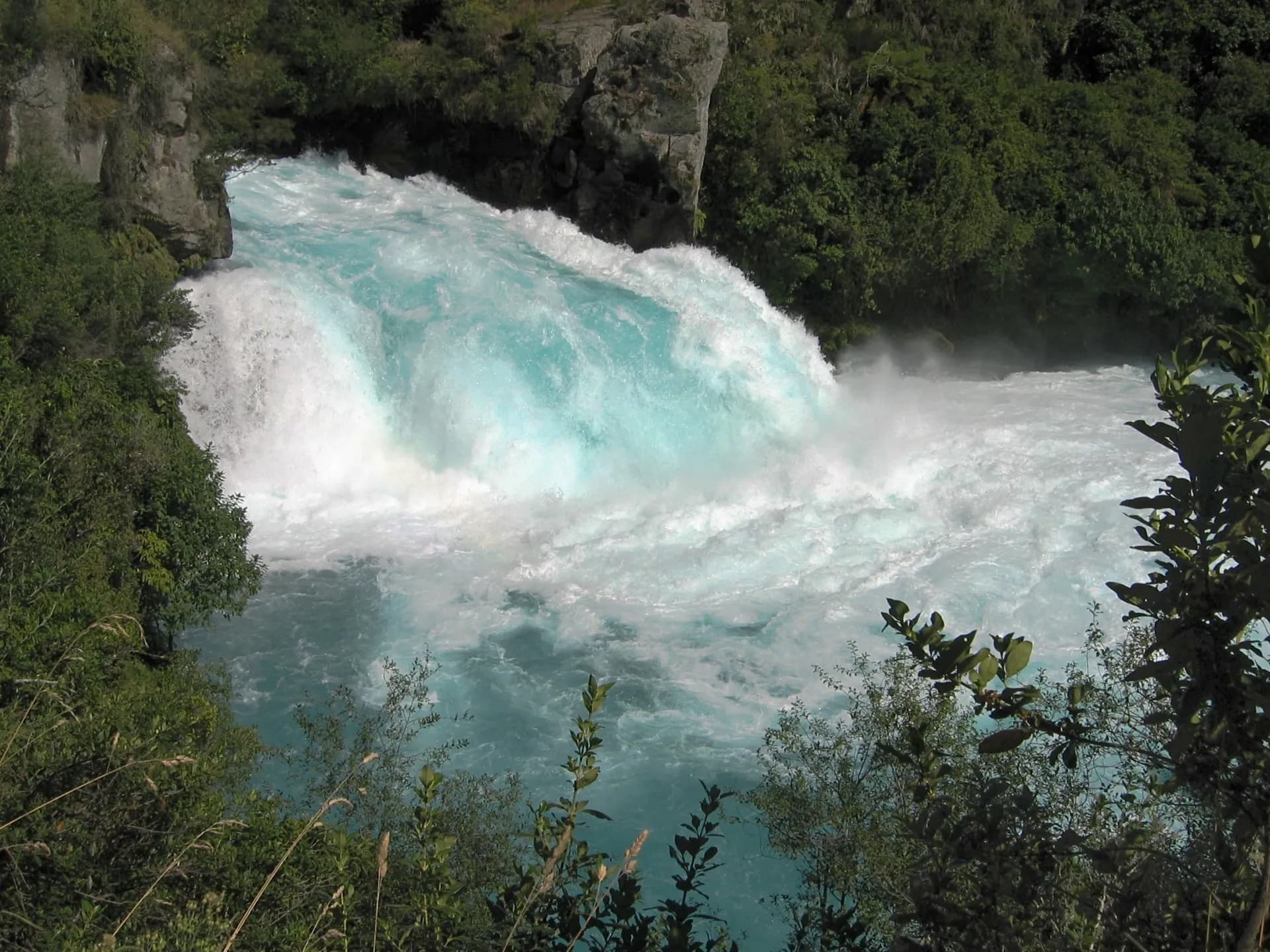
Huka Falls, where the Waikato River, New Zealand's longest river, is forced through a narrow rock chute, produces an enormously powerful surge of water, roughly 220,000 liters per second at times, dropping into a turquoise pool below. The falls sit close to town and remain one of the most consistently visited natural sights in the region, easily reached on foot or by a short drive.
Taupo functions as the main gateway to Tongariro National Park and the Tongariro Alpine Crossing, a roughly 19.4-kilometer one-day trek widely regarded as one of the best single-day hikes in the world, crossing active volcanic terrain including strikingly colored emerald crater lakes. The park holds dual UNESCO World Heritage status, recognized for both its natural volcanic landscape and its deep cultural significance to Maori, who consider the mountains within it sacred.
Lake Taupo itself also holds Maori rock carvings, created in the 1970s but designed in a traditional style, visible only by boat along a section of cliff face near the lake's western shore, a modern addition to a landscape whose deeper cultural and geological history stretches back far longer than the carvings themselves.
What a trip here actually costs
$50 / day avg.
- Hostel dorm or budget motel
- Local bus or shuttle transport
- Casual restaurant meals
- Huka Falls viewing, free
What to do at this tier
- • Huka Falls viewing platform, free
- • Lake Taupo waterfront walk, free
- • Craters of the Moon geothermal walkway, low entry fee
$120 / day avg.
- 3-star hotel
- Tongariro Alpine Crossing shuttle and guide option
- Craters of the Moon geothermal walk
- Sit-down restaurant dinners
What to do at this tier
- • Tongariro Alpine Crossing, with shuttle transport
- • Geothermal hot pools visit
- • Lake Taupo boat cruise to the Maori rock carvings
These are average estimates for planning purposes, not real-time prices — actual costs vary by season, availability, and how far ahead you book.
How to get there
Click anywhere on the world map — any airport works, not just our main hubs.
Click anywhere on the map above — any airport in the world works — to see estimated travel time and cost from there.
Times and prices are planning estimates, not live fares — always check a booking site before you commit. See the full Transport Comparison guide for the general tradeoffs of each mode.
Best time to visit
December-March, New Zealand's summer, brings the most stable weather for the Tongariro Alpine Crossing; the crossing can close in winter due to snow and avalanche risk without proper alpine gear.
Safety notes
The Tongariro Alpine Crossing crosses active volcanic terrain and exposed alpine conditions; check weather and volcanic activity alerts before attempting it, and consider a guided option if inexperienced.
Visa & currency
New Zealand dollar (NZD). Most nationalities need a New Zealand Electronic Travel Authority (NZeTA) arranged online before arrival.
Questions people ask before visiting
Is Taupo worth visiting?
Yes — Taupo sits on New Zealand's largest lake, itself a volcanic crater from a colossal ancient eruption, and serves as the main gateway to the Tongariro Alpine Crossing, widely considered one of the best one-day hikes in the world, alongside the powerful Huka Falls and active geothermal sites.
How was Lake Taupo formed?
The Hatepe eruption, occurring roughly 1,800 years ago, was one of the most powerful volcanic eruptions on Earth in the past 5,000 years, and the resulting caldera filled with water to form Lake Taupo, New Zealand's largest lake by surface area.
What is the Tongariro Alpine Crossing?
A roughly 19.4-kilometer one-day trek through Tongariro National Park, crossing active volcanic terrain including emerald-colored crater lakes and dramatic volcanic landscape, widely regarded as one of the best single-day hikes in the world.
How many days do you need in Taupo?
Two to three days covers Huka Falls, the geothermal sites, and time on the lake, with an additional full day needed for the Tongariro Alpine Crossing itself, which requires an early start and a full day of hiking.
Nearby destinations
 Rotorua
Rotorua
New Zealand
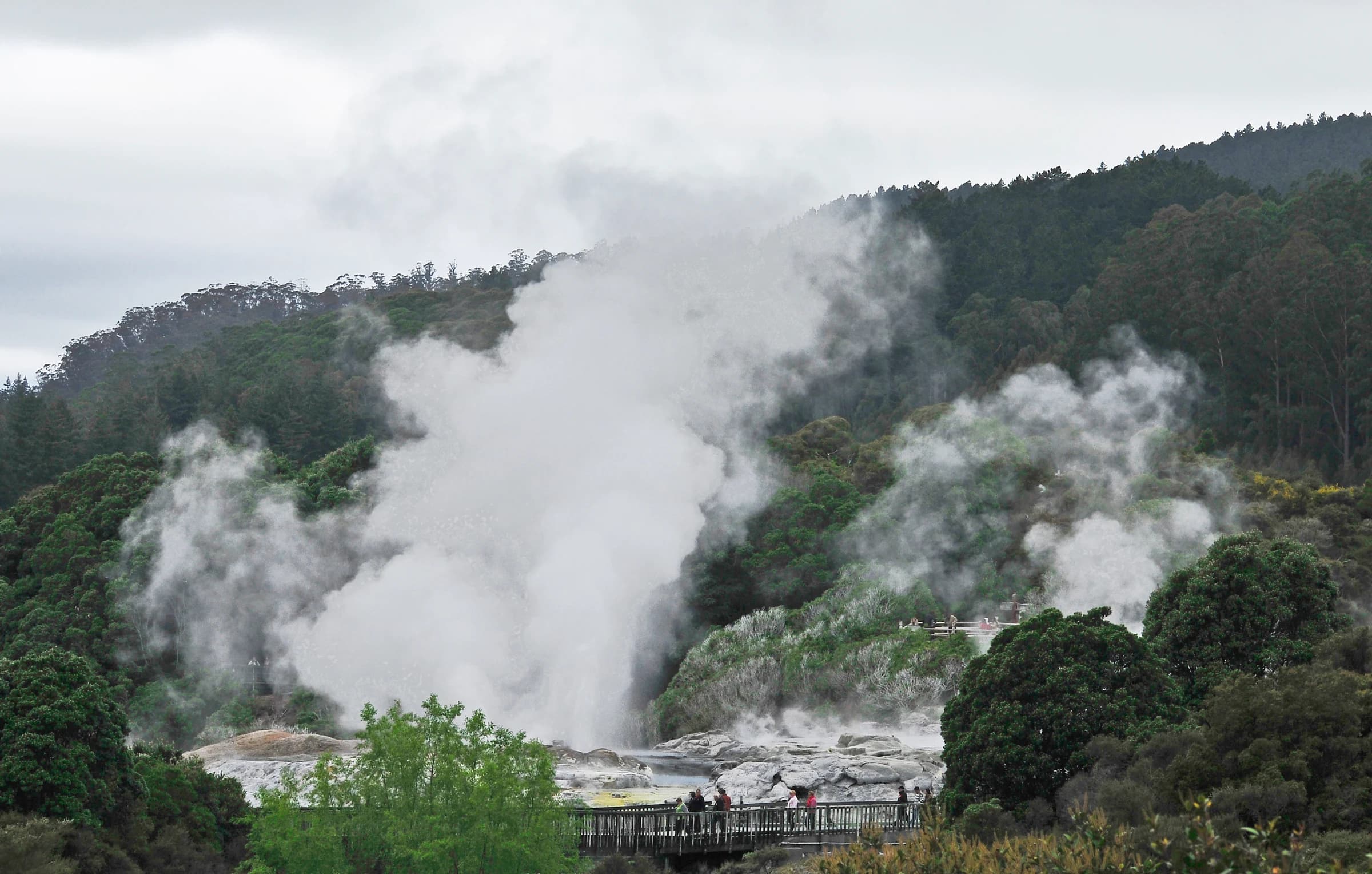
Rotorua sits on such intense geothermal activity that the whole town carries a faint sulfur smell locals have long since stopped noticing — geysers erupt on schedule, mud pools bubble in public parks, and the ground itself occasionally opens into new hot springs without much warning.
See full guide →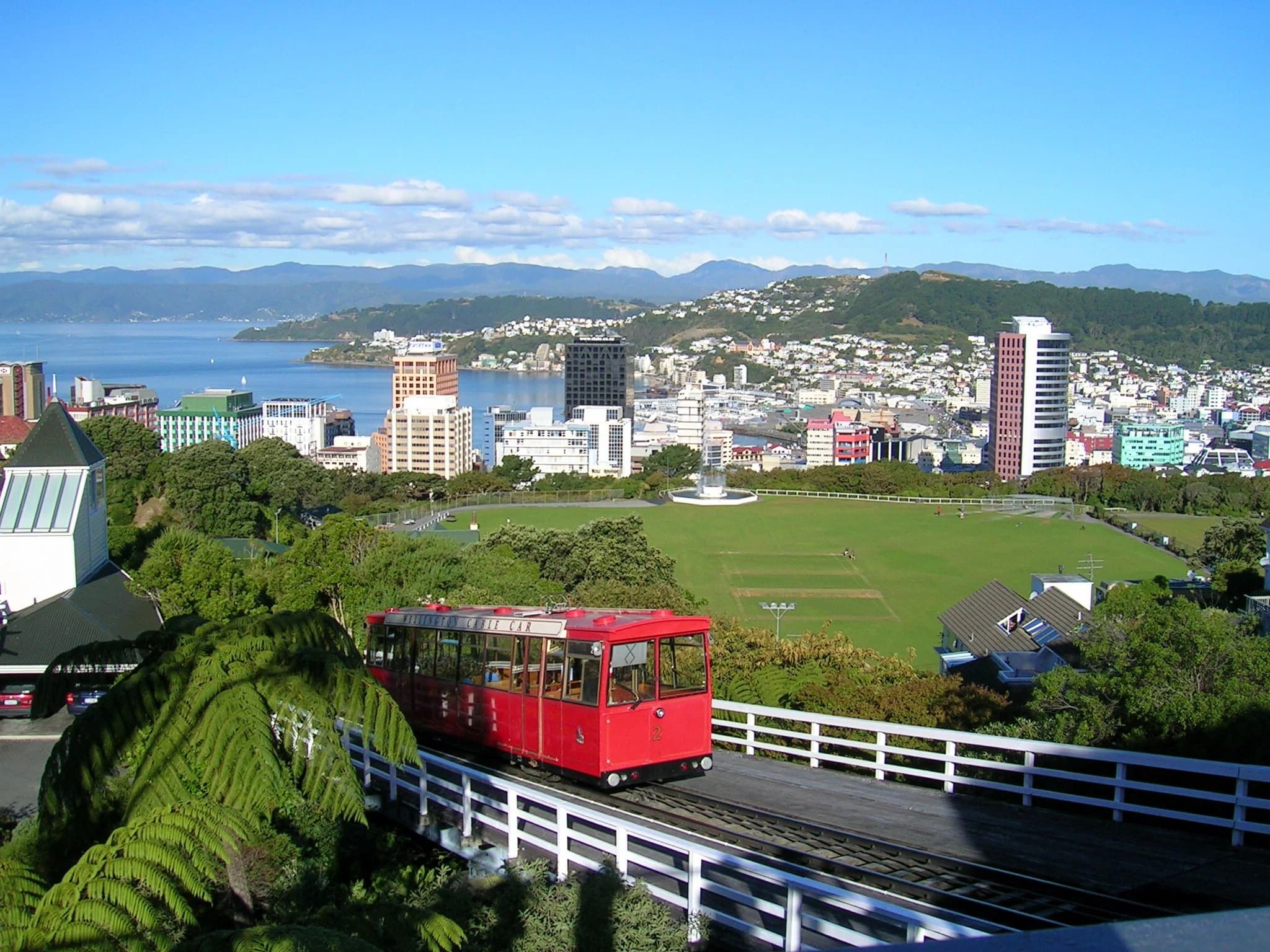 Wellington
Wellington
New Zealand
Wellington, not Auckland, is New Zealand's capital, and the city has leaned so hard into its creative reputation that Lonely Planet once called it 'the coolest little capital in the world' — a title backed up by Peter Jackson's effects studio, Weta Workshop, which turned the city into a genuine film production hub.
See full guide →Comparing more than one route? See the full transport comparison guide.