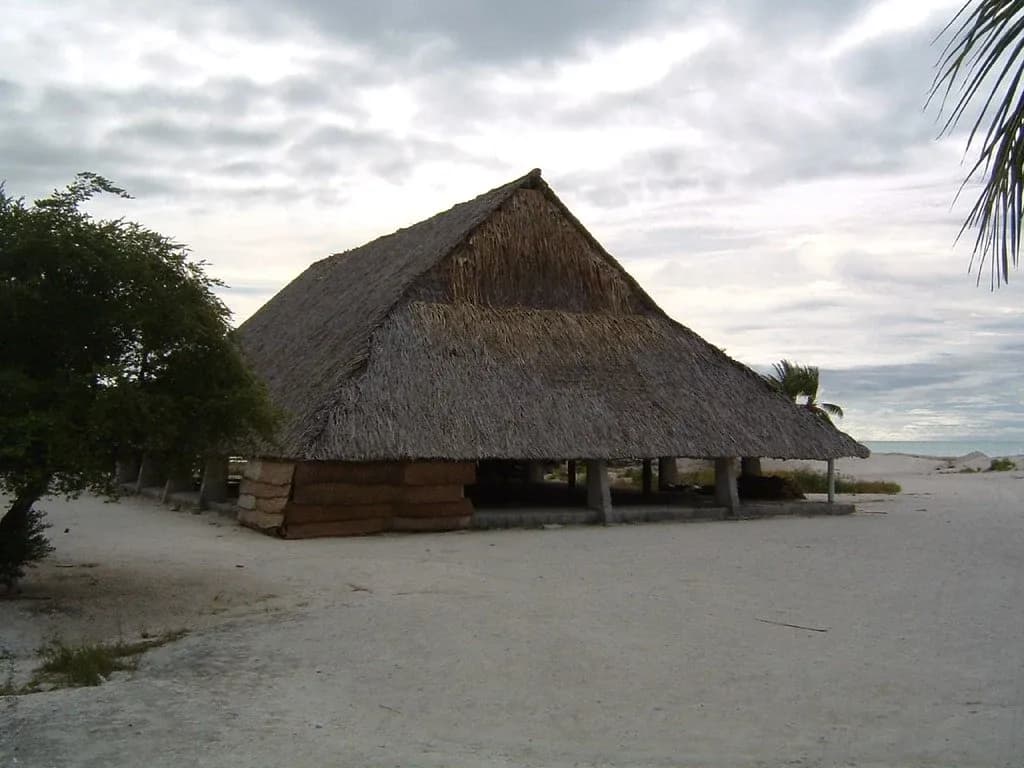
Kiribati · Oceania
Tarawa
Kiribati is the only country in the world that spans all four hemispheres, a quirk it made official in 1995 by moving the International Date Line eastward specifically so the whole nation could share a single date and become the first place on Earth to see each new year — a remote atoll nation now more often discussed for how much of it might disappear under rising seas.
Kiribati is the only country in the world whose territory spans all four hemispheres, northern, southern, eastern, and western, a geographic quirk made possible by its scattered islands straddling both the equator and the International Date Line. In 1995, the government moved the date line eastward around its easternmost islands specifically so the entire country could share a single calendar date, rather than being split across two different days as it had been previously, and the change let Kiribati claim the distinction of being the first place on Earth to greet each new year.
Tarawa, the country's capital atoll, carries a different kind of historical weight from the Battle of Tarawa, fought in November 1943 when US Marines captured the atoll from Japanese forces in a brutal three-day engagement, one of the bloodiest in the Pacific War relative to its short duration. WWII bunkers, rusted gun emplacements, and other relics remain scattered across Betio, the most developed islet, largely as they were left, without the kind of formal museum treatment found at more famous Pacific battle sites.
Kiribati's islands sit barely above sea level, and the country has become one of the most frequently cited examples in global discussions of climate change's existential threat to low-lying nations. The government has taken concrete steps in response, including purchasing land in Fiji as a long-term contingency should relocation ever become necessary, a decision that reflects genuine planning for a scenario most countries never have to seriously consider.
Getting to Tarawa takes real effort, with infrequent flights routed mostly through Fiji, and tourism infrastructure remains genuinely minimal, a handful of guesthouses and simple hotels rather than resorts. That limited development has kept Tarawa largely outside typical Pacific travel circuits, and visitors who do make the trip find an atoll life still built around fishing, family, and community in a way that's shifted less than in more internationally connected destinations.
For travelers drawn to genuinely remote places carrying real historical and contemporary weight, WWII history and a live view of climate vulnerability, rather than resort comfort, Tarawa offers something that few destinations in the Pacific, or anywhere, can match.
What a trip here actually costs
$35 / day avg.
- Guesthouse in South Tarawa
- Local minibus transport
- Local fish and rice meals
- WWII relic sites, free to visit
What to do at this tier
- • WWII bunkers and gun emplacements around Betio, free
- • Local village visits, low cost
- • Lagoon-side walking, free
$90 / day avg.
- Simple hotel with air conditioning
- Guided WWII history tour
- Snorkeling excursion
- Restaurant meals at limited local options
What to do at this tier
- • Guided Battle of Tarawa history tour
- • Snorkeling in the lagoon
- • Boat trip to a quieter outer islet
These are average estimates for planning purposes, not real-time prices — actual costs vary by season, availability, and how far ahead you book.
How to get there
Click anywhere on the world map — any airport works, not just our main hubs.
Click anywhere on the map above — any airport in the world works — to see estimated travel time and cost from there.
Times and prices are planning estimates, not live fares — always check a booking site before you commit. See the full Transport Comparison guide for the general tradeoffs of each mode.
Best time to visit
May-October brings drier conditions; Kiribati sees rain year-round near the equator, with the wetter period roughly November-April.
Safety notes
Generally safe with very limited tourism infrastructure; flights are infrequent and mostly routed through Fiji, so booking well ahead and building in flexibility matters.
Visa & currency
Australian dollar (AUD) is used as Kiribati's currency alongside the Kiribati dollar. Most nationalities can get a visa on arrival for short stays.
Questions people ask before visiting
Is Tarawa worth visiting?
For travelers genuinely seeking somewhere far off the typical circuit, yes — Tarawa holds WWII battle relics from one of the Pacific's bloodiest engagements, a rare atoll lifestyle largely untouched by mass tourism, and a firsthand look at a nation directly confronting sea-level rise.
What happened at the Battle of Tarawa?
In November 1943, US Marines fought a brutal three-day battle to capture Tarawa from Japanese forces, one of the bloodiest engagements of the Pacific War relative to its short duration. WWII bunkers, gun emplacements, and other relics remain scattered across the atoll today.
Why did Kiribati move the International Date Line?
In 1995, Kiribati shifted the date line eastward around its territory so that all of its scattered islands, previously split across two different calendar days, would share a single date. The change also let Kiribati become the first place in the world to reach each new year.
Is Kiribati at risk from climate change?
Yes, significantly — Kiribati's islands sit barely above sea level, and rising seas pose a genuine existential threat to the nation's habitability. The government has taken steps including purchasing land in Fiji as a long-term contingency for its population.
Nearby destinations
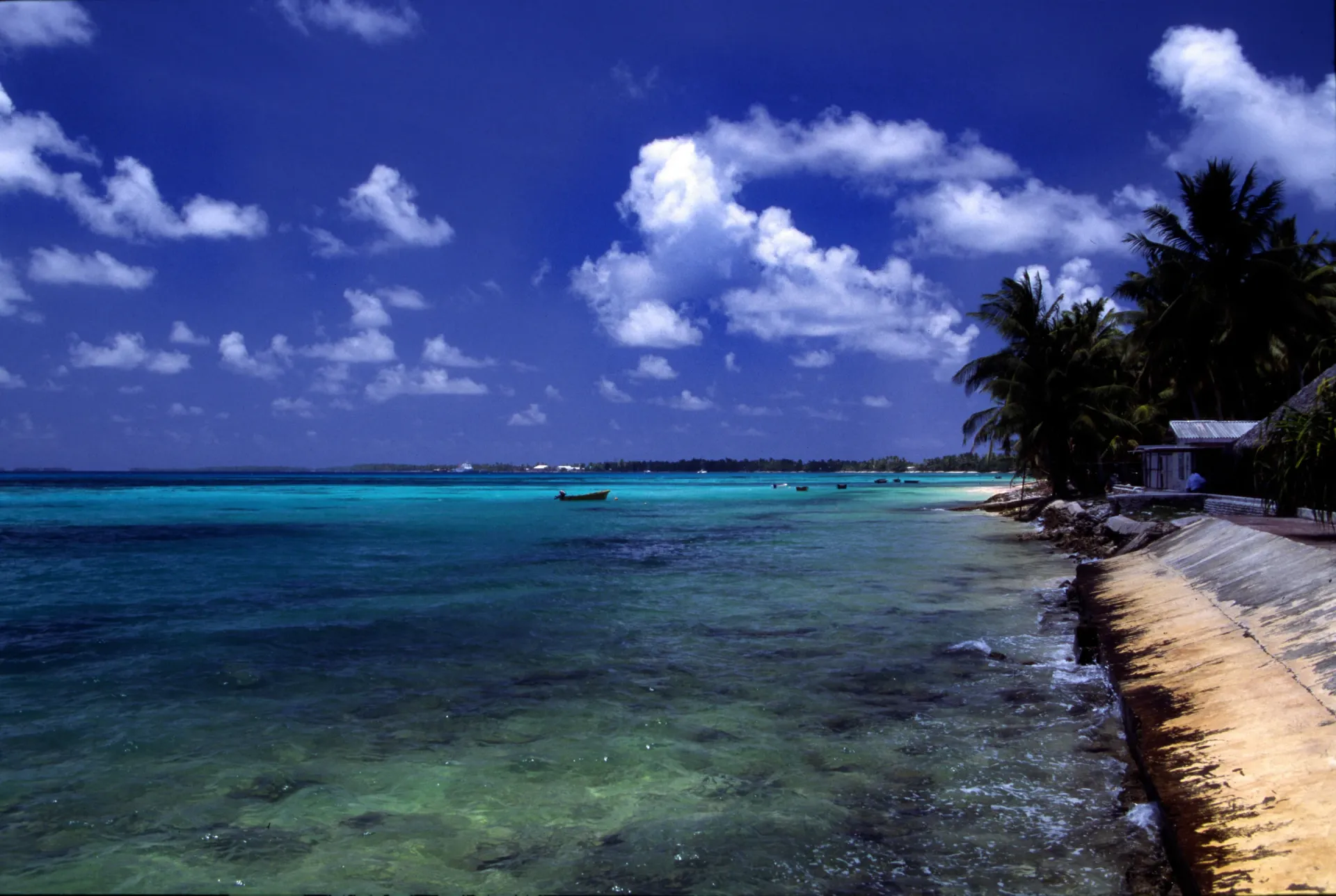 Funafuti
Funafuti
Tuvalu
Tuvalu is the fourth smallest country on Earth, and its most reliable source of government revenue isn't tourism or fishing but the internet domain ".tv" — leased to streaming and media companies worldwide, a strange bit of digital-age luck for a nation whose entire physical territory could plausibly disappear under rising seas within this century.
See full guide →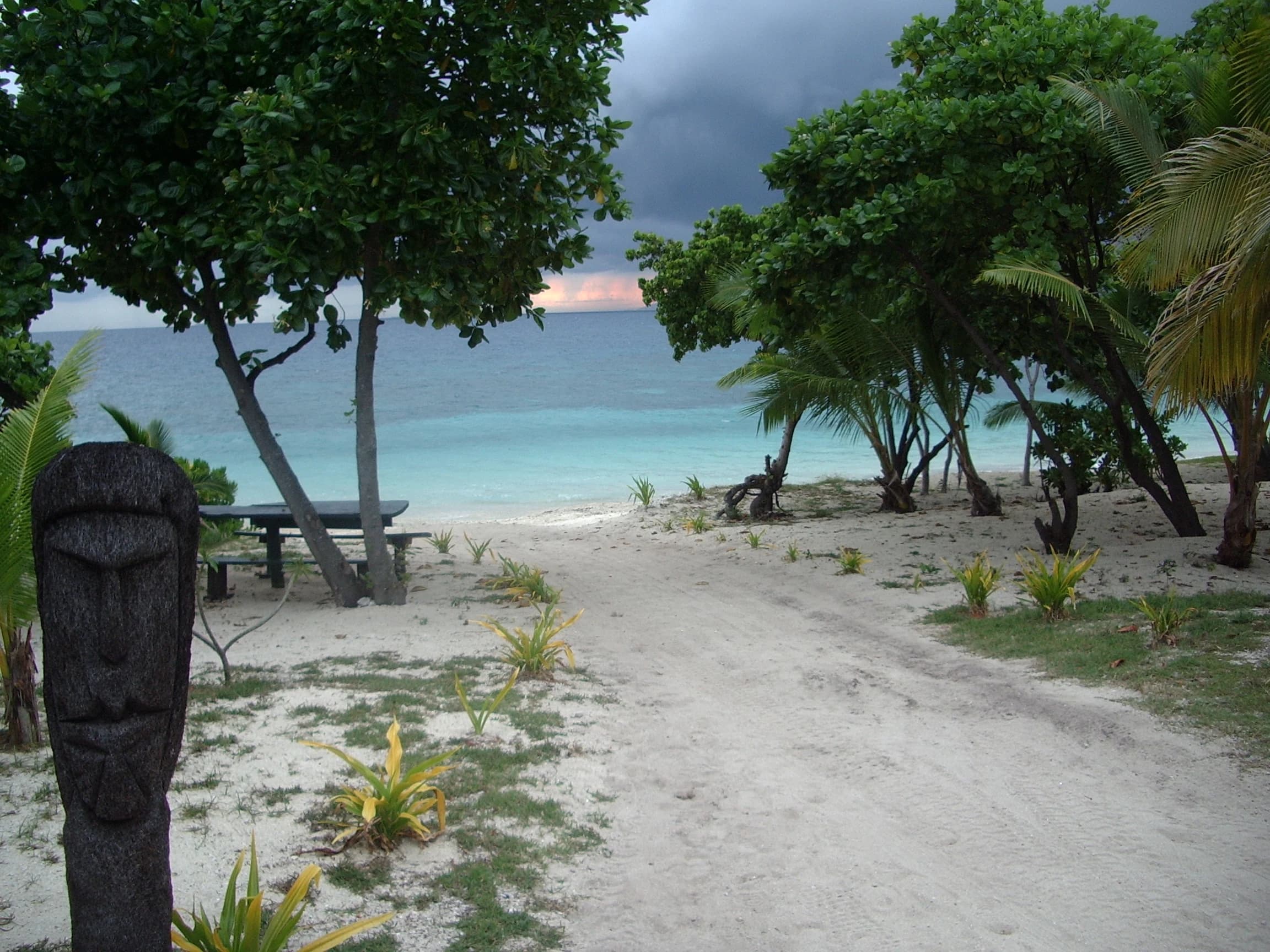 Nadi
NadiNadi
Fiji
Fiji is made up of more than 300 islands, and Nadi, the main international gateway, welcomes nearly every visitor with the same ritual — a kava ceremony, sharing a mildly numbing, earthy drink made from ground pepper root that's held real cultural and social weight in Fijian communities for centuries.
See full guide →Comparing more than one route? See the full transport comparison guide.