Tuvalu · Oceania
Funafuti
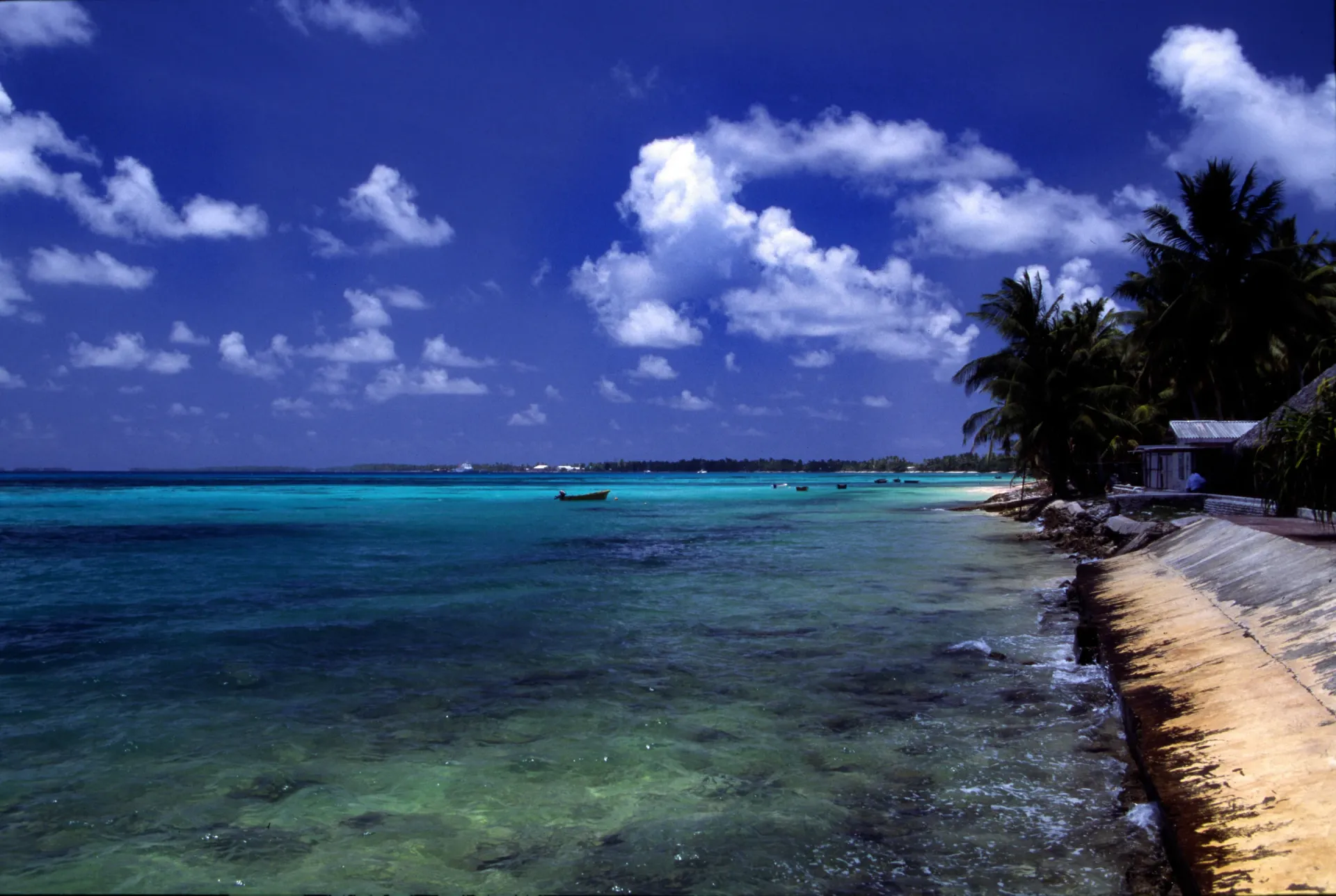
Tuvalu is the fourth smallest country on Earth, and its most reliable source of government revenue isn't tourism or fishing but the internet domain ".tv" — leased to streaming and media companies worldwide, a strange bit of digital-age luck for a nation whose entire physical territory could plausibly disappear under rising seas within this century.
Tuvalu is the fourth smallest country in the world by land area, covering roughly 26 square kilometers spread across nine low-lying atolls, and the second least populous UN member state after Vatican City. Despite that scale, or perhaps because of it, Tuvalu holds a genuinely unusual source of government revenue: its internet country-code domain, .tv, leased to streaming and media companies worldwide since the late 1990s, generating income disproportionate to the country's tiny physical footprint.
Funafuti, the capital atoll, is narrow enough in places that the lagoon side and ocean side sit within a short walk of each other, and its airport runway functions as the community's de facto central gathering space whenever no aircraft are landing or departing, used for evening walks, sports, and general socializing on one of the only large flat, open stretches of land available on the atoll.
Tuvalu's low elevation places it among the countries most existentially threatened by rising sea levels, a reality the government has confronted directly rather than treating as a distant hypothetical. Beyond conventional adaptation measures, Tuvalu has explored a "digital nation" concept, effectively preserving statehood, culture, and governance in digital form as a contingency should the physical territory eventually become uninhabitable, one of the more striking policy responses to climate change anywhere in the world.
Reaching Funafuti requires genuine effort, with infrequent flights typically routed through Fiji, and tourism infrastructure remains minimal, a small number of guesthouses and simple hotels rather than anything resembling a resort scene. That limited development has kept Tuvalu largely outside conventional Pacific travel circuits, and the country receives some of the fewest international visitors of any nation on Earth.
For travelers who do make the journey, Funafuti's lagoon offers genuinely clear water for swimming and snorkeling, and the Funafuti Conservation Area protects a stretch of reef and small islets home to seabirds and marine life relatively undisturbed by outside visitors, a quiet, low-key counterpart to the country's much larger role in global conversations about climate change.
What a trip here actually costs
$35 / day avg.
- Guesthouse in Funafuti
- Walking or bicycle transport
- Local fish and rice meals
- Lagoon swimming and snorkeling, free
What to do at this tier
- • Funafuti lagoon swimming and snorkeling, free
- • Walking or cycling the length of the main islet, free
- • Local market and community life observation, free
$85 / day avg.
- Simple hotel with air conditioning
- Boat trip to a nearby motu (islet)
- Guided snorkeling excursion
- Restaurant meals at limited local options
What to do at this tier
- • Boat trip to a quieter outer motu (islet)
- • Guided snorkeling excursion in the lagoon
- • Funafuti Conservation Area visit
These are average estimates for planning purposes, not real-time prices — actual costs vary by season, availability, and how far ahead you book.
How to get there
Click anywhere on the world map — any airport works, not just our main hubs.
Click anywhere on the map above — any airport in the world works — to see estimated travel time and cost from there.
Times and prices are planning estimates, not live fares — always check a booking site before you commit. See the full Transport Comparison guide for the general tradeoffs of each mode.
Best time to visit
May-October brings drier conditions; Tuvalu sees rain year-round near the equator, with the wetter period roughly November-April.
Safety notes
Generally safe with very limited tourism infrastructure; flights are infrequent, typically routed through Fiji, so book well ahead and build in schedule flexibility.
Visa & currency
Australian dollar (AUD) is used as Tuvalu's currency. Most nationalities can get a visa on arrival for short stays.
Questions people ask before visiting
Is Funafuti worth visiting?
For travelers drawn to genuinely remote, low-key destinations, yes — Funafuti offers a rare, unfiltered look at a Pacific atoll nation's daily life, clear lagoon waters for snorkeling, and the novelty of one of the smallest, least-visited countries in the world, though tourism infrastructure remains minimal.
What is Tuvalu's .tv domain?
Tuvalu's internet country-code domain, .tv, has been leased to media and streaming companies worldwide since the late 1990s, generating a meaningful share of government revenue, a genuinely unusual economic advantage for one of the world's smallest nations.
Is Tuvalu at risk from sea level rise?
Yes, significantly — Tuvalu's low elevation makes it one of the countries most existentially threatened by rising seas, and the government has explored contingency plans including a "digital nation" concept to preserve its statehood and culture even if the physical territory becomes uninhabitable.
What is unusual about Funafuti's airport?
Funafuti's runway doubles as the community's central gathering space when no flights are landing or departing, used for sports, walking, and socializing, since it's one of the only large flat, open areas on the narrow atoll.
Nearby destinations
 Tarawa
Tarawa
Kiribati
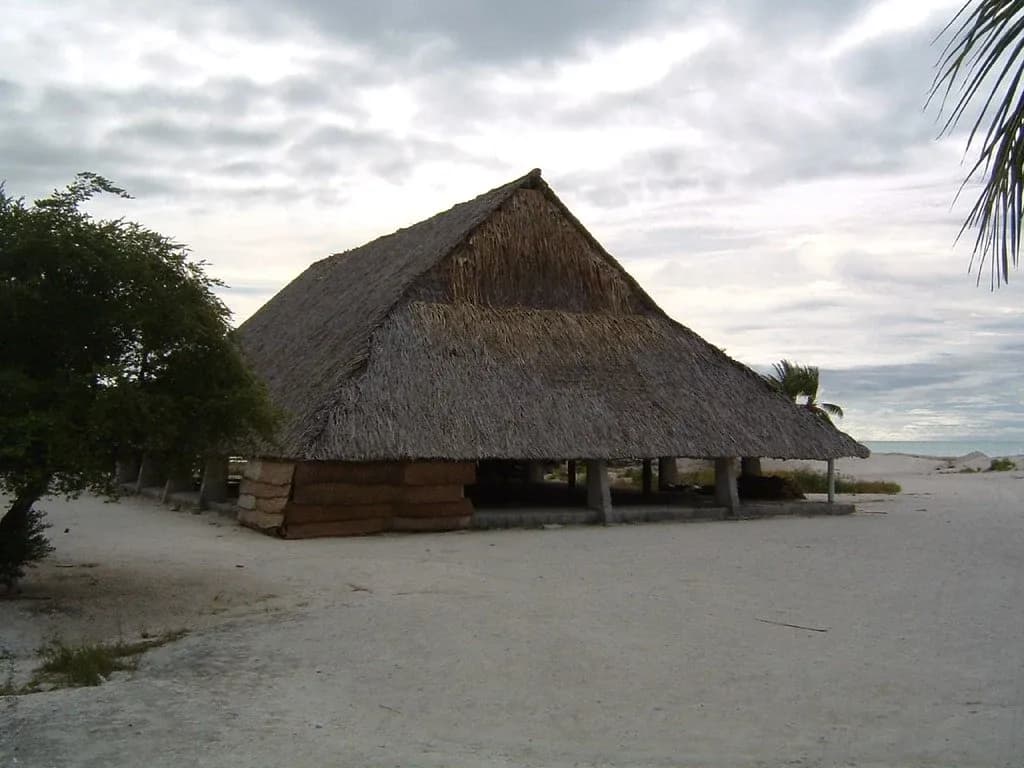
Kiribati is the only country in the world that spans all four hemispheres, a quirk it made official in 1995 by moving the International Date Line eastward specifically so the whole nation could share a single date and become the first place on Earth to see each new year — a remote atoll nation now more often discussed for how much of it might disappear under rising seas.
See full guide →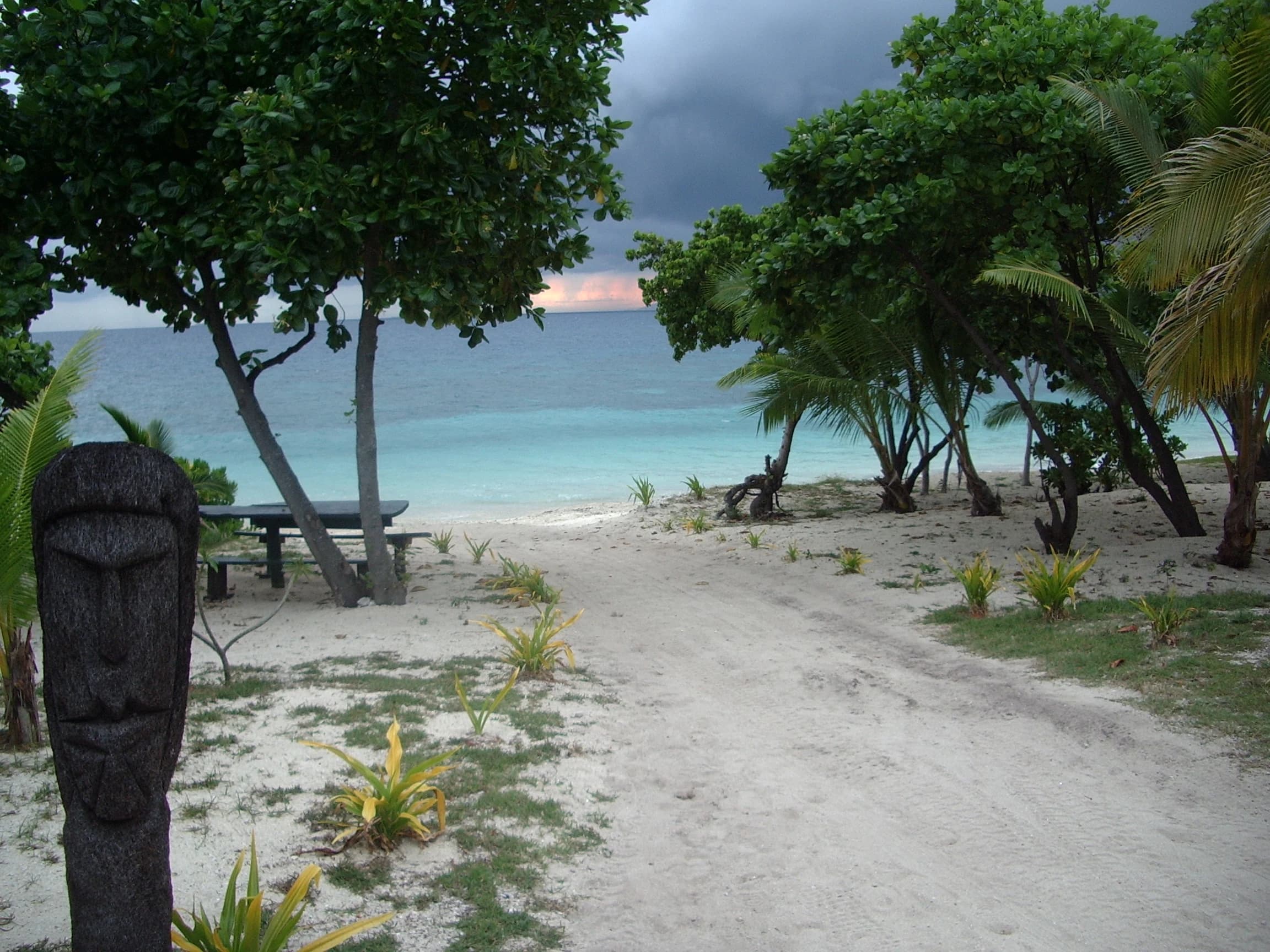 Nadi
NadiNadi
Fiji
Fiji is made up of more than 300 islands, and Nadi, the main international gateway, welcomes nearly every visitor with the same ritual — a kava ceremony, sharing a mildly numbing, earthy drink made from ground pepper root that's held real cultural and social weight in Fijian communities for centuries.
See full guide →Comparing more than one route? See the full transport comparison guide.