French Polynesia · Oceania
Tahiti
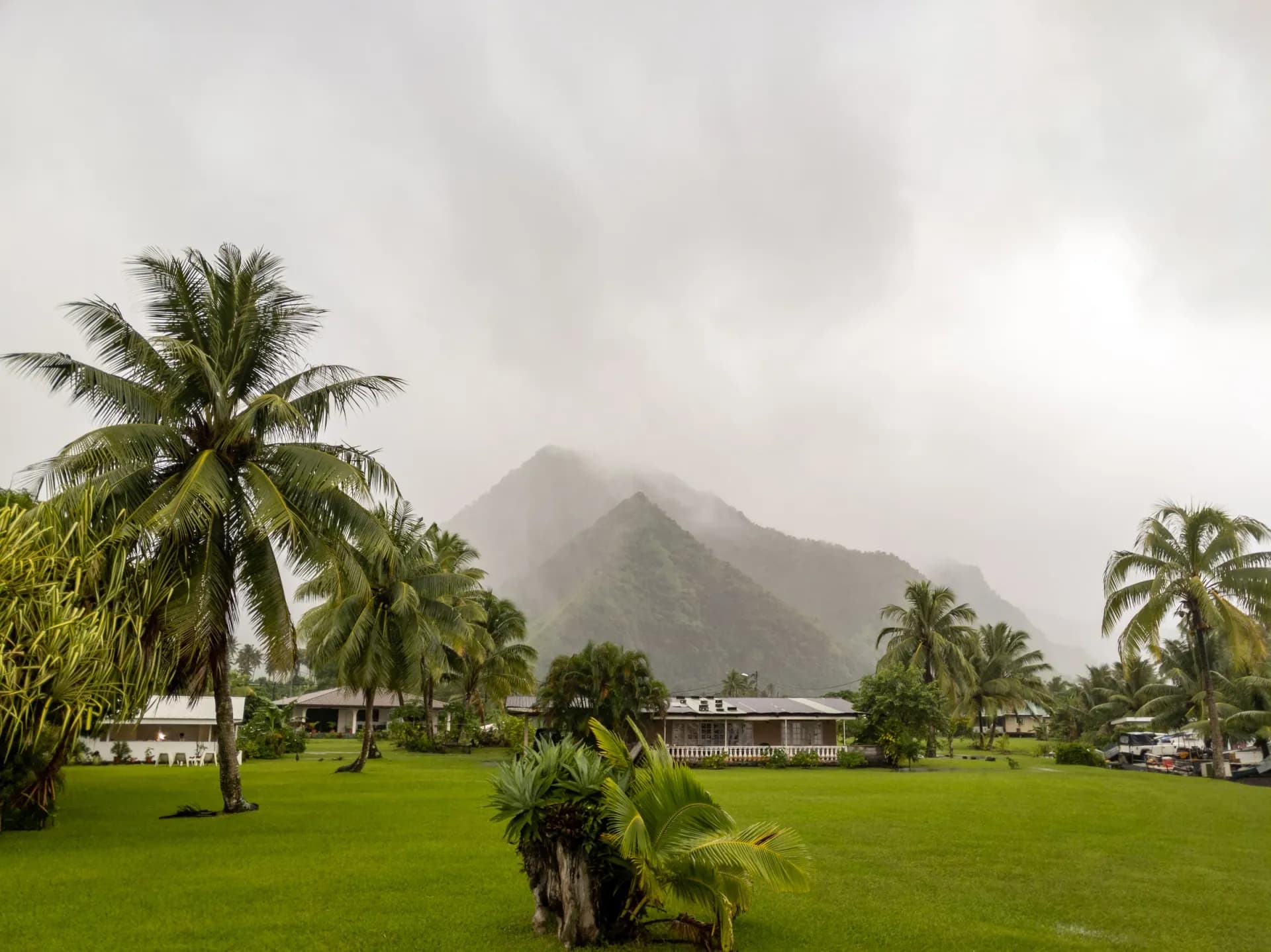
Tahiti's beaches run black, not white, the volcanic sand a constant reminder that this is the island everyone flies into on the way to Bora Bora or Moorea rather than the postcard image itself — and yet it's also where Captain Cook watched the transit of Venus in 1769 and where the Bounty mutineers first made landfall, a working island with more actual history than its more photogenic neighbors.
Tahiti's beaches run black rather than white, the sand made of eroded volcanic basalt rather than the crushed coral that gives neighboring Moorea and Bora Bora their postcard shorelines. For most visitors, Tahiti serves primarily as a gateway, the island holding French Polynesia's main international airport and the capital, Papeete, before continuing on to the more famous lagoon islands. That role has left it with a genuine, working island character that the more tourism-focused neighbors don't quite share.
Point Venus, on Tahiti's northern coast, marks the spot where Captain James Cook observed the transit of Venus across the sun in 1769, an astronomical observation that was part of the scientific justification for his first Pacific voyage. The same stretch of coastline later saw the Bounty mutineers make their first landfall in 1789, and the black sand beach here, backed by a historic lighthouse, carries more layered colonial and exploration history than almost anywhere else in French Polynesia.
Papeete's Municipal Market, a two-story hub of vendors selling fish, produce, flowers, and handicrafts, gives visitors a direct look at daily Tahitian life rather than a curated resort experience, and it remains one of the most reliably interesting stops for anyone spending even a short layover on the island.
The Heiva festival, held each July across French Polynesia, showcases traditional Tahitian dance, drumming, and outrigger canoe racing at a genuinely competitive level, with Papeete hosting some of the largest and most elaborate events. Dance troupes train for months, and the festival remains one of the most direct ways to see Polynesian cultural traditions performed at their highest standard rather than simplified for tourists.
For travelers willing to look past its role as a transit hub, Tahiti's black sand beaches, its market, and its concentrated colonial-era history give it a genuinely different character from the lagoon-island postcards that define most people's image of French Polynesia, an island worth a couple of days in its own right rather than just an airport layover before Moorea or Bora Bora.
What a trip here actually costs
$180 / day avg.
- 3-star hotel in or near Papeete
- Local le truck or taxi transport
- Local and market restaurant meals
- Point Venus and Papeete market, free
What to do at this tier
- • Papeete Municipal Market, free to browse
- • Point Venus, where Captain Cook observed the transit of Venus in 1769
- • Black sand beach day at Plage de Taharuu or Papeno'o
$450 / day avg.
- 4-5 star resort
- Private island tour with a driver-guide
- Fine dining French Polynesian tasting menu
- Ferry or flight connection arranged to Moorea or Bora Bora
What to do at this tier
- • Private island tour covering historical and cultural sites
- • Fine dining tasting menu at a top Papeete restaurant
- • Private transfer connection to Moorea or Bora Bora for the next leg of a trip
These are average estimates for planning purposes, not real-time prices — actual costs vary by season, availability, and how far ahead you book.
How to get there
Click anywhere on the world map — any airport works, not just our main hubs.
Click anywhere on the map above — any airport in the world works — to see estimated travel time and cost from there.
Times and prices are planning estimates, not live fares — always check a booking site before you commit. See the full Transport Comparison guide for the general tradeoffs of each mode.
Best time to visit
May-October is the dry season with the most comfortable temperatures; the Heiva festival typically runs through July, worth timing a visit around.
Safety notes
Very safe with low crime; standard water safety applies at black sand beaches, some of which have stronger currents than the sheltered lagoons of neighboring islands.
Visa & currency
CFP franc (XPF), pegged to the euro. Many nationalities can enter visa-free for tourism under French territory rules, worth confirming based on passport.
Questions people ask before visiting
Is Tahiti worth visiting?
Yes — Tahiti, French Polynesia's largest island and main gateway, holds Papeete's central market and genuine local city life, black volcanic sand beaches distinct from Moorea and Bora Bora's white sand, and historical sites tied to Captain Cook and the Bounty mutiny.
Why are Tahiti's beaches black sand?
Tahiti's beaches are made of volcanic basalt eroded over millennia, giving much of the island's coastline a dark, sometimes near-black color, distinct from the white coral sand found on neighboring Moorea and Bora Bora.
What is the Heiva festival?
A major annual traditional Polynesian dance, music, and sports competition held each July across French Polynesia, with Tahiti's Papeete hosting some of the largest events. It showcases traditional Tahitian dance, drumming, and outrigger canoe racing at a competitive level rarely seen outside the festival.
How many days do you need in Tahiti?
Two to three days covers Papeete's market and Point Venus at a relaxed pace, and most visitors treat it as a stopover before continuing on to Moorea or Bora Bora rather than a standalone multi-day destination.
Nearby destinations
 Moorea
Moorea
French Polynesia
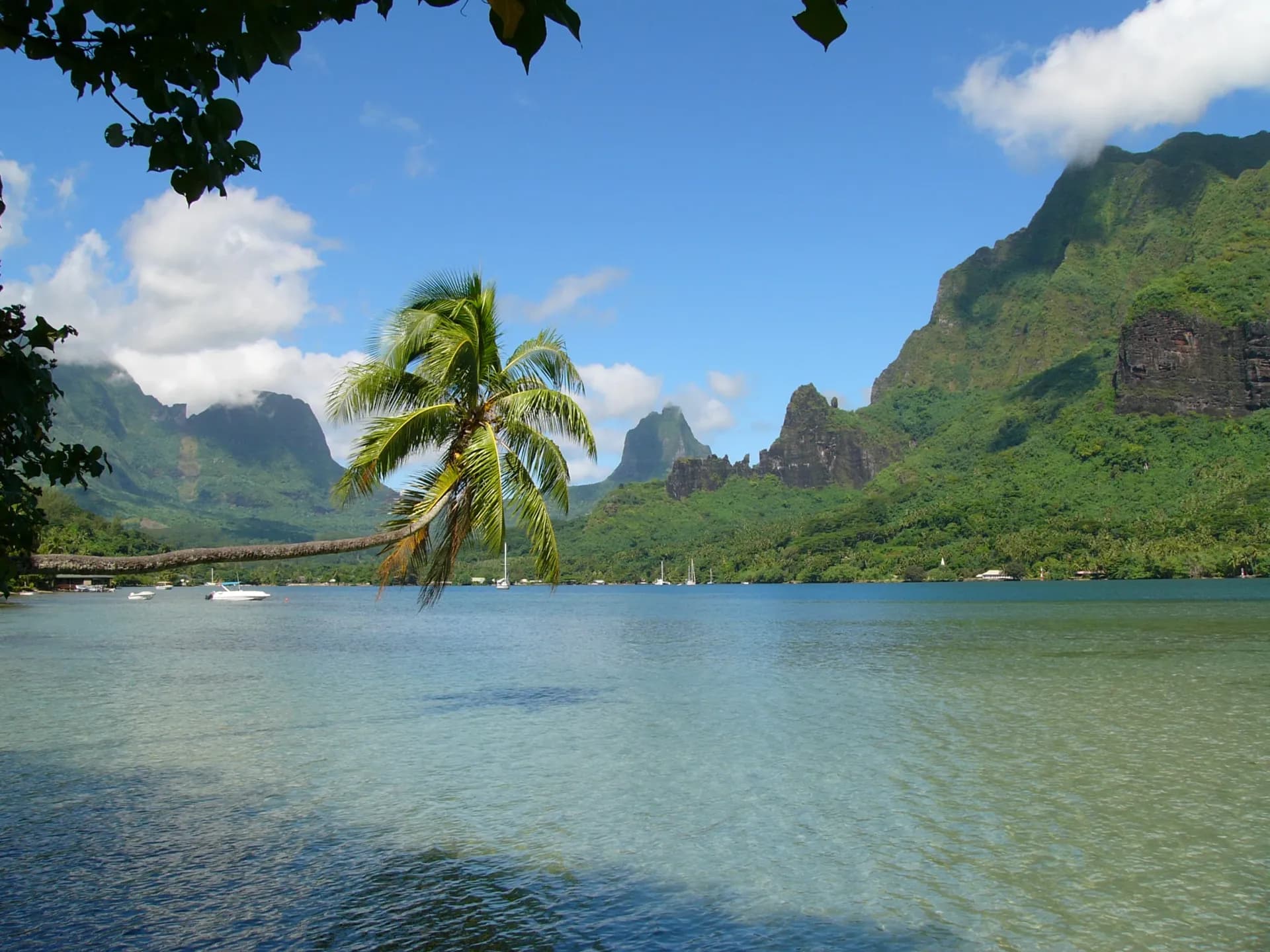
Moorea sits close enough to Tahiti that vintage tourism posters used to sell one island while photographing the other, and today it delivers the same jagged volcanic peaks and overwater bungalow scenery that made Bora Bora famous, reached by a ferry ride of well under an hour rather than a separate flight.
See full guide →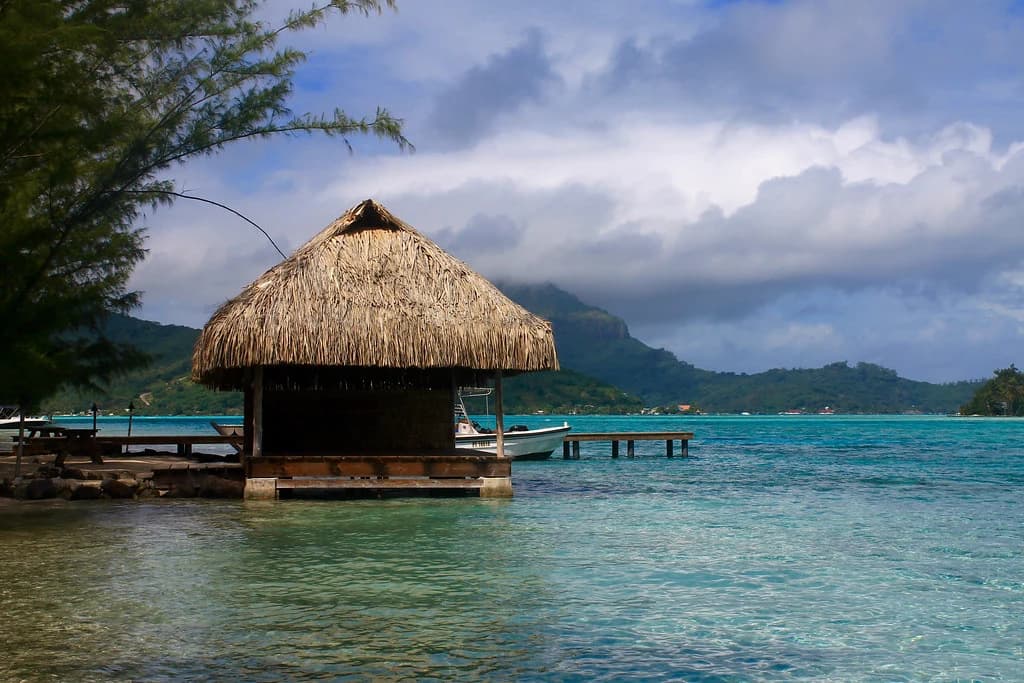 Bora Bora
Bora Bora
French Polynesia
The overwater bungalow, now a fixture of tropical resort marketing worldwide, was invented in French Polynesia in the 1960s by a small group of American expats who couldn't afford proper hotel land — Bora Bora simply perfected the idea, building it directly around a lagoon so clear the concept barely needed the marketing push it eventually got.
See full guide →Comparing more than one route? See the full transport comparison guide.