French Polynesia · Oceania
Bora Bora
The overwater bungalow, now a fixture of tropical resort marketing worldwide, was invented in French Polynesia in the 1960s by a small group of American expats who couldn't afford proper hotel land — Bora Bora simply perfected the idea, building it directly around a lagoon so clear the concept barely needed the marketing push it eventually got.
The overwater bungalow, now a fixture of luxury tropical resort marketing worldwide, has a surprisingly modest origin story. A small group of American expats in French Polynesia, including the founders of Hotel Bali Hai, are widely credited with building the first ones in the 1960s, reportedly not out of some grand design vision but because they simply couldn't afford enough beachfront land for a conventional resort and decided to build out over the lagoon instead. The concept caught on far beyond anything its inventors likely anticipated.
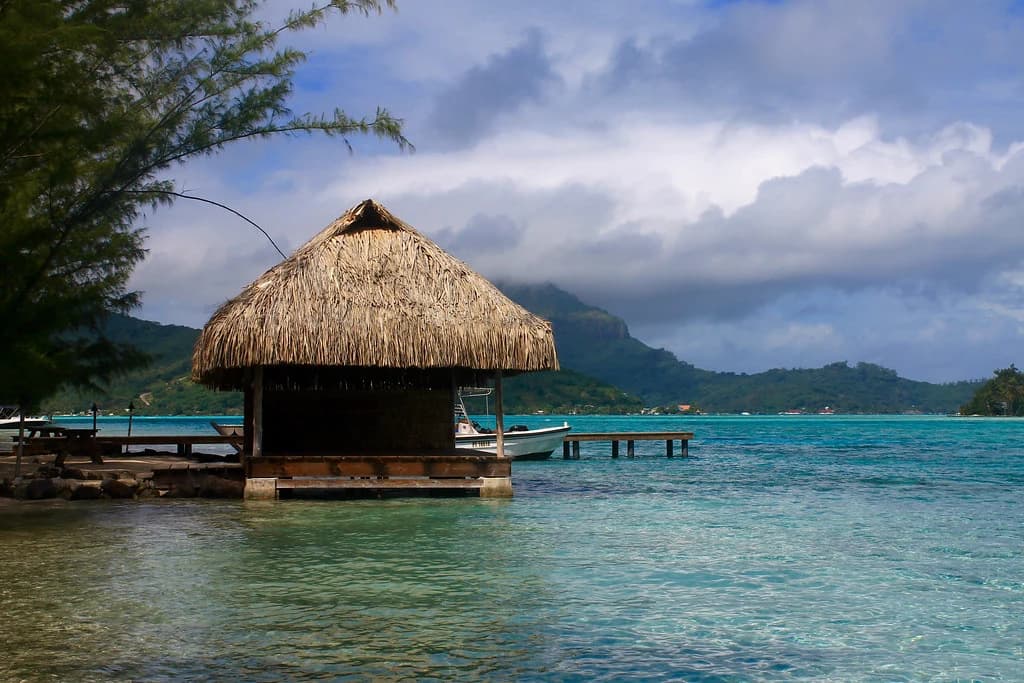
Bora Bora didn't invent the format, but it's become the destination most closely associated with it internationally, and it's easy to see why once you're looking at the lagoon itself. Ringed by a protective barrier reef and centered on Mount Otemanu, an extinct volcanic peak rising sharply from the island's core, the water here grades through vivid shades of turquoise and blue with a clarity that consistently outperforms photographs, a genuinely rare case of a place looking even better in person than in its own marketing.
Getting to Bora Bora requires real commitment: a long-haul international flight into Tahiti, followed by a roughly 50-minute domestic flight to Bora Bora's own small airport, which sits on a separate motu, or islet, requiring a final short boat transfer to reach the island's main resorts. That layered journey, combined with genuinely premium pricing throughout, keeps Bora Bora firmly positioned as a luxury, special-occasion destination rather than a casual add-on to a wider Pacific trip.
Shark and ray feeding tours, run in shallower, controlled sections of the lagoon, have become one of the island's signature excursions, giving visitors close, guided encounters with blacktip reef sharks and stingrays in water shallow and clear enough to see the full interaction without diving equipment.
Mount Otemanu itself, though its summit remains off-limits to climbers due to the terrain's genuine difficulty, is commonly explored via guided 4x4 safari tours that wind partway up its slopes, offering views back down over the lagoon and surrounding motus that give a fuller sense of the island's volcanic origin beyond just its famous water.
What a trip here actually costs
$650 / day avg.
- Overwater bungalow at a resort, half or full board
- Lagoon snorkeling excursion
- Shark and ray feeding tour
- Multi-course dinners at the resort
What to do at this tier
- • Snorkeling directly from an overwater bungalow or a guided lagoon excursion
- • Shark and ray feeding tour, a popular guided excursion into shallower parts of the lagoon
- • Mount Otemanu 4x4 safari tour, exploring the extinct volcanic peak at the island's center
These are average estimates for planning purposes, not real-time prices — actual costs vary by season, availability, and how far ahead you book.
How to get there
Click anywhere on the world map — any airport works, not just our main hubs.
Click anywhere on the map above — any airport in the world works — to see estimated travel time and cost from there.
Times and prices are planning estimates, not live fares — always check a booking site before you commit. See the full Transport Comparison guide for the general tradeoffs of each mode.
Best time to visit
May-October, the dry season, brings the most consistent sunshine and calmer lagoon conditions; the wetter months (November-April) coincide with a higher chance of tropical storms.
Safety notes
Very safe overall, among the more stable and low-crime destinations covered in this guide, with standard precautions around water activities.
Visa & currency
CFP franc (XPF), pegged to the euro given French Polynesia's status as a French overseas collectivity. Visa requirements generally follow French entry rules, though many nationalities can enter for short tourism stays without a visa — confirm current requirements before booking.
Questions people ask before visiting
Is Bora Bora worth visiting?
Yes, if the price fits your budget — its lagoon, ringed by a barrier reef and centered on the extinct volcanic peak of Mount Otemanu, produces some of the clearest, most vividly graded turquoise water anywhere in the world, and it remains the destination most closely associated with the overwater bungalow concept it helped popularize.
Where did overwater bungalows originate?
A small group of American expats, including the founders of Hotel Bali Hai, built the first overwater bungalows in French Polynesia in the 1960s, reportedly because they couldn't afford enough beachfront land for a conventional resort and built out over the lagoon instead. The concept later spread globally and became closely associated with luxury tropical resorts everywhere, though Bora Bora remains one of its spiritual homes.
How do you get to Bora Bora?
Most visitors fly into Tahiti's international airport, then take a roughly 50-minute domestic flight to Bora Bora's own small airport, which sits on a separate motu (islet) requiring a short boat transfer to reach the main resorts.
How many days do you need in Bora Bora?
Four to five days allows real time to enjoy an overwater bungalow, snorkel the lagoon, and take at least one excursion like a shark and ray feeding tour. Given the flight cost and time involved in reaching it, most visitors don't treat Bora Bora as a short stop.
Nearby destinations
 Nadi
NadiNadi
Fiji
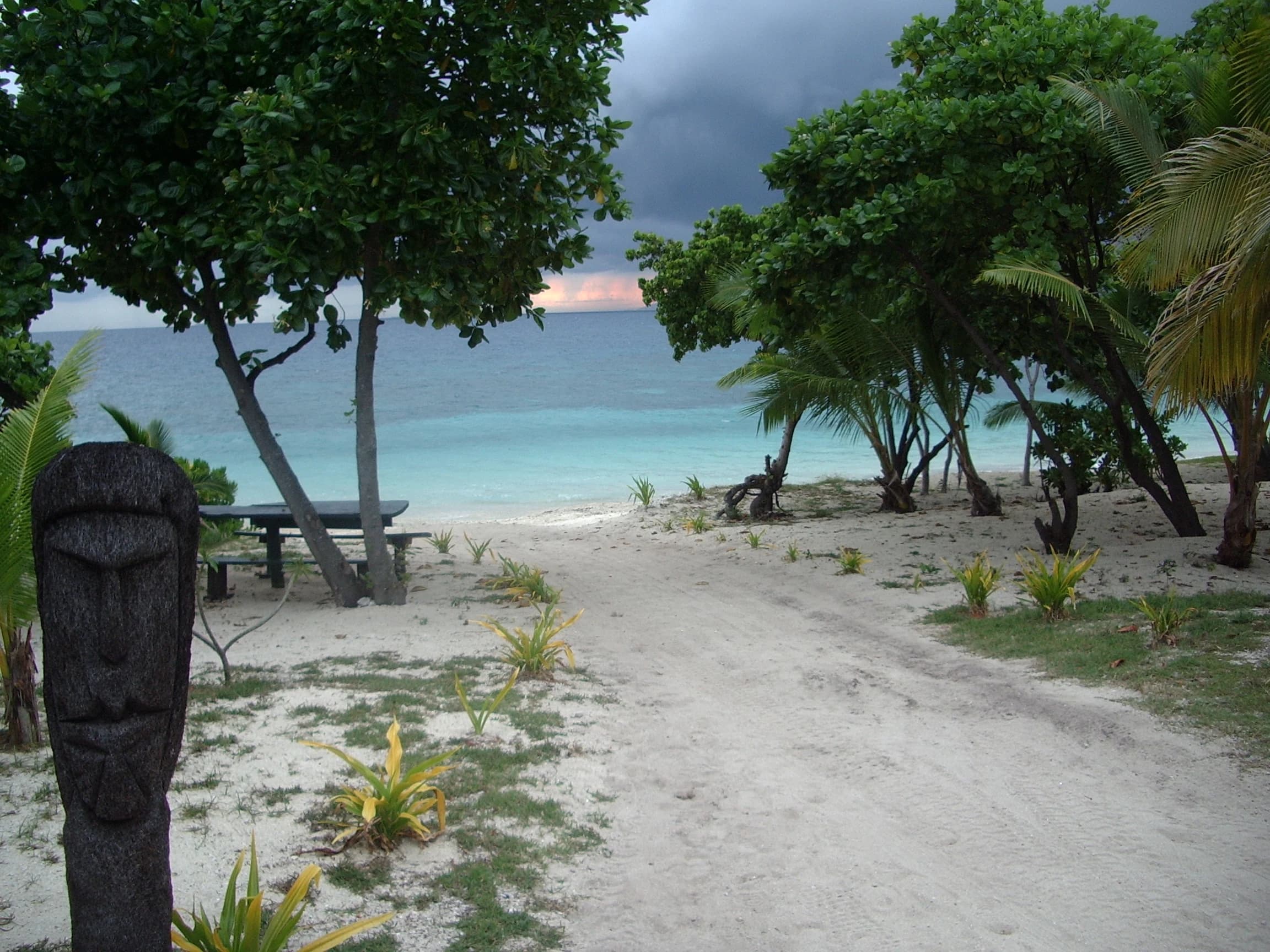
Fiji is made up of more than 300 islands, and Nadi, the main international gateway, welcomes nearly every visitor with the same ritual — a kava ceremony, sharing a mildly numbing, earthy drink made from ground pepper root that's held real cultural and social weight in Fijian communities for centuries.
See full guide →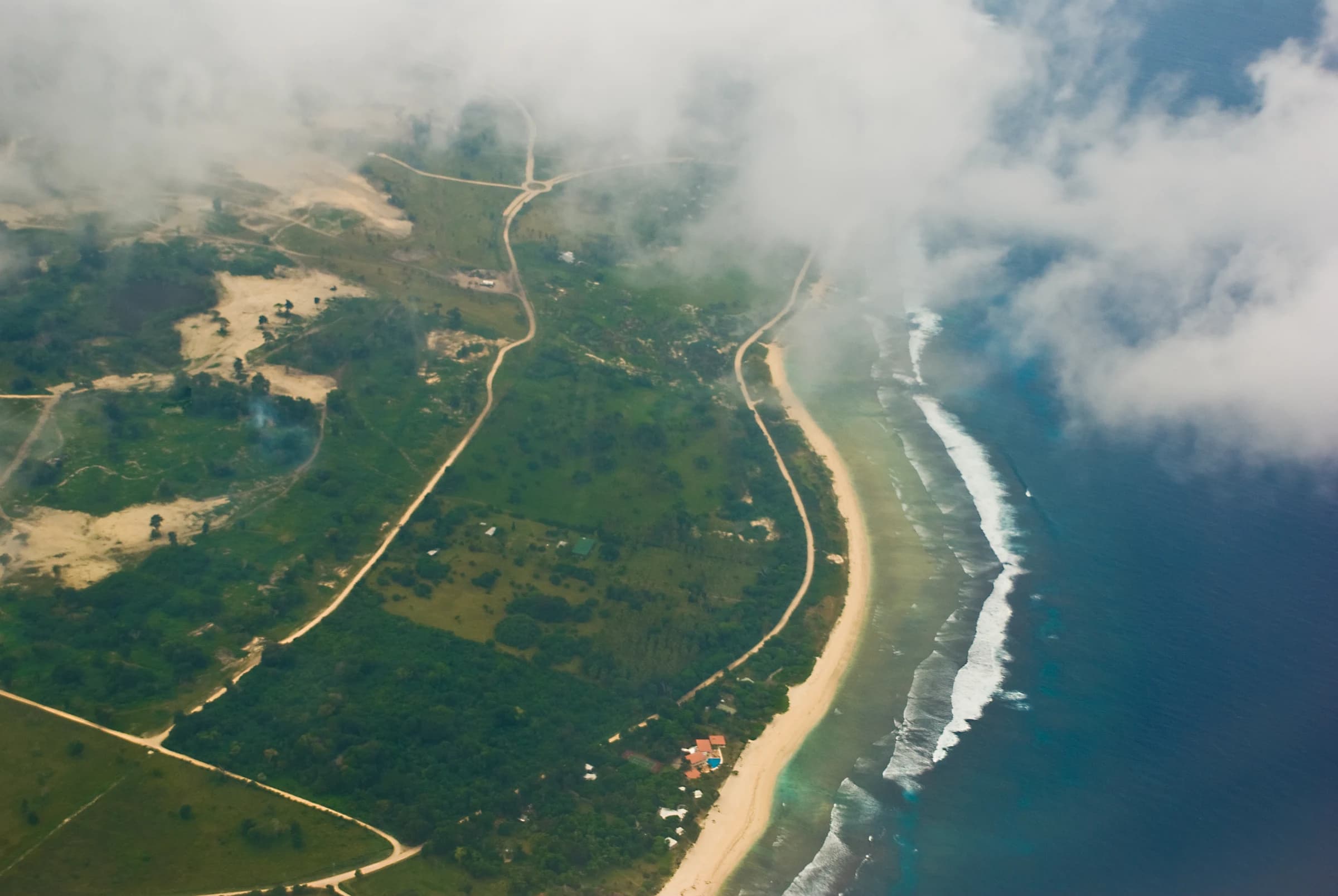 Port Vila
Port Vila
Vanuatu
Long before AJ Hackett turned bungy jumping into a global industry from a bridge near Queenstown, people on Vanuatu's Pentecost Island were diving off wooden towers with vines tied to their ankles — land diving, still practiced today, is widely considered the direct ancestor of modern bungy jumping, performed here for centuries before anyone thought to franchise it.
See full guide →Comparing more than one route? See the full transport comparison guide.