Christmas Island · Oceania
Christmas Island
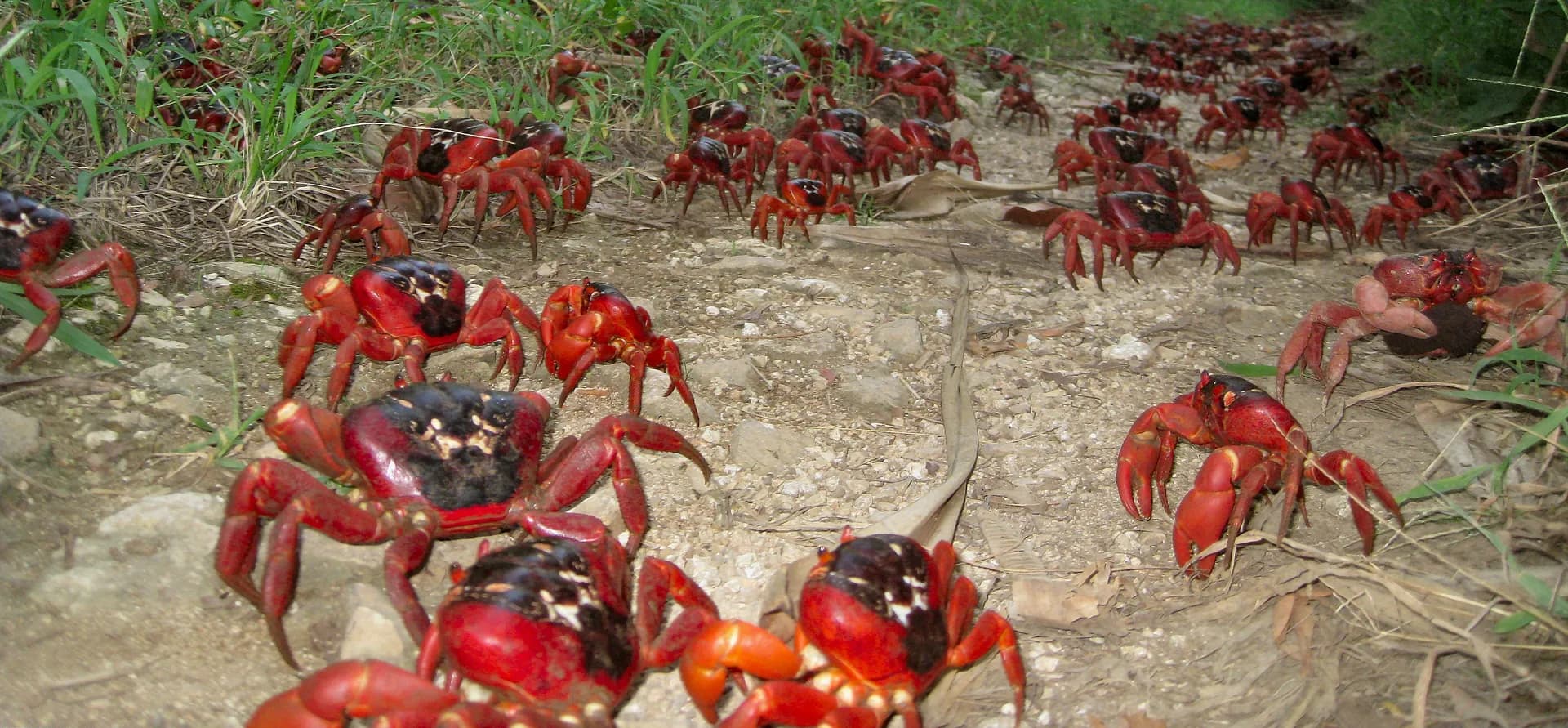
Once a year, tens of millions of red crabs abandon the forest floor of this remote Australian territory all at once and march to the ocean to breed, a migration so overwhelming that roads across the island close or reroute around them — one of the largest animal migrations on Earth, happening on an island most people couldn't place on a map.
Once a year, typically triggered by the first heavy rains of the wet season around October or November, tens of millions of red crabs abandon the forest floor across Christmas Island simultaneously and march toward the ocean to breed, timed precisely to lunar cycles that determine the tides needed for their eggs to hatch successfully. The scale of the migration is genuinely overwhelming, roads across the island close or reroute, and in some areas rangers build temporary bridges and barriers specifically to help the crabs cross safely, a level of infrastructure built around a single species that's rare almost anywhere else in the world.
Despite technically being an Australian external territory, Christmas Island sits in the Indian Ocean roughly 1,500 kilometers northwest of the Australian mainland, considerably closer to Indonesia than to Perth, giving it a genuinely different geography, climate, and ecological character from the rest of Australia's territory. That isolation has let the island develop distinctive wildlife and ecosystems found nowhere else, the red crabs being only the most dramatic example.
The island's history as a phosphate mining operation, dating back to the late 19th century, brought waves of Chinese and Malay laborers whose descendants make up a significant share of today's population, giving Christmas Island a genuinely multicultural character reflected in its temples, mosques, and food that stands apart from the rest of Australia.
Christmas Island National Park, covering a substantial portion of the island, protects both the rainforest crucial to the crab migration and a coastline offering some of the least-disturbed diving conditions in the Indian Ocean, steep coral walls dropping into deep water close to shore, drawing a small but dedicated community of divers specifically for that undeveloped quality.
Reaching Christmas Island takes deliberate planning, with limited flight connections reflecting its remote position, and that same remoteness has kept tourism infrastructure modest and visitor numbers genuinely low, even during the migration itself, a spectacle that would likely draw far larger crowds if it happened somewhere more accessible.
What a trip here actually costs
$60 / day avg.
- Guesthouse or budget lodge
- Rental car for island exploration
- Local and casual restaurant meals
- Christmas Island National Park, low entry fee
What to do at this tier
- • Christmas Island National Park walking trails, low entry fee
- • The Blowholes coastal viewpoint, free
- • Self-guided crab migration viewing, seasonal, free
$140 / day avg.
- 3-star lodge
- Guided diving or snorkeling excursion
- Guided crab migration viewing tour, seasonal
- Sit-down restaurant meals
What to do at this tier
- • Guided diving or snorkeling excursion along the island's coral walls
- • Guided red crab migration tour, seasonal
- • Dolly Beach hike, a remote, undeveloped stretch of coastline
These are average estimates for planning purposes, not real-time prices — actual costs vary by season, availability, and how far ahead you book.
How to get there
Click anywhere on the world map — any airport works, not just our main hubs.
Click anywhere on the map above — any airport in the world works — to see estimated travel time and cost from there.
Times and prices are planning estimates, not live fares — always check a booking site before you commit. See the full Transport Comparison guide for the general tradeoffs of each mode.
Best time to visit
May-September brings drier, more comfortable conditions for general visiting; the crab migration itself typically occurs around October-November, tied to the wet season's first heavy rains.
Safety notes
Generally safe; during crab migration season, drive cautiously and follow local guidance on closed or rerouted roads to avoid harming the crabs.
Visa & currency
Australian dollar (AUD), the currency used on Christmas Island as an Australian external territory. Most nationalities need an eVisitor or ETA arranged online before arrival, following Australian entry rules.
Questions people ask before visiting
Is Christmas Island worth visiting?
Yes for travelers drawn to genuinely singular wildlife spectacles — Christmas Island hosts one of the largest animal migrations on Earth, when tens of millions of red crabs move from forest to ocean to breed, alongside excellent, largely undeveloped diving and a genuinely remote Indian Ocean setting.
When does the red crab migration happen?
Typically triggered by the first heavy rains of the wet season, usually around October or November, timed precisely to lunar cycles for the crabs' ocean spawning. Exact dates vary year to year, so checking current forecasts before planning a trip specifically around it matters.
Where is Christmas Island located?
Despite being an Australian external territory, Christmas Island sits in the Indian Ocean roughly 1,500 kilometers northwest of the Australian mainland and considerably closer to Indonesia, giving it a genuinely different geography from the rest of Australia's territory.
How many days do you need on Christmas Island?
Three to four days covers the island's national park, diving or snorkeling sites, and, if timed right, the crab migration itself, a reasonable pace given the island's compact size and limited but genuine range of activities.
Nearby destinations
 Perth
PerthPerth
Australia
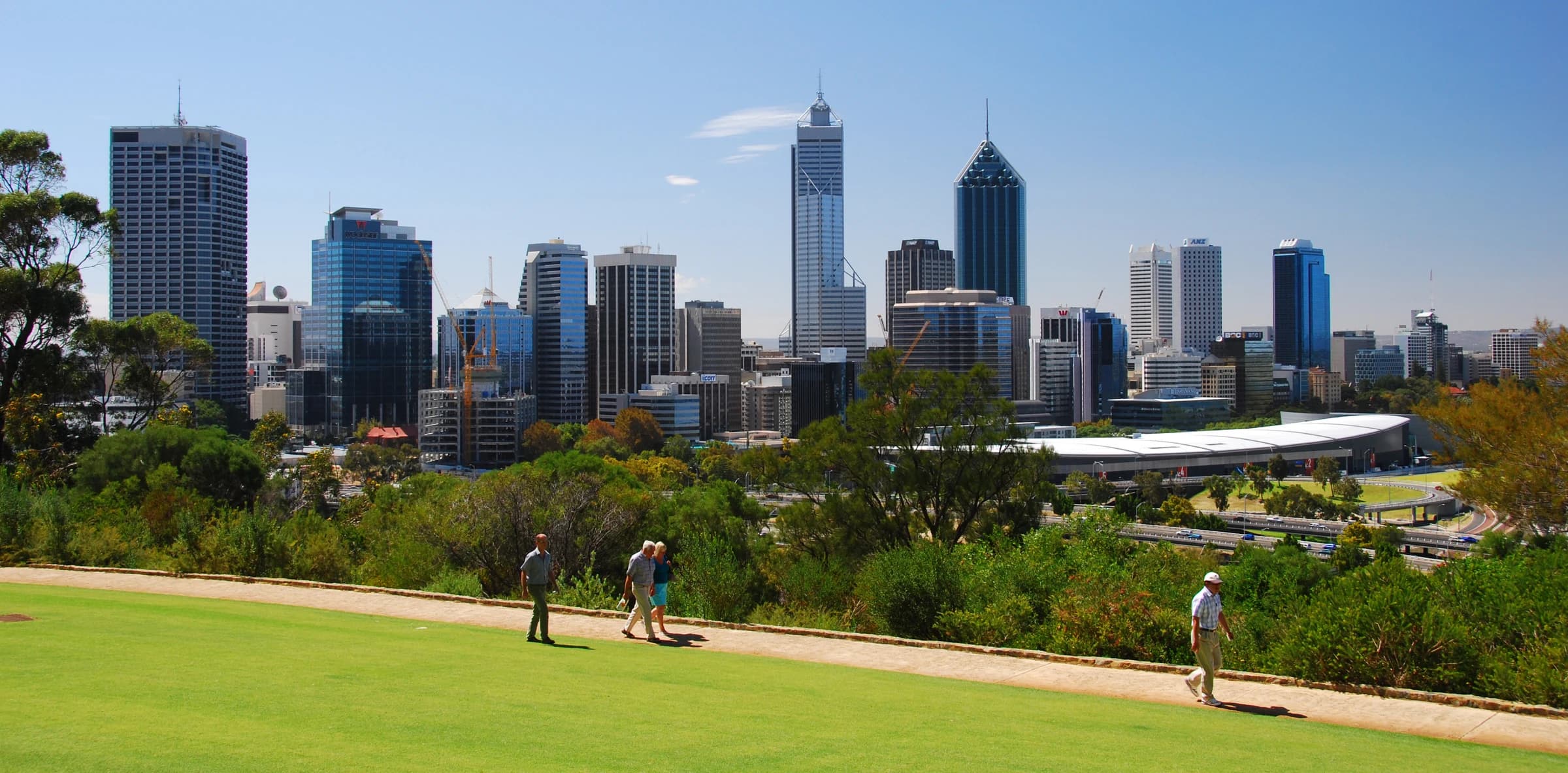
Perth is one of the most isolated major cities on Earth — it sits closer to Jakarta, Indonesia than to Sydney, and the nearest city of comparable size, Adelaide, is a two-and-a-half-hour flight away across a genuinely empty stretch of desert.
See full guide →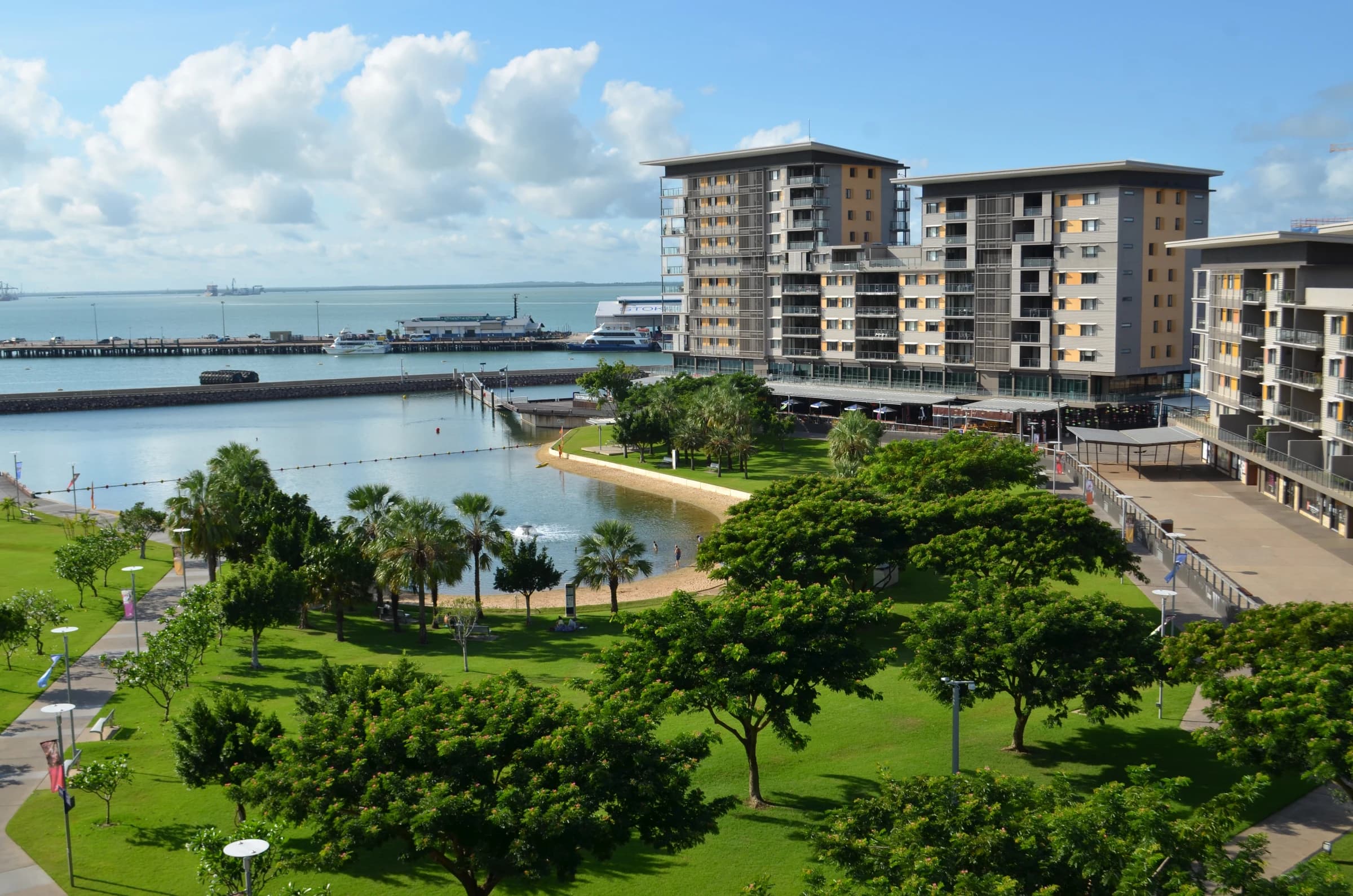 Darwin
Darwin
Australia
Darwin sits closer to Bali than to Canberra, and in February 1942 it became the only Australian city ever bombed by a foreign power — Japan dropped more bombs on Darwin in a single raid than it had on Pearl Harbor two months earlier, a fact many Australians outside the Northern Territory still don't know.
See full guide →Comparing more than one route? See the full transport comparison guide.