Australia · Oceania
Broome
Broome once supplied most of the world's mother-of-pearl shell, drawing a genuinely multicultural workforce of Japanese, Malay, Chinese, and Aboriginal divers into one of the most dangerous jobs of the era, and the Japanese Cemetery still standing today, holding hundreds of graves, is a quiet record of just how many of them never surfaced again.
Broome supplied the majority of the world's mother-of-pearl shell in the early 20th century, a boom industry built on the shells of pearl oysters harvested by divers working in genuinely dangerous conditions well before reliable decompression science existed. That industry drew a remarkably multicultural workforce, Japanese, Malay, Chinese, and Aboriginal divers working alongside European boat owners, creating a demographic mix unlike almost anywhere else in early 20th-century Australia.
The human cost of that industry remains visible at Broome's Japanese Cemetery, which holds hundreds of graves, many belonging to divers who died from decompression sickness, known then as "the bends," a risk poorly understood at the time and made worse by boat owners pushing divers to work longer at increasing depths as accessible shallow-water shells grew scarce. The cemetery stands today as a quiet, direct record of the human toll behind Broome's boom years.
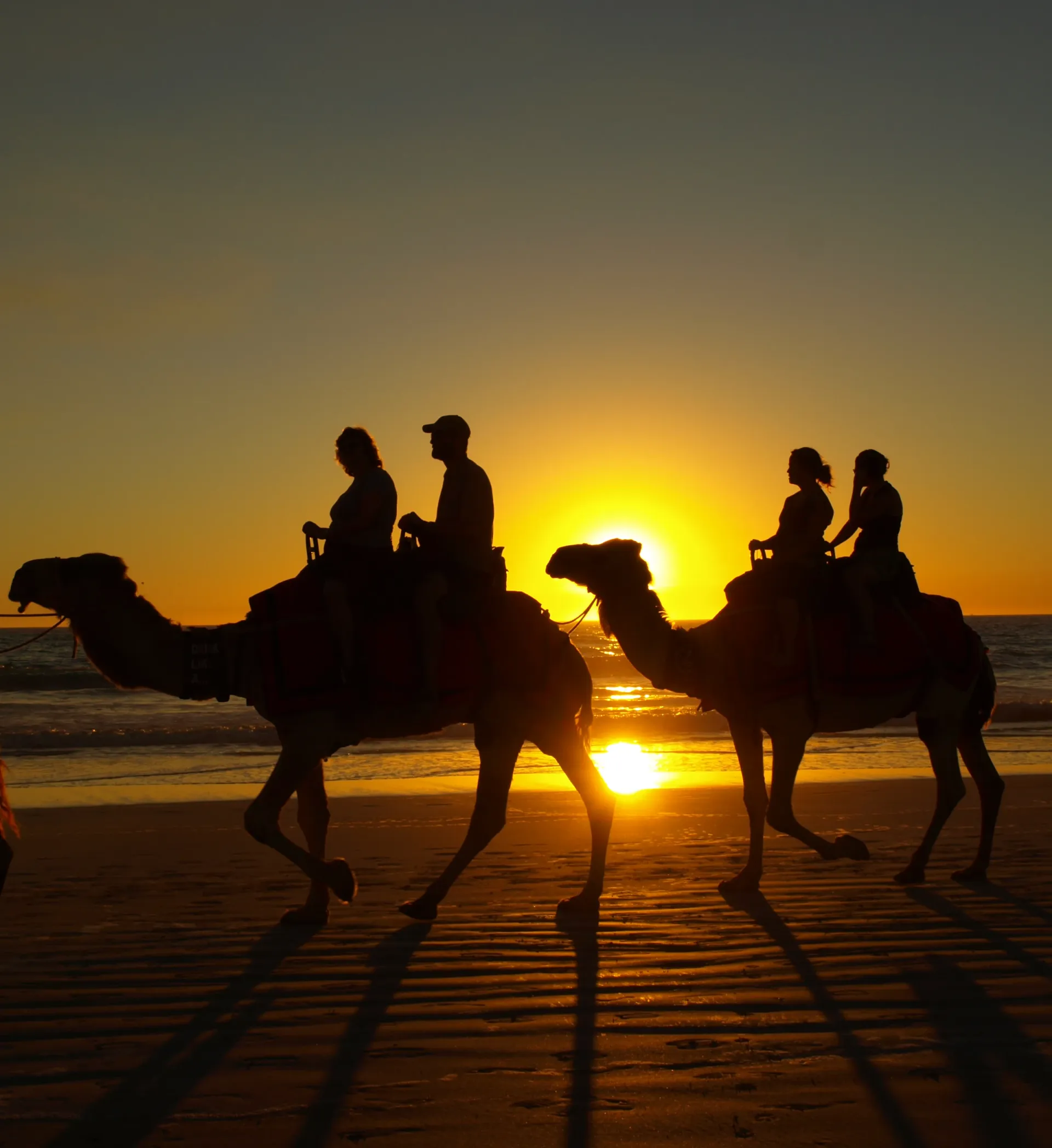
Cable Beach, a 22-kilometer stretch of white sand along Broome's coast, takes its name from the undersea telegraph cable that once ran from here to Java, another thread connecting the town to global communication infrastructure of the era. Today it's better known for sunset camel rides along the sand, a genuinely popular and photogenic activity that's become one of Broome's signature tourist experiences.
The Staircase to the Moon, a natural optical phenomenon occurring when a full moon rises over the exposed mudflats of Roebuck Bay during extremely low tide, creates the visual effect of a staircase of light stretching across the flats toward the horizon. It's visible only a few nights each month between March and October, when the specific combination of full moon and low tide aligns, and locals and visitors alike plan evenings specifically around catching it.
Broome's pearling industry still continues today in a modernized, cultured-pearl form, and farm tours let visitors see the current process alongside displays explaining the earlier, far more dangerous era of wild shell diving that first put the town on the map.
What a trip here actually costs
$150 / day avg.
- 3-star resort near Cable Beach
- Rental car or local transport
- Casual and sit-down restaurant meals
- Broome Historical Museum, low entry fee
What to do at this tier
- • Cable Beach, free public access
- • Japanese Cemetery and pearling history walk, free
- • Broome Historical Museum, low entry fee
$380 / day avg.
- 4-5 star beachfront resort
- Sunset camel ride on Cable Beach
- Pearl farm tour
- Fine dining at a top Broome restaurant
What to do at this tier
- • Sunset camel ride along Cable Beach
- • Pearl farm tour with a working lugger boat
- • Staircase to the Moon viewing, seasonal, free
These are average estimates for planning purposes, not real-time prices — actual costs vary by season, availability, and how far ahead you book.
How to get there
Click anywhere on the world map — any airport works, not just our main hubs.
Click anywhere on the map above — any airport in the world works — to see estimated travel time and cost from there.
Times and prices are planning estimates, not live fares — always check a booking site before you commit. See the full Transport Comparison guide for the general tradeoffs of each mode.
Best time to visit
May-September (the dry season) brings comfortable temperatures and the Staircase to the Moon viewing window; the wet season (November-April) brings heat, humidity, and cyclone risk.
Safety notes
Generally safe; strong currents and marine stingers affect ocean swimming at certain times of year, so check local conditions before going in the water.
Visa & currency
Australian dollar (AUD). Most nationalities need an eVisitor or ETA arranged online before arrival.
Questions people ask before visiting
Is Broome worth visiting?
Yes — Broome combines a genuinely unique multicultural pearling history, the 22-kilometer white sand of Cable Beach, famous for sunset camel rides, and the Staircase to the Moon, a natural optical phenomenon visible only a few nights each month during specific tidal and lunar conditions.
What is the Staircase to the Moon?
A natural optical illusion that occurs when a full moon rises over the exposed mudflats of Roebuck Bay at extremely low tide, creating what looks like a staircase of light reflecting across the tidal flats toward the horizon. It's visible only a few nights per month between March and October.
Why was Broome important for pearling?
Broome supplied the majority of the world's mother-of-pearl shell in the early 20th century, used for buttons and decorative items before plastic became widespread. That industry drew a multicultural workforce of Japanese, Malay, Chinese, and Aboriginal divers, many of whom died from decompression sickness, commemorated today at the Japanese Cemetery.
How many days do you need in Broome?
Three to four days covers Cable Beach, the pearling history sites, and a chance to catch the Staircase to the Moon if the timing lines up, at a relaxed pace suited to Broome's laid-back character.
Nearby destinations
 Darwin
Darwin
Australia
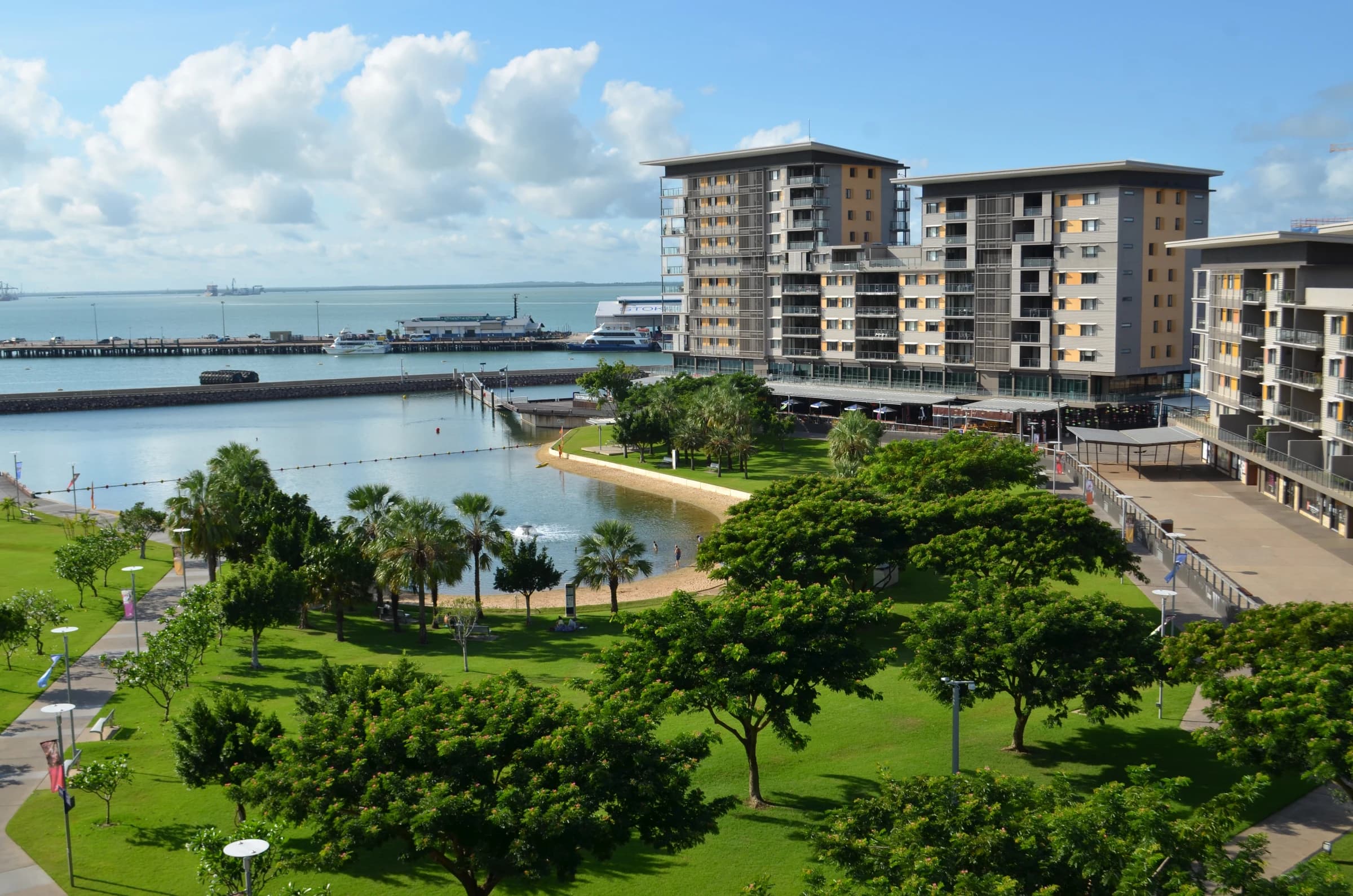
Darwin sits closer to Bali than to Canberra, and in February 1942 it became the only Australian city ever bombed by a foreign power — Japan dropped more bombs on Darwin in a single raid than it had on Pearl Harbor two months earlier, a fact many Australians outside the Northern Territory still don't know.
See full guide →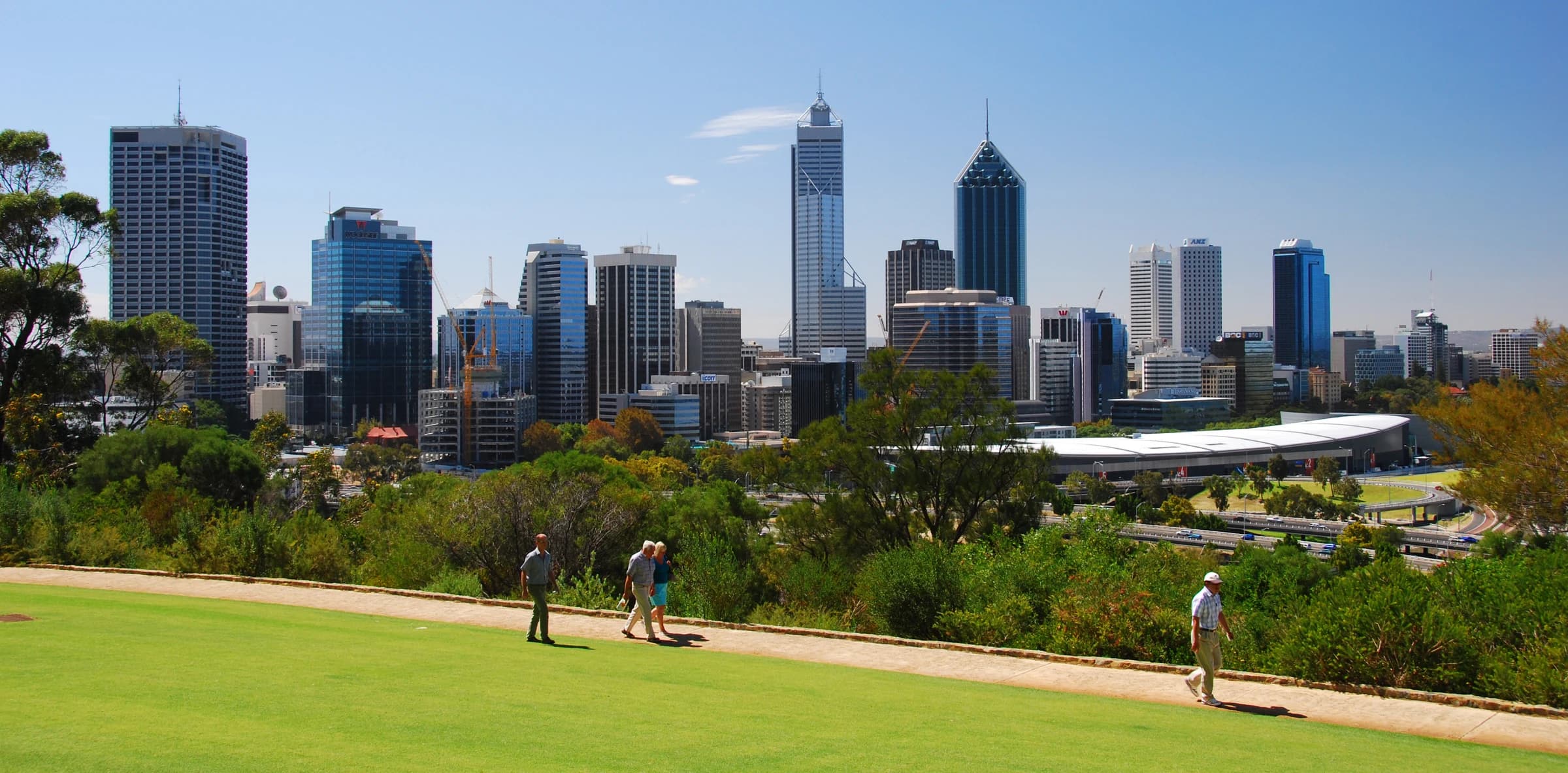 Perth
PerthPerth
Australia
Perth is one of the most isolated major cities on Earth — it sits closer to Jakarta, Indonesia than to Sydney, and the nearest city of comparable size, Adelaide, is a two-and-a-half-hour flight away across a genuinely empty stretch of desert.
See full guide →Comparing more than one route? See the full transport comparison guide.