United States · North America
Yellowstone
Yellowstone became the world's first national park in 1872, but the more startling fact is what it actually sits on top of — a supervolcano whose last three eruptions were each thousands of times larger than Mount St. Helens, and whose ongoing geothermal activity powers roughly half of all the geysers on Earth in one park.
Yellowstone earned its place in history in 1872 as the world's first national park, a designation that predates the entire modern concept of environmental conservation by decades. What's less commonly understood is what the park actually sits on top of: the Yellowstone Caldera, a supervolcano whose three prehistoric eruptions were each thousands of times larger than the 1980 Mount St. Helens eruption that most Americans think of as a major volcanic event.
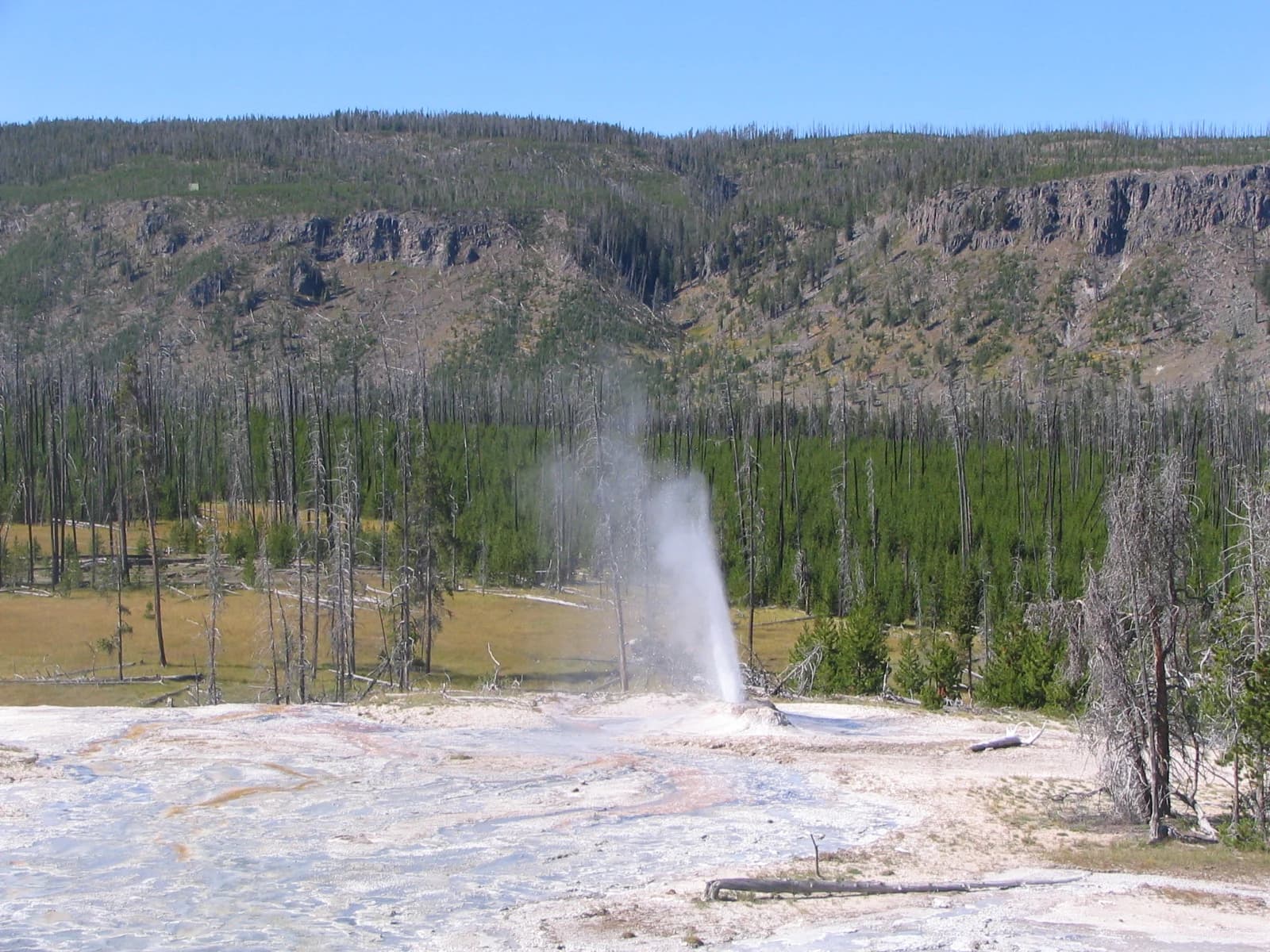
That underlying volcanic system powers the park's roughly half of the world's total geysers, along with thousands of hot springs, mud pots, and fumaroles, concentrated in this one park more densely than anywhere else on Earth. Old Faithful, the most famous of them, earned its name for genuinely reliable, if not perfectly regular, eruptions that park rangers can predict to within about 10-15 minutes based on the previous eruption's duration.
The park's wolves tell one of ecology's most frequently cited stories. Deliberate extermination programs wiped them out by 1926, and their absence let elk populations grow unchecked, overgrazing vegetation along rivers and streams across the park. A 1995 reintroduction effort brought wolves back from Canada, and the resulting shift in elk behavior, staying more alert and mobile rather than lingering to overgraze, allowed riverside vegetation to recover in a widely studied example of what ecologists call a trophic cascade, where a single species' return reshapes an entire ecosystem.
Lamar Valley, in the park's northeast section, has earned the nickname America's Serengeti for its unusually reliable wildlife viewing — wolves, grizzly bears, bison, and elk are all visible here with a consistency that's genuinely rare for wild, unfenced animals anywhere in the country.
Yellowstone's remote, high-elevation location means much of the park stays snowbound for a large part of the year, and most interior roads don't fully open until late May or June, closing again by early November — a real practical constraint that concentrates the vast majority of visits into a relatively narrow summer window each year.
What a trip here actually costs
$60 / day avg.
- Campground site inside the park
- Groceries and casual meals
- Park entrance fee, valid for 7 days
- Ranger-led programs, included with entry
What to do at this tier
- • Old Faithful and the Upper Geyser Basin boardwalks, included with park entry
- • Wildlife watching in Lamar Valley, often called America's Serengeti, free
- • Grand Prismatic Spring viewpoint, the park's largest and most colorful hot spring
$160 / day avg.
- Lodge or cabin inside or near the park
- Guided wildlife-watching drive
- Sit-down meals at park lodges
- Old Faithful and geyser basin boardwalk tours
What to do at this tier
- • Guided wildlife-watching drive, particularly for wolves and bears in Lamar Valley
- • Yellowstone Lake boat tour
- • Ranger-led geology and geothermal talks
$400 / day avg.
- Historic lodge room with premium location
- Private wildlife and geology guide
- Fine dining at a park lodge restaurant
- Multi-day private touring itinerary across the park's regions
What to do at this tier
- • Private wildlife and geology guide for a full-day tour
- • Multi-day private touring itinerary across the park's distinct regions
- • Fine dining at one of the park's historic lodge restaurants
These are average estimates for planning purposes, not real-time prices — actual costs vary by season, availability, and how far ahead you book.
How to get there
Click anywhere on the world map — any airport works, not just our main hubs.
Click anywhere on the map above — any airport in the world works — to see estimated travel time and cost from there.
Times and prices are planning estimates, not live fares — always check a booking site before you commit. See the full Transport Comparison guide for the general tradeoffs of each mode.
Best time to visit
June through September offers full road and facility access. Many interior roads stay closed under snow until late May or June, and some close again by early November, so shoulder-season visits require checking current road status carefully.
Safety notes
Wildlife encounters are a genuine, serious risk here — bison injure more visitors than any other animal in the park precisely because people underestimate them, and bears require proper food storage and distance at all times. Stay on boardwalks around geothermal features, since the ground can be thin and the water genuinely scalding.
Visa & currency
US dollar (USD). Most Western European, UK, Australian, and several other passport holders can enter visa-free for short tourist stays under the Visa Waiver Program with an approved ESTA — worth confirming current requirements before booking.
Questions people ask before visiting
Is Yellowstone's supervolcano dangerous right now?
Scientists monitoring the Yellowstone Caldera consider a major eruption extremely unlikely in any human timescale, despite the volcano's genuinely massive eruptive history. The park's geothermal features, geysers, hot springs, and mud pots, are the visible, ongoing evidence of that underlying activity, monitored continuously without indicating imminent danger.
How predictable is Old Faithful's eruption schedule?
Park rangers post eruption time predictions accurate to within about 10-15 minutes, based on the duration of the previous eruption, though it's not perfectly regular. It remains one of the most reliably predictable geysers in the park, which is exactly why it became the famous one.
Why were wolves reintroduced to Yellowstone?
Wolves had been eradicated from the park by 1926 through deliberate extermination programs, and their absence let elk populations grow unchecked, overgrazing vegetation along rivers and streams. A 1995 reintroduction program brought wolves back from Canada, and the resulting ecological changes, including elk behavior shifts that allowed riverside vegetation to recover, became a widely cited example of a trophic cascade in ecology.
When is the best time to visit Yellowstone?
June through September offers full access to the park's roads and facilities, most of which close seasonally due to snow. Many interior roads don't fully open until late May or June, so an early spring visit severely limits what's accessible.
Nearby destinations
 Banff
BanffBanff
Canada
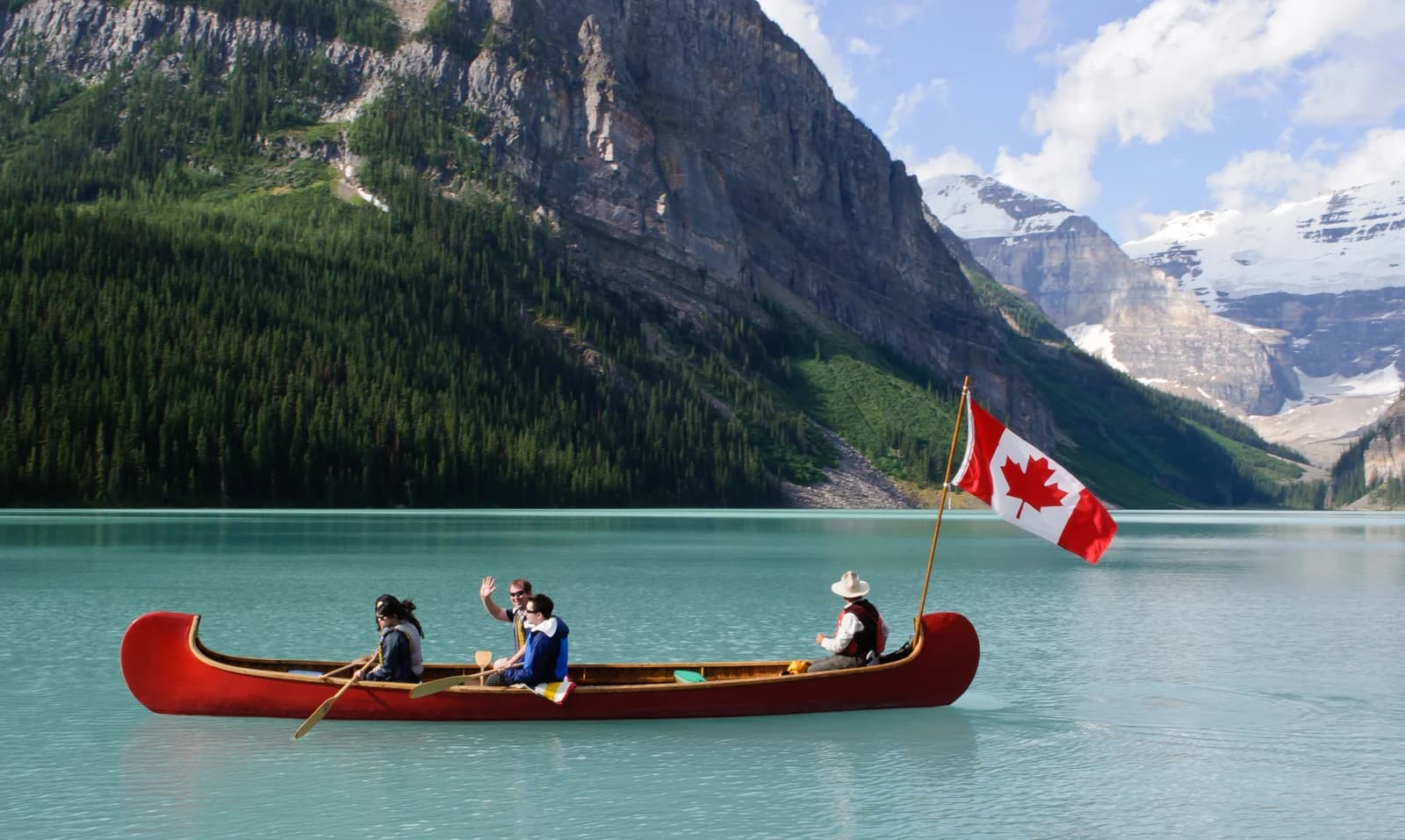
Banff National Park became Canada's first national park in 1885, created almost by accident after railway workers building the transcontinental line stumbled on natural hot springs — the glacial turquoise of Lake Louise a short drive away comes from rock flour, fine sediment ground by glaciers that stays suspended in the water and scatters light into that exact color.
See full guide →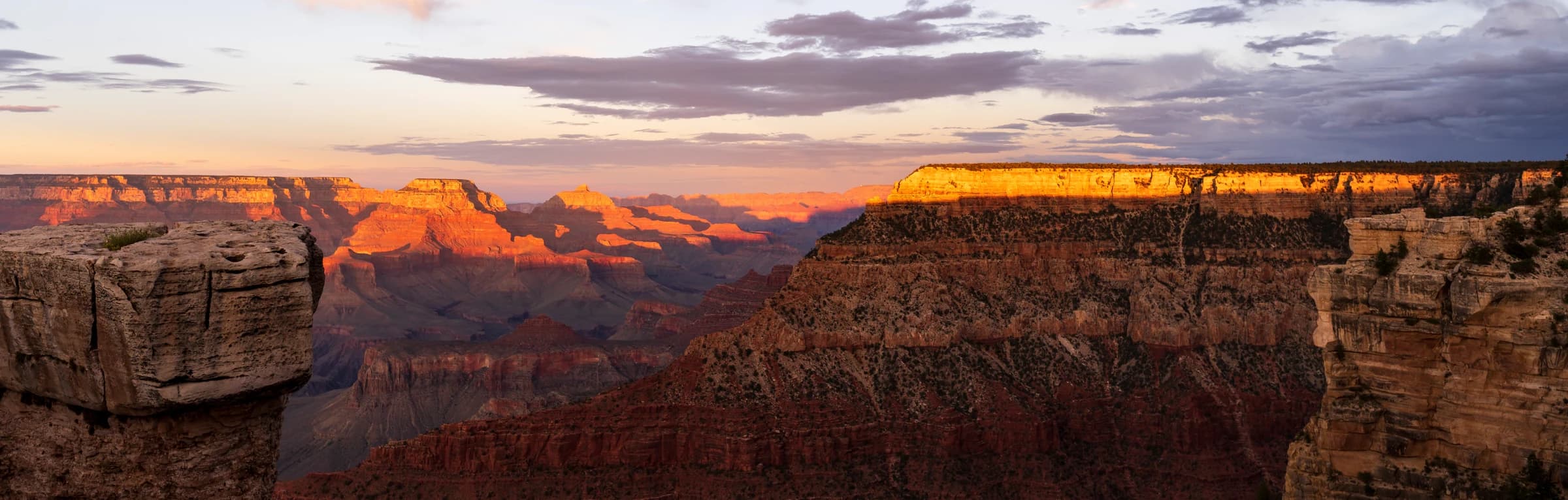 Grand Canyon
Grand Canyon
United States
The Grand Canyon's exposed rock layers span nearly two billion years of Earth's history, close to half the planet's entire age, carved by the Colorado River over roughly five to six million years — a stretch of time so vast that the canyon's oldest rock at the bottom formed before complex life existed anywhere on Earth.
See full guide →Comparing more than one route? See the full transport comparison guide.