United States · North America
Grand Canyon
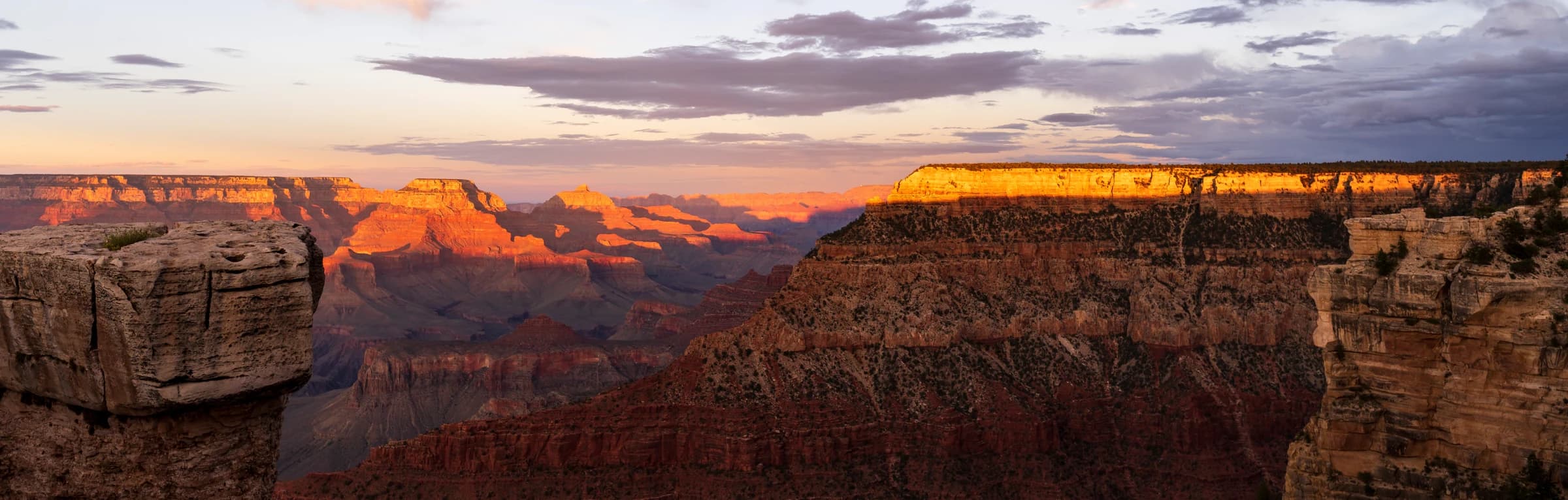
The Grand Canyon's exposed rock layers span nearly two billion years of Earth's history, close to half the planet's entire age, carved by the Colorado River over roughly five to six million years — a stretch of time so vast that the canyon's oldest rock at the bottom formed before complex life existed anywhere on Earth.
The Grand Canyon's rock layers read like a cross-section of Earth's own history, exposing nearly two billion years of geological time in a single view — the canyon's oldest rock, visible near the Colorado River at the bottom, formed before complex multicellular life existed anywhere on the planet, while the layers near the rim are, by comparison, geologically recent.
The Colorado River carved that immense record over roughly five to six million years, a genuinely fast process by geological standards, cutting through rock that had already been slowly uplifted over tens of millions of years before the river began its work — a combination of uplift and erosion that produced a canyon reaching over a mile deep and up to 18 miles wide at its widest point.
The South Rim handles the overwhelming majority of visitors, roughly 90 percent of the park's total, largely because it stays open and accessible year-round, while the North Rim, sitting noticeably higher and cooler, closes for months each winter under heavy snow — a genuine practical reason the two rims see such different visitor numbers rather than one being simply more scenic than the other.
The glass Skywalk platform that shows up in a lot of Grand Canyon marketing photos isn't actually part of the national park at all — it sits on Hualapai tribal land at Grand Canyon West, a separate area closer to Las Vegas, requiring its own trip and admission fee entirely apart from the main South Rim visitor areas most people picture when they think of the canyon.
Despite the canyon's scale, the rim itself requires no hiking experience to enjoy — much of the Rim Trail is flat and paved, accessible to nearly anyone. The real risk comes from underestimating the trip below the rim, where heat, elevation change, and the genuinely difficult climb back out have caught out visitors who treat it as a casual add-on rather than the serious undertaking it is.
What a trip here actually costs
$55 / day avg.
- Campground site inside or near the park
- Groceries and casual meals
- Free rim shuttle bus system
- Park entrance fee, valid for 7 days
What to do at this tier
- • Rim Trail, a mostly flat, paved path along the South Rim with numerous viewpoints, free with park entry
- • Free shuttle bus system connecting the park's main viewpoints
- • Sunset or sunrise viewing at Mather Point or Yavapai Point
$140 / day avg.
- Lodge or hotel near the South Rim
- Ranger-led rim walk or talk
- Sit-down meals at park lodges
- Mule ride or guided rim tour
What to do at this tier
- • Ranger-led talks and guided rim walks, included with park entry
- • Mule ride along the rim or partway into the canyon
- • Short hike partway down the Bright Angel or South Kaibab Trail
$350 / day avg.
- Historic lodge room with canyon views
- Private guided hiking or photography tour
- Fine dining at a park lodge restaurant
- Helicopter tour over the canyon
What to do at this tier
- • Helicopter tour over the canyon
- • Private guided hiking or photography tour with a specialist guide
- • Multi-day guided hike into the canyon with permits and gear arranged
These are average estimates for planning purposes, not real-time prices — actual costs vary by season, availability, and how far ahead you book.
How to get there
Click anywhere on the world map — any airport works, not just our main hubs.
Click anywhere on the map above — any airport in the world works — to see estimated travel time and cost from there.
Times and prices are planning estimates, not live fares — always check a booking site before you commit. See the full Transport Comparison guide for the general tradeoffs of each mode.
Best time to visit
March-May and September-November bring comfortable temperatures at the rim. Summer heat at the canyon bottom regularly exceeds 38°C (100°F), a genuine hazard for anyone hiking down, while winter can bring snow and ice to the rim itself.
Safety notes
The rim itself is safe with normal caution around unfenced edges; hiking below the rim carries real risk from heat, dehydration, and the difficulty of the climb back up, which has led to fatalities among underprepared hikers — carry more water than feels necessary and know your limits before descending.
Visa & currency
US dollar (USD). Most Western European, UK, Australian, and several other passport holders can enter visa-free for short tourist stays under the Visa Waiver Program with an approved ESTA — worth confirming current requirements before booking.
Questions people ask before visiting
South Rim or North Rim — which should I visit?
The South Rim is open year-round, holds nearly all the park's visitor infrastructure, and receives around 90 percent of total visitors, making it the practical default for most trips. The North Rim, closed roughly mid-October through mid-May due to snow, sits higher, cooler, and far less crowded, appealing to visitors specifically seeking a quieter experience.
How deep and wide is the Grand Canyon?
The canyon reaches over a mile deep (roughly 1,800 meters) at its deepest point, stretches about 277 miles (446 kilometers) long, and varies from under a mile to 18 miles wide. Its scale is genuinely difficult to grasp from a single viewpoint, which is part of why multiple stops along the rim are worth the time.
Is the Grand Canyon Skywalk part of the national park?
No — the glass Skywalk platform is on Hualapai tribal land at Grand Canyon West, a separate area outside the national park boundary and closer to Las Vegas than the South Rim's main visitor areas. It requires a separate admission fee and trip from the main national park entrance.
Do you need hiking experience to visit the Grand Canyon?
No — the rim trails are flat, paved in many sections, and require no special fitness or experience, making the canyon's views accessible to nearly anyone. Hiking down into the canyon itself is a different matter entirely, genuinely strenuous even for short distances given the elevation change and heat, and not recommended as a casual add-on.
Nearby destinations
 Las Vegas
Las Vegas
United States
The Las Vegas Strip, the stretch of casino resorts everyone pictures when they think of the city, technically isn't inside Las Vegas city limits at all — it sits in unincorporated Clark County, a legal quirk that traces back to the city itself once trying to impose stricter gambling regulations the casino owners wanted to avoid.
See full guide →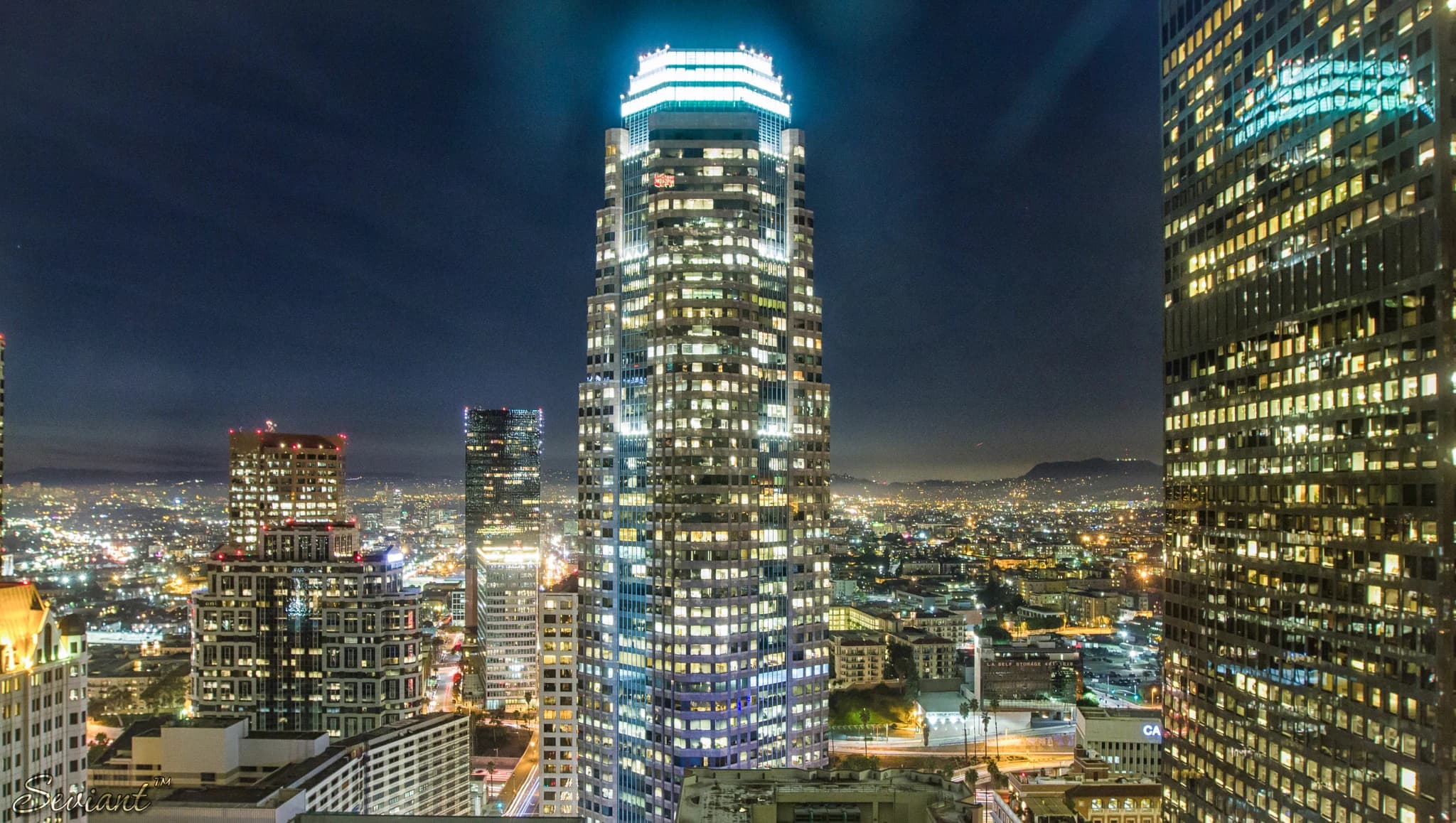 Los Angeles
Los Angeles
United States
The Hollywood sign originally read HOLLYWOODLAND and was built in 1923 purely as a temporary real estate advertisement for a housing development in the hills — it was only meant to stand for about a year and a half, and the LAND was removed for good in 1949.
See full guide →Comparing more than one route? See the full transport comparison guide.