United States · North America
Santa Fe
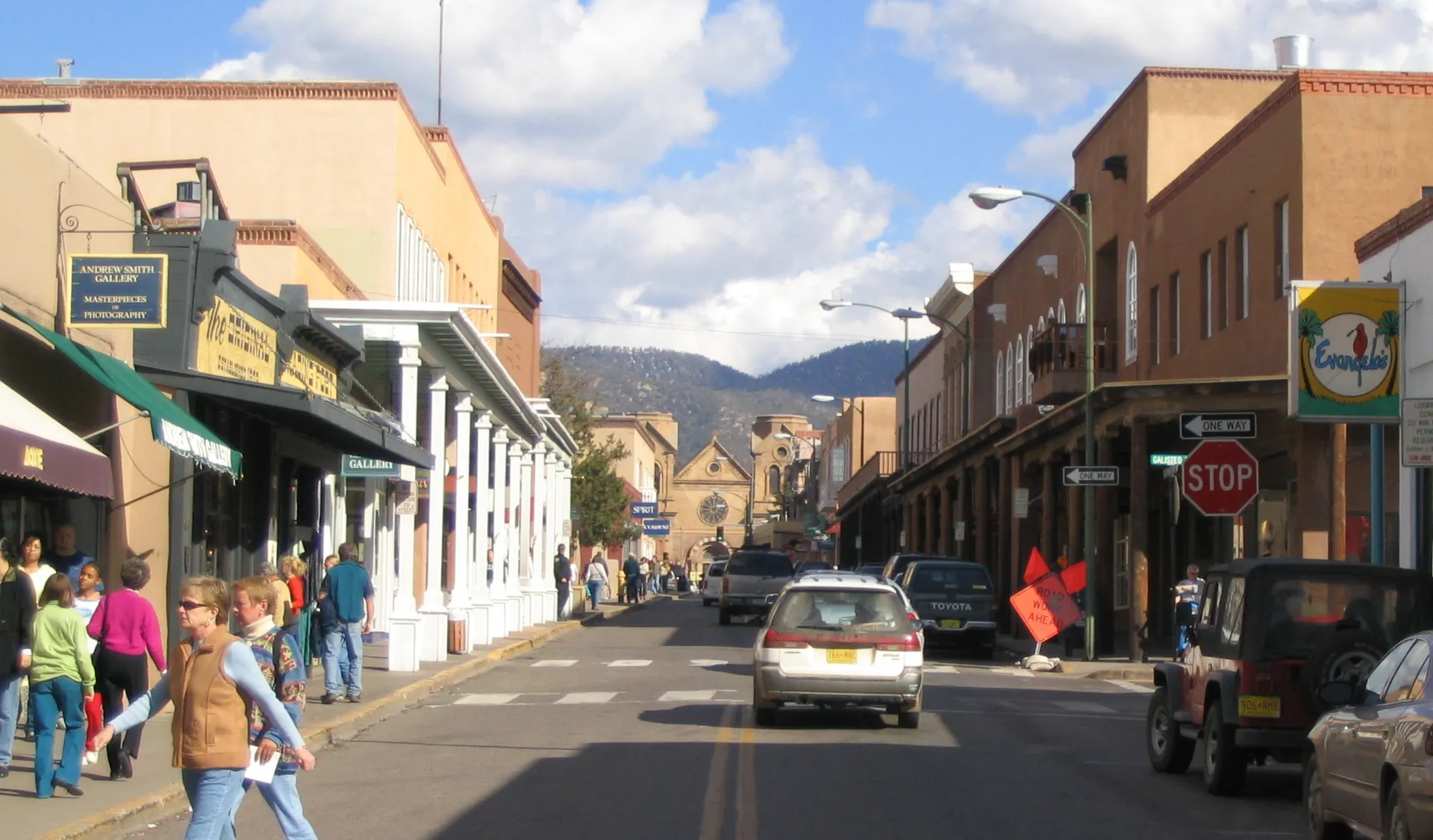
Santa Fe has enforced a single architectural style, adobe-style Pueblo Revival, by city ordinance since the 1950s, making it one of the only American cities where a new bank building and a 400-year-old mission church are required to look, at least superficially, like they belong to the same era.
Santa Fe has done something few American cities have attempted: it legislated its own architectural identity into permanence. A city ordinance, formalized in the mid-20th century and still enforced today, requires new construction within Santa Fe's historic districts to follow Pueblo Revival or Territorial style guidelines, rounded, earth-toned adobe-style forms echoing the city's Native American and Spanish colonial building traditions. The practical result is a downtown where a contemporary bank branch and a mission church built centuries earlier are required to share, at least superficially, a consistent visual language, an unusual degree of architectural discipline for an American city of any size.
That consistency sits atop a genuinely long history. Founded in 1610 by Spanish colonists, Santa Fe holds the distinction of being the oldest state capital in the United States, predating the permanent survival of Jamestown and the Pilgrims' Plymouth Colony by roughly a decade. The city's Palace of the Governors, facing the central plaza, has served continuously as a seat of government under Spanish, Mexican, and American rule, making it one of the oldest continuously used public buildings in the country.
Santa Fe's more recent identity centers on art, and specifically on Canyon Road, a roughly mile-long stretch lined with over 100 galleries, one of the densest concentrations of art dealers anywhere in the United States outside a handful of major coastal markets. That density reflects decades of artists drawn to the region's light and landscape, a tradition most closely associated internationally with Georgia O'Keeffe, whose stark, close-cropped paintings of New Mexico's desert scenery are held in a dedicated museum downtown, alongside the ranch north of the city where she lived and worked for decades.
The surrounding high desert landscape, Santa Fe sits at roughly 2,100 meters elevation, adds its own draw beyond the city itself. Bandelier National Monument, a short drive away, holds ancestral Puebloan cliff dwellings carved directly into volcanic rock, reachable by trail and viewable up close in a way few other archaeological sites in the country allow.
Between the enforced architectural consistency, the genuine colonial-era history, and an art market that's shaped the city's economy for generations, Santa Fe offers a version of the American Southwest considerably more layered than its adobe-postcard reputation alone suggests.
What a trip here actually costs
$140 / day avg.
- Boutique hotel near the historic plaza
- Rental car for day trips
- Restaurant meals
- Georgia O'Keeffe Museum entry
What to do at this tier
- • Santa Fe Plaza and Palace of the Governors, free
- • Canyon Road gallery walk, free
- • Georgia O'Keeffe Museum
- • Bandelier National Monument day trip
These are average estimates for planning purposes, not real-time prices — actual costs vary by season, availability, and how far ahead you book.
How to get there
Click anywhere on the world map — any airport works, not just our main hubs.
Click anywhere on the map above — any airport in the world works — to see estimated travel time and cost from there.
Times and prices are planning estimates, not live fares — always check a booking site before you commit. See the full Transport Comparison guide for the general tradeoffs of each mode.
Best time to visit
September-October brings mild temperatures and fall color at high elevation; summer stays comfortable given Santa Fe's roughly 2,100-meter elevation, though afternoon thunderstorms are common.
Safety notes
Very safe and well-established for tourism; standard precautions apply as anywhere.
Visa & currency
United States dollar (USD). Standard US visa requirements apply based on passport.
Questions people ask before visiting
Is Santa Fe worth visiting?
Yes, its combination of Native American, Spanish colonial, and Anglo-American history, expressed through genuinely enforced architectural consistency, along with one of the largest art markets in the United States outside major coastal cities, makes it a distinctive stop for culture-focused travelers.
Why does all the architecture in Santa Fe look the same?
A city ordinance, formalized in the mid-20th century, requires new construction in Santa Fe's historic districts to follow Pueblo Revival or Territorial style guidelines, rounded adobe-like forms, earth tones, flat roofs, a deliberate policy that's kept the city's overall look consistent regardless of a building's actual age or function.
What is Canyon Road known for?
A roughly mile-long stretch lined with over 100 art galleries, making it one of the highest concentrations of art dealers anywhere in the United States, reflecting Santa Fe's status as a major art market, particularly for Southwestern and Native American art.
How old is Santa Fe?
Founded in 1610 by Spanish colonists, Santa Fe is the oldest state capital in the United States and among the oldest continuously occupied European settlements in the country, predating Jamestown's permanent survival and the Pilgrims' Plymouth Colony by roughly a decade.
Nearby destinations
 Denver
Denver
United States
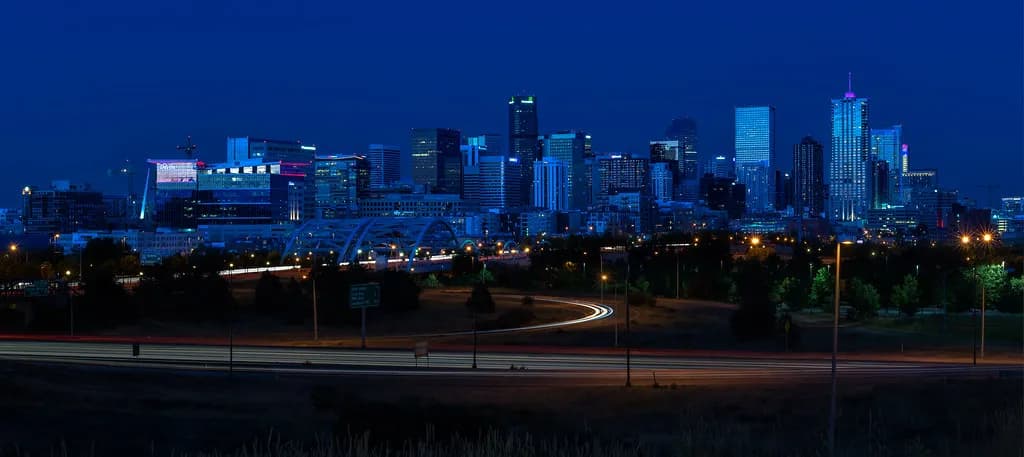
Denver's nickname, the Mile High City, isn't just a marketing phrase — the 13th step of the Colorado State Capitol building sits at exactly 5,280 feet above sea level, marked with an engraving, and the elevation genuinely shapes daily life here, from how quickly a beer hits you to why the city has become one of the most brewery-dense places in the country.
See full guide →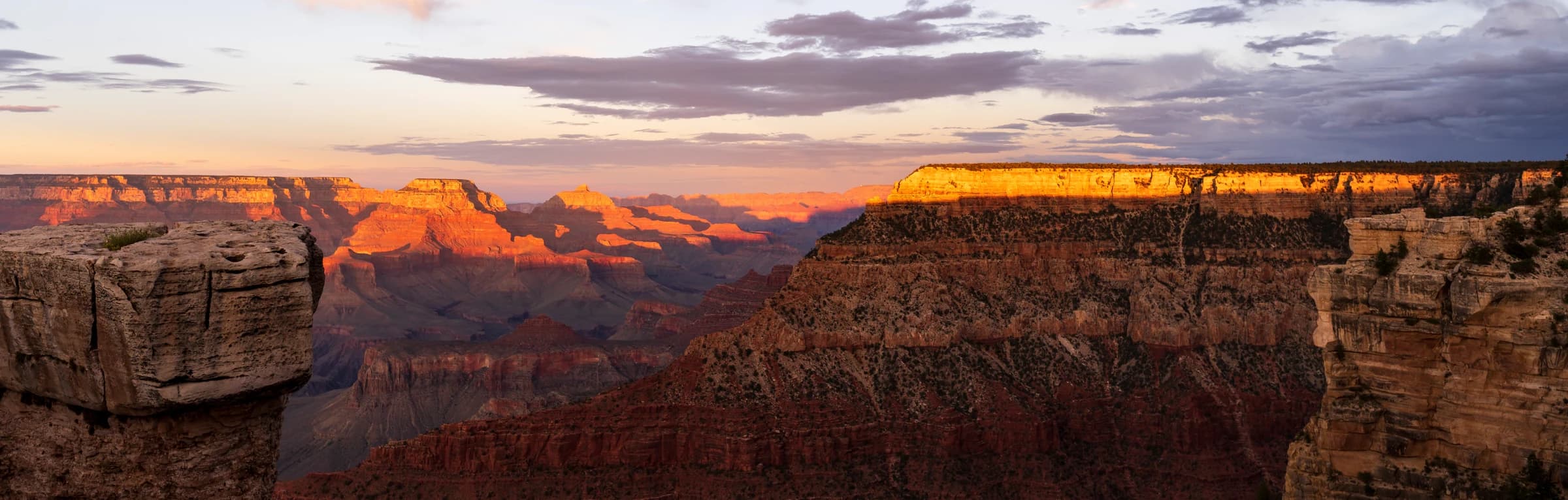 Grand Canyon
Grand Canyon
United States
The Grand Canyon's exposed rock layers span nearly two billion years of Earth's history, close to half the planet's entire age, carved by the Colorado River over roughly five to six million years — a stretch of time so vast that the canyon's oldest rock at the bottom formed before complex life existed anywhere on Earth.
See full guide →Comparing more than one route? See the full transport comparison guide.