Dominica · North America
Roseau
Dominica markets itself as the Nature Island, and the name is a real distinction, not marketing filler — Boiling Lake, a flooded fumarole so hot it's the second-largest of its kind in the world, sits at the end of a genuinely demanding hike through some of the least developed rainforest left in the Caribbean.
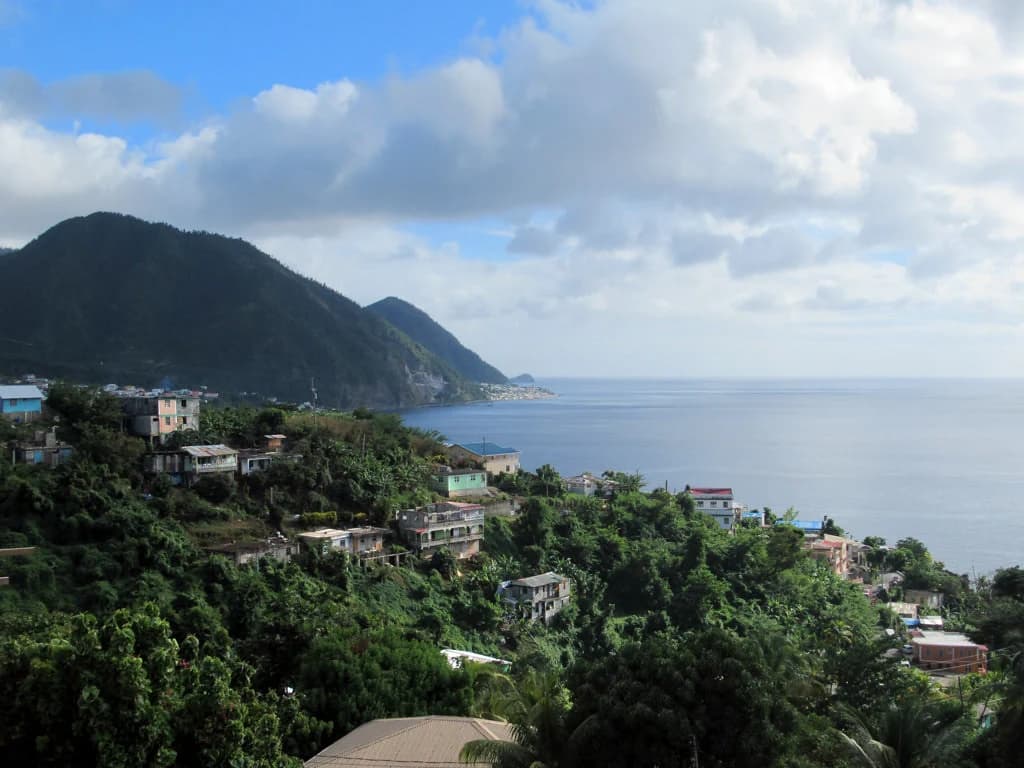
Dominica calls itself the Nature Island, a branding choice that holds up better under scrutiny than most tourism slogans. Steep, volcanically active, and covered in rainforest that escaped the large-scale plantation clearing common elsewhere in the Caribbean, it has built its entire tourism identity around hiking and diving rather than beaches, which are notably scarce here compared to flatter neighboring islands.
The signature hike is Boiling Lake, a flooded fumarole whose churning, steaming water reaches near-boiling temperatures, making it the second-largest lake of its kind in the world after one in New Zealand. Reaching it means a demanding six-to-eight-hour round trip through rainforest and raw volcanic terrain, typically done with a licensed local guide given both the difficulty and the genuinely hazardous ground near the crater itself.
Underwater, Champagne Reef offers a gentler but equally distinctive volcanic experience — streams of warm gas bubbles rise continuously from vents on the seafloor, creating an effect snorkelers and divers genuinely describe as swimming through champagne, a direct result of the same geothermal activity that powers Boiling Lake.
Roseau, the capital, is compact and workaday rather than resort-styled, built around a waterfront, a market, and colonial-era buildings, with most of the island's real draws — waterfalls, hot springs, rainforest trails — reached by a short drive rather than found in town itself.
Dominica's name causes genuine, frequent confusion with the much larger Dominican Republic, an entirely separate country roughly a thousand miles away — the two share a linguistic root in the word for Sunday, the day Christopher Columbus reportedly sighted each island, but nothing else connects them.
What a trip here actually costs
$50 / day avg.
- Guesthouse in or near Roseau
- Local Creole meals
- Public bus fares around the island
- Trafalgar Falls entry
What to do at this tier
- • Trafalgar Falls, twin waterfalls a short drive and walk from Roseau
- • Roseau's botanical gardens, free to walk
- • Public bus ride along the scenic west coast road
$120 / day avg.
- 3-star hotel or eco-lodge
- Guided Boiling Lake hike
- Champagne Reef snorkeling trip
- Sit-down Creole seafood dinners
What to do at this tier
- • Guided Boiling Lake hike, six to eight hours round trip
- • Champagne Reef snorkeling among volcanic gas bubbles
- • Middleham Falls hike through old-growth rainforest
$280 / day avg.
- Rainforest eco-resort with private guide
- Private full-day Boiling Lake hike with guide and lunch
- Diving trip to Champagne Reef and nearby sites
- Hot springs and waterfall private tour
What to do at this tier
- • Private full-day Boiling Lake hike with a dedicated guide
- • Diving trip to Champagne Reef and nearby volcanic dive sites
- • Private tour combining hot springs, waterfalls, and a rainforest canopy walk
These are average estimates for planning purposes, not real-time prices — actual costs vary by season, availability, and how far ahead you book.
How to get there
Click anywhere on the world map — any airport works, not just our main hubs.
Click anywhere on the map above — any airport in the world works — to see estimated travel time and cost from there.
Times and prices are planning estimates, not live fares — always check a booking site before you commit. See the full Transport Comparison guide for the general tradeoffs of each mode.
Best time to visit
February through April tends to be driest, though Dominica's mountainous rainforest terrain means rain is possible year-round. Hurricane season runs June through November, and the island has been hit hard by major storms in the past.
Safety notes
Generally safe with low crime; the more relevant safety concern is trail conditions on hikes like Boiling Lake, which should only be attempted with a licensed guide given real risks from volcanic terrain and weather.
Visa & currency
Eastern Caribbean dollar (XCD), pegged to the US dollar. Most nationalities can enter visa-free for tourist stays — worth confirming current requirements before booking.
Questions people ask before visiting
Is Dominica the same as the Dominican Republic?
No — they're entirely separate countries, a common source of confusion given the similar names. Dominica is a small, mountainous, volcanically active island in the Eastern Caribbean, while the Dominican Republic is a much larger country sharing the island of Hispaniola with Haiti, far to the northwest.
What is the Boiling Lake hike like?
A demanding round trip of roughly six to eight hours through rainforest and volcanic terrain, ending at a flooded fumarole whose bubbling, steaming water reaches near-boiling temperatures. It's considered one of the more serious hikes in the Caribbean and is generally done with a licensed local guide.
What is Champagne Reef known for?
A snorkeling and diving site named for the streams of warm volcanic gas bubbles rising continuously from vents on the seafloor, creating a genuinely champagne-like effect around swimmers. It's one of Dominica's most distinctive and easily accessible dive sites.
How many days do you need in Dominica?
Five to seven days lets you cover Boiling Lake, Champagne Reef, and several of the island's waterfalls and hot springs without rushing. Dominica rewards a slower, hiking-focused pace more than a quick beach stop.
Nearby destinations
 St. John's
St. John's
Antigua and Barbuda
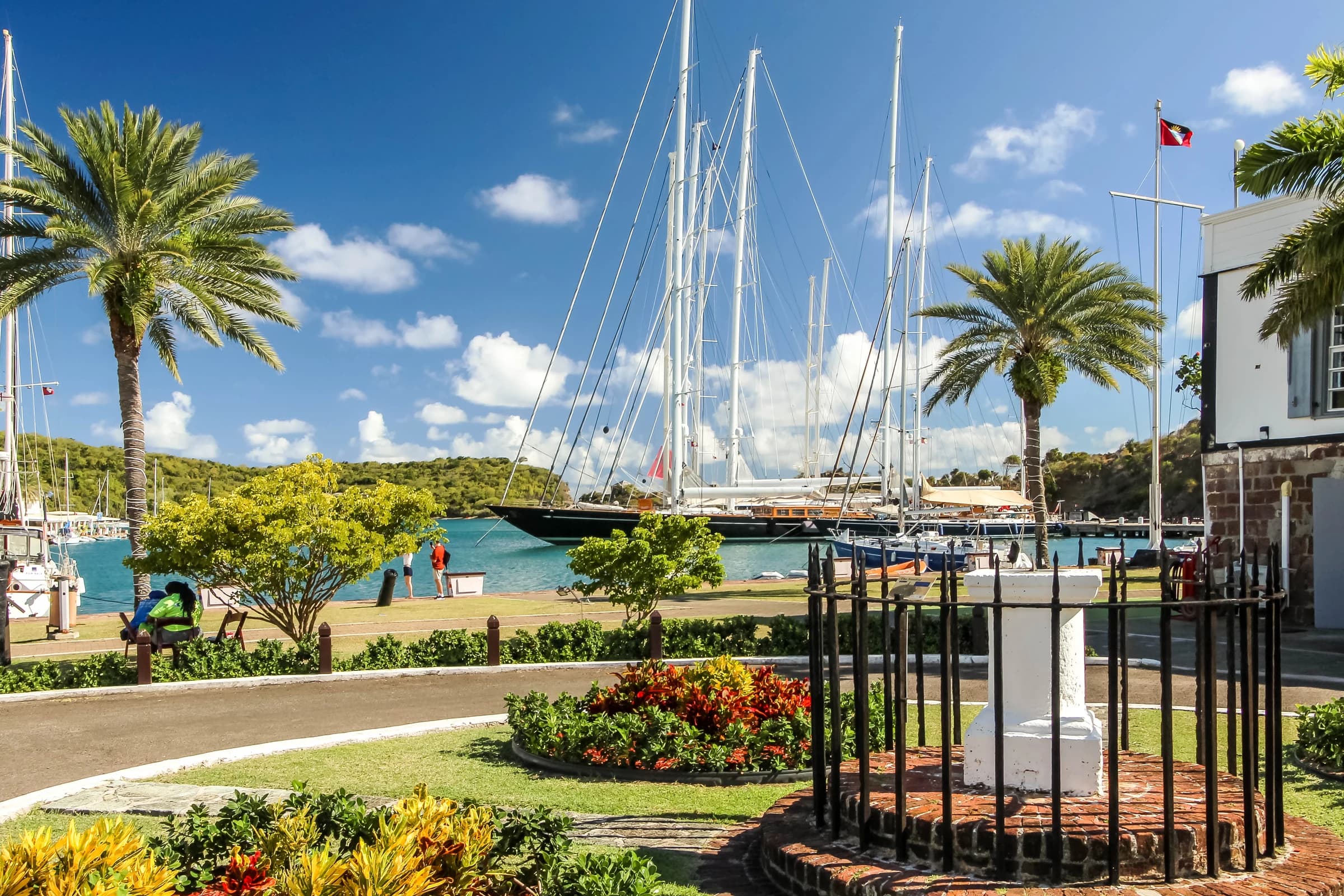
Antigua markets itself around a single, oddly specific claim — 365 beaches, one for every day of the year — and while nobody has ever produced an official count to verify it, the island genuinely is ringed by an unusual number of distinct coves for its size.
See full guide →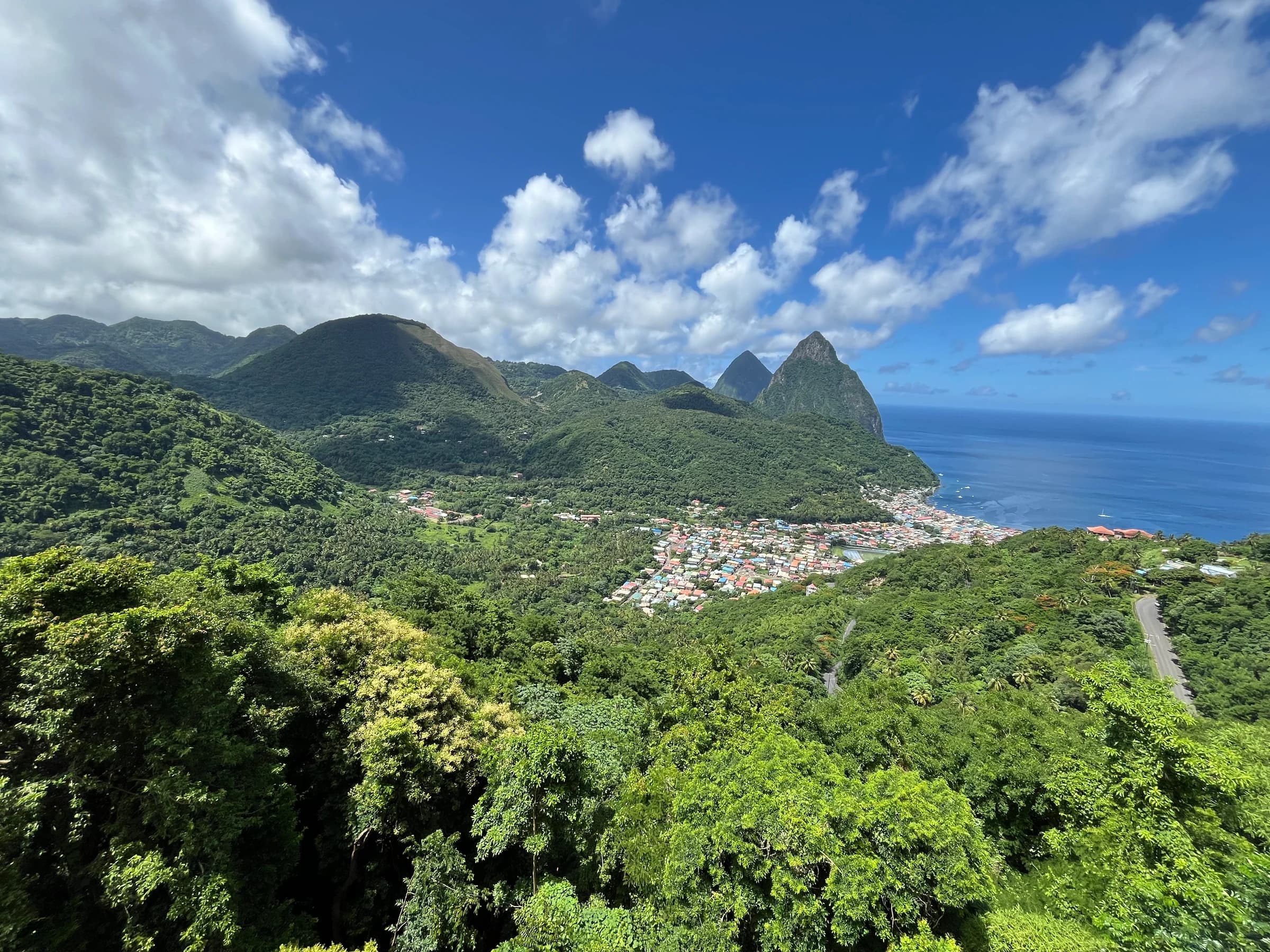 Soufrière
Soufrière
Saint Lucia
The Pitons, two volcanic spires rising straight out of the Caribbean Sea beside Soufrière, are the eroded plugs of long-extinct volcanoes — twin peaks so distinctive they appear on Saint Lucia's national flag, and so close together that boats sail directly through the bay between them.
See full guide →Comparing more than one route? See the full transport comparison guide.