Antigua and Barbuda · North America
St. John's
Antigua markets itself around a single, oddly specific claim — 365 beaches, one for every day of the year — and while nobody has ever produced an official count to verify it, the island genuinely is ringed by an unusual number of distinct coves for its size.
Antigua's tourism identity rests on a specific, memorable claim: 365 beaches, one for every day of the year. Nobody has ever produced an official survey confirming the exact figure, and the number functions more as a slogan than a literal count, but the underlying point holds up on the ground — the island's deeply indented coastline genuinely produces an unusual density of distinct coves and beaches for its modest size.
St. John's, the capital, centers around a busy cruise port, a local market, and an Anglican cathedral dating to the colonial era, giving the city a more workaday feel than the resort areas elsewhere on the island.
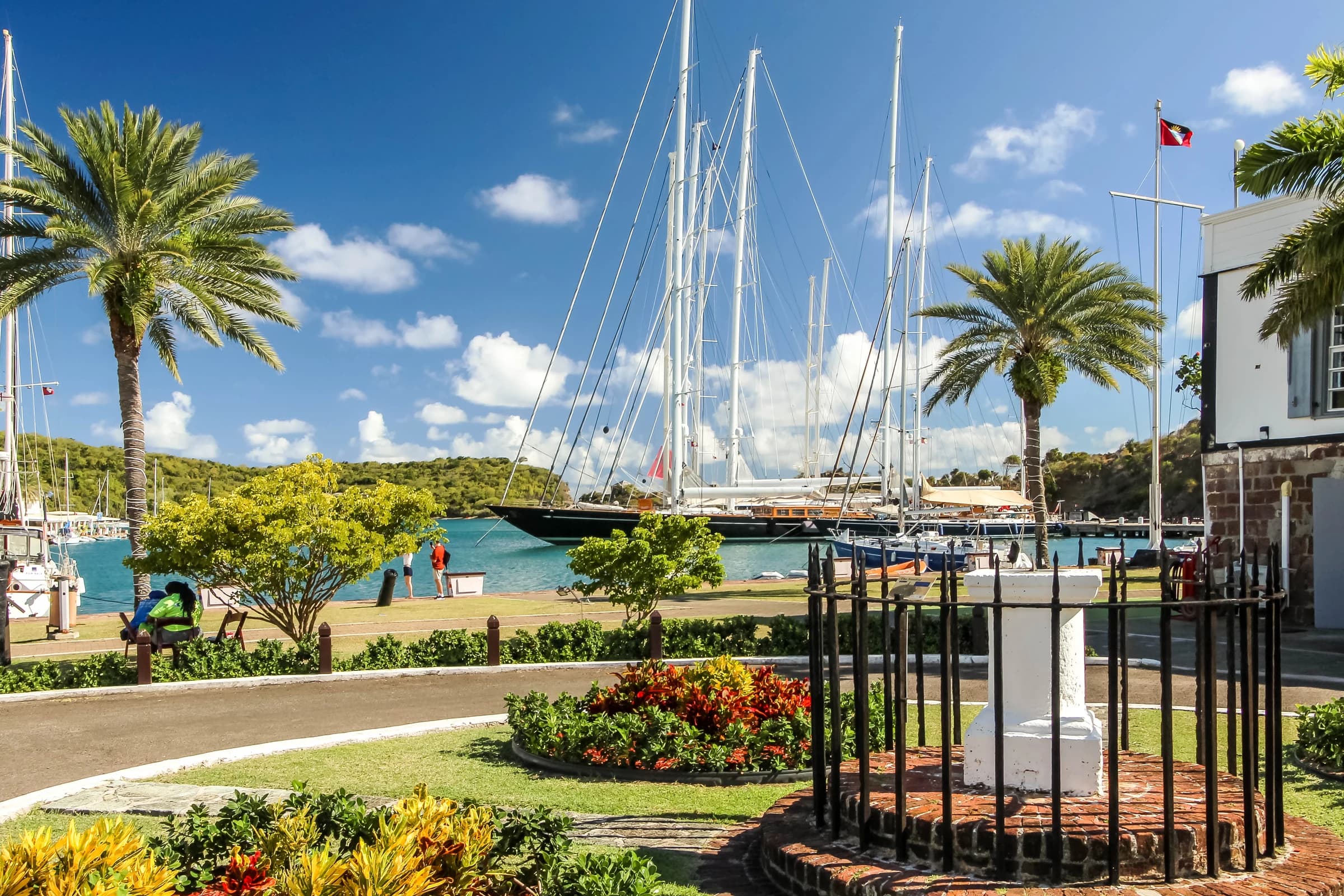
The more historically significant site sits on the opposite coast: Nelson's Dockyard, a restored 18th-century Georgian naval dockyard in English Harbour, is the only continuously working example of its kind anywhere in the world, still functioning as a marina today rather than existing purely as a museum piece. It takes its name from Horatio Nelson, who commanded the Royal Navy fleet stationed there before his later, more famous career, and the surrounding harbor holds UNESCO World Heritage status.
That naval history evolved into a modern identity as a serious yachting destination — English Harbour hosts Antigua Sailing Week each April, one of the world's most established regatta events, drawing competitive sailors and spectator crowds well beyond what the island's size might suggest.
Antigua's twin-island partner, Barbuda, sits a short flight or ferry away and offers a quieter, far less developed alternative, known primarily for its own exceptional pink-sand beach and a large frigatebird nesting colony — most visitors treat it as a day trip rather than the main destination.
What a trip here actually costs
$150 / day avg.
- 3-star hotel near St. John's or English Harbour
- Nelson's Dockyard and English Harbour tour
- Sit-down Caribbean seafood dinners
- Beach-hopping day with a rental car
What to do at this tier
- • Nelson's Dockyard and English Harbour, a restored working Georgian naval yard
- • Beach-hopping by rental car among the island's many distinct coves
- • St. John's local market and colonial-era Anglican cathedral
$380 / day avg.
- Beachfront resort
- Private catamaran day sail with snorkeling
- Fine dining reservations
- Private beach-hopping tour to several of the island's coves
What to do at this tier
- • Private catamaran day sail with snorkeling stops
- • Fine dining reservation overlooking English Harbour
- • Private guided beach-hopping tour covering several of the island's best coves
These are average estimates for planning purposes, not real-time prices — actual costs vary by season, availability, and how far ahead you book.
How to get there
Click anywhere on the world map — any airport works, not just our main hubs.
Click anywhere on the map above — any airport in the world works — to see estimated travel time and cost from there.
Times and prices are planning estimates, not live fares — always check a booking site before you commit. See the full Transport Comparison guide for the general tradeoffs of each mode.
Best time to visit
December through April is the driest season and Antigua's high season, including Antigua Sailing Week in late April. Hurricane season runs June through November.
Safety notes
Generally safe with a well-developed, upscale tourism sector; standard precautions apply in St. John's, particularly around the cruise port on busy ship days.
Visa & currency
Eastern Caribbean dollar (XCD), pegged to the US dollar; US dollars are widely accepted. Most nationalities can enter visa-free for tourist stays — worth confirming current requirements before booking.
Questions people ask before visiting
Does Antigua really have 365 beaches?
It's a long-standing marketing slogan rather than a verified count, but the island genuinely has an unusually high number of distinct coves and beaches for its size, thanks to a deeply indented coastline. Nobody treats the number as literal, but the underlying claim of exceptional beach variety holds up.
What is Nelson's Dockyard?
A restored 18th-century Georgian naval dockyard in English Harbour, the only continuously working example of its kind in the world, still used as a marina today. It's named for Horatio Nelson, who commanded the Royal Navy fleet based there, and the surrounding area holds UNESCO World Heritage status.
Is Antigua expensive?
Yes, on the higher end of Caribbean destinations — much of the island's tourism infrastructure is built around upscale resorts and yachting, which keeps average prices elevated compared to more budget-oriented Caribbean islands.
What is Antigua Sailing Week?
One of the world's most established regatta events, held annually and drawing sailors and spectators from around the world to English Harbour. It reflects Antigua's long-standing identity as a serious yachting hub, not just a beach destination.
Nearby destinations
 Soufrière
Soufrière
Saint Lucia
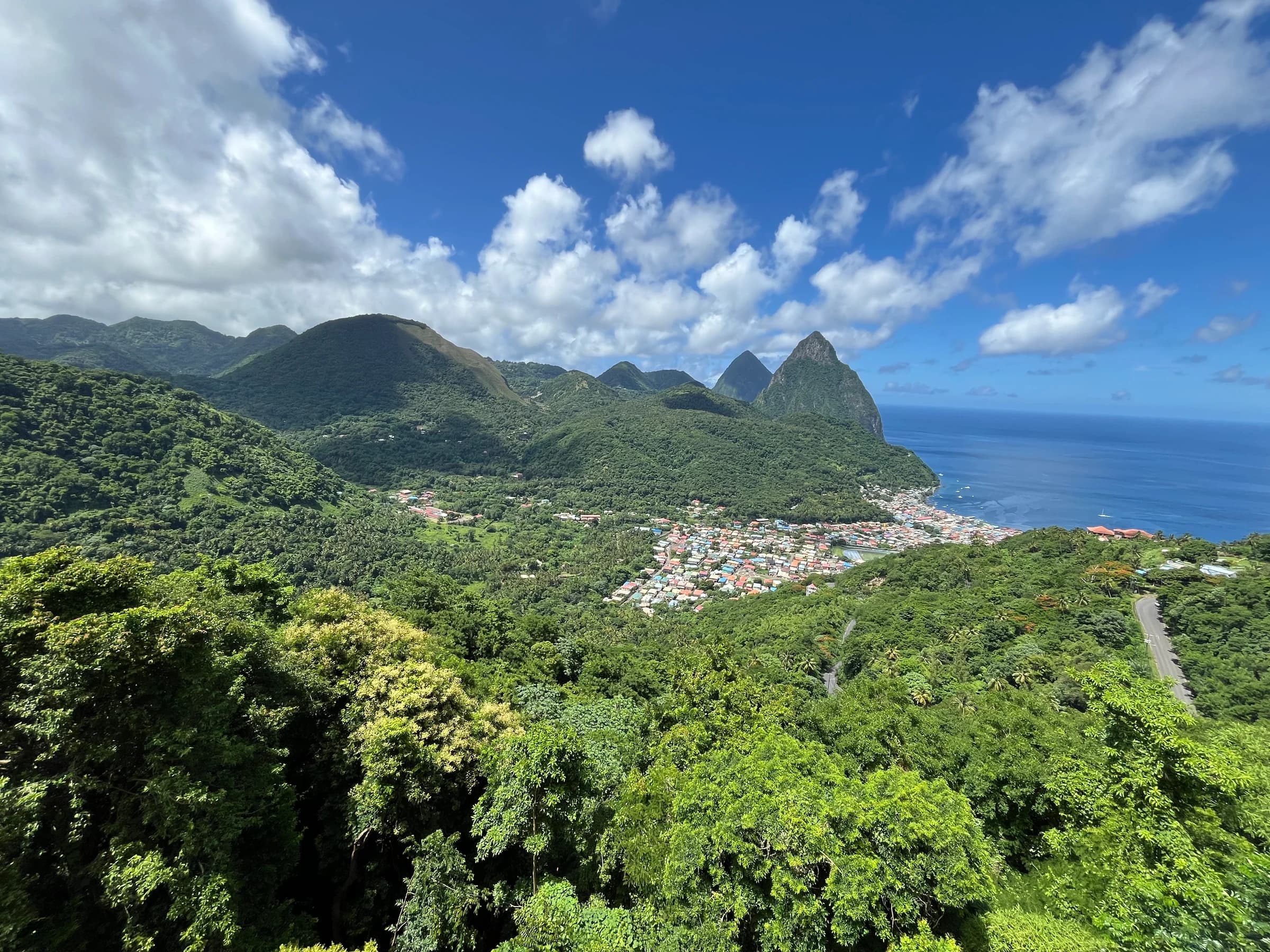
The Pitons, two volcanic spires rising straight out of the Caribbean Sea beside Soufrière, are the eroded plugs of long-extinct volcanoes — twin peaks so distinctive they appear on Saint Lucia's national flag, and so close together that boats sail directly through the bay between them.
See full guide →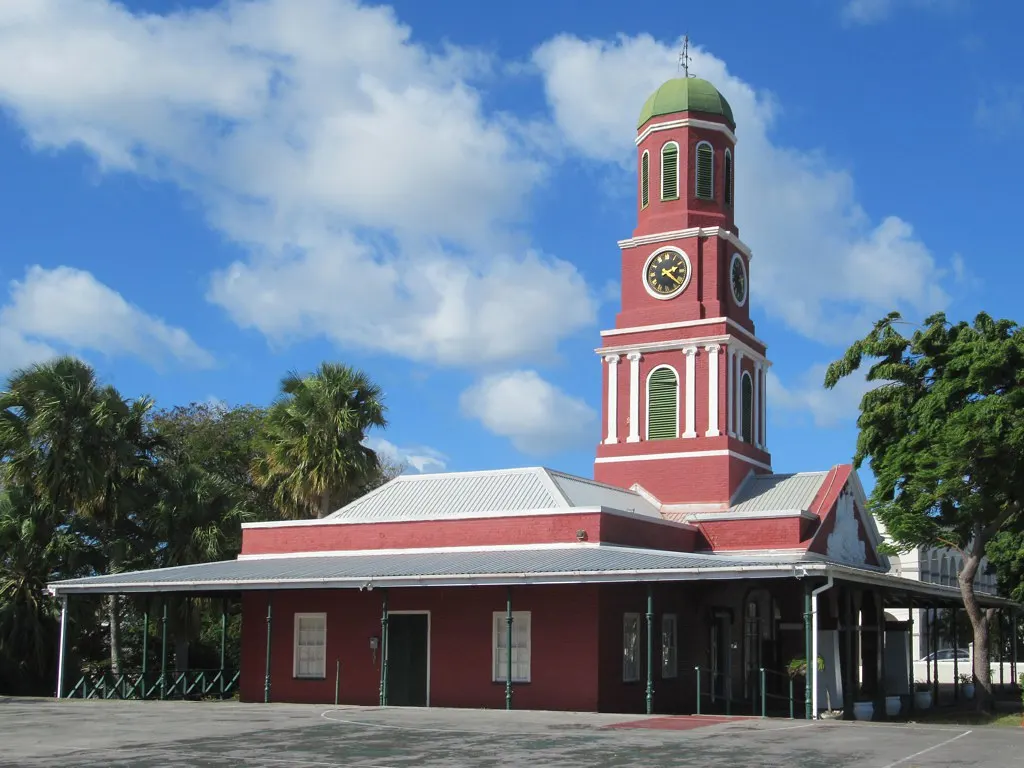 Bridgetown
Bridgetown
Barbados
Barbados is the birthplace of rum — Mount Gay, founded in 1703 on the island and still producing today, holds the Guinness World Record as the oldest rum brand still in existence, and Bridgetown's historic garrison is now a UNESCO World Heritage Site built partly on that trade.
See full guide →Comparing more than one route? See the full transport comparison guide.