Mexico · North America
Oaxaca
Nearly all of Mexico's mezcal comes from Oaxaca, produced across hundreds of small family-run palenques where agave is still roasted underground and crushed by hand or by a stone wheel pulled by a donkey, a slower, more artisanal process than tequila's industrial-scale production just a few states away.
Nearly all of Mexico's mezcal production traces back to Oaxaca, made across hundreds of small, family-run palenques scattered through the surrounding valleys, where agave is still roasted in underground pits lined with volcanic rock and wood, then crushed by hand or by a stone wheel pulled slowly by a donkey. That artisanal, small-batch process stands in genuine contrast to tequila's more industrialized production in neighboring states, and it's part of why mezcal has developed such a distinct, terroir-driven reputation among spirits enthusiasts worldwide.
Monte Albán, an ancient Zapotec city built atop a mountain deliberately leveled for the purpose, was occupied for roughly 1,500 years starting around 500 BCE, making it one of the earliest major urban centers anywhere in Mesoamerica. Its plazas, pyramids, and ballcourt remain remarkably intact, and the site's elevated position offers sweeping views back over the Oaxaca valley that made it such a strategically significant location in the first place.
Oaxaca's food culture is widely regarded as among the most sophisticated and distinct in Mexico, built around dishes like mole negro, a complex sauce combining dozens of ingredients including chocolate and multiple varieties of chili, and tlayudas, large crisp tortillas topped with beans, cheese, and meat, often called Mexican pizza by visitors encountering them for the first time.
The city ranks among the best places in Mexico to experience Día de los Muertos, when elaborate altars fill homes and public spaces, and candlelit vigils at cemeteries, particularly around the nearby town of Xoxocotlán, draw both residents and visitors for a genuinely moving, community-centered version of the holiday that blends Indigenous Zapotec and Mixtec traditions with Catholic ritual.
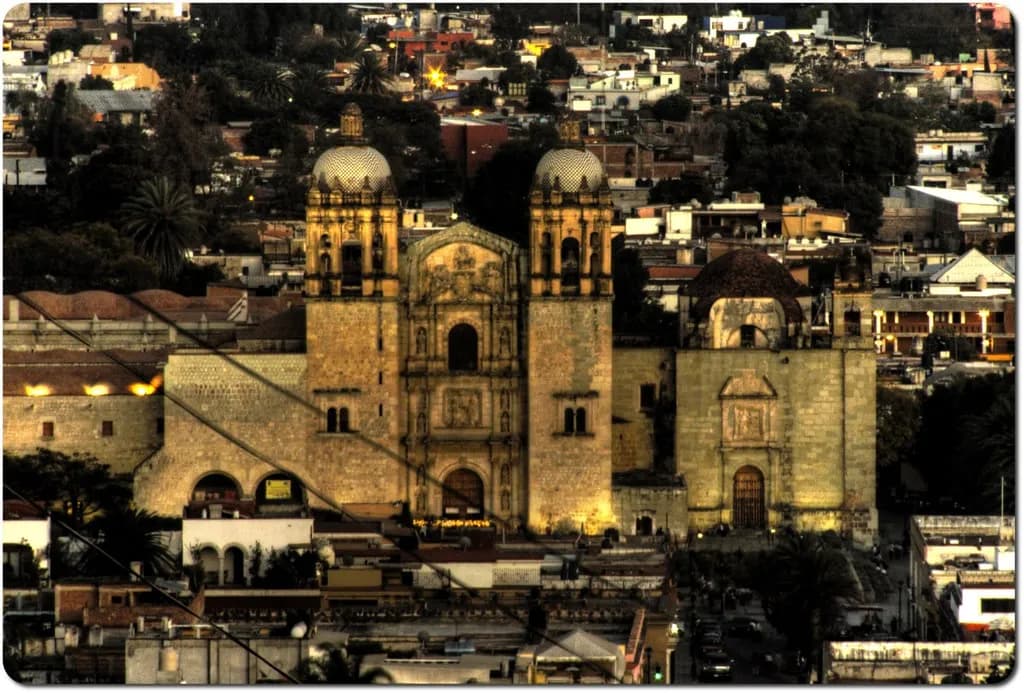
Oaxaca's UNESCO-listed historic center, anchored by the elaborately gilded Santo Domingo church, holds Spanish colonial architecture layered directly on top of centuries of Indigenous cultural continuity, a combination that gives the city a genuinely different character from Mexico's more colonial-focused historic centers elsewhere in the country.
What a trip here actually costs
$30 / day avg.
- Guesthouse in the historic center
- Local bus or shared taxi
- Street food and market meals
- Monte Albán entry, low cost
What to do at this tier
- • Historic center and Santo Domingo church, free to walk
- • Mercado 20 de Noviembre food market, low cost
- • Monte Albán ruins, low entry fee
$75 / day avg.
- 3-star colonial-era hotel
- Guided Monte Albán tour
- Mezcal palenque tour and tasting
- Sit-down Oaxacan restaurant dinners
What to do at this tier
- • Guided mezcal palenque tour and tasting
- • Monte Albán guided archaeological tour
- • Oaxacan cooking class covering mole negro
These are average estimates for planning purposes, not real-time prices — actual costs vary by season, availability, and how far ahead you book.
How to get there
Click anywhere on the world map — any airport works, not just our main hubs.
Click anywhere on the map above — any airport in the world works — to see estimated travel time and cost from there.
Times and prices are planning estimates, not live fares — always check a booking site before you commit. See the full Transport Comparison guide for the general tradeoffs of each mode.
Best time to visit
October-April brings mild, dry weather; Day of the Dead celebrations typically run late October into early November and draw large crowds, so book well ahead if visiting specifically for it.
Safety notes
Generally safe in the historic center and main tourist areas with standard precautions.
Visa & currency
Mexican peso (MXN). Many nationalities can enter visa-free for tourism, worth confirming based on passport before booking.
Questions people ask before visiting
Is Oaxaca worth visiting?
Yes — Oaxaca combines a UNESCO-listed colonial historic center, Monte Albán's ancient Zapotec hilltop ruins, one of Mexico's most respected regional cuisines, and hundreds of small mezcal distilleries producing the spirit using traditional artisanal methods.
What is Monte Albán?
An ancient Zapotec city built atop a leveled mountain outside Oaxaca, occupied for roughly 1,500 years starting around 500 BCE, making it one of the earliest major cities in Mesoamerica. Its plazas, pyramids, and ball court remain among the most significant pre-Columbian archaeological sites in Mexico.
Is Oaxaca a good place to experience Day of the Dead?
Yes, Oaxaca is widely considered one of the best places in Mexico to experience Día de los Muertos, with elaborate altars, candlelit cemetery vigils, particularly around Xoxocotlán, and citywide celebrations blending Indigenous and Catholic traditions.
How many days do you need in Oaxaca?
Four to five days covers the historic center, Monte Albán, and at least one mezcal distillery visit at a comfortable pace, with time to properly explore the city's food scene, widely regarded as among the best in Mexico.
Nearby destinations
 Mexico City
Mexico City
Mexico
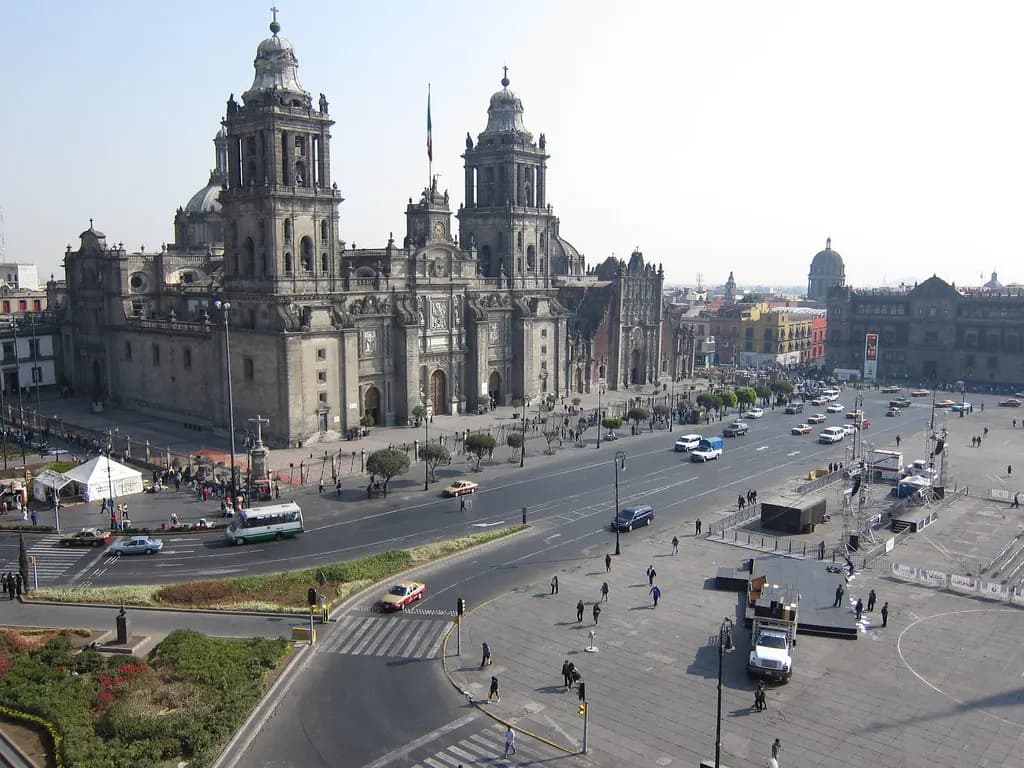
Mexico City sits on top of Tenochtitlan, the Aztec capital the Spanish demolished in 1521 — the ruins of its main temple, Templo Mayor, were only rediscovered in 1978 when electrical workers hit a carved stone disc a few blocks from the modern cathedral.
See full guide →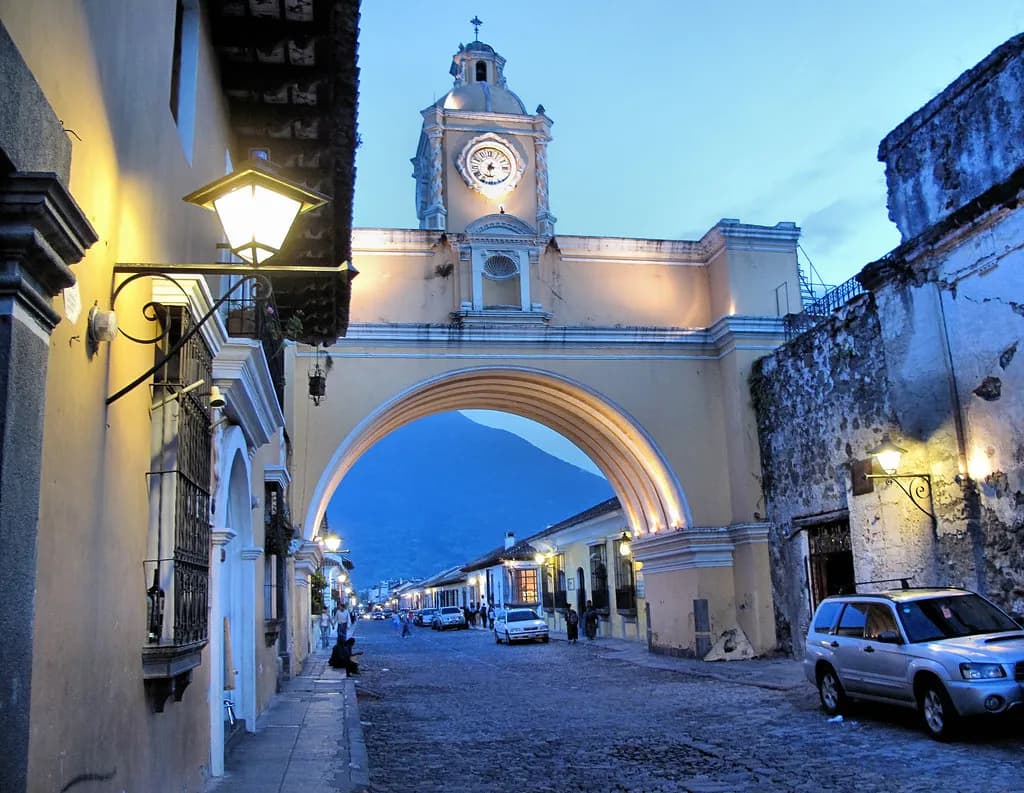 Antigua Guatemala
Antigua Guatemala
Guatemala
A 1773 earthquake devastated Antigua so thoroughly that Spanish colonial authorities abandoned it entirely and moved the capital of Central America to present-day Guatemala City, and rather than fully rebuild, the city left many of its grandest ruined churches standing in collapse, a deliberate choice that's preserved one of the best examples of Spanish Baroque colonial architecture anywhere in the Americas.
See full guide →Comparing more than one route? See the full transport comparison guide.