Mexico · North America
Mexico City
Mexico City sits on top of Tenochtitlan, the Aztec capital the Spanish demolished in 1521 — the ruins of its main temple, Templo Mayor, were only rediscovered in 1978 when electrical workers hit a carved stone disc a few blocks from the modern cathedral.
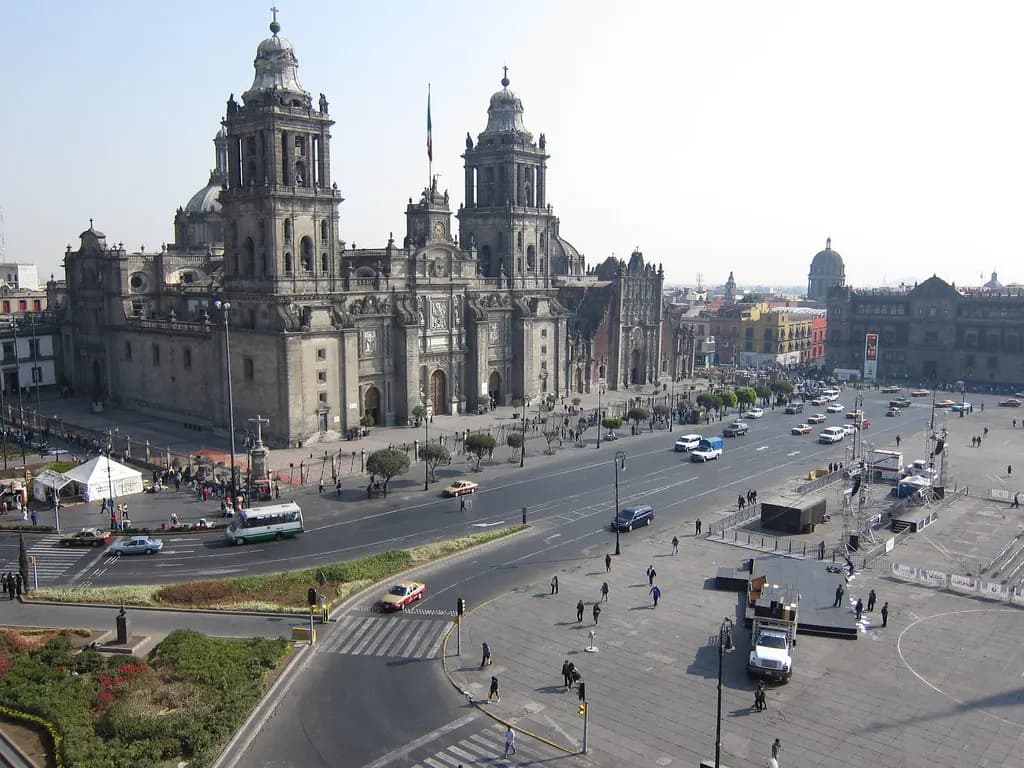
Mexico City is built directly on top of Tenochtitlan, the Aztec capital that Hernán Cortés's forces destroyed in 1521. For centuries the temple complex at its center was assumed lost until 1978, when utility workers digging near the cathedral struck a massive carved stone disc depicting the dismembered goddess Coyolxauhqui — the find that led to the excavation of Templo Mayor, now a functioning archaeological site a short walk from the modern Zócalo.
That layering of eras defines the historic center: colonial cathedrals, Aztec ruins, and 20th-century government buildings occupy the same few blocks, often without much separation between them.
Outside the center, the city's scale becomes more apparent. Chapultepec Park covers more ground than New York's Central Park and holds several of the city's best museums within it, including the Museo Nacional de Antropología, whose collection of Aztec, Maya, and other Mesoamerican artifacts is considered among the finest anthropology collections anywhere.
Roma and Condesa, adjoining neighborhoods of early-20th-century architecture and tree-lined streets, have become the city's center of gravity for restaurants, cafés, and nightlife — a shift driven partly by a wave of foreign remote workers over the past several years, which has pushed up prices in these specific areas even as much of the rest of the city remains considerably cheaper.
South of the center, Xochimilco preserves a fragment of the canal and chinampa system the Aztecs used to farm on reclaimed lake beds — visitors ride flat-bottomed trajinera boats, often with mariachi or marimba bands paddling alongside to play for tips, through one of the last working remnants of pre-Hispanic Mexico City's original geography.
What a trip here actually costs
$35 / day avg.
- Hostel or budget guesthouse in Roma or the historic center
- Street tacos and market comida corrida lunches
- Metro and Metrobús fares
- Free entry to many museums on Sundays
What to do at this tier
- • Templo Mayor and the Zócalo, the historic Aztec and colonial core, largely free to walk
- • Chapultepec Park, one of the largest city parks in the Western Hemisphere
- • Street food crawl through the historic center or a neighborhood market
$80 / day avg.
- 3-star hotel in Roma, Condesa, or Polanco
- Teotihuacán pyramids day trip
- Sit-down dinners at mid-range restaurants
- Xochimilco trajinera boat trip
What to do at this tier
- • Museo Nacional de Antropología, widely considered Mexico's best museum
- • Xochimilco canal trip by colorful trajinera boat, a remnant of the Aztec chinampa farming system
- • Frida Kahlo's Casa Azul in Coyoacán
$220 / day avg.
- Boutique or 5-star hotel in Polanco
- Private guide for Teotihuacán and Templo Mayor
- Tasting menu at a high-end restaurant
- Private trajinera charter in Xochimilco
What to do at this tier
- • Private day trip to the pyramids of Teotihuacán with a specialist guide
- • Tasting menu at one of the city's internationally ranked restaurants
- • Private art and architecture walking tour of Polanco and Roma
These are average estimates for planning purposes, not real-time prices — actual costs vary by season, availability, and how far ahead you book.
How to get there
Click anywhere on the world map — any airport works, not just our main hubs.
Click anywhere on the map above — any airport in the world works — to see estimated travel time and cost from there.
Times and prices are planning estimates, not live fares — always check a booking site before you commit. See the full Transport Comparison guide for the general tradeoffs of each mode.
Best time to visit
March-May and October-November bring mild, mostly dry weather. The rainy season runs roughly June-September, usually short afternoon downpours rather than all-day rain.
Safety notes
Safe in the main tourist and expat neighborhoods with standard city precautions; use ride-hailing apps rather than hailing taxis on the street, especially after dark.
Visa & currency
Mexican peso (MXN). Many Western passport holders receive a free tourist card on arrival — worth confirming current requirements before booking. The altitude means the sun feels stronger than the temperature suggests, so sunscreen matters even on mild days.
Questions people ask before visiting
Is Mexico City safe for tourists?
The main tourist and expat neighborhoods — Roma, Condesa, Polanco, and the historic center — see heavy foot traffic and are generally safe with normal city precautions. Petty theft is the more realistic concern than violent crime for visitors sticking to these areas; use ride-hailing apps at night rather than hailing taxis on the street.
Does the altitude in Mexico City affect visitors?
The city sits at roughly 2,240 meters (7,350 feet), high enough that some visitors notice shortness of breath or fatigue for the first day or two, especially with alcohol or heavy exertion. It's rarely severe, but pacing the first day and staying hydrated helps.
What's the best neighborhood to stay in Mexico City?
Roma and Condesa offer tree-lined streets, cafés, and a walkable nightlife scene popular with visitors. Polanco is more upscale and business-oriented, with high-end shopping and dining. The historic center puts you next to the major museums and Zócalo but is quieter at night.
How many days do you need in Mexico City?
Four to five days covers the historic center, Templo Mayor, a major museum or two, and Xochimilco's canals, with time left for Roma and Condesa's restaurant scene. A week allows a side trip to the pyramids at Teotihuacán without feeling rushed.
Nearby destinations
 Playa del Carmen
Playa del Carmen
Mexico
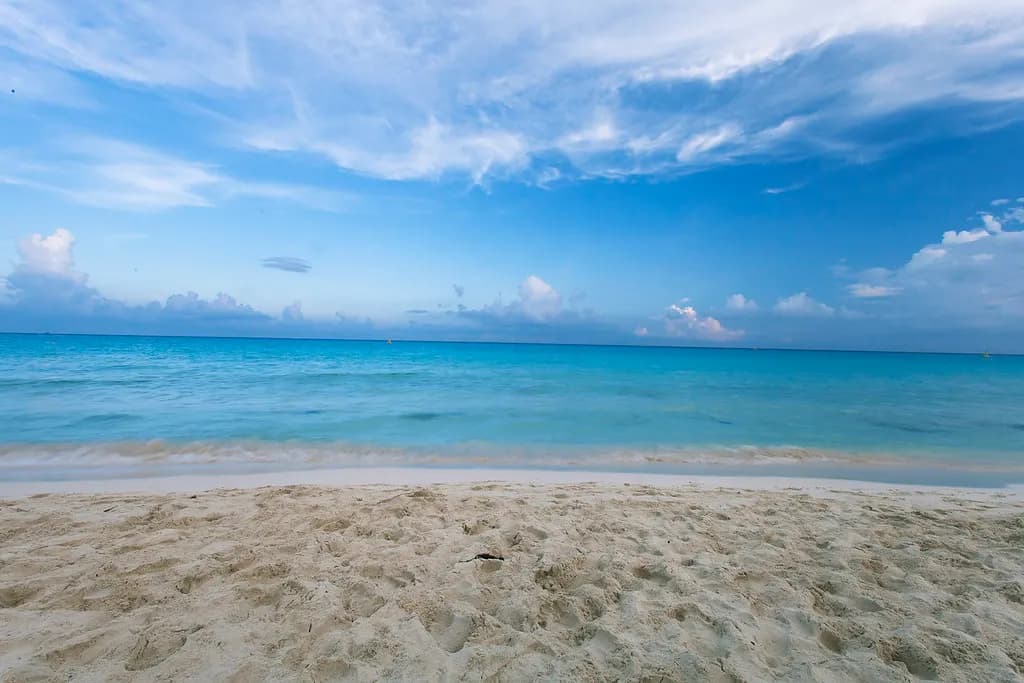
Fifth Avenue, Playa del Carmen's main pedestrian strip, was a sandy footpath used mostly by fishermen until the 1990s — now it runs for roughly two miles, packed with shops and restaurants, and locals still just call it La Quinta.
See full guide →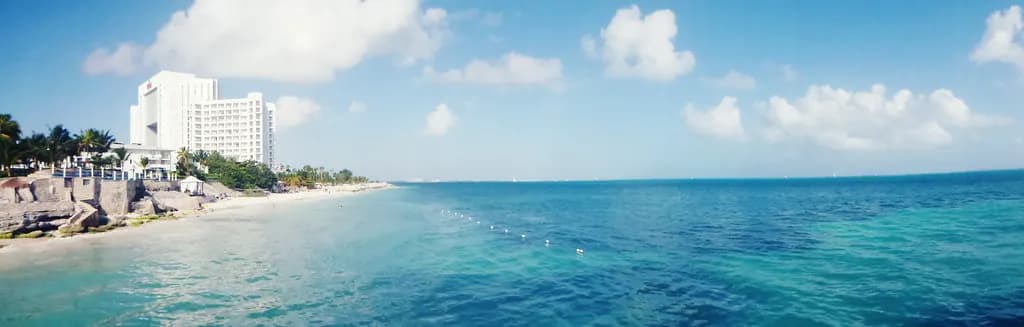 Cancún
Cancún
Mexico
Cancún didn't exist as a city until 1970 — Mexico's government picked the spot using a computer analysis of wind patterns, water color, and hurricane risk, then built an entire resort city from scratch on what had been an uninhabited sandbar.
See full guide →Comparing more than one route? See the full transport comparison guide.