Mexico · North America
Cancún
Cancún didn't exist as a city until 1970 — Mexico's government picked the spot using a computer analysis of wind patterns, water color, and hurricane risk, then built an entire resort city from scratch on what had been an uninhabited sandbar.
Cancún is a genuinely planned city, not one that grew organically — Mexico's government selected the location in the late 1960s using a computer analysis weighing factors like prevailing wind direction, water clarity, and hurricane exposure, then built an entire resort destination from scratch on what had been a largely uninhabited sandbar barrier island starting in 1970. The approach worked: Cancún became Mexico's most visited international resort destination within a few decades.
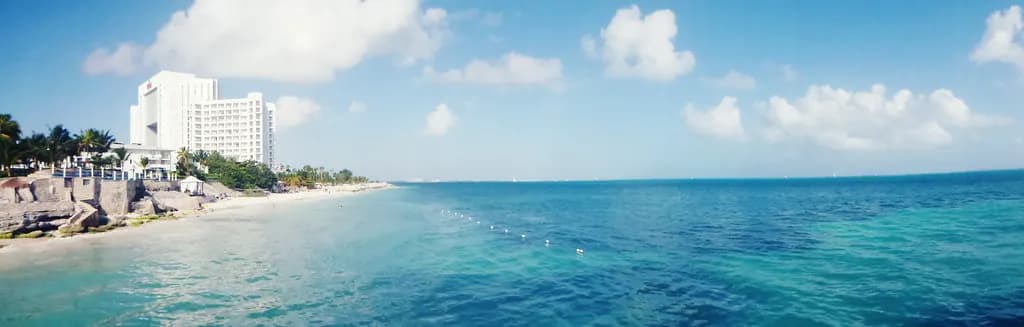
The Hotel Zone, a narrow strip of land curved into a rough number-7 shape, holds the overwhelming majority of Cancún's resorts along a stretch of genuinely excellent white sand and turquoise Caribbean water — a concentration of tourism infrastructure dense enough that many visitors never need to leave the zone for their entire trip.
Downtown Cancún, a short bus ride from the Hotel Zone, offers a real, functioning Mexican city largely bypassed by resort-bound tourists — significantly cheaper food, markets, and a more authentic sense of place for visitors willing to make the trip.
Cancún's position on the Yucatán Peninsula makes it the practical gateway to some of Mexico's most significant archaeological sites, including Chichén Itzá, one of the New Seven Wonders of the World and among the best-preserved Mayan cities, alongside the closer Tulum ruins overlooking the Caribbean directly.
The surrounding region also holds hundreds of cenotes — natural freshwater sinkholes formed by collapsed limestone bedrock, unique to the Yucatán's underlying geology — offering a genuinely different swimming experience from the ocean, with startlingly clear water and, in some cases, dramatic cave formations.
What a trip here actually costs
$45 / day avg.
- Hostel in downtown Cancún
- Local bus fares to the Hotel Zone
- Street tacos and casual Mexican lunches
- Free public beach access points
What to do at this tier
- • Public beach access points along the Hotel Zone, free
- • Downtown Cancún (El Centro) market and street food, genuinely local and cheap
- • Playa Delfines, one of the best free public beaches with a scenic overlook
$110 / day avg.
- 3-star Hotel Zone or downtown hotel
- Chichén Itzá or Tulum ruins day trip
- Sit-down Mexican and seafood dinners
- Cenote swimming day
What to do at this tier
- • Chichén Itzá, one of the New Seven Wonders of the World, or the closer Tulum ruins
- • Cenote swimming, freshwater sinkholes unique to the Yucatán Peninsula
- • Sit-down dinner featuring Yucatán specialties like cochinita pibil
$280 / day avg.
- All-inclusive beachfront resort
- Private Mayan ruins and cenote guided tour
- Multi-course dinners included
- Private catamaran or snorkeling excursion
What to do at this tier
- • All-inclusive resort stay covering meals, drinks, and activities
- • Private guided tour combining Mayan ruins with a cenote swim
- • Private catamaran trip to Isla Mujeres, a short boat ride offshore
These are average estimates for planning purposes, not real-time prices — actual costs vary by season, availability, and how far ahead you book.
How to get there
Click anywhere on the world map — any airport works, not just our main hubs.
Click anywhere on the map above — any airport in the world works — to see estimated travel time and cost from there.
Times and prices are planning estimates, not live fares — always check a booking site before you commit. See the full Transport Comparison guide for the general tradeoffs of each mode.
Best time to visit
December-April brings the driest, most comfortable weather; hurricane season runs roughly June-November, with the highest risk August-October.
Safety notes
Generally safe in the Hotel Zone and main tourist areas with standard precautions; use registered taxis or official transport rather than unmarked vehicles.
Visa & currency
Mexican peso (MXN), though US dollars are widely accepted in tourist areas. Visa requirements vary by nationality; many Western passport holders receive a free tourist card (FMM) on arrival, worth confirming current requirements before booking.
Questions people ask before visiting
Is Cancún worth visiting?
Yes, particularly for a straightforward beach vacation — the Hotel Zone's white sand and turquoise Caribbean water are genuinely excellent, the all-inclusive resort infrastructure is extremely well developed, and it functions as the main gateway to the wider Riviera Maya, including Tulum and Mayan ruins.
Hotel Zone or downtown Cancún — where should I stay?
The Hotel Zone, a narrow barrier island lined with resorts, is where almost all visitors stay for direct beach access. Downtown Cancún (El Centro) is a genuine, more affordable Mexican city a short bus ride away, worth a visit for authentic food and lower prices even if not staying there.
Is Cancún safe?
Generally safe in the Hotel Zone and main tourist areas, which see heavy security presence given their economic importance. Standard precautions around valuables and reputable transportation are enough for most visitors, similar to other major resort destinations.
Is an all-inclusive resort worth it in Cancún?
For many travelers, yes — the format removes most daily spending decisions and works well for a relaxing, low-effort beach trip. Independent travelers who want to explore Mayan ruins, cenotes, or downtown Cancún more freely may prefer a standalone hotel with more flexibility.
How many days do you need in Cancún?
Three to four days covers the beach, one Mayan ruin site (Chichén Itzá or Tulum), and a cenote swim. Longer stays suit travelers using it purely as a relaxing beach base without day trips.
Nearby destinations
 Tulum
TulumTulum
Mexico
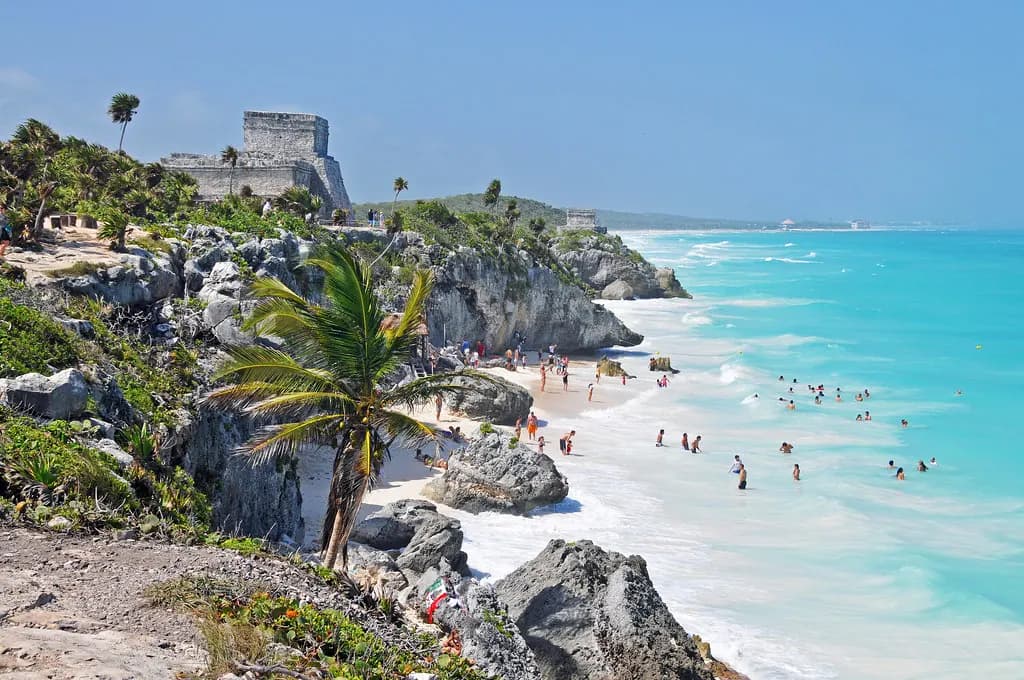
Tulum is the only major Mayan ruin site built directly on a Caribbean cliff overlooking the sea — everywhere else the Maya built inland, but here you can stand in a 13th-century watchtower and look straight down at turquoise water and a beach most resorts would kill for.
See full guide →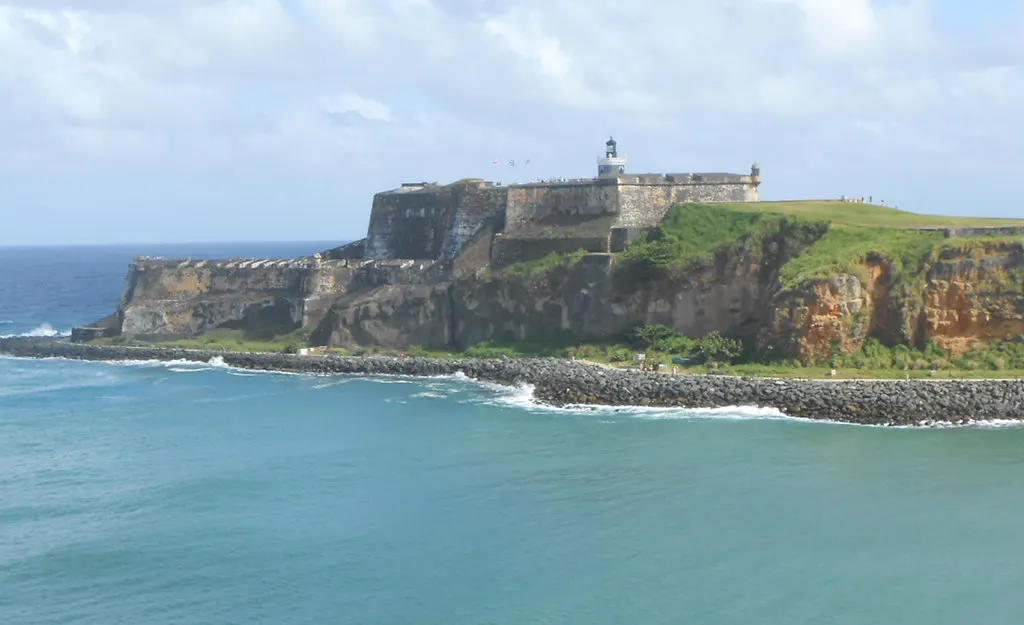 San Juan
San Juan
Puerto Rico
Old San Juan's fortress walls have defended the same seven blocks for over 400 years without ever being taken by force in a direct siege — not by Francis Drake in 1595, not by the Dutch in 1625, not by the British in 1797 — making it one of the most successfully defended cities in the Americas.
See full guide →Comparing more than one route? See the full transport comparison guide.