Canada · North America
Niagara Falls
Niagara Falls became a honeymoon destination almost by accident in 1804, when Napoleon Bonaparte's younger brother Jerome brought his American bride here after their wedding, and the tradition stuck hard enough that by the 20th century the falls had become one of the most reliable honeymoon clichés in North America.
Niagara Falls became one of North America's most enduring honeymoon destinations almost by accident. In 1804, Jerome Bonaparte, Napoleon's younger brother, brought his American bride Elizabeth Patterson to see the falls following their wedding, an early, high-profile visit that helped establish the site's romantic reputation well before organized tourism infrastructure existed there at all. By the 20th century, that reputation had solidified into one of the most recognizable honeymoon clichés in North American culture.
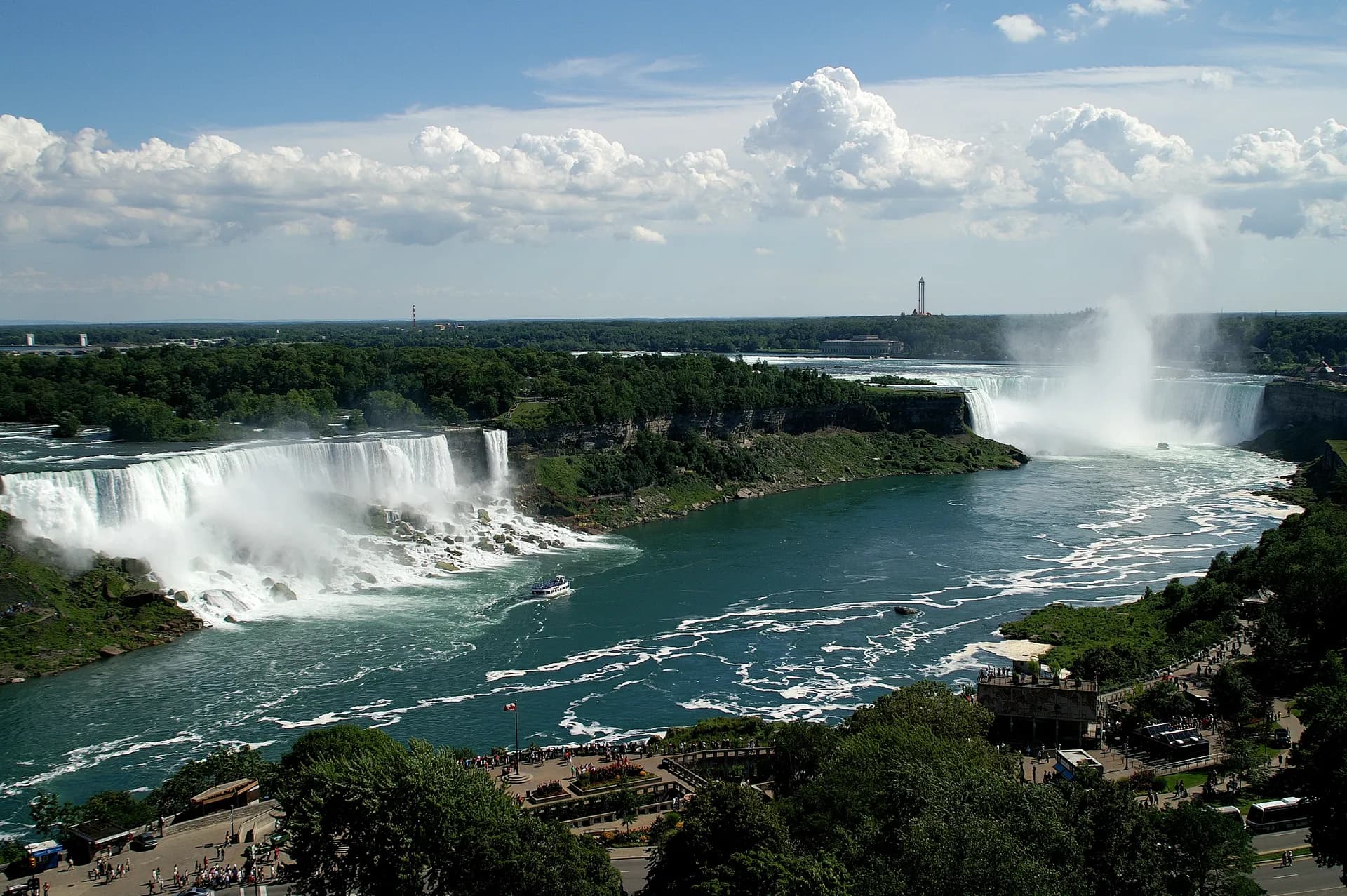
The falls actually comprise three distinct waterfalls, Horseshoe Falls, the largest and most powerful, straddling the Canada-US border, along with the American Falls and the smaller Bridal Veil Falls, both sitting entirely on the US side. The Canadian side generally offers the better overall view, since it looks directly across the gorge at both Horseshoe Falls and the American Falls together, a perspective the American side, positioned closer to its own falls, simply can't replicate.
Journey Behind the Falls, an attraction accessible from the Canadian side, takes visitors through tunnels carved directly into the bedrock behind Horseshoe Falls, ending at viewing portals that look out through the base of the falling water, a genuinely disorienting perspective on a landmark most visitors only ever see from above or directly in front.
Boat tours, run under names like Hornblower Niagara Cruises on the Canadian side, carry visitors close enough to the base of the falls to feel the spray directly, following a route pioneered by the historic Maid of the Mist boats that have operated in some form since the 1840s, among the oldest tourist attractions in North America still running in a recognizable version of their original form.
Niagara Falls sits within easy reach of Toronto, roughly 90 minutes by car, making it one of the most accessible major natural landmarks from a large North American city, and that convenience, combined with its long-standing romantic reputation, has kept it a consistently popular weekend and day-trip destination for well over a century.
What a trip here actually costs
$60 / day avg.
- Budget hotel away from the immediate falls view
- Local bus transport
- Casual restaurant meals
- Falls viewpoints along Queen Victoria Park, free
What to do at this tier
- • Queen Victoria Park viewpoints along the falls, free
- • Niagara Parkway walk, free
- • Nightly falls illumination, seasonal, free
$150 / day avg.
- 3-star hotel with a partial falls view
- Hornblower boat tour into the falls' mist
- Journey Behind the Falls entry
- Sit-down restaurant dinners
What to do at this tier
- • Hornblower Niagara Cruises boat tour into the falls' mist
- • Journey Behind the Falls tunnel and viewing portals
- • Skylon Tower observation deck
$350 / day avg.
- 4-5 star hotel with a full falls view
- Private guided tour covering both sides
- Fine dining with a falls-view table
- Helicopter tour over the falls
What to do at this tier
- • Private guided tour of both the Canadian and American sides
- • Helicopter tour over the falls
- • Fine dining dinner with a direct falls view
These are average estimates for planning purposes, not real-time prices — actual costs vary by season, availability, and how far ahead you book.
How to get there
Click anywhere on the world map — any airport works, not just our main hubs.
Click anywhere on the map above — any airport in the world works — to see estimated travel time and cost from there.
Times and prices are planning estimates, not live fares — always check a booking site before you commit. See the full Transport Comparison guide for the general tradeoffs of each mode.
Best time to visit
May-September brings the warmest weather and full boat tour operations; winter offers a striking frozen-mist look but with reduced attraction hours.
Safety notes
Very safe with low crime; standard caution applies near viewpoint railings and during boat tours given the spray and current.
Visa & currency
Canadian dollar (CAD). Most nationalities need an eTA or visa arranged in advance, worth confirming based on passport before booking.
Questions people ask before visiting
Is Niagara Falls worth visiting?
Yes — Niagara Falls, actually three separate waterfalls including the massive Horseshoe Falls, offers boat tours directly into the mist, tunnels running behind the falling water, and, from the Canadian side specifically, the classic postcard view looking across at both the American and Horseshoe Falls together.
Should you visit the Canadian or American side of Niagara Falls?
The Canadian side generally offers the better view, looking directly across at both Horseshoe Falls and the American Falls together, along with more developed tourist infrastructure. Many visitors base themselves on the Canadian side even if crossing over to see the American perspective as well.
What is Journey Behind the Falls?
An attraction on the Canadian side that takes visitors through tunnels carved into the rock behind Horseshoe Falls, ending at viewing portals looking out through the base of the falling water itself, a genuinely different perspective from any surface-level viewpoint.
How many days do you need at Niagara Falls?
One to two days covers the main falls viewpoints, a boat tour, and Journey Behind the Falls at a comfortable pace, making it a popular weekend trip or day excursion from Toronto.
Nearby destinations
 Toronto
Toronto
Canada
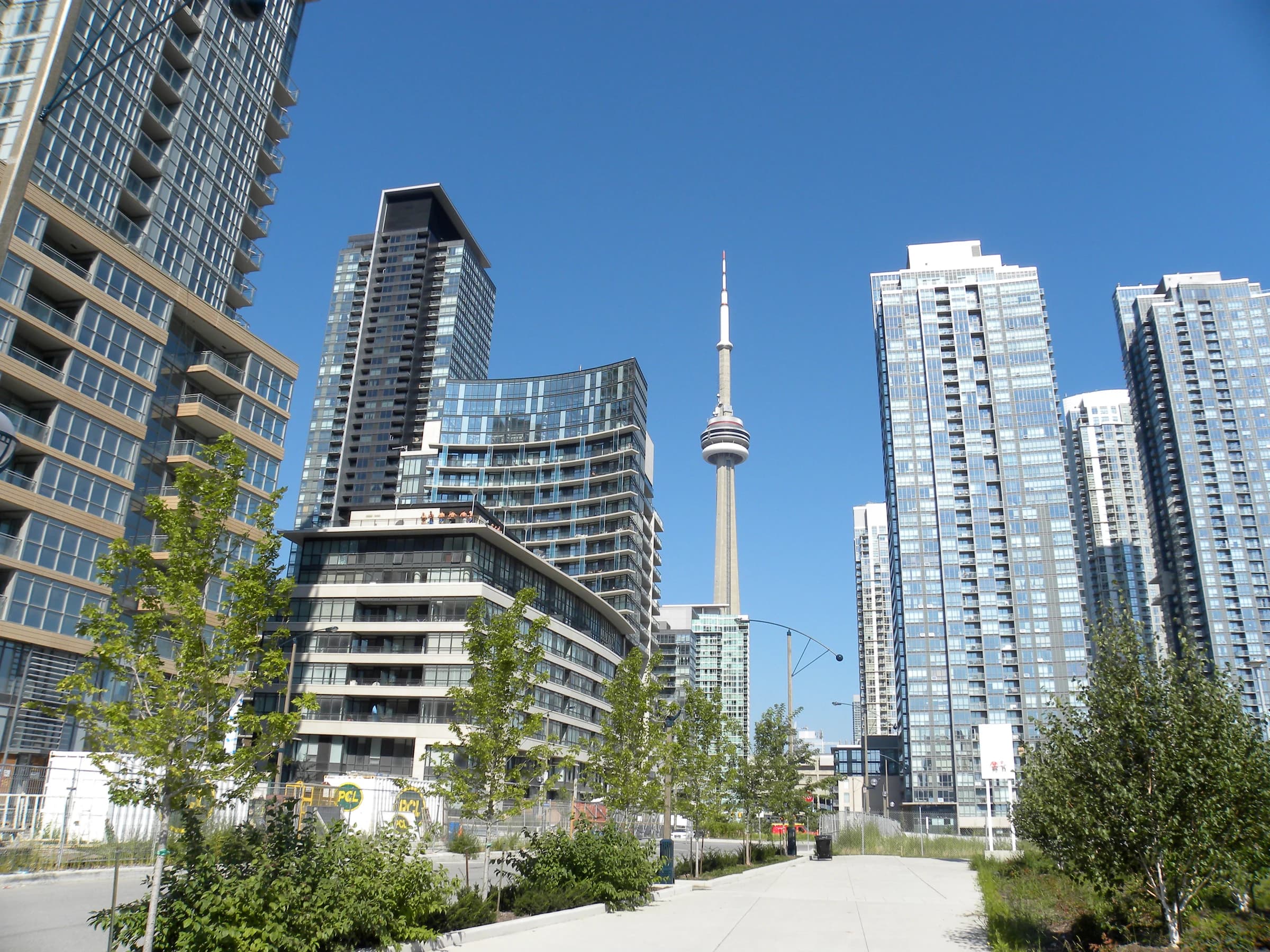
More than half of Toronto's residents were born outside Canada, a proportion higher than almost any other major city on Earth — and the CN Tower, once the world's tallest freestanding structure, still lets visitors walk a hands-free loop around its outer edge 356 meters up.
See full guide →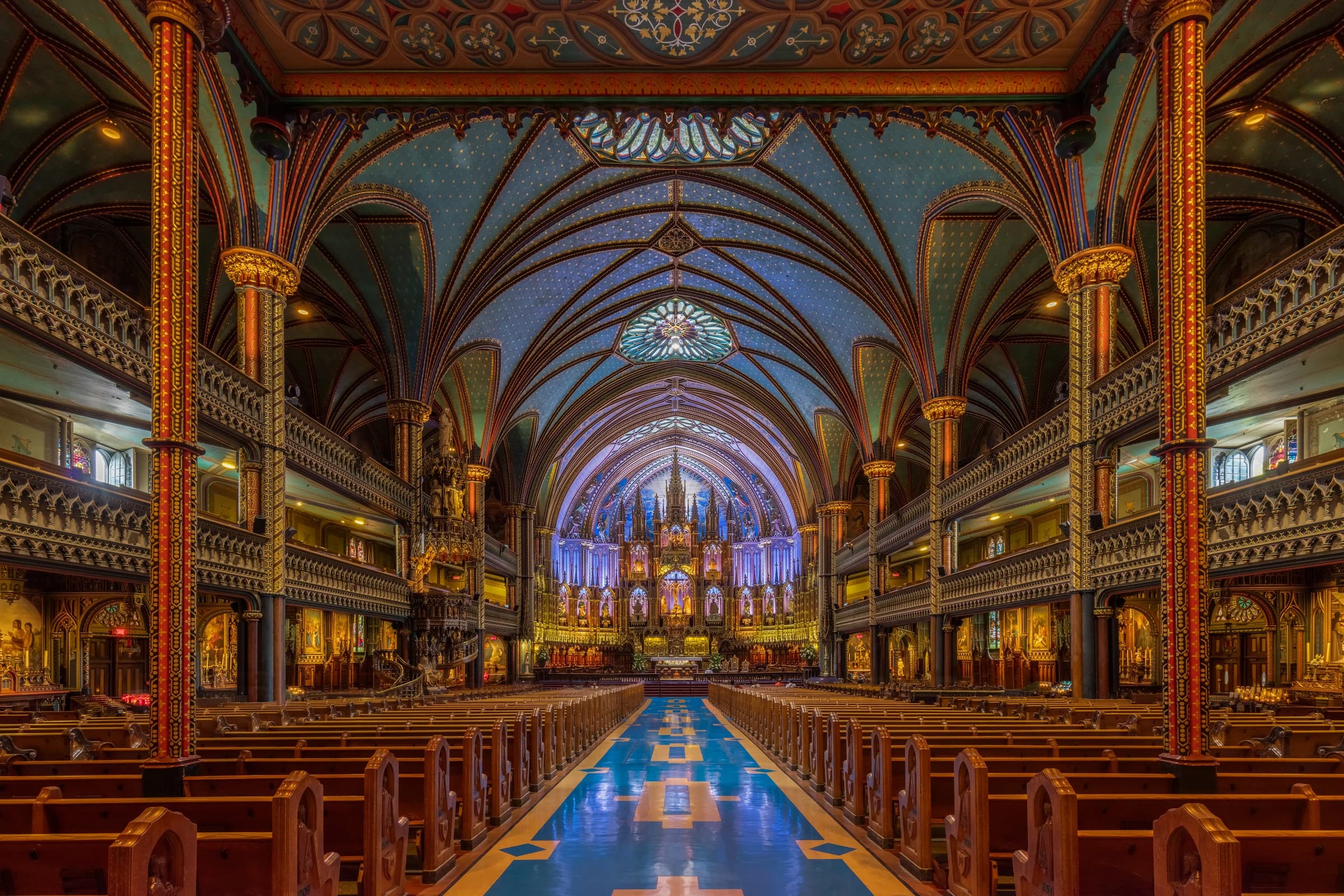 Montreal
Montreal
Canada
Montreal is the largest French-speaking city in the Americas and second-largest in the world after Paris, and its 32-kilometer underground city — a genuine response to brutal winters — connects metro stations, shopping, and offices without anyone needing to step outside for months at a time.
See full guide →Comparing more than one route? See the full transport comparison guide.