Poland · Europe
Wrocław
Someone hid over 400 tiny bronze dwarf statues around Wrocław's streets, and finding them has become such a genuine local pastime that the city now publishes an official map — what started as a single 2001 political protest statue quietly multiplied into a citywide scavenger hunt.
Wrocław's most distinctive feature has nothing to do with its architecture and everything to do with hundreds of tiny bronze dwarves scattered across its streets. The tradition began in 2001 with a single statue, Papa Krasnal, commemorating the Orange Alternative — an anti-Communist protest movement active in Wrocław during the 1980s that used deliberately absurd, dwarf-themed graffiti and street performances to mock and destabilize the Communist regime's authority through ridicule rather than direct confrontation. The single statue proved popular enough that the city commissioned more, and the collection has since grown past 400, hidden in doorways, on windowsills, and along building facades throughout the city, with an official map now published specifically to help visitors hunt them down.
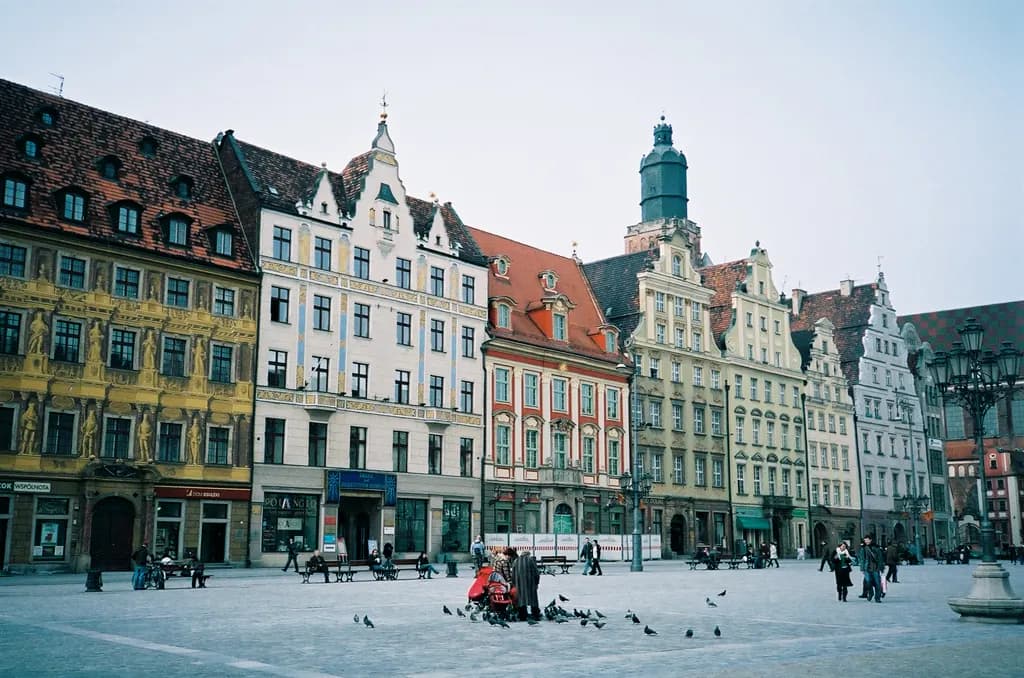
Beyond the dwarves, Wrocław's Rynek, one of the largest market squares in Poland, is densely lined with colorfully painted merchant houses and a Gothic town hall, giving the square a visual density that rivals better-known Polish old towns without the same volume of visitors.
Ostrów Tumski, or Cathedral Island, is Wrocław's oldest settled area and remains its spiritual center, home to the Cathedral of St. John the Baptist and a genuine concentration of churches connected by small bridges — the district retains an unusually tranquil, almost separate atmosphere from the busier commercial streets nearby.
Wrocław carries a layered German-Polish history that gets less international attention than Warsaw's wartime destruction or Krakow's wartime history — known as Breslau under German rule for centuries, the city was transferred to Poland after World War II following a massive, forced population exchange, with ethnic Germans expelled and Poles, many themselves displaced from territory ceded to the Soviet Union, resettled in their place.
The Racławice Panorama, a massive 360-degree cylindrical painting completed in 1894 depicting a decisive 1794 battle in the Kościuszko Uprising, remains a significant piece of Polish national art and one of only a handful of such panoramic paintings still displayed in their intended immersive format anywhere in the world.
What a trip here actually costs
$30 / day avg.
- Hostel near the market square
- Tram day pass
- Milk bar and pierogi lunches
- Free dwarf statue hunt through the old town
What to do at this tier
- • Rynek (market square) wander, one of Poland's largest and most colorfully painted squares, free
- • Dwarf statue hunting through the old town, using the free official map, free
- • Ostrów Tumski (Cathedral Island), Wrocław's oldest district, free to walk
$75 / day avg.
- 3-star hotel near the market square
- Racławice Panorama entry
- Sit-down Polish dinners
- Ostrów Tumski cathedral entry
What to do at this tier
- • Racławice Panorama, a massive 360-degree cylindrical painting depicting an 1794 battle
- • Cathedral of St. John the Baptist on Ostrów Tumski, including a tower climb for a city view
- • Sit-down dinner featuring Silesian pierogi and other regional Polish dishes
These are average estimates for planning purposes, not real-time prices — actual costs vary by season, availability, and how far ahead you book.
How to get there
Click anywhere on the world map — any airport works, not just our main hubs.
Click anywhere on the map above — any airport in the world works — to see estimated travel time and cost from there.
Times and prices are planning estimates, not live fares — always check a booking site before you commit. See the full Transport Comparison guide for the general tradeoffs of each mode.
Best time to visit
May-September brings the mildest weather for walking the old town and hunting dwarf statues comfortably.
Safety notes
Very safe overall. Standard urban caution is enough almost everywhere in the city.
Visa & currency
Polish złoty (PLN), not the euro. Standard Schengen 90-day visa-free rule applies for most Western passport holders.
Questions people ask before visiting
Is Wrocław worth visiting?
Yes — it has one of the most colorful, densely decorated market squares in Poland, a genuinely unusual city-wide dwarf statue scavenger hunt, and a layered German-Polish history (as former Breslau) that's less discussed internationally than Warsaw's or Krakow's wartime story but no less significant.
What is the story behind Wrocław's dwarf statues?
The first, a small bronze figure called Papa Krasnal, was installed in 2001 to commemorate the Orange Alternative, an anti-Communist protest movement in the 1980s that used absurdist, dwarf-themed street art to mock the regime. The statue proved popular enough that the city commissioned more, and the collection has since grown past 400, scattered throughout the streets, with an official map available for hunting them down.
Wrocław or Krakow — which should I visit?
Krakow has the more internationally famous historic core and easier access to Auschwitz. Wrocław offers a comparably beautiful, less crowded old town, the dwarf statue hunt, and a distinct German-Polish history as the former city of Breslau, changed hands after World War II. Both are worth visiting on a longer Poland trip rather than choosing just one.
Is Wrocław cheap to visit?
Yes, similar to the rest of Poland — noticeably cheaper than Western European cities across food, transit, and accommodation.
How many days do you need in Wrocław?
Two days covers the market square, Ostrów Tumski (Cathedral Island), and a dwarf-hunting walk. A third day allows the Racławice Panorama, a massive 19th-century cylindrical painting, or a slower pace through the city's many bridges and islands.
Nearby destinations
 Krakow
Krakow
Poland
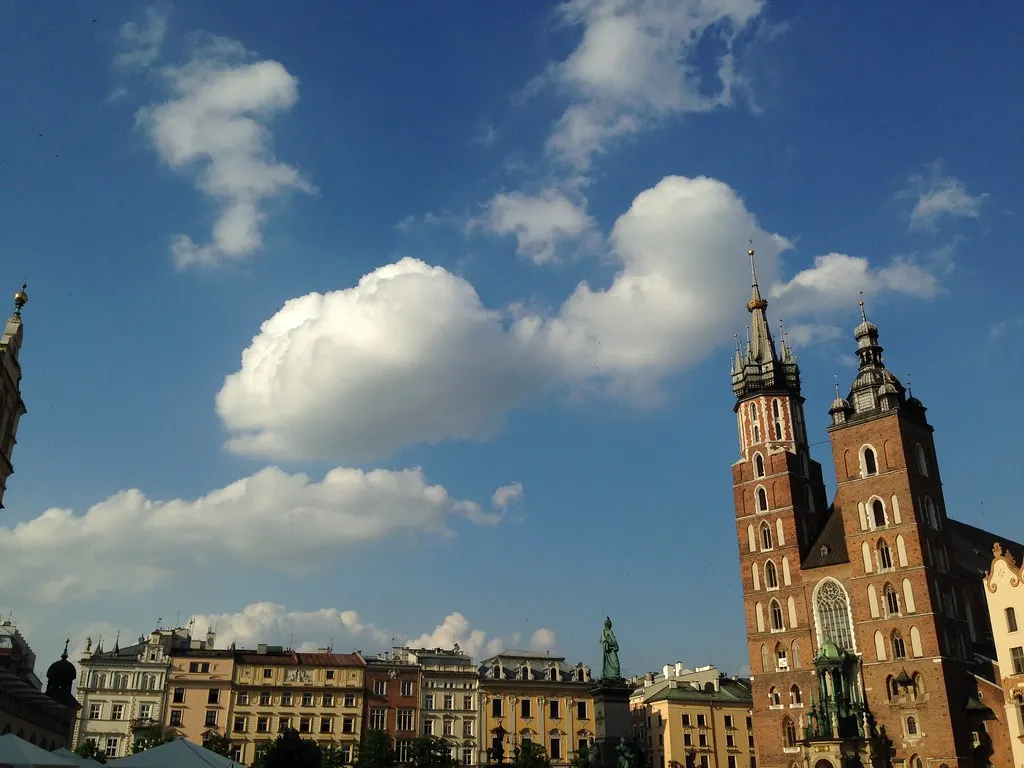
A trumpet call cuts off mid-note every hour from the tallest tower of St. Mary's Basilica, a tradition dating back to a watchman supposedly shot mid-warning during a 13th-century invasion.
See full guide →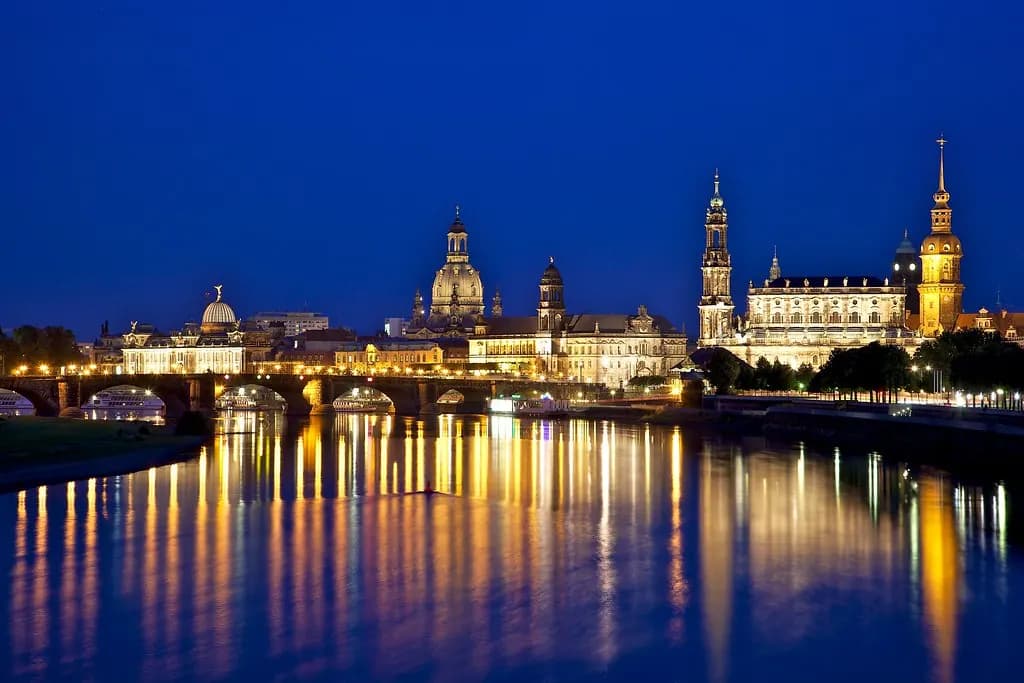 Dresden
Dresden
Germany
Allied bombing raids destroyed nearly all of Dresden's historic center in a single February night in 1945 — the Frauenkirche's dome collapsed and its ruins sat untouched as a war memorial for 45 years before reconstruction finally began, stone by original stone.
See full guide →Comparing more than one route? See the full transport comparison guide.