Germany · Europe
Dresden
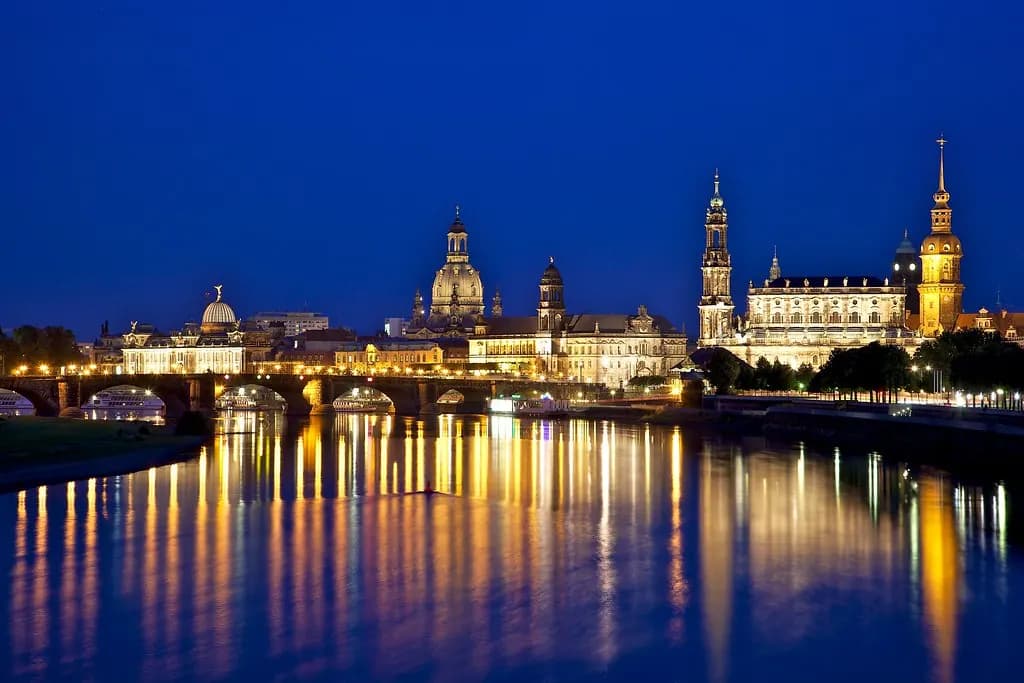
Allied bombing raids destroyed nearly all of Dresden's historic center in a single February night in 1945 — the Frauenkirche's dome collapsed and its ruins sat untouched as a war memorial for 45 years before reconstruction finally began, stone by original stone.
Dresden's historic center underwent one of the most concentrated single acts of destruction any European city suffered in the 20th century. Over the nights of February 13-15, 1945, Allied bombing raids created a firestorm that destroyed roughly 90% of the old town and killed an estimated 25,000 people — a raid that remains genuinely debated among historians as one of the war's most devastating campaigns against a civilian center, given how late in the war it occurred and Dresden's limited military-industrial significance at the time.
The Frauenkirche, a Baroque Lutheran church whose dome had been Dresden's defining silhouette since the 18th century, collapsed two days after the bombing under the weight of the surrounding fires. East Germany's Communist government made a deliberate choice afterward: rather than rebuild, it left the ruins standing for 45 years as an anti-war memorial, a pile of blackened stone at the heart of the city. Only after German reunification in 1990 did reconstruction begin, using original stones recovered from the rubble and matched back into the new structure wherever possible — their darker color still visible today against the lighter new stone, an intentional, visible record of what survived. The rebuilt church reopened in 2005.
The Zwinger Palace, a sprawling Baroque complex that survived the bombing in ruins but was reconstructed earlier, under East German rule, now houses several major collections, including Old Masters paintings and one of Europe's most significant porcelain collections — a reflection of Dresden's long history as a center of fine porcelain production.
The Green Vault, one of the oldest museum collections in Europe, holds an extraordinary trove of jewels, gold, and decorative objects assembled by Saxon rulers over centuries — a level of opulence that survived the war in underground vaults while the buildings above were destroyed.
Beyond the city, Saxon Switzerland National Park, about 45 minutes away, offers dramatic sandstone cliff formations and hiking trails that give Dresden a genuine nature day-trip option most other German historic cities can't match.
What a trip here actually costs
$45 / day avg.
- Hostel near the historic center
- Tram day pass
- Bakery and casual German lunches
- Free exterior wander through the reconstructed old town
What to do at this tier
- • Frauenkirche exterior, the rebuilt Baroque church at the center of the reconstruction story, free
- • Historic center wander, including the Fürstenzug porcelain mural, free
- • Elbe riverfront promenade, free
$100 / day avg.
- 3-star hotel near the old town
- Frauenkirche dome climb and Zwinger Palace entry
- Sit-down Saxon dinners
- Green Vault treasury collection ticket
What to do at this tier
- • Frauenkirche dome climb for a panoramic view over the reconstructed old town
- • Zwinger Palace, a Baroque complex housing significant art and porcelain collections
- • Green Vault, one of Europe's oldest and most significant treasury collections
$220 / day avg.
- 4-5 star hotel near the Elbe riverfront
- Private guided reconstruction and history tour
- Multi-course dinner at a well-regarded restaurant
- Private day trip into Saxon Switzerland National Park
What to do at this tier
- • Private guided tour covering the 1945 bombing, the Communist-era memorial decision, and the post-1990 reconstruction
- • Private day trip into Saxon Switzerland National Park, dramatic sandstone cliffs about 45 minutes away
- • Multi-course dinner at a well-regarded Dresden restaurant
These are average estimates for planning purposes, not real-time prices — actual costs vary by season, availability, and how far ahead you book.
How to get there
Click anywhere on the world map — any airport works, not just our main hubs.
Click anywhere on the map above — any airport in the world works — to see estimated travel time and cost from there.
Times and prices are planning estimates, not live fares — always check a booking site before you commit. See the full Transport Comparison guide for the general tradeoffs of each mode.
Best time to visit
May-September brings the mildest weather for walking the old town and riverfront comfortably.
Safety notes
Very safe overall. Standard urban caution is enough almost everywhere in the city.
Visa & currency
Euro. Standard Schengen 90-day visa-free rule applies for most Western passport holders.
Questions people ask before visiting
Is Dresden worth visiting?
Yes — it holds one of the most remarkable architectural reconstruction stories in Europe, having rebuilt its Baroque historic center, nearly leveled in a single 1945 bombing raid, with painstaking accuracy, alongside a genuinely significant art collection in the Zwinger Palace.
What happened to Dresden in 1945?
Allied bombing raids on the nights of February 13-15, 1945, created a firestorm that destroyed roughly 90% of Dresden's historic center and killed an estimated 25,000 people, one of the most devastating single bombing campaigns of World War II against a European city. The raid remains a significant, still-debated topic in discussions of wartime civilian bombing.
Why did the Frauenkirche take so long to rebuild?
The church's dome collapsed two days after the bombing, and East Germany's Communist government deliberately left the ruins standing for 45 years as an anti-war memorial rather than rebuilding. Reconstruction only began after German reunification in 1990, using original stones recovered from the rubble wherever possible, and finished in 2005.
Is Dresden cheap to visit?
Yes, noticeably more affordable than Munich or Frankfurt, closer to the rest of eastern Germany's price levels — a reasonable value pick for the depth of art and architecture on offer.
How many days do you need in Dresden?
Two days covers the Frauenkirche, the Zwinger Palace, and the historic center. A third day allows the Green Vault treasury collection or a day trip into Saxon Switzerland National Park's dramatic sandstone cliffs.
Nearby destinations
 Berlin
Berlin
Germany
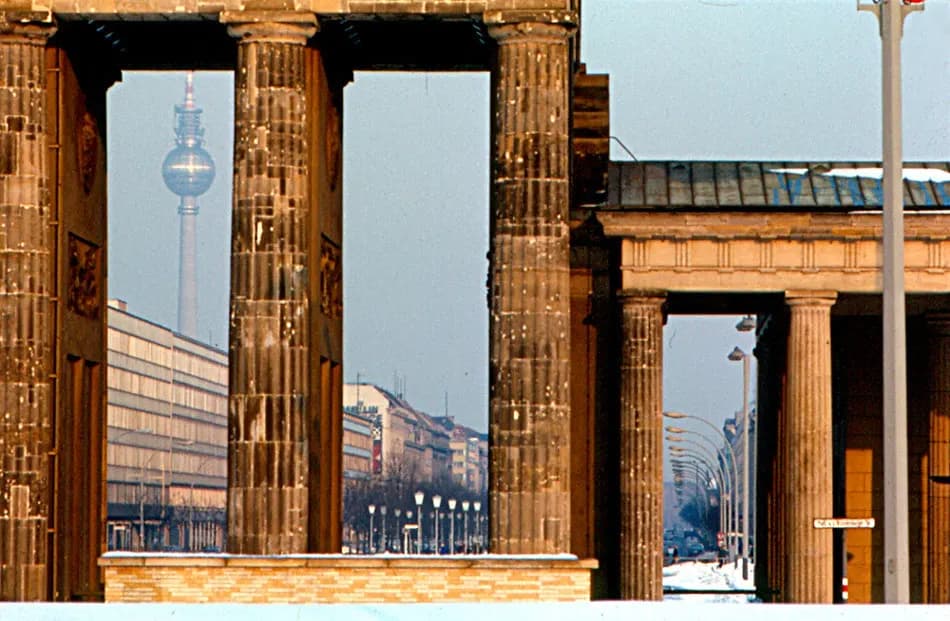
A city that was physically split in two for 28 years now has almost no visible seam — you can walk from what was the Soviet-controlled east into the former West Berlin without noticing, unless you know exactly where to look.
See full guide →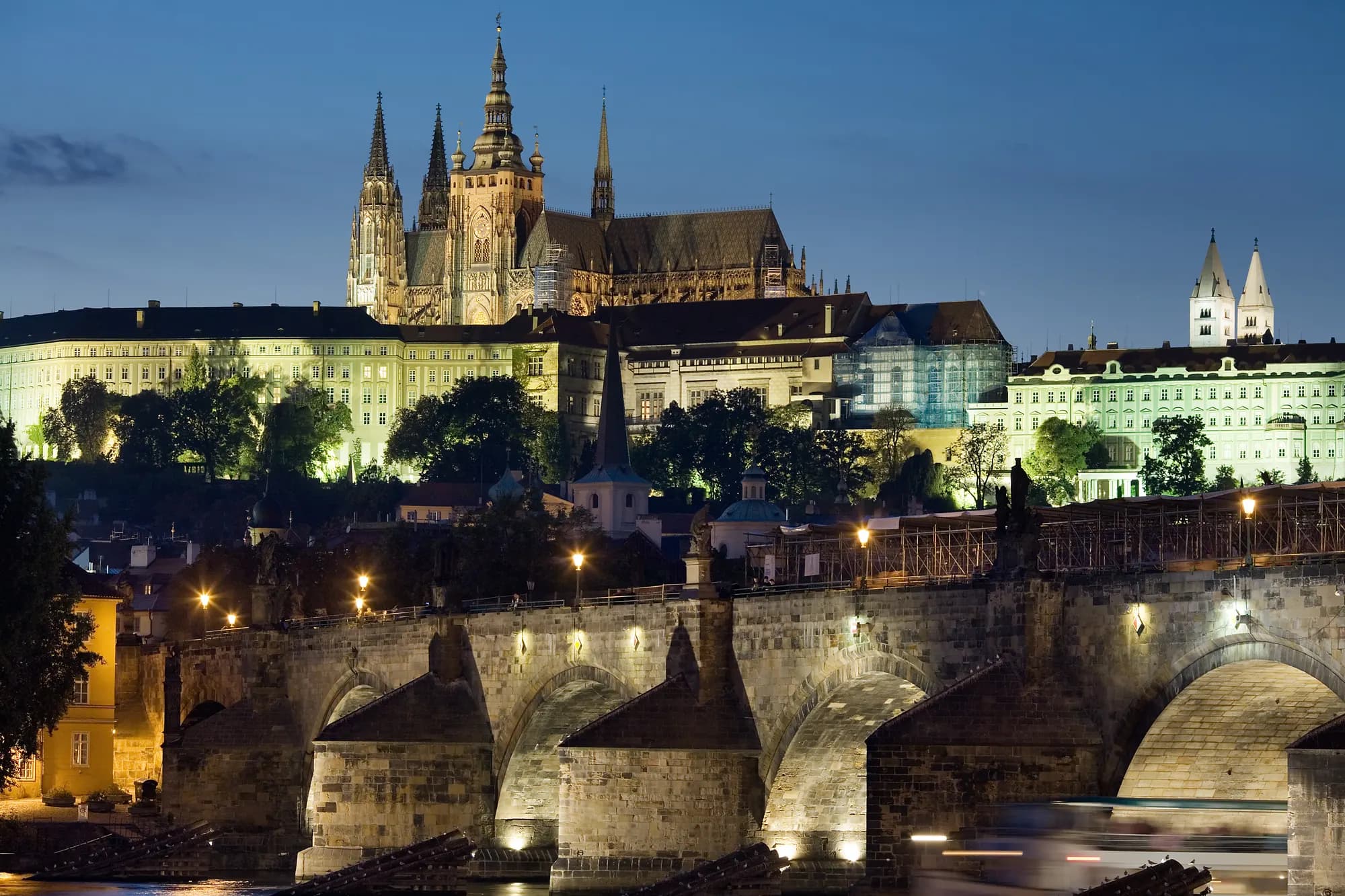 Prague
Prague
Czechia
The beer costs less than the bottled water in most restaurants, which tells you almost everything about the local priorities before you've even seen the castle.
See full guide →Comparing more than one route? See the full transport comparison guide.