Lithuania · Europe
Vilnius
Vilnius has a neighborhood that declared itself an independent republic on April Fools' Day in 1997, complete with its own constitution nailed to a wall in dozens of languages — and the city has let the joke run for almost three decades.
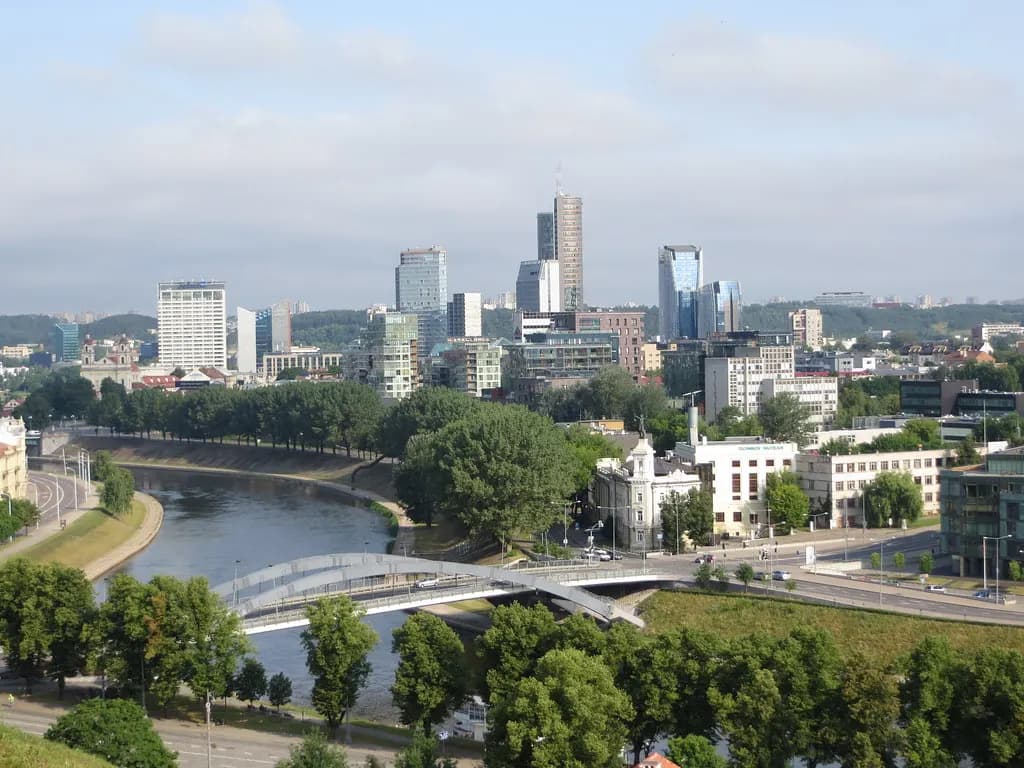
Vilnius holds the largest Old Town in Central and Northern Europe, a genuinely dense stretch of Baroque, Gothic, and Renaissance architecture layered across seven centuries, and it draws a fraction of the visitors that similarly sized old towns get further west. The Baroque churches in particular — St. Peter and St. Paul's, with its roughly 2,000 stucco figures covering every interior surface, chief among them — reward slow visits rather than quick photo stops.
Across the Vilnia River from the Old Town sits Užupis, a neighborhood that jokingly declared itself an independent republic on April Fools' Day in 1997. The bit has a full constitution — 41 articles, ranging from the earnest ("everyone has the right to be happy") to the absurd ("everyone has the right to understand nothing") — posted on a wall in dozens of languages, and the neighborhood has genuinely grown into Vilnius's artsy, bohemian quarter as a result, full of galleries, cafés, and studios rather than staying a one-off gag.
Gediminas Tower, the last standing remnant of Vilnius's medieval castle complex, sits on a hill overlooking the Old Town and gives one of the better orientation views in the Baltics — the city's mix of red rooftops, church spires, and, further out, Soviet-era apartment blocks all visible in one sweep. A funicular or a short uphill walk gets visitors to the top.
About 30 minutes outside the city, Trakai Island Castle sits on its own small island in Lake Galvė, connected to shore by a wooden footbridge — a genuinely photogenic red-brick fortress that was the medieval seat of the Grand Duchy of Lithuania and remains one of the more popular half-day trips from Vilnius.
Vilnius tends to get folded into a "Baltic capitals" itinerary alongside Riga and Tallinn, connected by long-distance buses, and holds its own within that trio — the largest Old Town, the strongest Baroque architecture, and noticeably fewer crowds than either of the other two.
What a trip here actually costs
$35 / day avg.
- Hostel in or near Old Town
- Trolleybus day pass
- Cafeteria-style Lithuanian lunches
- Free wander through Užupis and the Old Town
What to do at this tier
- • Wander Užupis, the self-declared artists' republic, free
- • Old Town walk past St. Anne's Church and the Presidential Palace, free
- • Gediminas Hill viewpoint over the city, free to climb
$85 / day avg.
- 3-star hotel in the Old Town
- Gediminas Tower and castle museum entry
- Sit-down Lithuanian dinners
- Half-day Trakai Castle trip
What to do at this tier
- • Gediminas Tower and the National Museum's castle exhibits
- • Half-day trip to Trakai Island Castle, a red-brick lakeside fortress about 30 minutes away
- • Sit-down dinner featuring cepelinai, Lithuania's potato-dumpling national dish
These are average estimates for planning purposes, not real-time prices — actual costs vary by season, availability, and how far ahead you book.
How to get there
Click anywhere on the world map — any airport works, not just our main hubs.
Click anywhere on the map above — any airport in the world works — to see estimated travel time and cost from there.
Times and prices are planning estimates, not live fares — always check a booking site before you commit. See the full Transport Comparison guide for the general tradeoffs of each mode.
Best time to visit
May-September brings the mildest weather; winters run genuinely cold and short on daylight, similar to the rest of the Baltic region.
Safety notes
Very safe overall. Standard urban caution at night is enough almost everywhere in the city.
Visa & currency
Euro. Lithuania is in the Schengen area; standard 90-day visa-free rule applies for most Western passport holders.
Questions people ask before visiting
Is Vilnius worth visiting?
Yes, and it tends to surprise people who arrive with low expectations — the Old Town is one of the largest in Central and Northern Europe, the Baroque architecture is genuinely dense, and Užupis gives it a quirky, artsy edge that Riga and Tallinn don't quite have.
What is the Republic of Užupis?
A small, artsy neighborhood across the river from the Old Town that jokingly declared independence on April 1, 1997, complete with its own flag, a symbolic army of about a dozen, and a 41-article constitution posted on a wall in over 20 languages. It's not a real country, but the bohemian identity it built around the joke is genuine and worth an hour's wander.
Is Vilnius cheap to visit?
Yes, one of the more affordable capitals in this guide — closer to Riga and Warsaw than to Stockholm or Vienna. Food, transit, and accommodation all run well below Western European norms.
Vilnius, Riga, or Tallinn — which Baltic capital should I prioritize?
They're commonly combined on one trip via bus. Vilnius has the largest Old Town and the strongest Baroque architecture of the three; Riga has the densest Art Nouveau district; Tallinn has the best-preserved medieval core. Vilnius is a reasonable single pick if you want the least crowded of the three.
How many days do you need in Vilnius?
Two days covers the Old Town, Gediminas Tower, and Užupis comfortably. A third day allows the Trakai Island Castle day trip, about 30 minutes outside the city and a genuinely scenic add-on.
Nearby destinations
 Riga
RigaRiga
Latvia
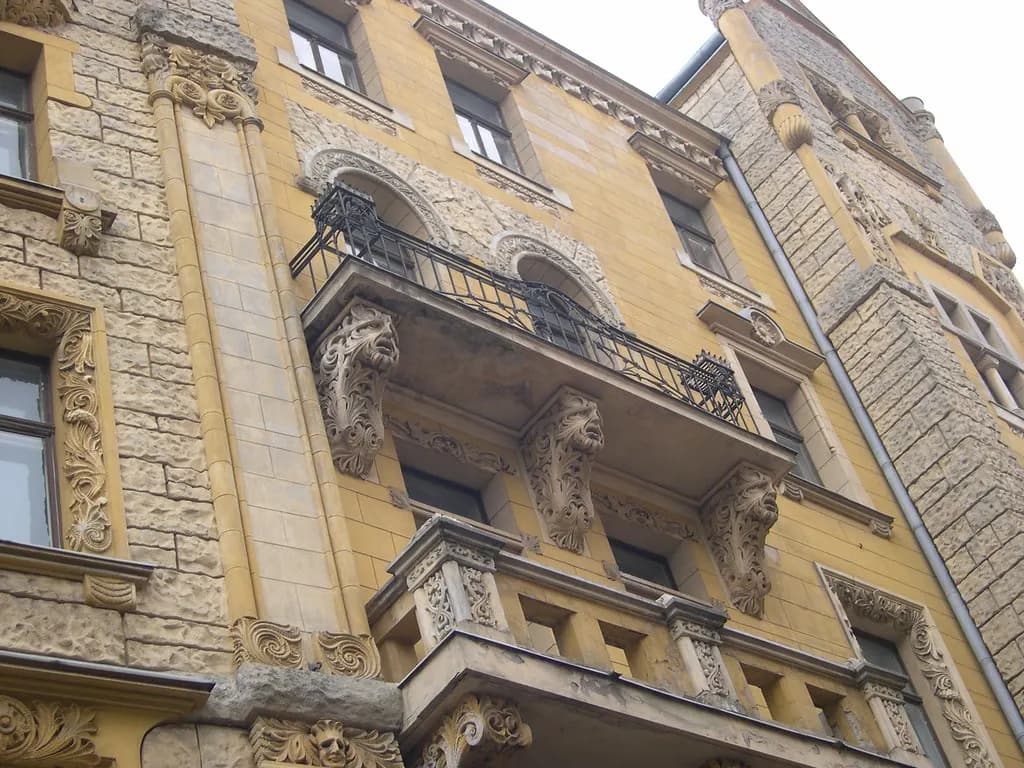
This city holds the largest collection of Art Nouveau buildings anywhere in Europe — entire streets of ornate, sculpture-covered facades that most visitors have never even heard Riga is known for.
See full guide →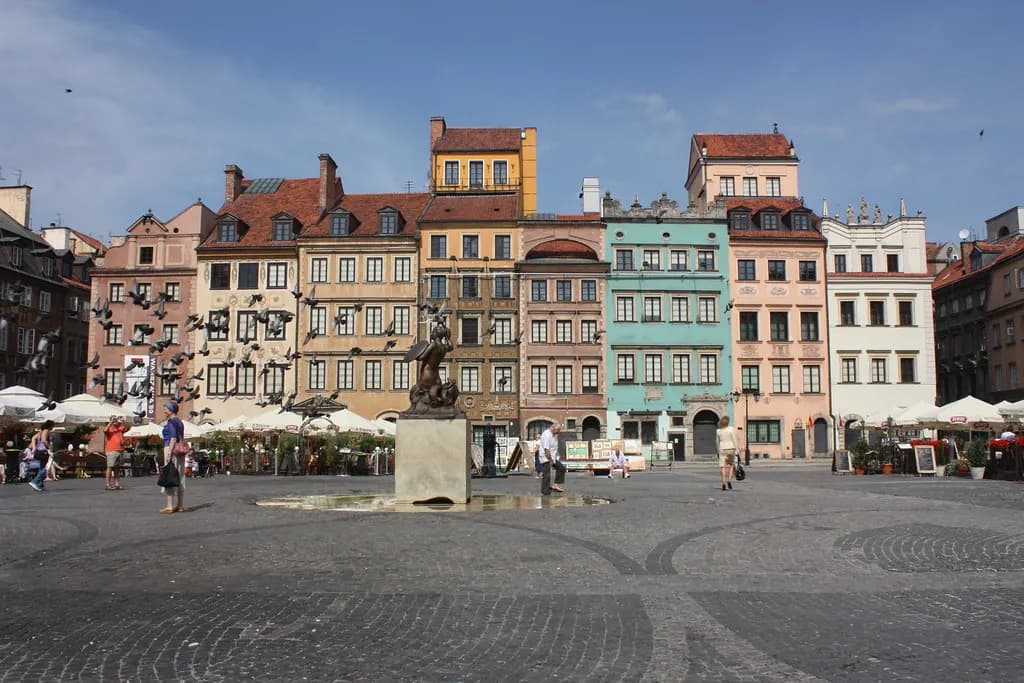 Warsaw
Warsaw
Poland
About 85% of the city was deliberately destroyed after the 1944 Warsaw Uprising, and the Old Town you see today is a meticulous postwar reconstruction, rebuilt from old paintings and photographs — the rebuild itself is what earned it UNESCO status, not original age.
See full guide →Comparing more than one route? See the full transport comparison guide.