Poland · Europe
Warsaw
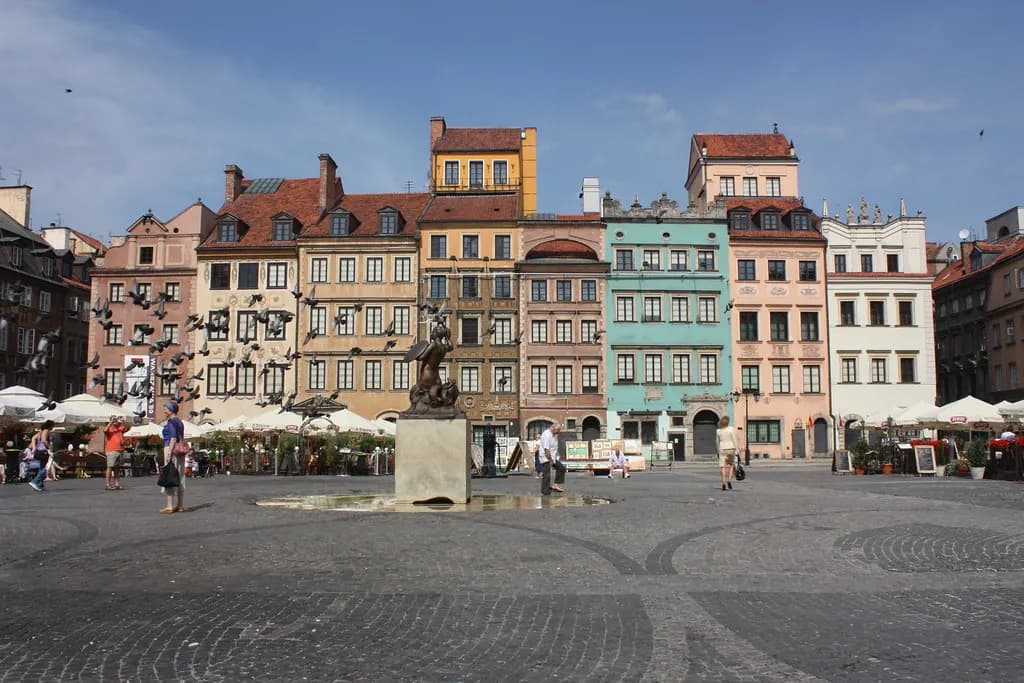
About 85% of the city was deliberately destroyed after the 1944 Warsaw Uprising, and the Old Town you see today is a meticulous postwar reconstruction, rebuilt from old paintings and photographs — the rebuild itself is what earned it UNESCO status, not original age.
Warsaw's Old Town looks medieval, and understanding that it isn't — not physically, anyway — is close to essential to understanding the city. After the 1944 Warsaw Uprising, an attempt by the Polish resistance to liberate the city before Soviet forces arrived, German forces responded by systematically demolishing roughly 85% of Warsaw, block by block, in a deliberate campaign of destruction rather than incidental war damage. What visitors see in the Old Town today was rebuilt after the war using pre-war paintings, photographs, and architectural surveys, detailed enough that UNESCO granted it World Heritage status specifically for the reconstruction's quality — one of the few sites recognized for a rebuild rather than an original.
The Warsaw Uprising Museum, opened in 2004 on the uprising's 60th anniversary, is built to make that history immediate rather than distant — personal accounts, a reconstructed sewer passage referencing how resistance fighters moved through the city, and a scale of detail that rewards a genuine two-hour visit rather than a quick pass-through.
The Palace of Culture and Science, the tallest building in Poland, is a Stalin-era gift from the Soviet Union, completed in 1955, and remains a genuinely contested piece of the skyline — some Varsovians see it as an unwanted symbol of Soviet influence, others as a normalized, even nostalgic part of the city's silhouette. Either way, its viewing deck gives the best full panorama of Warsaw available, ironically looking out over a skyline the building itself dominates.
Praga, the district across the Vistula River from the main center, escaped the worst of the wartime destruction and the subsequent reconstruction alike, which means it looks genuinely different from the polished Old Town — more weathered, less restored, and increasingly home to Warsaw's alternative art and nightlife scene as the neighborhood has gentrified in recent decades.
Like Krakow, Warsaw runs noticeably cheaper than Western European capitals despite being the country's political and business center — milk bars, the subsidized cafeteria-style restaurants found across Poland, remain a genuine budget option here too, not just a Krakow specialty.
What a trip here actually costs
$35 / day avg.
- Hostel near Old Town or Praga
- Tram and metro day pass
- Milk bar lunches and pierogi
- Free wander through the reconstructed Old Town
What to do at this tier
- • Old Town Market Square, free, especially good in early morning light
- • Praga district wander, across the river, grittier and less restored than the center
- • Łazienki Park, free, including the palace exterior and peacocks that roam the grounds
$85 / day avg.
- 3-star hotel walkable to the center
- Warsaw Uprising Museum and Royal Castle tickets
- Sit-down Polish dinners
- Palace of Culture and Science viewing deck
What to do at this tier
- • Warsaw Uprising Museum, at least two hours, a genuinely well-built and sobering museum
- • Royal Castle, rebuilt like the rest of Old Town, worth the interior ticket
- • Palace of Culture and Science viewing deck for a full city panorama
$190 / day avg.
- 4-5 star hotel near Old Town
- Private guided history tour covering the Uprising and reconstruction
- Tasting menu at a modern Polish restaurant
- Private day trip outside the city
What to do at this tier
- • Private guided tour connecting the wartime destruction with the postwar reconstruction story
- • Tasting menu dinner at a restaurant reinterpreting traditional Polish dishes
- • Private day trip to the Wolf's Lair or another WWII-era historical site outside the city
These are average estimates for planning purposes, not real-time prices — actual costs vary by season, availability, and how far ahead you book.
How to get there
Click anywhere on the world map — any airport works, not just our main hubs.
Click anywhere on the map above — any airport in the world works — to see estimated travel time and cost from there.
Times and prices are planning estimates, not live fares — always check a booking site before you commit. See the full Transport Comparison guide for the general tradeoffs of each mode.
Best time to visit
May-September brings mild-to-warm weather; winters are genuinely cold, similar to Krakow.
Safety notes
Very safe overall, among the safer major European capitals. Standard urban caution at night is enough.
Visa & currency
Polish złoty (PLN), not the euro. Standard Schengen 90-day visa-free rule applies for most Western passport holders.
Questions people ask before visiting
Is Warsaw worth visiting if I've already been to Krakow?
Yes, and they're genuinely different — Krakow's Old Town is largely original medieval fabric, while Warsaw's is a deliberate, detailed postwar reconstruction, and that story of destruction and rebuilding is central to what makes Warsaw worth understanding. Warsaw is also the modern capital, with a skyline and energy Krakow doesn't have.
How long should I spend at the Warsaw Uprising Museum?
At least two hours. It's an intense, well-built museum covering the 1944 uprising against Nazi occupation, and it rewards the time rather than being a quick add-on stop — plan the visit as a dedicated activity, not something squeezed between other sights.
Is Warsaw cheap to visit?
Yes, similar to Krakow — noticeably cheaper than Western European capitals on food, transit, and accommodation, even as the modern political and business capital of Poland.
Is Warsaw's Old Town actually old?
Not physically — around 85% of the city, including the entire Old Town, was systematically destroyed by German forces after the 1944 Warsaw Uprising. What stands today was rebuilt after the war using old paintings, photographs, and architectural records, detailed enough that UNESCO recognized it specifically for the quality and significance of the reconstruction itself.
How many days do you need in Warsaw?
Two days covers the Old Town, the Warsaw Uprising Museum, and the Palace of Culture and Science. A third day allows a slower look at the Praga district, across the river and noticeably less polished, or a day trip out of the city.
Nearby destinations
 Krakow
Krakow
Poland
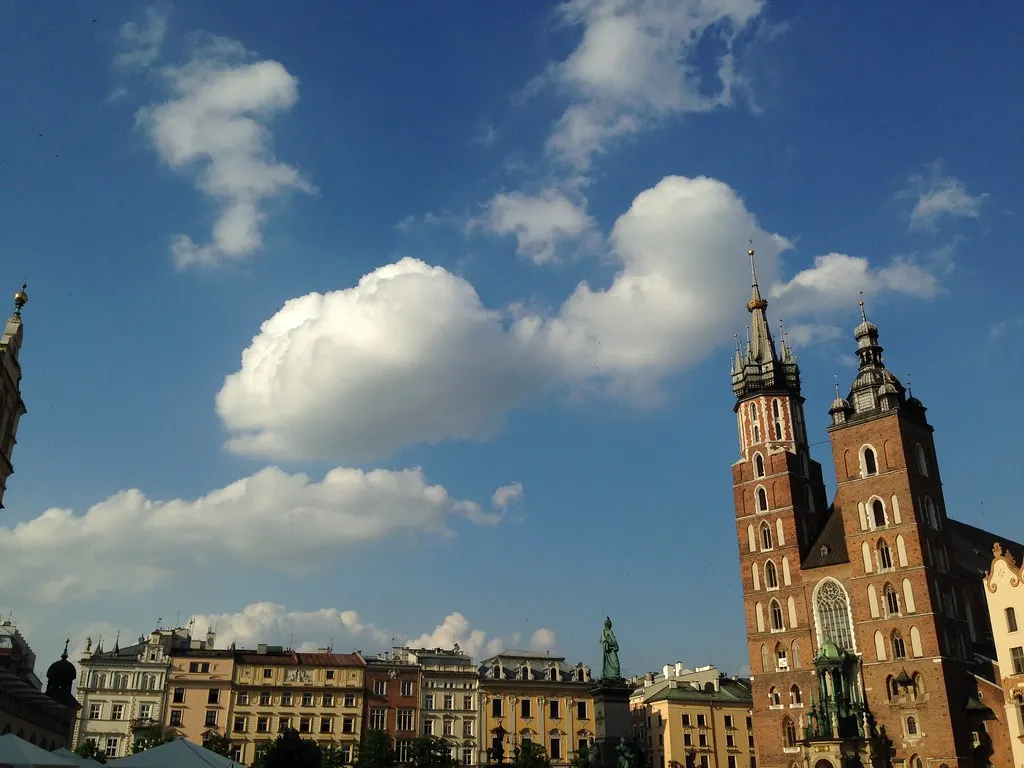
A trumpet call cuts off mid-note every hour from the tallest tower of St. Mary's Basilica, a tradition dating back to a watchman supposedly shot mid-warning during a 13th-century invasion.
See full guide →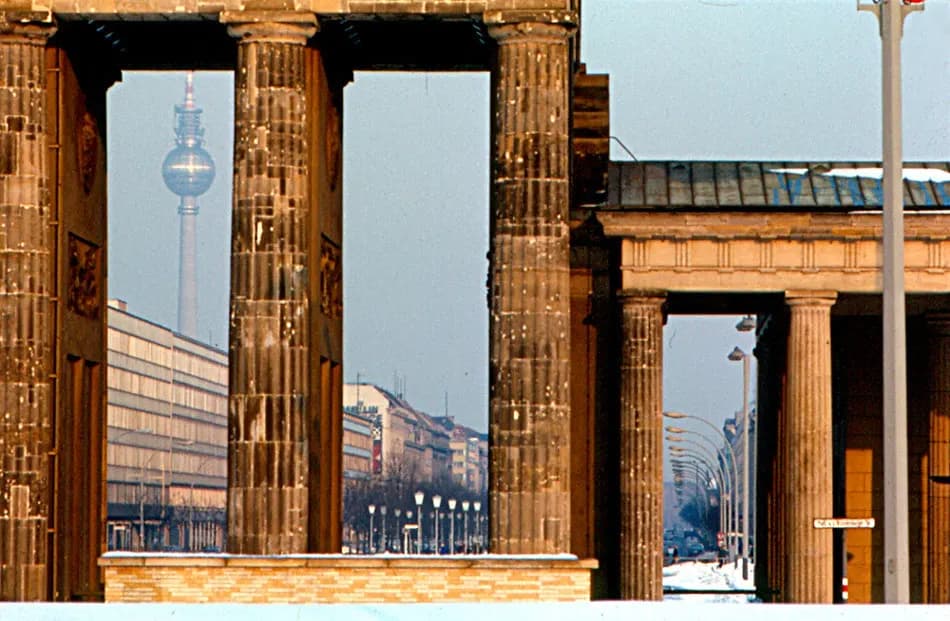 Berlin
Berlin
Germany
A city that was physically split in two for 28 years now has almost no visible seam — you can walk from what was the Soviet-controlled east into the former West Berlin without noticing, unless you know exactly where to look.
See full guide →Comparing more than one route? See the full transport comparison guide.