Spain · Europe
Valencia
Paella was invented here, in the fields outside the city, not in Barcelona or anywhere else it's commonly associated with — and the version served in most of Spain barely resembles what locals actually consider real paella valenciana.
Paella's actual origin traces to the fields and rice paddies around Valencia, not the seafood-heavy version most commonly served across Spain and internationally. Traditional paella valenciana uses rabbit, chicken, green beans, and a local variety of white bean called garrofón — no seafood at all — and it's traditionally eaten at lunch, cooked slowly over an open flame in a wide, shallow pan that gives the dish its name. Restaurants in Ruzafa or along the Albufera lagoon south of the city are generally more reliable for the traditional version than anything served near the main tourist sights.
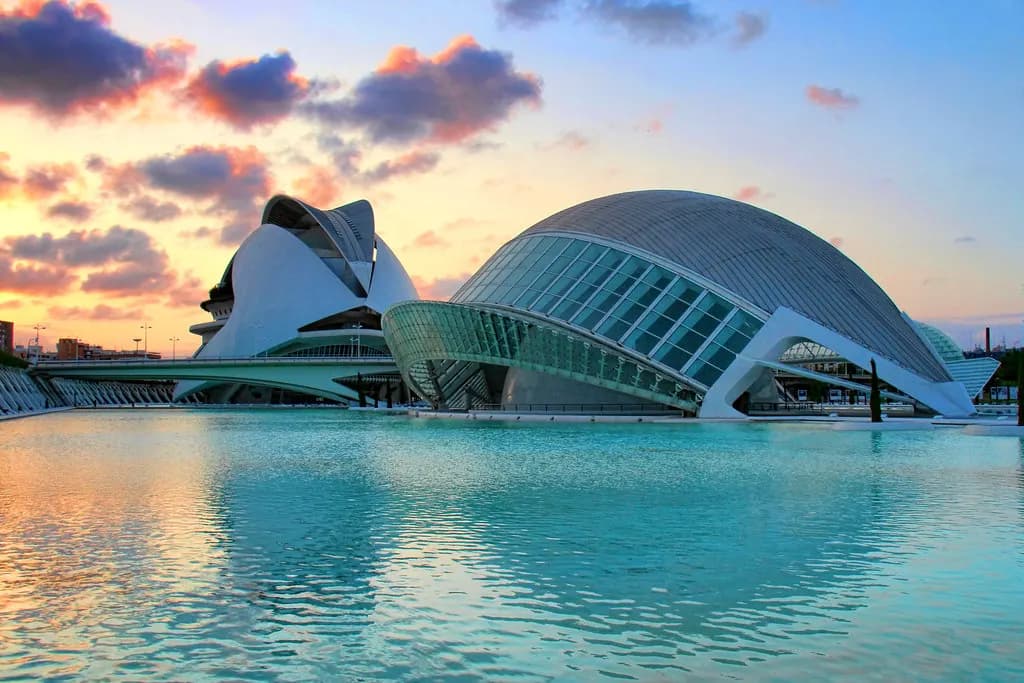
The City of Arts and Sciences, a cluster of striking modern buildings designed largely by Valencia-born architect Santiago Calatrava, was built in the dried-up bed of the Turia River, which was diverted after a devastating 1957 flood rather than left running through the city center. That decision turned what could have been a lost stretch of riverfront into the Turia Gardens, a long park now running through Valencia, with the City of Arts and Sciences — an aquarium, science museum, planetarium, and opera house among its buildings — anchoring one end of it.
Valencia's beach, Malvarrosa, is a genuine city beach reachable by tram, not a token strip locals ignore — a real point of contrast with Barcelona or Madrid, neither of which offers anything comparable this close to the center. The Albufera Natural Park, a large freshwater lagoon just south of the city, is where much of the region's rice — and by extension its paella tradition — actually grows, and a sunset boat trip across it is one of the more distinctive things available near any major Spanish city.
Compared to Barcelona, Valencia runs calmer, more affordable, and considerably less saturated by tourism, despite offering a comparable mix of beach access, architecture, and food culture. It's a reasonable choice for travelers who've already done the bigger Spanish cities and want something with a similar identity at a slower pace.
What a trip here actually costs
$50 / day avg.
- Hostel in Ruzafa or near the Old Town
- Metro and bus day pass
- Market lunches, paella split between two
- Free beach time and the Turia Gardens park
What to do at this tier
- • Turia Gardens, a former riverbed converted into a long park running through the city, free
- • Malvarrosa Beach, free, a genuine city beach rather than a token strip of sand
- • Central Market (Mercado Central), one of Europe's oldest working markets, free to browse
$110 / day avg.
- 3-star hotel near the center
- City of Arts and Sciences tickets (aquarium or science museum)
- Sit-down paella lunches, one proper dinner
- Half-day Albufera lagoon boat trip
What to do at this tier
- • City of Arts and Sciences, at least half a day, aquarium or science museum entry
- • Traditional paella valenciana lunch in Ruzafa, rabbit and chicken, not the seafood tourist version
- • Half-day boat trip on the Albufera lagoon, especially good at sunset
$250 / day avg.
- 4-5 star hotel near the Old Town or beach
- Private guided architecture tour of the City of Arts and Sciences
- Multi-course dinner at a well-regarded restaurant
- Private Albufera sunset boat tour
What to do at this tier
- • Private guided tour of Santiago Calatrava's City of Arts and Sciences architecture
- • Private sunset boat tour of the Albufera Natural Park
- • Multi-course tasting menu at one of Valencia's well-regarded restaurants
These are average estimates for planning purposes, not real-time prices — actual costs vary by season, availability, and how far ahead you book.
How to get there
Click anywhere on the world map — any airport works, not just our main hubs.
Click anywhere on the map above — any airport in the world works — to see estimated travel time and cost from there.
Times and prices are planning estimates, not live fares — always check a booking site before you commit. See the full Transport Comparison guide for the general tradeoffs of each mode.
Best time to visit
April-June and September-October bring warm, comfortable weather without the peak summer heat and crowds, particularly around Las Fallas in March, a major and very crowded local festival.
Safety notes
Very safe overall. Standard urban caution is enough almost everywhere in the city.
Visa & currency
Euro. Standard Schengen 90-day visa-free rule applies for most Western passport holders.
Questions people ask before visiting
Is Valencia worth visiting compared to Barcelona or Madrid?
Yes, and it's a genuinely different pace — smaller, more laid-back, less overrun by tourism than Barcelona, with beach access, the futuristic City of Arts and Sciences complex, and the actual birthplace claim to paella all in one city.
Where do I find real paella valenciana, not a tourist version?
Authentic paella valenciana uses rabbit, chicken, and beans — not the seafood-heavy version served across most of Spain and abroad. Restaurants in the traditional Ruzafa neighborhood or along the Albufera lagoon just south of the city are more likely to serve it the traditional way, and it's traditionally a lunch dish, not dinner.
Valencia or Barcelona — which should I prioritize?
Barcelona has more internationally famous sights (Sagrada Família, Park Güell) and a bigger, more intense city energy. Valencia is calmer, more affordable, and less tourist-saturated, with its own strong identity built around food, beaches, and modern architecture. Barcelona is the classic first choice; Valencia rewards travelers who want something a notch quieter.
Is the City of Arts and Sciences worth visiting?
Yes — it's a striking modern architectural complex by Santiago Calatrava and Félix Candela, built in a dried-up riverbed running through the city, including an aquarium, science museum, and opera house. Worth at least a few hours even without entering every building, since the architecture itself is the main draw for many visitors.
How many days do you need in Valencia?
Three days covers the Old Town, the City of Arts and Sciences, and a beach afternoon comfortably. A fourth day allows the Albufera lagoon, just south of the city, particularly good at sunset.
Nearby destinations
 Barcelona
Barcelona
Spain
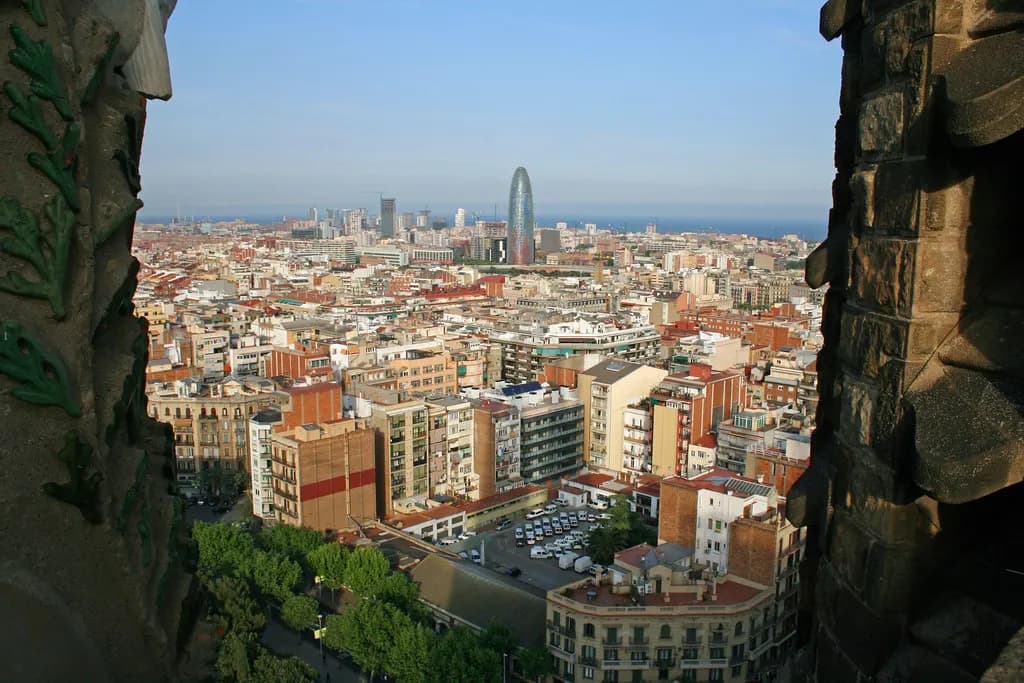
Gaudí spent over a decade on a church that's still not finished, and somehow that unfinished cathedral is now the thing everyone plans their trip around.
See full guide →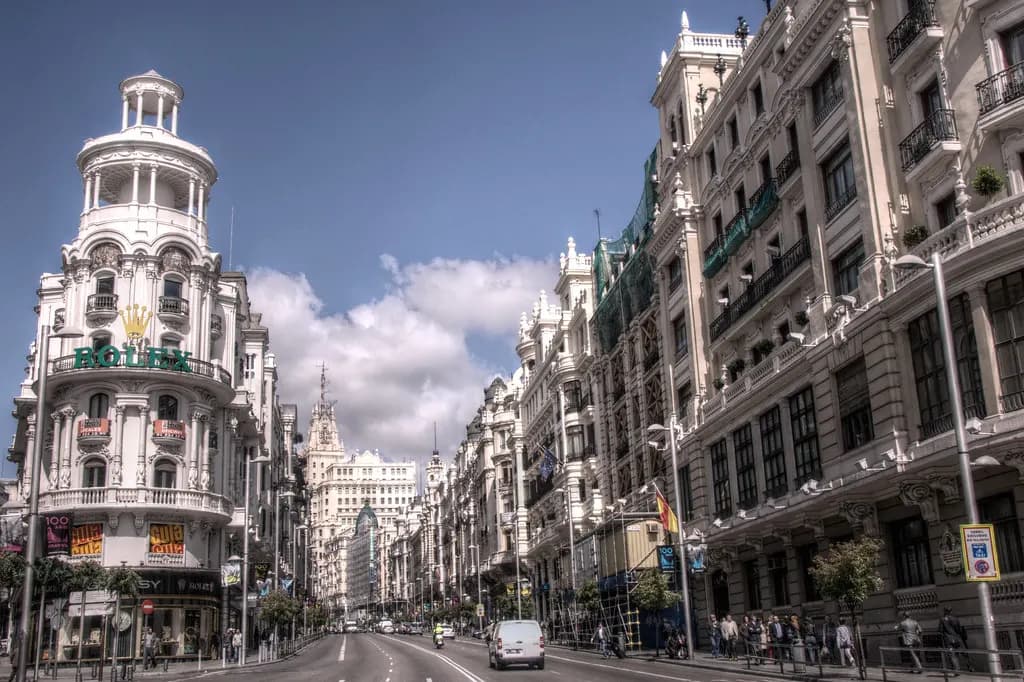 Madrid
Madrid
Spain
Dinner reservations before 9pm are considered early here — Madrid runs on a schedule shifted so late that the city's nightlife doesn't really start until other European capitals are already closing down.
See full guide →Comparing more than one route? See the full transport comparison guide.