Norway · Europe
Tromsø
This city sits so far north that the sun never fully sets for about two months each summer, and never fully rises for about two months each winter — and it's still one of the most reliable places on Earth to see the Northern Lights from an actual city, not a remote wilderness camp.
Tromsø sits far enough above the Arctic Circle that its relationship with daylight runs to genuine extremes: from roughly late May through late July, the sun never fully sets, giving round-the-clock daylight known as the midnight sun. The reverse — the polar night, when the sun never rises above the horizon — runs roughly late November through mid-January, though a soft, extended twilight still provides several hours of usable light even during the darkest stretch.
That same far-north position places Tromsø inside the auroral oval, the band around the Arctic Circle where the Northern Lights appear most consistently, and it does so with a rare practical advantage: unlike many of the world's best aurora-viewing locations, which require remote wilderness lodges or multi-day expeditions, Tromsø is an actual city with a functioning airport, a full range of hotels, and tour operators who can get visitors to dark viewing spots outside the city within an hour of landing.
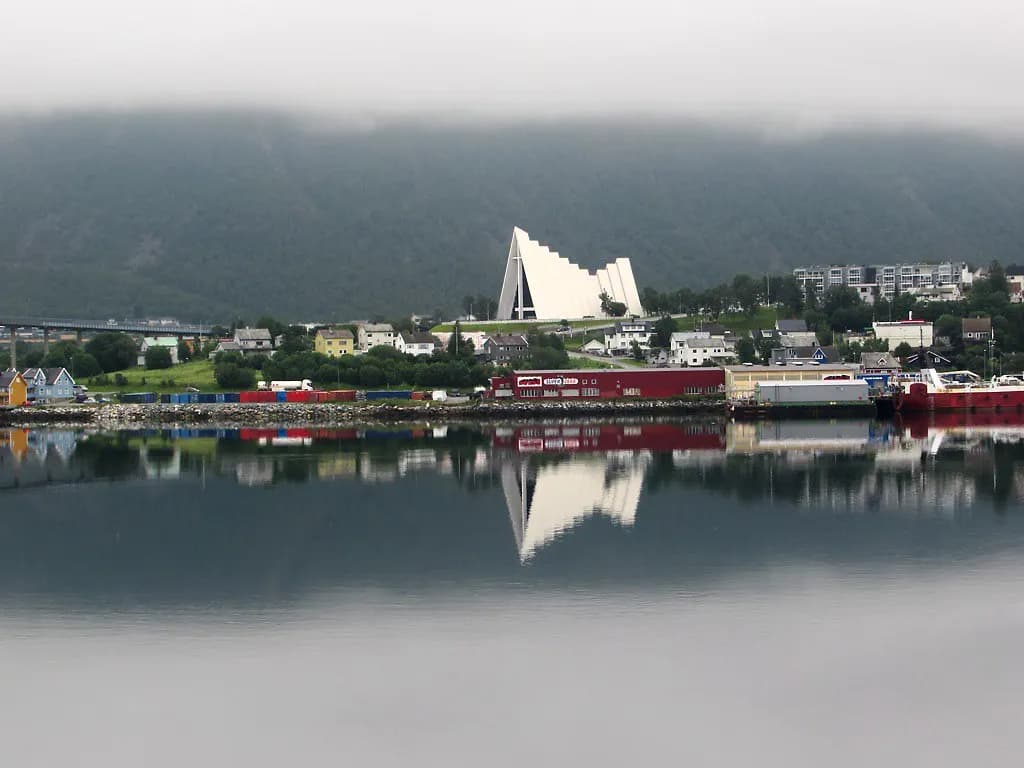
The Arctic Cathedral, a striking triangular building of white concrete and glass completed in 1965, has become Tromsø's most recognizable modern landmark, its distinctive silhouette echoing the surrounding mountain peaks across the fjord from the city center.
Fjellheisen, a cable car climbing Mount Storsteinen just behind the city, gives a sweeping view over Tromsø, its surrounding fjords, and, on clear winter nights, a genuine chance at spotting the aurora from an elevated vantage point without leaving the city limits.
Beyond the city itself, Tromsø functions as a genuine gateway to Arctic wildlife and activities — whale watching boat trips, dog sledding with real working huskies, and fjord cruises are all realistic additions to a longer stay, backed by a surprisingly lively restaurant and bar scene fueled by the city's large university population, an unusual combination of genuine Arctic wilderness access and real urban comfort.
What a trip here actually costs
$170 / day avg.
- 3-star hotel near the center
- Guided Northern Lights or midnight sun tour
- Sit-down Norwegian seafood dinners
- Fjellheisen cable car to Mount Storsteinen
What to do at this tier
- • Guided Northern Lights tour (winter) or midnight sun boat trip (summer)
- • Fjellheisen cable car up Mount Storsteinen for a panoramic Arctic view
- • Arctic Cathedral, a striking triangular modern church, exterior and interior
$360 / day avg.
- 4-5 star hotel with fjord views
- Private guided Northern Lights photography tour
- Whale watching or dog sledding excursion
- Multi-course Arctic seafood tasting menu
What to do at this tier
- • Private guided Northern Lights photography excursion away from city light pollution
- • Whale watching boat trip or a dog sledding excursion with an Arctic tour operator
- • Multi-course Arctic seafood tasting menu at a well-regarded Tromsø restaurant
These are average estimates for planning purposes, not real-time prices — actual costs vary by season, availability, and how far ahead you book.
How to get there
Click anywhere on the world map — any airport works, not just our main hubs.
Click anywhere on the map above — any airport in the world works — to see estimated travel time and cost from there.
Times and prices are planning estimates, not live fares — always check a booking site before you commit. See the full Transport Comparison guide for the general tradeoffs of each mode.
Best time to visit
September-March for Northern Lights viewing, or June-August for the midnight sun — the two seasons offer completely different experiences, and it's worth picking a trip specifically around one or the other.
Safety notes
Very safe overall, among the safer cities in Europe. Winter weather and road conditions call for genuine preparation, but crime is a minimal concern.
Visa & currency
Norwegian krone (NOK), not the euro. Norway is in the Schengen area (though not the EU); standard 90-day visa-free rule applies for most Western passport holders.
Questions people ask before visiting
Is Tromsø a good place to see the Northern Lights?
Yes — it's inside the auroral oval, the band around the Arctic where the lights appear most consistently, and unlike many remote viewing spots, Tromsø is an actual city with an airport, hotels, and tour operators, making it one of the most accessible reliable aurora destinations on Earth. The best window runs roughly late September through late March.
When does Tromsø get the midnight sun?
Roughly late May through late July, when the sun stays above the horizon around the clock. The reverse — the polar night, when the sun doesn't rise above the horizon at all — runs roughly late November through mid-January, though there's still several hours of twilight-like light each day even then.
Is Tromsø worth visiting?
Yes, particularly for the Northern Lights or the midnight sun specifically — few places combine genuine Arctic wilderness access (fjords, whale watching, dog sledding) with an actual walkable city offering real restaurants and a lively bar scene, largely thanks to Tromsø's university population.
Is Tromsø expensive?
Yes, consistent with the rest of Norway — one of the pricier destinations in this guide. Guided activities like Northern Lights tours or dog sledding add up quickly on top of already high accommodation and food costs.
How many days do you need in Tromsø?
Two days allows one dedicated Northern Lights or midnight sun evening plus a city walk, including the Arctic Cathedral and the cable car up Mount Storsteinen. Three or more days allow whale watching, dog sledding, or a fjord cruise, weather and season permitting.
Nearby destinations
 Reykjavik
Reykjavik
Iceland
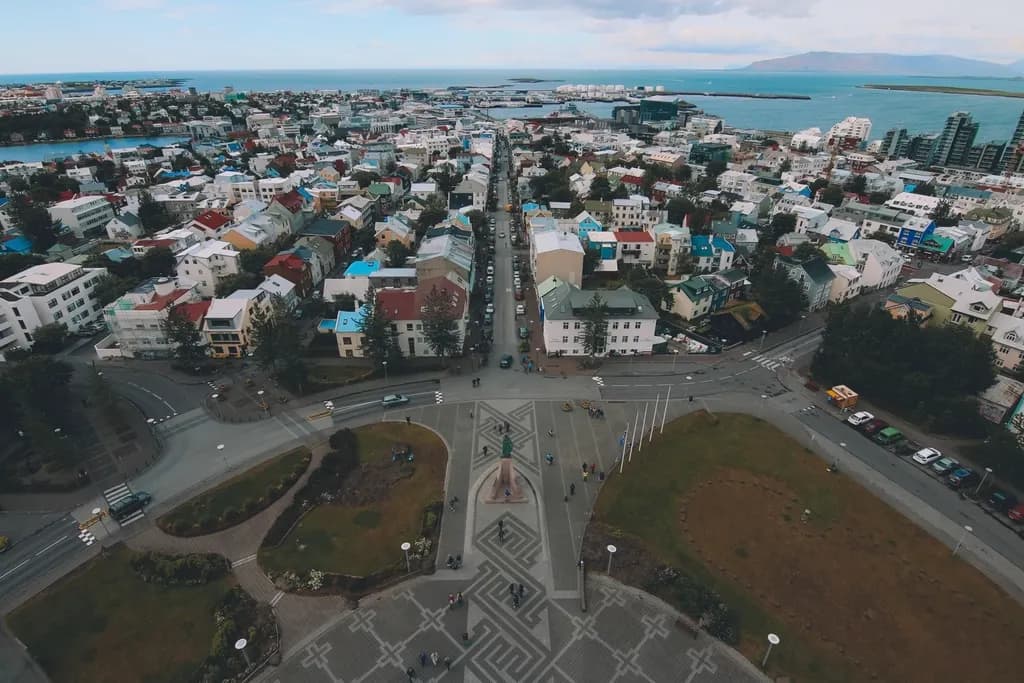
The tap water comes straight from glacial springs and most homes are heated by the ground itself — geothermal energy covers virtually all of the city's heating, which is the quiet fact behind almost everything you'll notice here.
See full guide →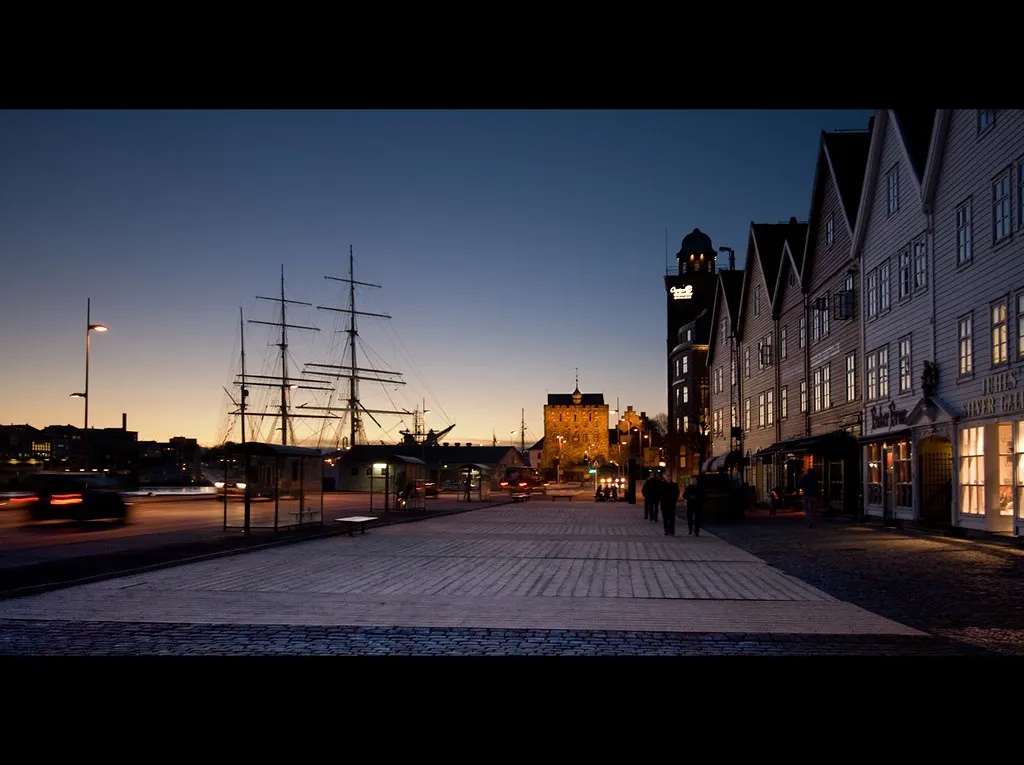 Bergen
Bergen
Norway
This city gets rain roughly 240 days a year, enough that locals have made peace with it as a defining trait rather than a complaint — bring a proper jacket and expect the weather to change plans regardless of season.
See full guide →Comparing more than one route? See the full transport comparison guide.