Norway · Europe
Bergen
This city gets rain roughly 240 days a year, enough that locals have made peace with it as a defining trait rather than a complaint — bring a proper jacket and expect the weather to change plans regardless of season.
Bergen's relationship with rain is close to a defining civic trait — the city sees precipitation roughly 240 days a year, among the wettest major cities in Europe, a product of its position surrounded by mountains that trap moisture rolling in off the Atlantic. Locals have made a kind of peace with it rather than treating it as a flaw, and visitors who pack accordingly rather than hoping for clear skies tend to have a better time.
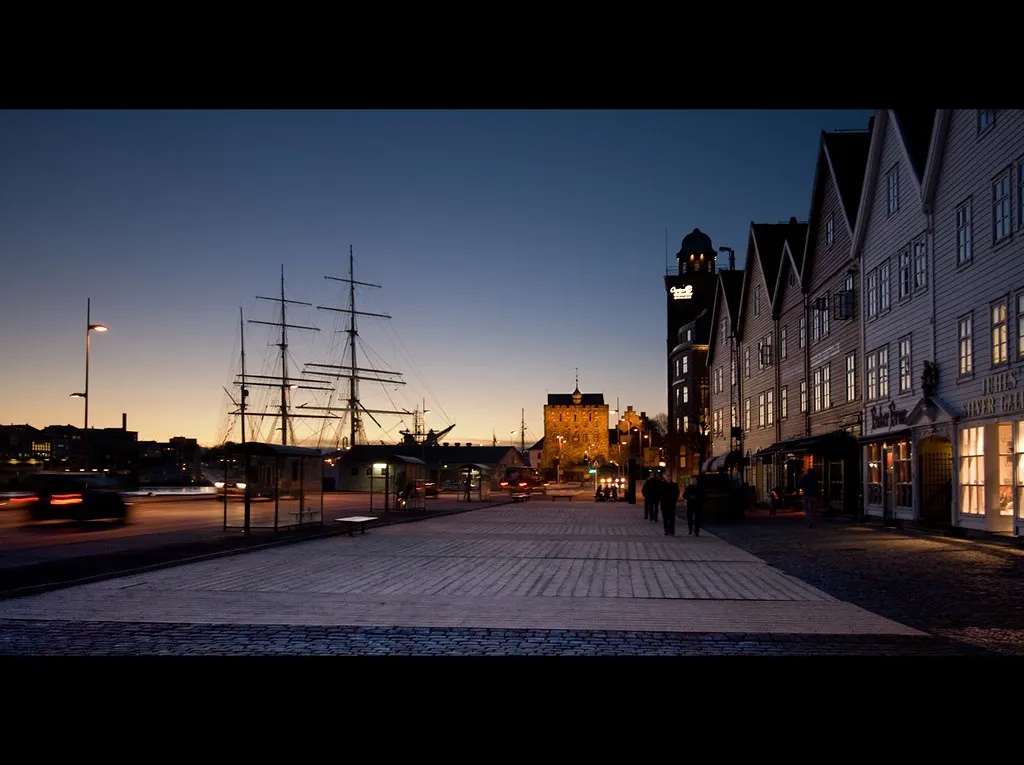
Bryggen, the wharf district along the harbor, is Bergen's most photographed feature — a row of colorful, narrow wooden buildings dating to the city's era as a major Hanseatic League trading post, a medieval and early modern commercial network spanning Northern Europe. The UNESCO-listed buildings aren't just a facade for photos; the narrow alleys behind them hold small workshops, galleries, and shops still operating within structures that have stood, in some form, for centuries despite repeated fires.
The Fløyen funicular climbs one of the seven mountains ringing Bergen in about eight minutes, delivering a full panoramic view over the city and harbor that's genuinely worth doing even under Bergen's frequent cloud cover — conditions change fast enough at altitude that a cloudy start doesn't guarantee a cloudy summit.
Bergen functions as Norway's practical gateway to its most famous fjords. The Sognefjord, the country's longest and deepest, and the Hardangerfjord, known for its waterfalls and orchards, are both reachable as day trips or as part of the popular Norway in a Nutshell route, a combined train-and-boat journey that packages fjord scenery into a manageable single-day itinerary rather than requiring a longer independent trip.
Prices here track the rest of Norway — high, consistent with Zurich or Reykjavik elsewhere in this guide rather than continental European norms. A casual meal or a round of drinks costs noticeably more than almost anywhere else covered so far, and budgeting for mid-range spending as a realistic floor avoids a lot of frustration.
What a trip here actually costs
$150 / day avg.
- 3-star hotel near the center or Bryggen
- Fløyen funicular return ticket
- Fish market lunches, one sit-down Norwegian dinner
- Public transit day pass
What to do at this tier
- • Bryggen wharf wander, the UNESCO-listed Hanseatic-era wooden buildings, free to walk through
- • Fløyen funicular and summit trails for a panoramic view over the city
- • Bergen Fish Market for lunch, fresh seafood right on the harbor
$340 / day avg.
- 4-5 star hotel near the harbor
- Private fjord cruise, Sognefjord or Hardangerfjord
- Multi-course seafood-focused dinner
- Private guided Bryggen and Hanseatic history tour
What to do at this tier
- • Full-day fjord cruise into the Sognefjord, Norway's longest and deepest fjord
- • Norway in a Nutshell rail-and-boat route, a full-day scenic journey through fjord country
- • Multi-course seafood tasting menu at a well-regarded Bergen restaurant
These are average estimates for planning purposes, not real-time prices — actual costs vary by season, availability, and how far ahead you book.
How to get there
Click anywhere on the world map — any airport works, not just our main hubs.
Click anywhere on the map above — any airport in the world works — to see estimated travel time and cost from there.
Times and prices are planning estimates, not live fares — always check a booking site before you commit. See the full Transport Comparison guide for the general tradeoffs of each mode.
Best time to visit
May-September brings the mildest weather and the longest daylight hours, though rain is a realistic possibility at any time of year — pack for it regardless.
Safety notes
Very safe overall, among the safer cities in Europe. Minimal precautions needed beyond normal urban awareness.
Visa & currency
Norwegian krone (NOK), not the euro. Norway is in the Schengen area (though not the EU); standard 90-day visa-free rule applies for most Western passport holders.
Questions people ask before visiting
Is Bergen a good base for visiting the Norwegian fjords?
Yes, it's the standard gateway — the Norway in a Nutshell route and various fjord cruises depart from or near Bergen, making it the practical starting point for day trips or multi-day fjord tours into the Sognefjord and Hardangerfjord regions.
Is the Bryggen wharf actually worth visiting, or just a postcard shot?
It's worth genuinely walking through, not just photographing from outside — Bryggen's narrow wooden alleys between the colorful facades hold small workshops, galleries, and shops, and the UNESCO-listed buildings date back to Bergen's Hanseatic trading era, with real history behind the picturesque exterior.
Is Bergen expensive?
Yes, consistent with the rest of Norway — one of the pricier destinations in this guide, closer to Zurich or Reykjavik than to most of continental Europe. Budget travel in the backpacker sense is genuinely difficult here.
How many days do you need in Bergen?
Two days covers Bryggen, the fish market, and the Fløyen funicular viewpoint. A third day is worth adding if a fjord cruise or the Norway in a Nutshell rail-and-boat route is part of the plan, since that's typically a full-day commitment.
What's the Fløyen funicular, and is it worth it?
A cable railway climbing Mount Fløyen, one of the seven mountains surrounding Bergen, in about eight minutes. The summit gives a full panoramic view over the city and harbor, and it's a reliable, low-effort way to get above Bergen's frequent low cloud cover — worth doing even in imperfect weather, since conditions change fast.
Nearby destinations
 Stockholm
Stockholm
Sweden
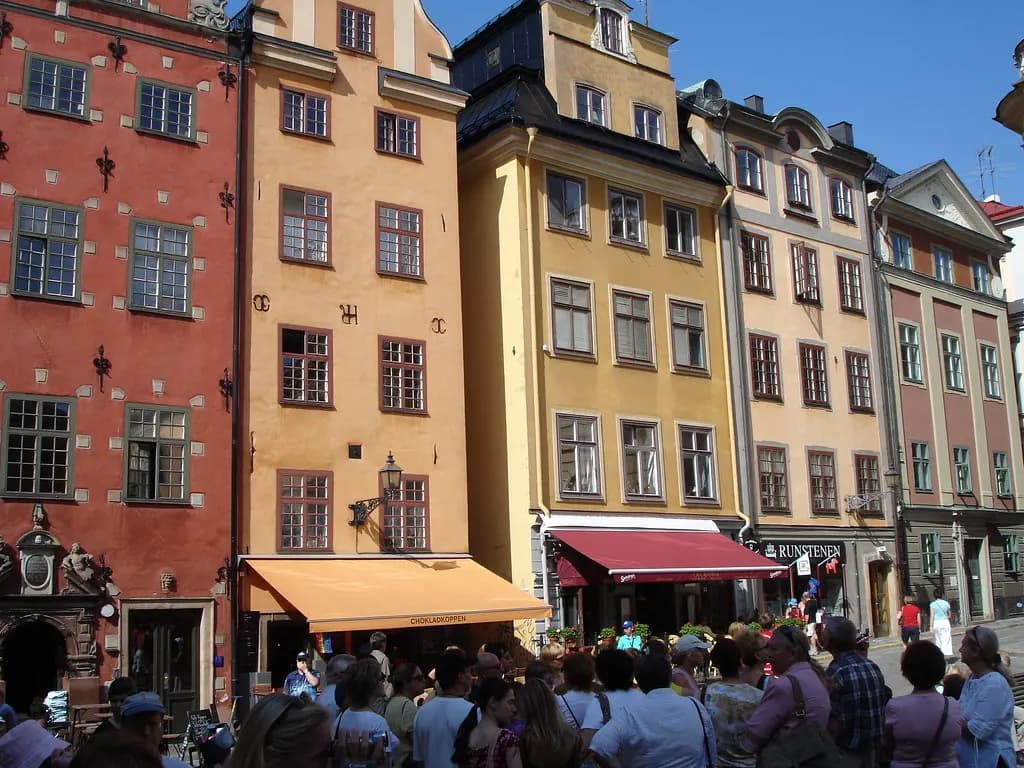
A 17th-century warship sank about 1,300 meters into its maiden voyage, sat at the bottom of the harbor for over 300 years, and is now the single most-visited thing in the city — recovered almost perfectly intact.
See full guide →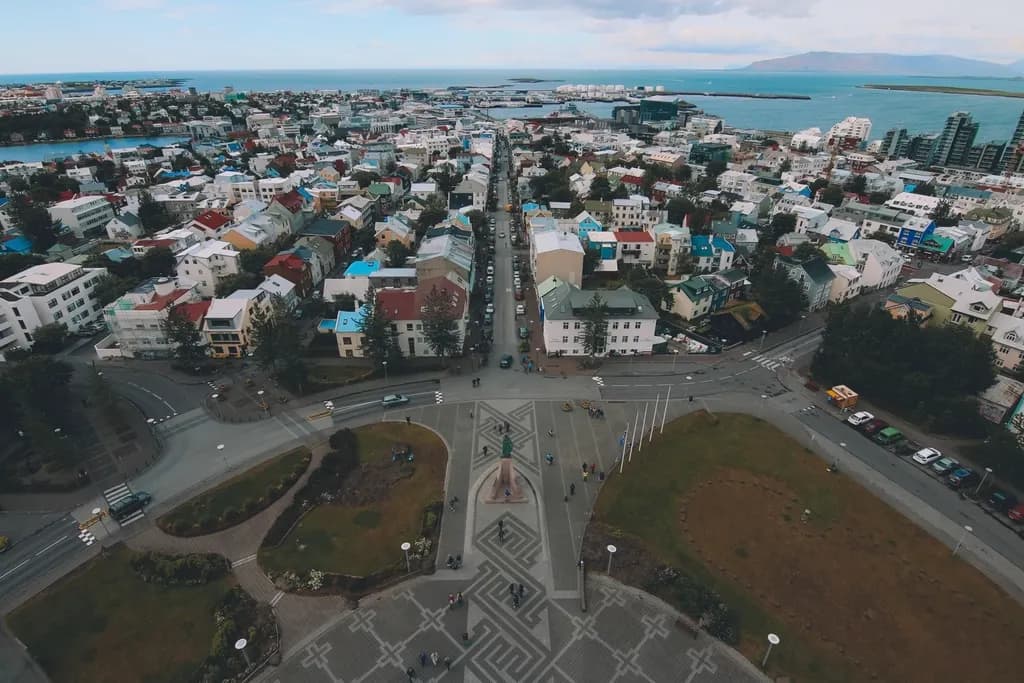 Reykjavik
Reykjavik
Iceland
The tap water comes straight from glacial springs and most homes are heated by the ground itself — geothermal energy covers virtually all of the city's heating, which is the quiet fact behind almost everything you'll notice here.
See full guide →Comparing more than one route? See the full transport comparison guide.