Estonia · Europe
Tallinn
Estonia runs more of its government online than almost any country on earth, yet its capital's walled medieval core looks close to untouched since the 1400s — the two facts sit right next to each other and neither cancels the other out.
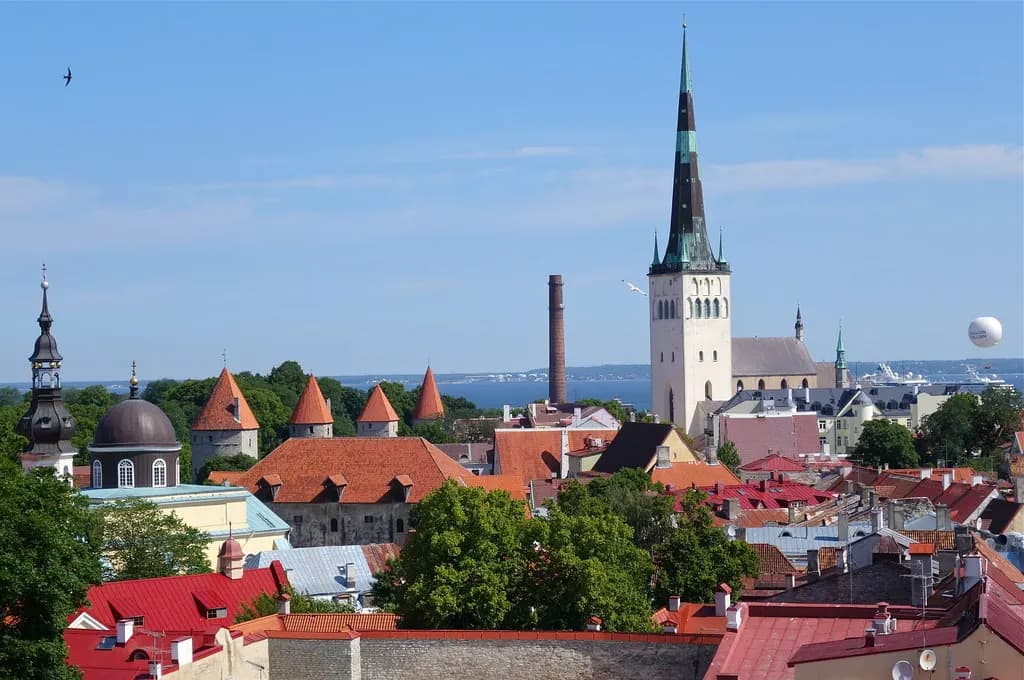
Estonia has built a global reputation as one of the most digitally advanced countries on earth — nearly all government services, from voting to filing taxes, run online, and the country's e-Residency program lets foreigners register businesses remotely. That reputation sits oddly next to Tallinn's Old Town, which looks close to untouched since the 15th century: full city walls, nearly 20 surviving defensive towers, and a street layout that hasn't meaningfully changed since the Hanseatic League ran trade through it. Both things are true of the same small country at once.
The Old Town splits into two distinct halves. Toompea, on a limestone hill, was historically the seat of nobility and administration — it still holds Estonia's parliament building and Alexander Nevsky Cathedral, a Russian Orthodox cathedral with striking onion domes that some Estonians view ambivalently as a 19th-century imperial imposition. Below it, the lower town was the merchant and guild district, centered on Town Hall Square, which has hosted a market in some form for over 800 years.
The city walls themselves, still substantially intact, are one of the more complete surviving fortification systems in Northern Europe. Several of the towers are open to climb, and walking a stretch of the wall walk gives a genuinely different vantage point on the Old Town than the ground-level streets do.
Kadriorg, a Baroque palace and surrounding park about a 20-minute walk from the Old Town, was built by Peter the Great for his wife Catherine after Russia took control of Estonia in the early 18th century — a reminder that Tallinn's history runs through Russian, Swedish, German, and Soviet control before Estonian independence, not a straight line.
Tallinn's position across the Gulf of Finland from Helsinki, a roughly two-hour ferry away, makes it a natural add-on for travelers already in Scandinavia, and it holds its own against pricier Nordic capitals on cost while offering an old town that few cities in the region can match for how completely it survives.
What a trip here actually costs
$40 / day avg.
- Hostel in or near Old Town
- Tram day pass
- Market and bakery lunches
- Free wander through Toompea and the lower Old Town
What to do at this tier
- • Walk Toompea and the lower Old Town, both free to wander
- • Town Hall Square, the medieval market square, free
- • Kohtuotsa viewing platform for a panoramic Old Town view, free
$95 / day avg.
- 3-star hotel in Old Town
- City walls and tower entry tickets
- Sit-down Estonian dinners
- Kadriorg Palace and park visit
What to do at this tier
- • City wall and tower walk along the surviving fortifications
- • Kadriorg Palace and park, an 18th-century Baroque palace built for Peter the Great
- • Sit-down dinner featuring Estonian black bread and Baltic herring
$210 / day avg.
- 4-5 star hotel with Old Town views
- Private guided Old Town and Toompea history tour
- Multi-course tasting menu
- Day trip to Lahemaa National Park
What to do at this tier
- • Private guided history tour connecting Toompea's noble past with the lower town's merchant history
- • Day trip to Lahemaa National Park, bogs and coastal forest about an hour east
- • Multi-course tasting menu at a well-regarded Tallinn restaurant
These are average estimates for planning purposes, not real-time prices — actual costs vary by season, availability, and how far ahead you book.
How to get there
Click anywhere on the world map — any airport works, not just our main hubs.
Click anywhere on the map above — any airport in the world works — to see estimated travel time and cost from there.
Times and prices are planning estimates, not live fares — always check a booking site before you commit. See the full Transport Comparison guide for the general tradeoffs of each mode.
Best time to visit
May-September brings the mildest weather and the longest daylight; winters are cold and dark, similar to the rest of the Baltic region.
Safety notes
Very safe overall, among the safer capitals in Europe. Standard urban caution is enough.
Visa & currency
Euro. Estonia is in the Schengen area; standard 90-day visa-free rule applies for most Western passport holders.
Questions people ask before visiting
Is Tallinn worth visiting?
Yes — it has arguably the best-preserved medieval Old Town in Northern Europe, still fully walled with towers intact, and it's compact enough to see thoroughly in two or three days without feeling rushed.
How many days do you need in Tallinn?
Two days covers the Old Town, both the upper Toompea district and the lower merchant town, comfortably. A third day allows Kadriorg Park and Palace, or a day trip to Lahemaa National Park for a different, wilder side of Estonia.
Tallinn, Riga, or Vilnius — which Baltic capital should I prioritize?
Tallinn has the most intact medieval old town of the three, with the most complete city walls. Riga has the strongest Art Nouveau architecture; Vilnius the largest old town and Baroque density. Tallinn is also the easiest of the three to combine with a Helsinki side trip, a roughly two-hour ferry away.
Is Tallinn expensive?
Moderate — pricier than Riga or Vilnius, partly due to steady day-trip traffic from Helsinki, but still noticeably cheaper than Stockholm or Copenhagen across the water.
What is Toompea?
The upper, historically noble and administrative part of Tallinn's Old Town, sitting on a limestone hill above the lower merchant town where guilds and traders operated. The two districts developed with distinct characters and the split is still visually obvious today — Toompea has the cathedral and parliament building; the lower town has the guild halls and market square.
Nearby destinations
 Riga
RigaRiga
Latvia
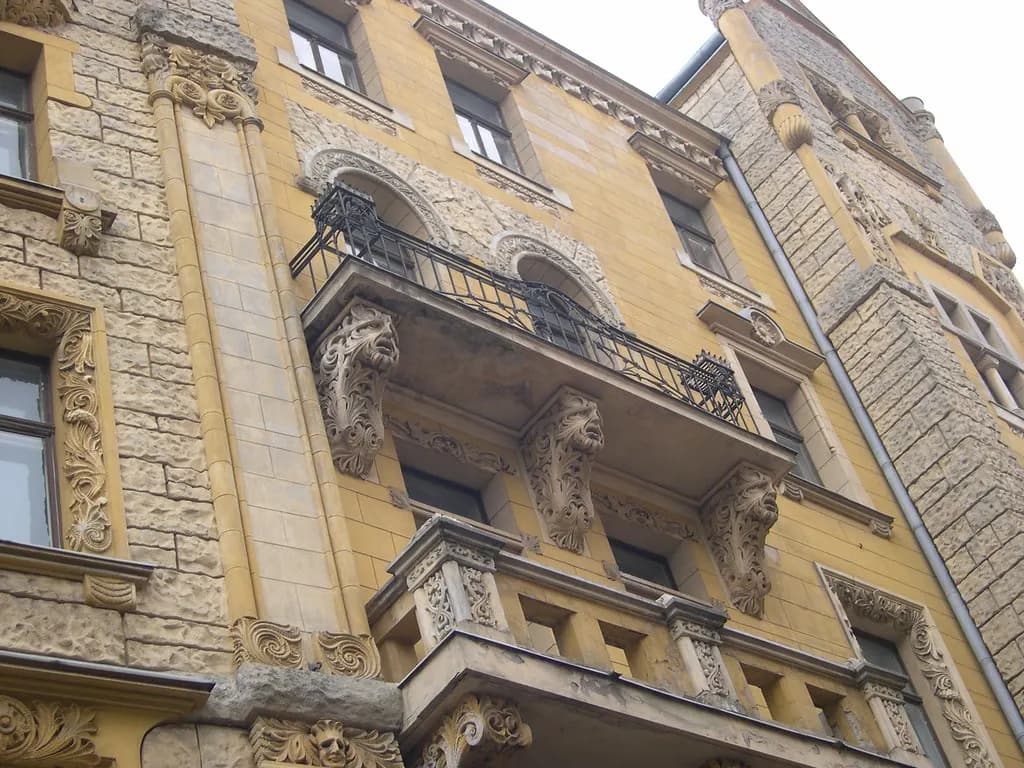
This city holds the largest collection of Art Nouveau buildings anywhere in Europe — entire streets of ornate, sculpture-covered facades that most visitors have never even heard Riga is known for.
See full guide →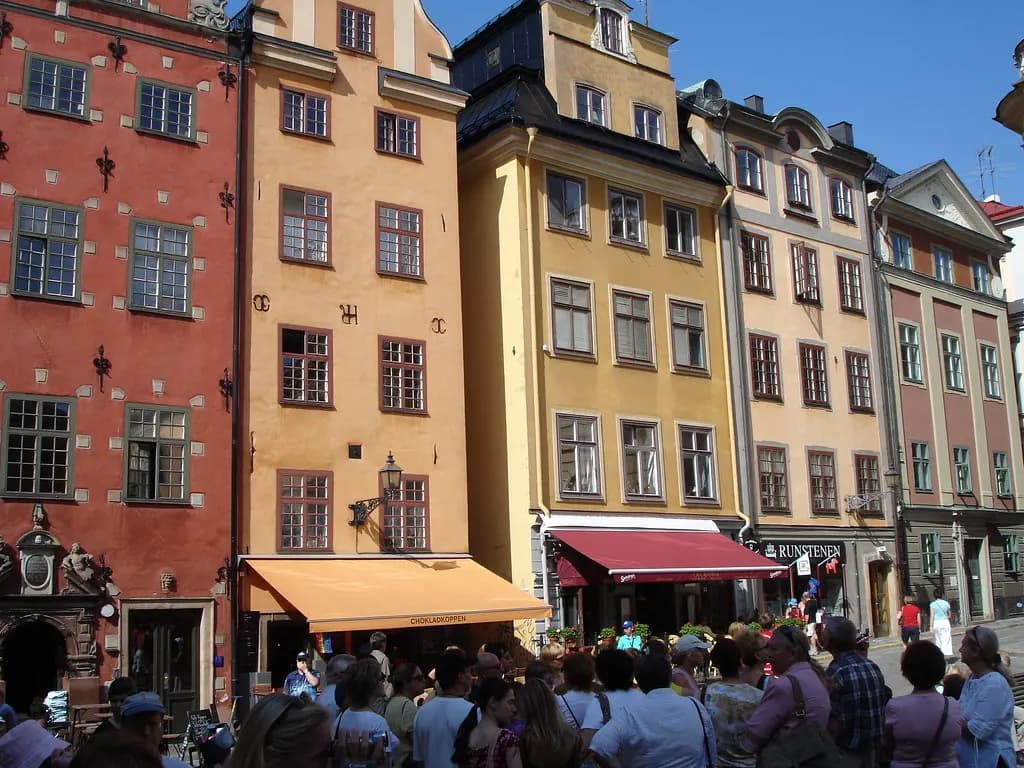 Stockholm
Stockholm
Sweden
A 17th-century warship sank about 1,300 meters into its maiden voyage, sat at the bottom of the harbor for over 300 years, and is now the single most-visited thing in the city — recovered almost perfectly intact.
See full guide →Comparing more than one route? See the full transport comparison guide.