Croatia · Europe
Split
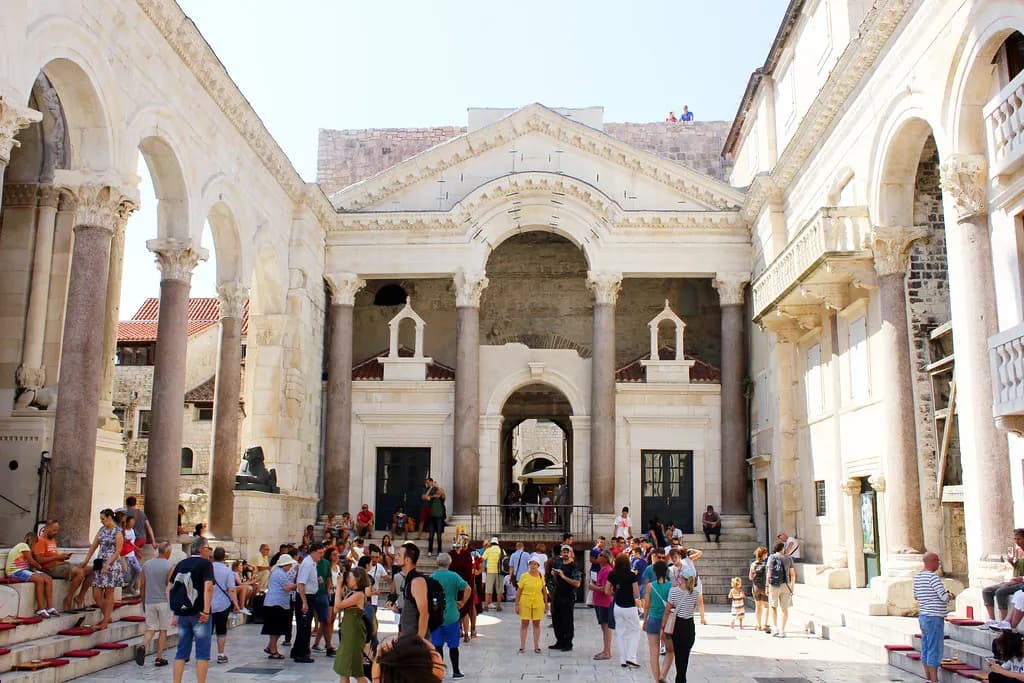
A Roman emperor built himself a retirement palace here in the 4th century, and instead of turning into ruins, an entire city just moved in — Split's old town isn't built near Diocletian's Palace, it's built inside it.
Diocletian's Palace is less a single monument than the reason Split exists as a city at all. The Roman emperor Diocletian built it as his retirement residence in the early 4th century, and rather than being abandoned to ruin after the empire's collapse, local residents gradually moved into the fortified structure over the following centuries, building homes, churches, and later shops directly into and around its original Roman walls. Roughly 3,000 people still live inside the palace today, which means walking through it means walking through someone's actual neighborhood — laundry lines above ancient columns, cafés operating out of Roman-era stone — rather than a preserved, roped-off site.
The Cathedral of St. Domnius, at the palace's center, has its own strange twist: it was built around what was originally Diocletian's own mausoleum, meaning a fervently anti-Christian Roman emperor who persecuted Christians during his reign ended up with his tomb converted into one of the oldest Catholic cathedrals still in continuous use anywhere in the world.
Below the palace's ground level, a network of substructures — originally storage and service spaces supporting the emperor's private quarters above — survives largely intact and has become one of Split's more atmospheric attractions, doubling as a filming location for scenes set in Daenerys Targaryen's dragon lair in Game of Thrones.
Split functions as Dalmatia's main transport hub as much as a destination in its own right, with regular ferries and fast catamarans connecting to Hvar, known for its livelier scene and lavender fields; Brač, home to the widely photographed Zlatni Rat beach; and Vis, the most remote and least developed of the three, only opened to general tourism after decades as a closed Yugoslav military base.
Compared to Dubrovnik, Split runs as a genuine working city rather than a preserved-for-tourism old town — busier, less manicured, and with a livelier everyday rhythm — while still holding one of the most unusual living ancient sites in Europe at its core.
What a trip here actually costs
$45 / day avg.
- Hostel in or near the old town
- Bus day pass
- Konoba (tavern) lunches
- Free wander through Diocletian's Palace and the Riva
What to do at this tier
- • Wander Diocletian's Palace, a living neighborhood built into and around the 4th-century Roman structure, free
- • Riva waterfront promenade, Split's main gathering spot, free
- • Marjan Hill trails and viewpoints over the city and harbor, free
$100 / day avg.
- 3-star hotel near the old town
- Cathedral of St. Domnius and palace substructure tickets
- Sit-down Dalmatian seafood dinners
- Day trip ferry to Hvar or Brač
What to do at this tier
- • Cathedral of St. Domnius, built around Diocletian's own mausoleum, plus the palace's atmospheric underground substructures
- • Day trip ferry to Hvar or Brač, both under an hour and a half by fast catamaran
- • Sit-down Dalmatian dinner, grilled fish and Croatian wine on or near the Riva
$230 / day avg.
- 4-5 star hotel with old town or waterfront views
- Private guided Diocletian's Palace history tour
- Multi-course seafood tasting menu
- Private boat day trip across multiple islands
What to do at this tier
- • Private guided tour connecting the palace's Roman history with its centuries of continuous habitation
- • Private boat day combining two or more islands, Hvar and Vis among the common pairings
- • Multi-course seafood tasting menu at a well-regarded Split restaurant
These are average estimates for planning purposes, not real-time prices — actual costs vary by season, availability, and how far ahead you book.
How to get there
Click anywhere on the world map — any airport works, not just our main hubs.
Click anywhere on the map above — any airport in the world works — to see estimated travel time and cost from there.
Times and prices are planning estimates, not live fares — always check a booking site before you commit. See the full Transport Comparison guide for the general tradeoffs of each mode.
Best time to visit
May-June and September-October bring warm weather with meaningfully fewer crowds and lower ferry and accommodation prices than the July-August peak.
Safety notes
Very safe overall. Standard urban caution is enough almost everywhere in the city.
Visa & currency
Euro. Croatia is in the Schengen area; standard 90-day visa-free rule applies for most Western passport holders.
Questions people ask before visiting
Is Split worth visiting?
Yes — Diocletian's Palace, the Roman core the entire old town is built around and within, is one of the most unusual ancient sites in Europe precisely because it's still a living, lived-in neighborhood rather than a roped-off ruin, and Split doubles as the main ferry gateway to Croatia's most popular islands.
Is it true people still live inside Diocletian's Palace?
Yes — roughly 3,000 people live within the palace's walls today, in homes, apartments, and buildings that incorporate genuine 4th-century Roman structure into their walls and foundations. Shops, bars, and restaurants operate out of the same ancient stone, which is what makes walking through it feel different from a typical archaeological site.
Split or Dubrovnik — which should I prioritize?
Dubrovnik has the more famous, fully intact city walls and a more dramatic Adriatic setting, but draws heavier crowds, especially from cruise ships. Split has Diocletian's Palace, a livelier everyday city feel since it's Croatia's second-largest, and better ferry connections to the islands. Many trips combine both, connected by a scenic coastal bus or ferry route.
What islands can I reach from Split by ferry?
Hvar, Brač, and Vis are the most popular, all reachable as day trips or overnight stays via regular ferry and catamaran service from Split's harbor, right at the edge of Diocletian's Palace. Hvar draws a livelier, more upscale crowd; Brač has the well-known Zlatni Rat beach; Vis is the least developed and most remote of the three.
How many days do you need in Split?
Two days covers Diocletian's Palace, the Riva waterfront, and Marjan Hill. A third or fourth day allows at least one island day trip, most comfortably Hvar or Brač given ferry frequency.
Nearby destinations
 Dubrovnik
Dubrovnik
Croatia
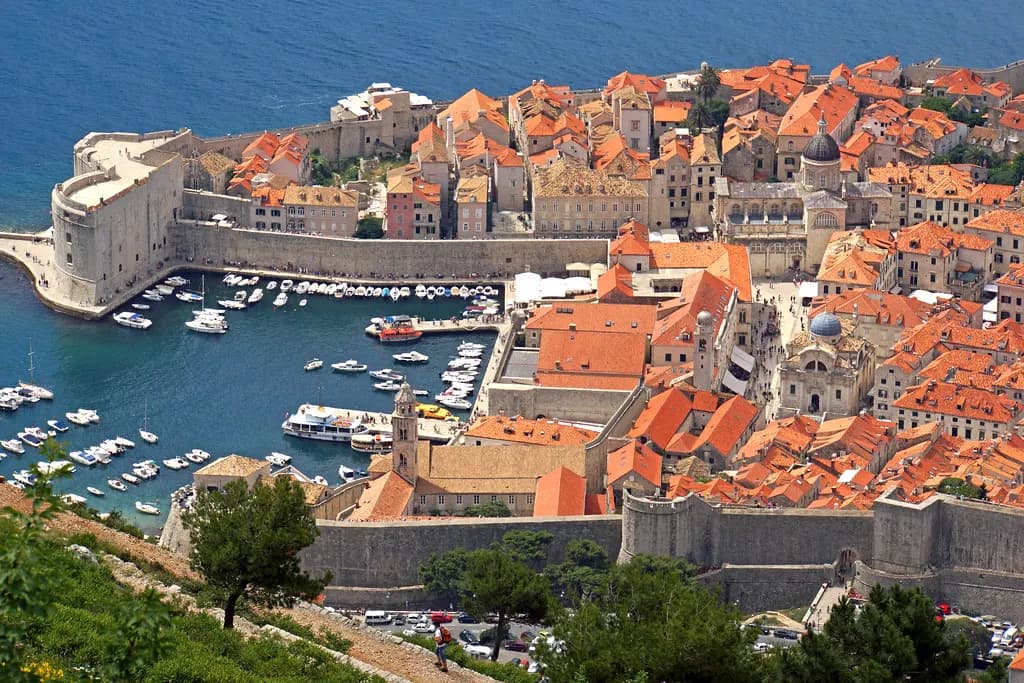
This walled city was an independent maritime republic for over 400 years, wealthy enough to rival Venice, before Napoleon finally ended it in 1808 — the walls that made it defensible then are what make it a full-day walk today.
See full guide →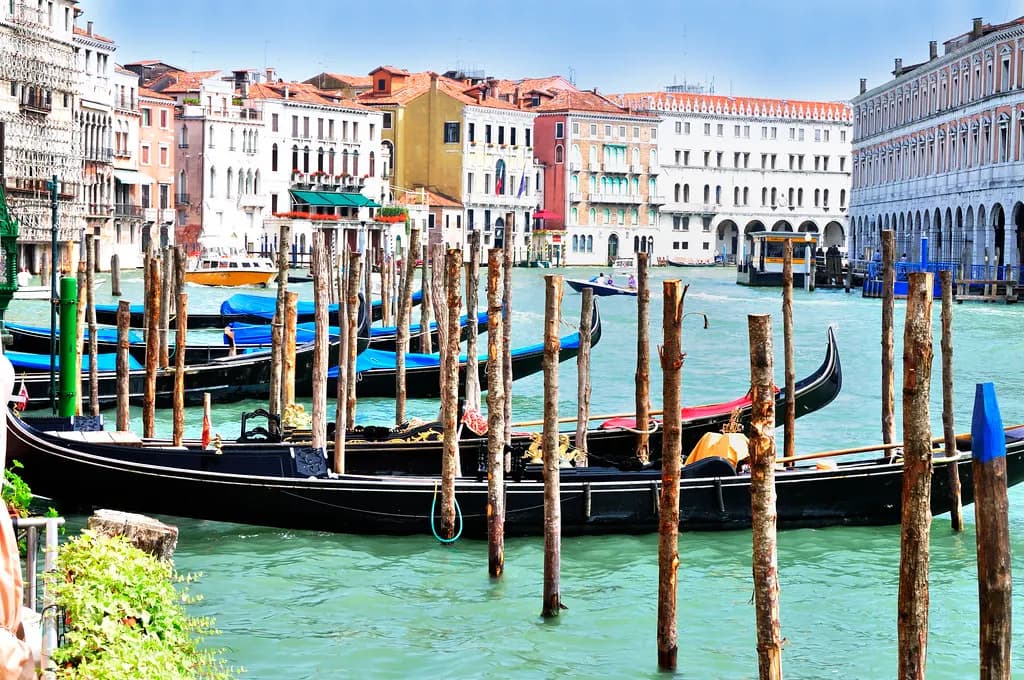 Venice
Venice
Italy
There are no cars here, not because of a pedestrian-zone policy but because the city is built across more than a hundred small islands — a boat is the only way to move anything heavier than a suitcase.
See full guide →Comparing more than one route? See the full transport comparison guide.