Bosnia and Herzegovina · Europe
Sarajevo
A single bridge in Sarajevo is where a 19-year-old's gunshot in 1914 set off a chain of alliances that became World War I — the spot is marked, unremarkable, and easy to walk past without noticing.
Sarajevo holds an outsized place in 20th-century history for a city its size, and it starts at the Latin Bridge: on June 28, 1914, Gavrilo Princip, a 19-year-old Bosnian Serb nationalist, shot and killed Archduke Franz Ferdinand of Austria-Hungary and his wife Sophie a few steps from it, setting off the alliance system that turned a regional assassination into World War I. The spot today is marked but understated — a small museum on the corner, easy to walk past without registering what happened there.
Less than a century later, Sarajevo endured the longest siege of a capital city in modern warfare: nearly four years, from 1992 to 1996, during the Bosnian War, with the city surrounded and shelled while a UN-protected tunnel under the airport runway remained the main supply line in and out. That tunnel is partially preserved today as the Tunnel of Hope museum, and scattered across the city, mortar shell scars in the pavement — filled with red resin as memorials and known as "Sarajevo Roses" — remain a quiet, ongoing part of the urban landscape rather than a sealed-off historical site.
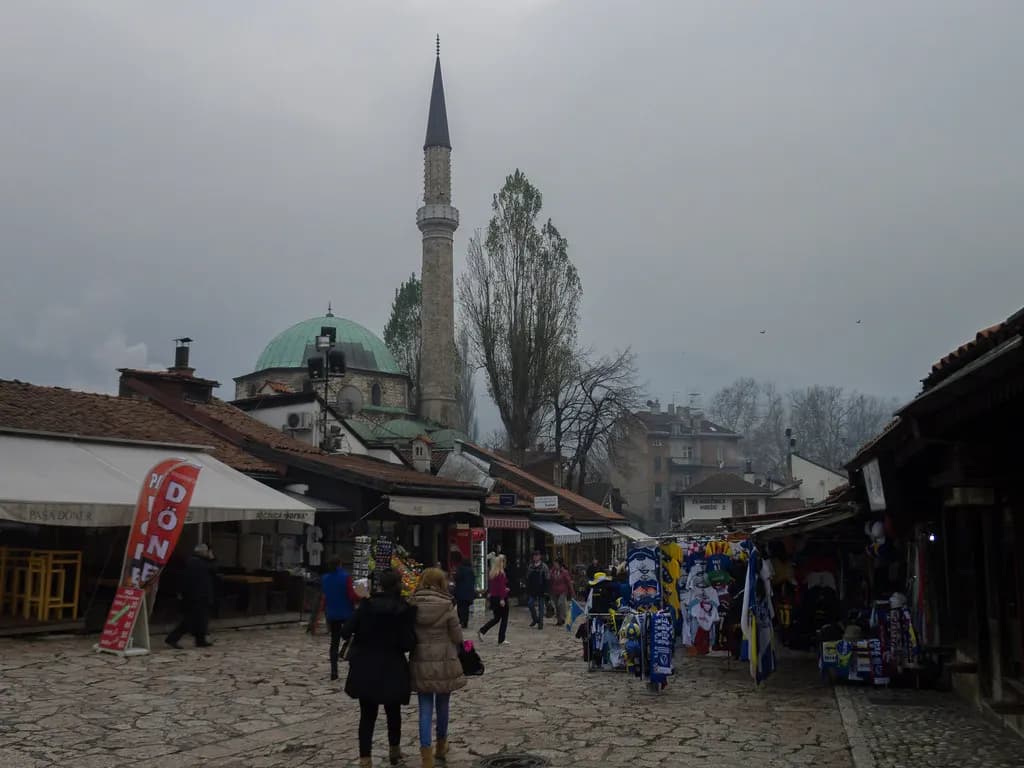
Baščaršija, the old Ottoman-era bazaar quarter at the city's center, gives Sarajevo its most distinctive visual signature: walking west along Ferhadija street, the architecture visibly shifts from Ottoman mosques and covered markets to Austro-Hungarian facades within a few blocks, a physical line marking where the Ottoman Empire's control gave way to Austro-Hungarian rule in 1878. Mosques, an Orthodox cathedral, a Catholic cathedral, and a synagogue all sit within a short walk of each other, a density of religious coexistence that's given Sarajevo the informal nickname "Jerusalem of Europe."
Above the city, Trebević mountain hosted the bobsled and luge track for the 1984 Winter Olympics — a genuine high point in Sarajevo's 20th century, held less than a decade before the siege began. The track sits abandoned today, reclaimed by graffiti artists, and a cable car (rebuilt after the war) makes the visit an easy half-day trip with panoramic views back over the city.
Sarajevo remains one of the least-visited capitals covered in this guide relative to its historical significance, priced well below most of Central Europe, and its layered Ottoman, Austro-Hungarian, and 1990s history gives it a depth that a two- or three-day visit only starts to cover.
What a trip here actually costs
$30 / day avg.
- Hostel in or near Baščaršija
- Tram day pass
- Ćevapi and burek lunches
- Free wander through the old bazaar quarter
What to do at this tier
- • Baščaršija, the Ottoman-era old bazaar quarter, free to wander
- • Latin Bridge and the corner where the 1914 assassination took place, free
- • Walk the line where Ottoman and Austro-Hungarian architecture visibly meet along Ferhadija street, free
$70 / day avg.
- 3-star hotel near the center
- Tunnel of Hope museum entry
- Sit-down Bosnian dinners
- Trebević cable car and bobsled track visit
What to do at this tier
- • Tunnel of Hope museum, built around a preserved section of the tunnel used to supply the city during the 1990s siege
- • Trebević cable car up to the abandoned 1984 Winter Olympics bobsled track, now covered in graffiti
- • Sit-down dinner featuring ćevapi, Bosnia's grilled minced-meat national dish
These are average estimates for planning purposes, not real-time prices — actual costs vary by season, availability, and how far ahead you book.
How to get there
Click anywhere on the world map — any airport works, not just our main hubs.
Click anywhere on the map above — any airport in the world works — to see estimated travel time and cost from there.
Times and prices are planning estimates, not live fares — always check a booking site before you commit. See the full Transport Comparison guide for the general tradeoffs of each mode.
Best time to visit
May-September brings the mildest weather; winters are genuinely cold, given Sarajevo's mountainous, valley setting.
Safety notes
Very safe overall for day-to-day travel. The city's wartime history is visible and openly discussed but isn't a current safety concern for visitors.
Visa & currency
Bosnian convertible mark (BAM), not the euro. Bosnia and Herzegovina is not in the EU or Schengen area; most Western passport holders can enter visa-free for stays up to 90 days, though it's worth confirming current requirements for your specific nationality before flying.
Questions people ask before visiting
Is Sarajevo safe to visit?
Yes — day-to-day safety for visitors is genuinely good, comparable to most Central European capitals. The city's difficult history (the WWI assassination, the 1990s siege) is visible and openly discussed, but it isn't an active safety concern for tourists today.
What happened at the Latin Bridge?
On June 28, 1914, Gavrilo Princip, a 19-year-old Bosnian Serb nationalist, shot and killed Archduke Franz Ferdinand of Austria-Hungary and his wife Sophie near the Latin Bridge, an event that triggered the alliance system leading directly to World War I. The bridge and a small museum on the corner mark the spot today, understated relative to the scale of what happened there.
Is Sarajevo cheap to visit?
Yes, one of the more affordable capitals in this guide — costs run below Warsaw or Riga in many categories, reflecting Bosnia and Herzegovina's position outside the EU.
What are the Sarajevo Roses?
Mortar shell scars in the pavement from the 1992-1996 siege, filled with red resin as memorials to where people were killed. They're scattered across the city, unmarked beyond the resin itself, and serve as a quiet, ongoing reminder of the longest siege of a capital city in modern warfare.
How many days do you need in Sarajevo?
Two days covers Baščaršija, the Latin Bridge, and a siege-history museum or tunnel visit. A third day allows the abandoned 1984 Winter Olympics bobsled track on Trebević mountain, now covered in graffiti and reachable by cable car.
Nearby destinations
 Dubrovnik
Dubrovnik
Croatia
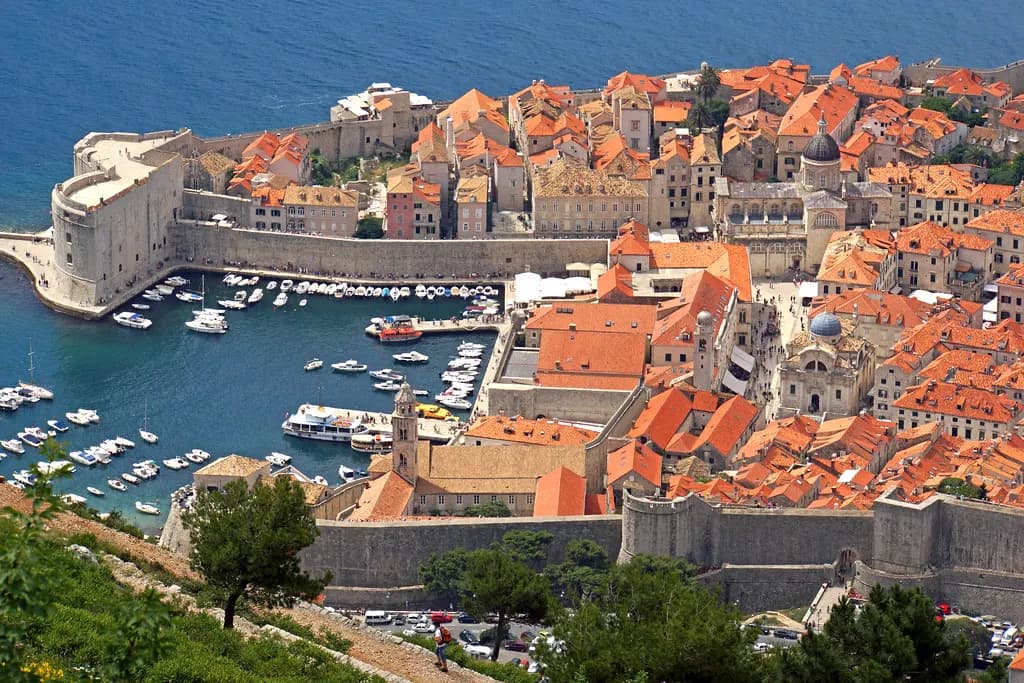
This walled city was an independent maritime republic for over 400 years, wealthy enough to rival Venice, before Napoleon finally ended it in 1808 — the walls that made it defensible then are what make it a full-day walk today.
See full guide →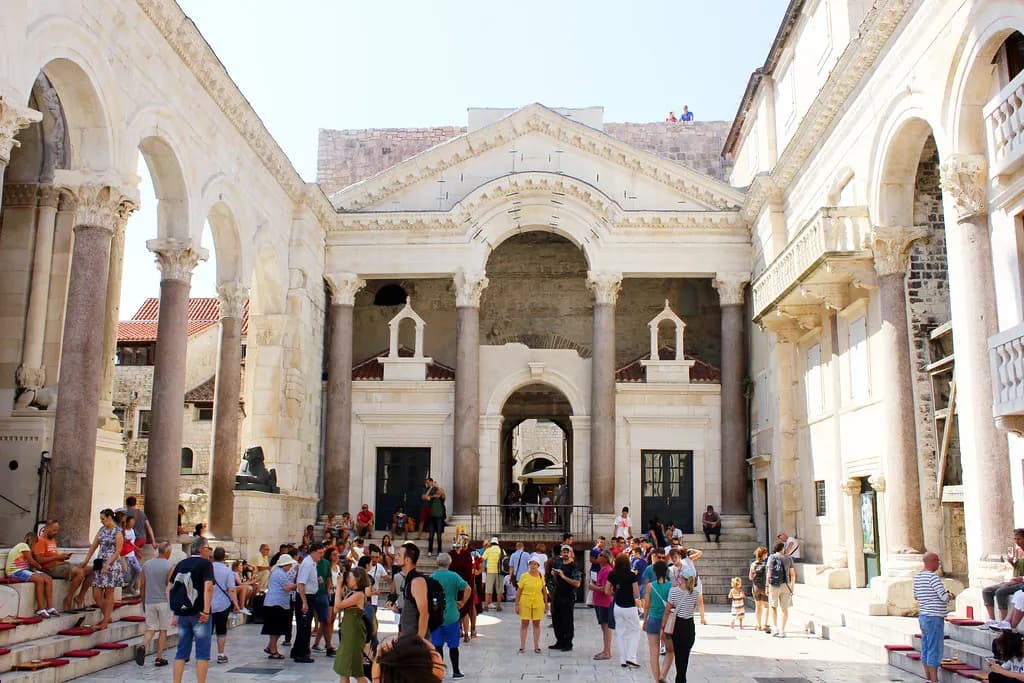 Split
SplitSplit
Croatia
A Roman emperor built himself a retirement palace here in the 4th century, and instead of turning into ruins, an entire city just moved in — Split's old town isn't built near Diocletian's Palace, it's built inside it.
See full guide →Comparing more than one route? See the full transport comparison guide.