Italy · Europe
Palermo
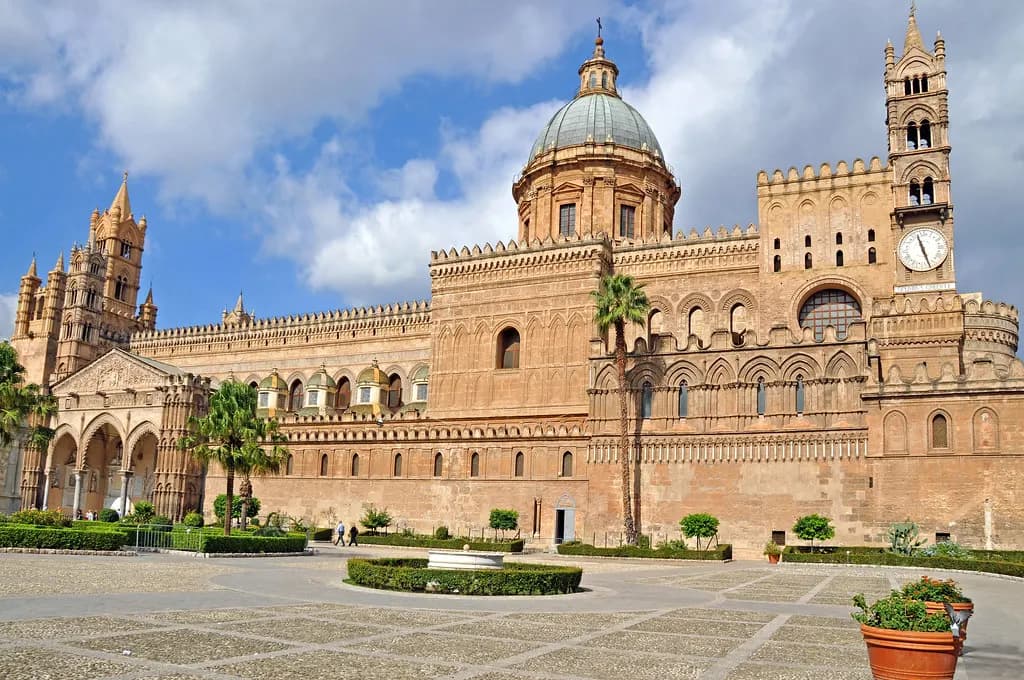
Palermo has been ruled by Phoenicians, Greeks, Romans, Arabs, Normans, and Spanish — and its cathedral alone shows evidence of nearly every one of them, a single building that keeps switching architectural styles depending on which century you're looking at.
Palermo's layered history reads almost like a checklist of Mediterranean powers: Phoenicians founded it, Greeks and Romans each controlled it in turn, Arabs ruled it for over two centuries starting in the 9th century, Normans conquered it in the 11th century, and Spanish rule followed centuries later — and the city's architecture, rather than erasing each layer, tends to absorb and blend them.
Palermo Cathedral is the clearest single example: built on the site of a mosque, itself built on the site of an earlier Byzantine church, the current structure mixes Norman, Gothic, Baroque, and Neoclassical elements added across different centuries, giving it a genuinely patchwork character rather than a single coherent style.
The Palatine Chapel, inside the Norman Palace, represents the fullest expression of Palermo's most distinctive architectural achievement: Norman-Arab-Byzantine style, a 12th-century fusion where Norman rulers deliberately employed Arab and Byzantine craftsmen, producing a building with Islamic geometric ceiling patterns, Byzantine gold mosaics, and Norman structural design working together rather than competing. Monreale Cathedral, a short trip outside the city, extends the same tradition on a larger scale and is often ranked among the finest surviving Byzantine mosaic collections anywhere.
Palermo's markets — Ballarò, Vucciria, and Capo — function as genuine, centuries-old daily institutions rather than tourist-oriented food halls, and the street food found there, including panelle (chickpea flour fritters) and the notably unusual pani ca meusa (a sandwich of stewed spleen), traces directly back through Sicily's long history of Arab and broader Mediterranean culinary influence.
Palermo's reputation among some travelers still lags behind its actual present-day safety, shaped by decades-old associations with organized crime that mostly don't affect visitors' day-to-day experience — the city today functions as a genuinely rich, still-underrated stop relative to Sicily's other major draws.
What a trip here actually costs
$45 / day avg.
- Hostel near the historic center
- Bus day pass
- Street food market lunches
- Free wander through the historic center
What to do at this tier
- • Ballarò and Vucciria market wander, genuine daily food markets, browsing is free
- • Palermo Cathedral exterior, a striking mix of architectural styles, free
- • Quattro Canti and Piazza Pretoria, the Baroque crossroads at the city's center, free
$100 / day avg.
- 3-star hotel near the center
- Palatine Chapel and Norman Palace entry
- Sit-down Sicilian dinners
- Day trip to Monreale Cathedral
What to do at this tier
- • Palatine Chapel inside the Norman Palace, a UNESCO-listed masterpiece of Norman-Arab-Byzantine art
- • Day trip to Monreale Cathedral, just outside the city, holding some of the finest Byzantine mosaics in Italy
- • Sit-down dinner featuring Sicilian classics like pasta alla Norma and caponata
$220 / day avg.
- 4-5 star hotel near the historic center
- Private guided Norman-Arab architecture tour
- Multi-course Sicilian tasting menu
- Private day trip to Mondello beach
What to do at this tier
- • Private guided tour covering Palermo's Phoenician, Arab, Norman, and Baroque layers
- • Private beach day at Mondello, a short trip from the city center
- • Multi-course Sicilian tasting menu at a well-regarded Palermo restaurant
These are average estimates for planning purposes, not real-time prices — actual costs vary by season, availability, and how far ahead you book.
How to get there
Click anywhere on the world map — any airport works, not just our main hubs.
Click anywhere on the map above — any airport in the world works — to see estimated travel time and cost from there.
Times and prices are planning estimates, not live fares — always check a booking site before you commit. See the full Transport Comparison guide for the general tradeoffs of each mode.
Best time to visit
April-June and September-October bring warm, comfortable weather without the intense summer heat, which regularly exceeds 32°C (90°F) in peak season.
Safety notes
Generally safe for visitors; standard urban caution in crowded market areas is enough for most trips.
Visa & currency
Euro. Standard Schengen 90-day visa-free rule applies for most Western passport holders.
Questions people ask before visiting
Is Palermo worth visiting?
Yes — Sicily's capital holds one of the most architecturally layered old towns in the Mediterranean, blending Arab, Norman, Byzantine, and Baroque influences often within the same building, alongside some of Italy's most highly regarded street food markets.
Is Palermo safe?
Yes for the overwhelming majority of visitors — Palermo's historical association with organized crime is mostly a thing of the past for tourists, and the main risk in practice is petty theft in crowded market areas, similar to other major Italian cities. Normal urban caution is enough.
What makes Palermo's street food scene special?
Its markets — Ballarò, Vucciria, and Capo chief among them — function as genuine daily food institutions, not tourist attractions, serving dishes like panelle (chickpea fritters), arancine, and pani ca meusa (spleen sandwich) that trace back through Sicily's layered Arab and Mediterranean influences.
What is the Norman-Arab architecture Palermo is known for?
A distinctive fusion style from the 12th century, when Norman kings ruling Sicily employed Arab and Byzantine craftsmen, producing buildings that combine Islamic geometric patterns, Byzantine mosaics, and Norman structural forms. The Palatine Chapel and Monreale Cathedral are the two most striking examples, both UNESCO-listed.
How many days do you need in Palermo?
Two days covers the cathedral, the Norman Palace and Palatine Chapel, and a proper market crawl. A third day allows a trip to Monreale Cathedral just outside the city, or a beach day at nearby Mondello.
Nearby destinations
 Naples
Naples
Italy
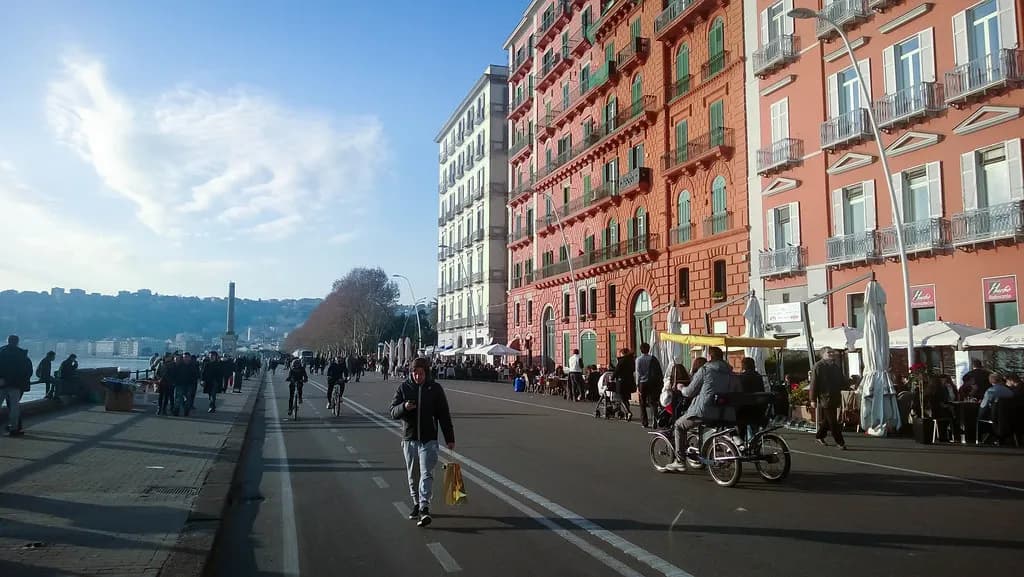
Margherita pizza was named after an actual queen who tried it here in 1889 — and the pizzeria that served her, Brandi, is still open a few streets from where the story happened.
See full guide →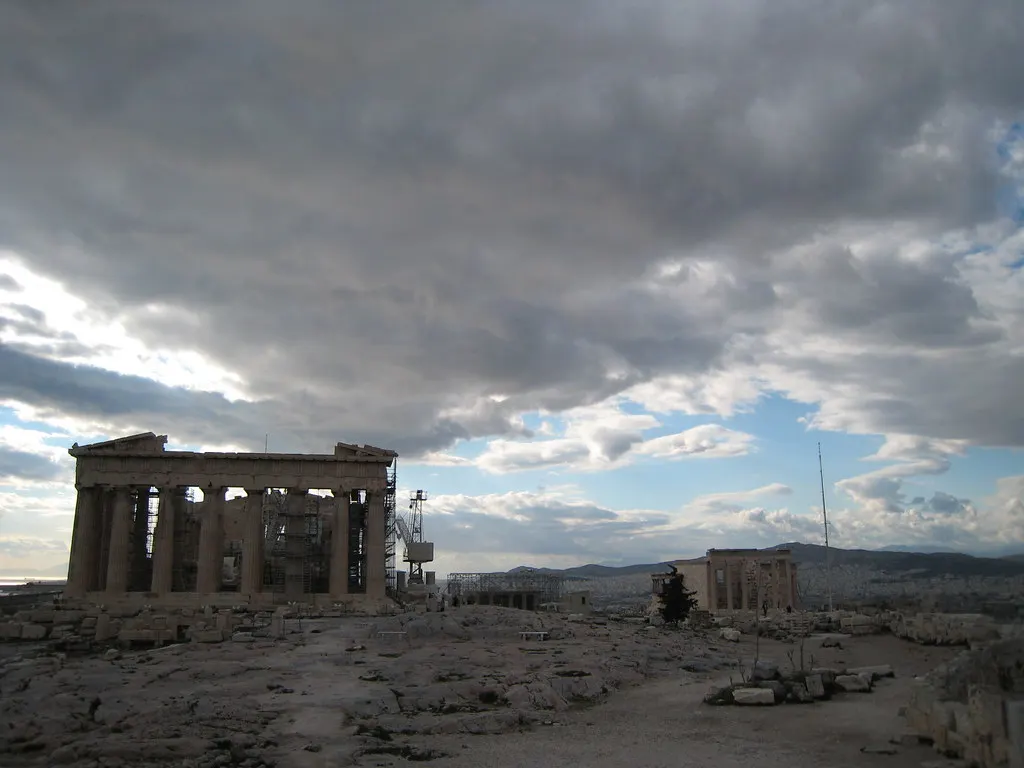 Athens
Athens
Greece
You can stand in the shadow of a 2,500-year-old temple, then walk two minutes and find some of the best street art in southern Europe covering the side of an apartment block — the ancient and the unfinished sit right next to each other here.
See full guide →Comparing more than one route? See the full transport comparison guide.