Greece · Europe
Athens
You can stand in the shadow of a 2,500-year-old temple, then walk two minutes and find some of the best street art in southern Europe covering the side of an apartment block — the ancient and the unfinished sit right next to each other here.
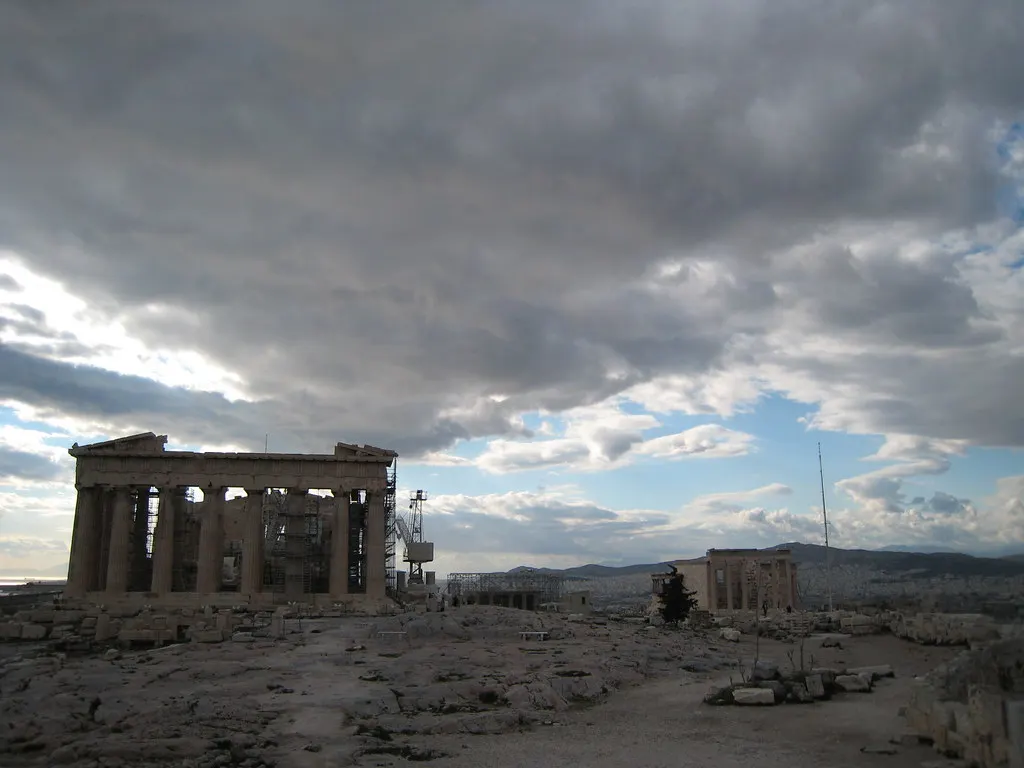
The Acropolis has been the defining image of Athens for so long it's easy to forget it's an active, ongoing restoration project, not a finished museum piece — scaffolding and cranes have been part of the Parthenon's silhouette for decades as conservators work to stabilize and, where possible, reverse damage from centuries of war, pollution, and an infamous 17th-century gunpowder explosion. Visiting early, at or near opening, beats both the crowds and the worst of the heat, which by midday in summer makes the exposed hilltop genuinely punishing.
The Acropolis Museum, at the base of the hill, is built directly over an active archaeological excavation, visible through glass floors in the entrance, and the top floor is deliberately aligned with the Parthenon's actual orientation, positioned so the building's frieze fragments can be viewed in something close to their original spatial relationship. It's a newer building, opened in 2009, designed specifically to make the case for returning the Parthenon Marbles currently held in the British Museum — a debate the museum doesn't shy away from.
Plaka, the old neighborhood spilling down the Acropolis's northern slope, survived Athens's rapid 20th-century development mostly intact, and its narrow lanes include Anafiotika, a small pocket built by workers from the island of Anafi in the 1800s, whitewashed and Cycladic in style in a way that looks transplanted from a Greek island rather than the mainland capital.
Athens carries a reputation for chaotic traffic and dense, uneven modern architecture, some of it fair, and the contrast between that and the ancient sites is part of what makes the city interesting rather than purely a liability — Monastiraki and the streets around it hold some of the best street art in southern Europe, spray-painted across apartment blocks a few minutes' walk from ruins older than most countries.
For most visitors, Athens functions as much as a gateway as a destination in its own right — Piraeus, the city's port, connects by ferry to most of the Greek islands, Santorini included, which makes a few days in the city a natural bookend to an island-hopping trip rather than a standalone visit. Cape Sounion, an hour or so outside the city, adds a worthwhile half-day option: the ruined Temple of Poseidon on a coastal cliff, particularly striking at sunset.
What a trip here actually costs
$50 / day avg.
- Hostel in Koukaki or near Monastiraki
- Metro day pass
- Souvlaki and gyro meals instead of sit-down restaurants
- Free wander through Plaka and Anafiotika's whitewashed lanes
What to do at this tier
- • Walk Plaka and Anafiotika, the whitewashed Cycladic-style lanes tucked below the Acropolis, free
- • Monastiraki flea market and the surrounding street art, free
- • Free view of the Acropolis from Areopagus Hill at sunset
$115 / day avg.
- 3-star hotel in Plaka or Koukaki
- Acropolis and Acropolis Museum combined ticket, booked ahead
- Sit-down tavernas, one proper Greek dinner with wine
- Mount Lycabettus cable car for sunset
What to do at this tier
- • Acropolis and Parthenon, timed entry booked ahead, go early to beat heat and crowds
- • Acropolis Museum, built directly over an active excavation site
- • Mount Lycabathus cable car and summit view over the whole city
$260 / day avg.
- 4-5 star hotel with an Acropolis view
- Private early-access Acropolis tour before public opening
- Multi-course dinner at a well-regarded modern Greek restaurant
- Private day trip to Cape Sounion for sunset at the Temple of Poseidon
What to do at this tier
- • Private early-access Acropolis tour before the general public entry time
- • Private day trip to Cape Sounion and the Temple of Poseidon for sunset
- • Multi-course dinner at a modern Greek restaurant reinterpreting traditional dishes
These are average estimates for planning purposes, not real-time prices — actual costs vary by season, availability, and how far ahead you book.
How to get there
Click anywhere on the world map — any airport works, not just our main hubs.
Click anywhere on the map above — any airport in the world works — to see estimated travel time and cost from there.
Times and prices are planning estimates, not live fares — always check a booking site before you commit. See the full Transport Comparison guide for the general tradeoffs of each mode.
Best time to visit
April-June and late September-October bring warm, comfortable weather without the extreme July-August heat, which regularly pushes past 35°C (95°F) and makes midday Acropolis visits genuinely uncomfortable.
Safety notes
Generally safe in the main tourist areas. Standard pickpocket caution on the metro and around the busiest squares is enough for most visitors.
Visa & currency
Euro. Standard Schengen 90-day visa-free rule applies for most Western passport holders.
Questions people ask before visiting
Is 2 days enough in Athens?
It's a workable minimum for the Acropolis, the Acropolis Museum, and Plaka, but three days lets you add the National Archaeological Museum and a slower wander through Monastiraki without rushing. Many visitors treat Athens as a 2-3 day bookend to an island-hopping trip rather than the main event.
Are skip-the-line Acropolis tickets worth it?
In summer, close to essential — the standard queue can run well over an hour in the midday heat. A timed-entry ticket booked ahead turns that into a short wait, and going right at opening avoids both the crowds and the worst of the heat.
Is Athens a good gateway to the Greek islands?
Yes, it's the practical hub for both flights and ferries to the islands, including Santorini. Piraeus, Athens's port, has ferry connections to most major islands, which makes pairing a few days in the city with island time straightforward to plan.
Is Athens safe for tourists?
Generally yes in the main tourist areas. Standard pickpocket caution on the metro and around Monastiraki and Syntagma Square is enough; some neighborhoods further from the center are best researched ahead if you're staying outside the usual visitor zones.
What's the best neighborhood to stay in?
Plaka, the old neighborhood right below the Acropolis, is the most atmospheric and walkable, if also the most touristy and priced accordingly. Koukaki, just south, gives easy Acropolis access with more local prices and fewer crowds.
Nearby destinations
 Santorini
Santorini
Greece
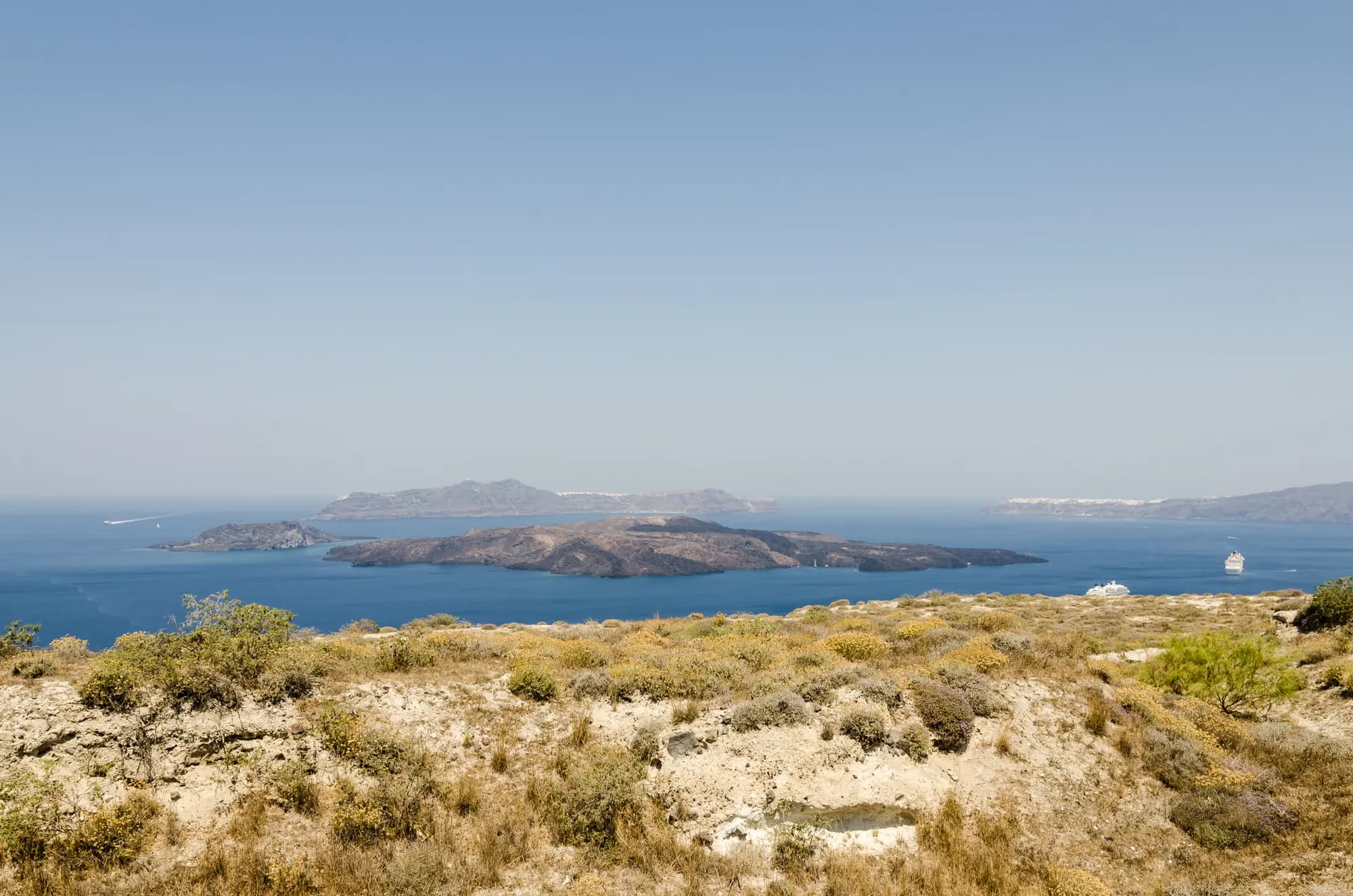
The island is actually the rim of a collapsed volcano that blew itself apart around 1600 BC, which is why every photo of Oia is really a photo of the edge of a crater.
See full guide →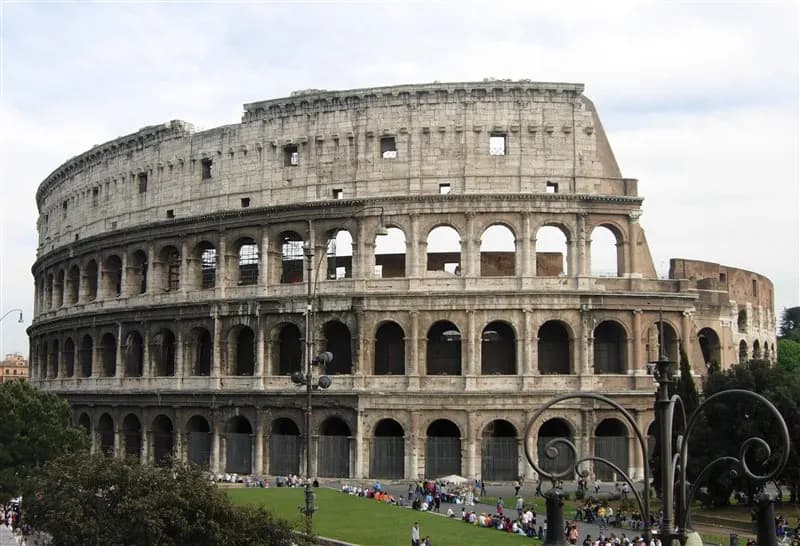 Rome
RomeRome
Italy
You can walk out of a 2,000-year-old amphitheater, cross one street, and order a coffee standing at a bar counter for a euro-fifty, no big deal to anyone but you.
See full guide →Comparing more than one route? See the full transport comparison guide.